TL;DR

Get business pricing on garage and car supplies
- Business-only prices and quantity discounts
- Tax-exempt purchasing
- Multiple users, one account, clear invoices
Truck bed storage organizers range from simple dividers and cargo bars to lockable boxes and sliding drawers. Choose one by measuring your bed, checking compatibility with your liner and cover, and matching its capacity and weather protection to what you carry. More protection and easier access usually mean more cost, weight, installation effort, or lost bed space.
A toolbox rattling against a shovel can turn a quiet drive into a metal percussion solo—and a loose cooler can slide across the bed when you brake. Truck bed storage organizers help keep cargo arranged, easier to reach, and less likely to shift, but they come in very different forms: a removable divider is not a substitute for a covered drawer, and a lock is not a theft-proof guarantee.
This guide helps you match an organizer to your truck, your cargo, and the way you use the bed. You’ll learn what to measure, how dividers compare with boxes and drawers, what weather and security claims really mean, and how to keep the setup practical instead of buying a heavy system you rarely use.
The best choice depends on whether you carry changing loads, daily tools, camping gear, or bulky weekend equipment. A contractor hauling a drill and fasteners each morning has different needs from a family carrying muddy soccer cleats on Saturday. Start with what you actually carry—not a product photo showing an impossibly tidy truck.
Measure bed length, wheel-well width, height, rails, tie-downs, and cover clearance before ordering.
Use dividers or cargo bars for flexible loads, a toolbox for frequently used tools, and drawers for organized covered access.
Treat weather-resistant as different from waterproof, and treat a lock as a deterrent rather than a guarantee.
Check the organizer’s capacity, mounting instructions, and compatibility with your liner, bed rack, and cover.
Secure heavy cargo to approved anchor points; an organizer alone may not stop a heavy load from moving during braking.
Pick the organizer type that fits what you carry
Truck bed storage organizers keep cargo in defined places, but each type solves a different problem. Dividers and cargo bars control shifting; toolboxes and storage boxes enclose gear; sliding drawers make covered cargo easier to reach. The distinction matters because controlling movement, protecting items, and making them accessible are separate jobs. Buying a system that excels at one may not solve the others.
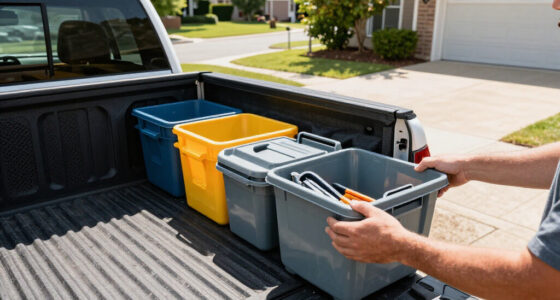
If your load changes every day, adjustable dividers or a cargo bar offer a flexible starting point. You can separate a grocery run from a toolbox, or keep a pair of muddy boots from rolling into a clean sleeping bag. That flexibility is valuable when the bed needs to switch between cargo and open space, but a divider generally does not protect items from rain or prevent small pieces from bouncing over or around it. Cargo nets can hold lighter items, though they are not a replacement for securing heavy equipment.
A cross-bed toolbox suits frequently used hand tools because its position can make them easy to reach without unloading the whole bed; the trade-off is that it occupies bed space and may restrict tall cargo. A side-mount box can leave more of the bed floor clear, although access and compatibility depend on the truck and installation. Under-cover boxes and full-length sliding drawers can organize gear behind a tonneau cover. They often make access easier, especially when equipment would otherwise sit at the front of the bed, but their weight, cost, and footprint can limit what else you can carry.
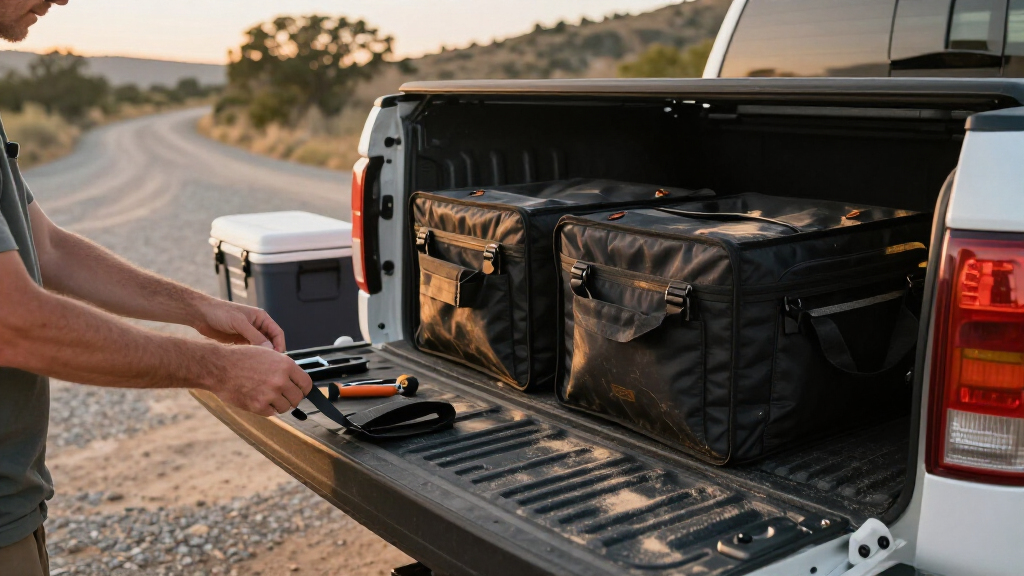
For example, a weekend camper may want bins for cooking gear and a drawer for recovery straps, while a plumber may prefer a lockable box for tools used every day. The camper benefits from separating clean and dirty equipment; the plumber may value quick access and a place to keep small tools together. Neither use case automatically calls for a full drawer system. From simple dividers to sliding drawers, organizers help keep items sorted; the trick is choosing access and protection you’ll actually use without giving up more flexibility than you need.
Quick rule: Choose a divider for changing loads, a toolbox for frequently used tools, and drawers when you need covered gear within easy reach. Add protection or restraint separately if the organizer does not provide it.
As an affiliate, we earn on qualifying purchases.
Measure your truck before you order
Truck bed storage organizers fit reliably only when their dimensions and mounting points match your specific truck setup. Measure the bed, the narrow space between the wheel wells, and the available height under any cover; then check the product’s fit guide for your truck’s make, model, and model year. These measurements determine more than whether the organizer can be lowered into the bed: they affect whether you can still use the tailgate, reach tie-downs, open a lid, or load the cargo you bought the system to carry.
Bed length alone can mislead you. A box might fit from tailgate to cab but collide with a wheel-well shape, bed rail, or factory tie-down point. A spray-in or drop-in liner can also change the usable dimensions or interfere with the mounting hardware. Even a small mismatch can mean a lid cannot open fully, a fastener cannot be installed as intended, or the organizer sits in a position that makes other cargo awkward to secure.
Before buying, measure in more than one place and note where the rails, anchors, and cover supports sit. Beds may narrow around wheel wells, and covers can have supports or mechanisms that reduce clearance in specific spots. If you use a tonneau cover, check both installed height and operating clearance: a drawer lid that fits beneath the cover may still be awkward or impossible to open as intended. Also consider whether the system blocks the anchors you rely on; losing convenient tie-down access can force you to change how you secure bulky loads.
Imagine ordering a drawer system for a midsize pickup, then finding that its corner brackets cover the tie-downs you use to secure a motorcycle. The drawers might fit, but the installation would undermine the way you use the bed. A quick measurement and compatibility check could catch that conflict before delivery. Vehicle-specific fit information can change by model year, so confirm the manufacturer’s current specifications rather than relying on a similar truck’s setup.
As an affiliate, we earn on qualifying purchases.
Compare dividers, boxes, and drawers before spending
Dividers, boxes, and drawers trade flexibility for protection and convenience. Dividers are usually light and easy to rearrange; boxes enclose selected gear; drawers offer organized access beneath a cover but add weight, expense, and installation demands. The practical question is not simply which type stores the most: it is whether the system saves enough time or prevents enough hassle to justify the bed space and limits it brings.
| Organizer type | Best for | Main trade-off |
|---|---|---|
| Dividers or cargo bars | Mixed, changing loads | Limited weather protection |
| Toolbox or storage box | Tools and compact equipment | Uses bed space; security varies |
| Sliding drawers | Frequently accessed, sorted gear | Higher cost, added weight, less open floor |
| Cargo net | Light items that need restraint | Not suited to heavy cargo |
A removable bar may be enough when you haul lumber on weekdays and sports equipment on weekends. Its low weight and quick removal preserve flexibility, but it will not keep tools dry or organize small parts by itself. If you carry small parts daily, a toolbox can stop fasteners from disappearing under a jacket. For camping gear under a tonneau cover, drawers can keep a stove and lantern separate from wet recovery straps; however, if you regularly load tall or bulky items, that organized access may not compensate for the floor space and height the drawers take up.
There is no universal winner. A highly organized drawer system can make daily work smoother when you repeatedly reach the same equipment, but the same system may frustrate you if you often need the full bed for tall or bulky loads. A cheaper organizer can be better value when it covers the main problem without adding weight or installation work; a more expensive one may pay off if it saves time every day. Compare access, capacity, and lost space together, and consider how often each benefit matters in your routine. The cheapest system is not always the best value, and the most elaborate one is not always the most useful.
weatherproof truck bed storage box
As an affiliate, we earn on qualifying purchases.
As an affiliate, we earn on qualifying purchases.
Check weather protection and security claims
Truck bed storage organizers can reduce exposure and discourage casual access, but “weather-resistant” does not automatically mean waterproof, and a lock does not make cargo theft-proof. Protection depends on the organizer’s seals and drainage, how it mounts, the truck bed, and any cover fitted above it. In practice, a box can protect gear from ordinary splashes yet still let water or dust in during driving rain; the claim matters because the cost of moisture varies from a muddy camping bin to damaged power tools.
Look for specific details in the product information: Does the lid use a seal? Are there drainage paths? Can water enter around the mounting points? Drainage can help manage water that gets inside, but it does not mean the contents remain dry. A tonneau cover helps shield gear, but dust and water can still reach a bed through gaps or during heavy rain. Keep temperature-sensitive supplies in storage suited to them rather than assuming the bed stays dry and cool. If an item must remain dry, use an appropriate sealed container inside the organizer rather than relying on broad marketing language.
Security also depends on more than the lock. Strong mounting hardware and an out-of-sight location may deter a quick grab, but they cannot promise that valuable tools are safe. For example, a locked toolbox may be a sensible place for everyday equipment at a jobsite, while expensive gear left in view overnight is still an invitation. Think of the lock as one layer that can discourage opportunistic access—not a guarantee against someone determined to remove or force the box.
Choose steel, aluminum, or molded plastic based on the job. Steel can be strong but heavier and may need protection from rust; aluminum is lighter and resists corrosion; plastics vary in stiffness and durability. These differences affect the whole setup: extra weight can reduce the remaining payload available for people and cargo, while a lighter material may be easier to remove but less suited to rough handling. Check rated capacity and mounting instructions, too. An overloaded box or loose cargo can shift during hard braking, even if the organizer looks sturdy while parked.
Security reminder: Treat locks as deterrents, not guarantees, and don’t rely on a bed cover alone to keep valuable cargo dry.
As an affiliate, we earn on qualifying purchases.
Install it so your gear stays put
Install an organizer by confirming the fit, following its mounting instructions, and testing the load before you rely on it on the road. Small dividers may need little setup, while a heavy drawer or box may call for vehicle-specific hardware, careful alignment, and another person to help lift it into place. Installation is not just about keeping the organizer from rattling: the way it is mounted affects whether it stays aligned, whether doors and covers work, and whether cargo can be secured safely.
- Clear and measure the bed. Note the wheel wells, rails, liner, cover supports, and tie-down points before opening the package.
- Confirm the load and mounting limits. Check the organizer’s rated capacity and the maker’s directions for fasteners or drilling.
- Install and test access. Open drawers and lids fully, and confirm they clear the tailgate and cover.
- Secure the cargo. Use dividers, correctly positioned bars, bins, or straps attached to approved anchors.
- Recheck after a short drive. Listen for rattles and inspect the mounts before adding more gear.
Picture a toolbox installed tight against the tailgate: the lid may open easily in the driveway but hit the tonneau cover once the cover’s supports are in place. Testing before loading saves you from moving tools twice. Likewise, a divider keeps bags apart, but it does not automatically restrain a heavy metal toolbox during a sudden stop. That distinction matters because an organizer can make cargo neater without being designed to absorb the forces of braking or a collision.
Many simple organizers are suitable for do-it-yourself installation, but larger systems can be awkward to lift or may require drilling. If the instructions call for unfamiliar work, use a qualified installer rather than improvising. Secure heavy cargo to approved tie-down points, and treat organizer mounts as part of the system—not as permission to exceed the product’s load rating. A correctly installed organizer can still be overloaded, so check both the organizer’s limits and your vehicle’s payload guidance.
Match the setup to your routine and budget
The most useful truck bed setup matches your regular routine, not a once-a-year adventure. A small divider can solve a daily rattle; a lockable toolbox can keep frequently used equipment together; a drawer system may earn its cost when you reach the same gear several times a day. The more often a feature solves a real problem, the easier it is to justify its price, weight, and space requirements.
Think through a normal week. If your truck hauls bags of soil one day and a bicycle the next, removable dividers are easier to reconfigure than permanent compartments. If you carry drills, sockets, and small fittings to jobs, a toolbox with separate spaces may save time—and keep a dropped socket from hiding beneath the tailgate. The choice also affects what you can do between those regular tasks: permanent storage can make work gear easier to manage but may get in the way when an occasional bulky load needs the entire bed.
Costs include more than the purchase price. Large drawers may add substantial weight, need help with installation, and reduce the open bed area available for bulky loads. That weight uses some of the truck’s payload capacity, while reduced floor space can mean removing or rearranging the system for certain jobs. Lighter organizers usually cost less and are easier to remove, but offer less cover and security. Materials matter, too: choose for your climate, expected wear, and willingness to maintain the equipment.
Make a short cargo list before shopping: what you carry, how heavy it is, whether it needs to stay dry, and how often you need it. Add the awkward items you occasionally haul, since they reveal whether a permanent system will block an important use of the bed. That list turns vague claims like “lots of storage” into a useful test. Buy for repeated use and your real load, not for the number of compartments in a product photo. A simple system that fits your truck is often better than an impressive one that blocks your usual cargo.
Frequently Asked Questions
What is the best truck bed organizer?
The best choice depends on what you carry. Dividers suit changing loads, a toolbox holds frequently used tools, and sliding drawers organize gear you access often beneath a cover.
How do I choose the right organizer size?
Measure bed length, width between the wheel wells, and available height. Also account for the liner, rails, factory tie-downs, cover supports, and the manufacturer’s vehicle-specific fit information.
Will a truck bed organizer fit under a tonneau cover?
It depends on the organizer’s installed height and the cover’s clearance. Check that the cover closes and that any drawer or lid can open as intended before you buy.
Are truck bed storage organizers waterproof?
Some offer strong weather protection, but weather-resistant does not always mean waterproof. Check seal and drainage details, and remember that water may enter through gaps in the truck bed or cover.
Can I lock a truck bed storage organizer?
Some toolboxes and drawer systems include locks. A lock may deter casual access, but security also depends on mounting, design, visibility, and the cover; it is not a guarantee against theft.
Will an organizer work with a bed liner or bed rack?
Compatibility depends on the mounting method and the space available around the rails and tie-downs. Check the maker’s fit guide for your exact truck and accessories before ordering.
Do truck bed organizers reduce cargo capacity?
They add weight and occupy space. Dividers and bars usually use less room, while drawer systems can limit access to the bed floor; check the product’s capacity and your vehicle’s limits.
Conclusion
Choose a truck bed organizer by starting with your cargo and measuring your actual truck—not by chasing the most elaborate setup. Confirm compatibility with your liner, rails, tie-downs, and cover, then weigh access against cost, cargo space, and added weight.
A good organizer turns a noisy, jumbled bed into gear you can find and secure. Measure first, mount it properly, and give every item a place before the next drive.
Halloween Picks
halloween
As an affiliate, we earn on qualifying purchases.