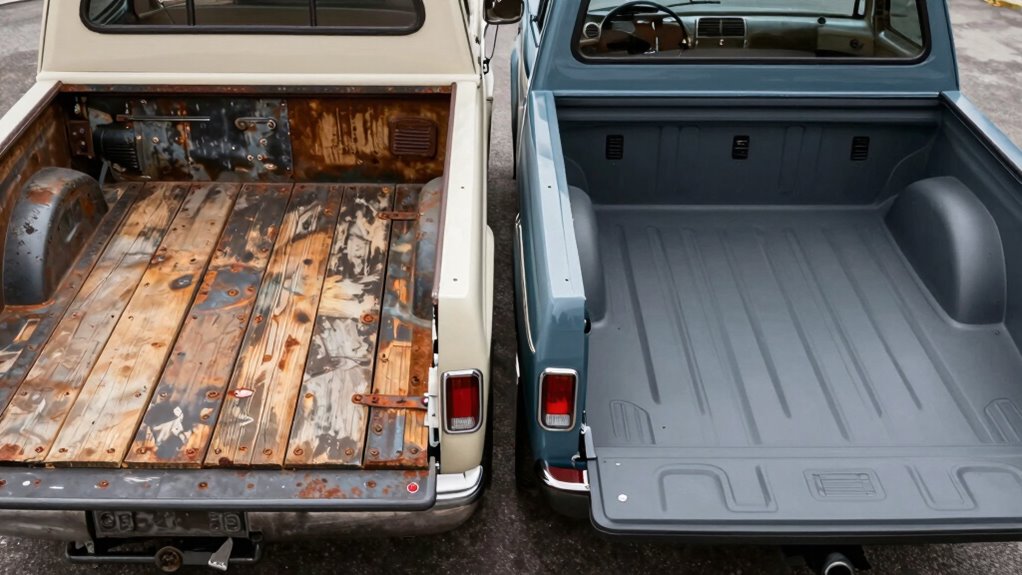
You’ve seen how truck beds have evolved from simple wooden platforms built mainly for function. Over time, new materials like high-strength steel, aluminum, and composites made beds stronger, lighter, and more durable. Advanced features such as reinforced sidewalls, bed liners, and customizable tie-down points also emerged to protect cargo and improve safety. Future designs will likely focus on smarter, tech-integrated solutions. Keep exploring to discover how these innovations continue to shape truck bed development.

Get garage and car supplies delivered free — and shop member deals
- Fast, free delivery on millions of items
- Access to Prime Big Deal Days deals on October 6–7
- Prime Video, Amazon Music and more included
Key Takeaways
- Early truck beds were simple wooden platforms focused solely on cargo hauling.
- Material innovations introduced stronger, lighter metals and composites, increasing durability and load capacity.
- Advanced features like reinforced sidewalls and bed liners improved cargo protection and bed lifespan.
- Customization options such as built-in tie-downs and compartments enhanced functionality and safety.
- Technological integration has led to smarter, more efficient designs with increased versatility and performance.
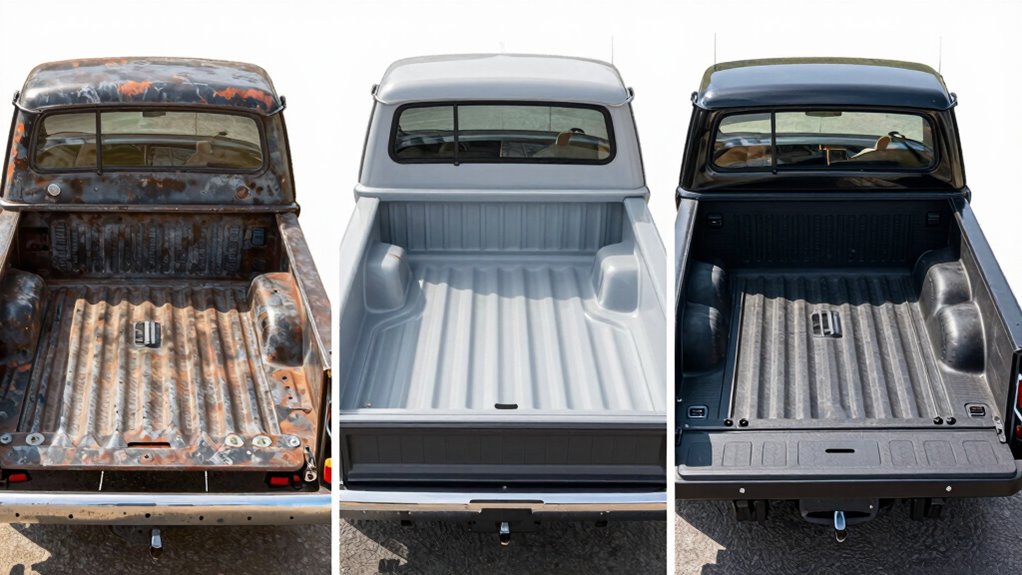
Have you ever wondered how truck beds have transformed over the years? It’s a fascinating journey that highlights both technological advancements and changing demands. Early truck beds were simple, basic wooden platforms designed primarily for hauling loads. Their cargo capacity was limited by the materials used and the design, which prioritized function over form. Over time, manufacturers realized that to meet the needs of industries and everyday users, they had to innovate not just in size but also in how trucks could handle different types of cargo. This led to a focus on material innovation, using stronger, lighter metals and composites that increased durability and load capacity without adding unnecessary weight. These improvements allowed you to carry heavier loads more securely, making trucks more versatile and reliable.
Truck beds have evolved from simple wood platforms to durable, lightweight, and customizable cargo solutions.
As material technology advanced, truck beds became more than just sturdy platforms. Today, you benefit from beds made with high-strength steel, aluminum, and composite materials that resist corrosion, reduce weight, and boost cargo capacity. These innovations mean you can load more items, whether it’s construction gear, outdoor equipment, or large boxes, without compromising the truck’s performance or safety. Manufacturers also began designing multi-functional features, like reinforced sidewalls and bed liners, to protect both your cargo and the truck itself. These enhancements extend the lifespan of your truck bed and guarantee that the cargo remains secure even over rough terrain or long hauls.
Additionally, the evolution of truck bed design has introduced modular and customizable options that cater to your specific needs. You might now choose beds with built-in tie-down points, compartments, or even integrated electrical outlets. All these improvements stem from a deeper understanding of how to maximize cargo capacity while maintaining structural integrity. It’s not just about making the bed bigger; it’s about making it smarter. Material innovation plays a vital role here, enabling manufacturers to develop lighter, stronger, and more adaptable beds that serve a wider range of purposes. Material innovation has been crucial in pushing the boundaries of what truck beds can achieve.
Furthermore, the integration of technological innovations has also contributed to making truck beds more efficient and user-friendly, aligning with current market demands for smarter and more transparent solutions. It’s a continuous effort to enhance cargo capacity through smarter materials and innovative engineering. What once was a simple box has become a sophisticated platform tailored to your needs, whether you’re hauling construction materials, outdoor gear, or everyday essentials. As technology progresses, expect future designs to push these boundaries even further, giving you more capacity, durability, and versatility than ever before.
As an affiliate, we earn on qualifying purchases.
Frequently Asked Questions
What Materials Were Used in Early Truck Beds?
You notice that early truck beds mainly used vintage craftsmanship, with wooden panels forming the primary material. These wooden panels provided durability and a classic look, making them ideal for hauling heavy loads. You can appreciate how these materials, though simple, were effective for their time. Over the years, advancements introduced metals and composites, but the charm of wooden panels remains a nostalgic reminder of the early days of truck design.
How Have Safety Features Changed in Truck Bed Design?
You’ll notice safety features in truck beds now prioritize cargo security and load capacity. Modern designs include adjustable tie-down points, reinforced sidewalls, and non-slip surfaces, helping prevent cargo from shifting or falling. These improvements guarantee you can transport heavier loads safely, reducing accidents and damage. Overall, these advancements make your truck bed more reliable, secure, and capable of handling larger, more varied cargo with confidence.
Are There Eco-Friendly Options for Modern Truck Beds?
Yes, you can choose eco-friendly options for modern truck beds that feel like a breath of fresh air. Recycled plastics transform waste into durable, sustainable beds, while solar-powered beds harness the sun’s energy, turning your truck into a green powerhouse. These innovations help reduce your carbon footprint, making your work and adventures kinder to the planet, like planting seeds for a greener future with every mile you travel.
How Do Truck Bed Sizes Vary Across Different Vehicle Models?
You’ll find that truck bed sizes vary widely across different vehicle models, affecting your cargo capacity and options for bed customization. Smaller trucks often feature compact beds suited for light loads, while larger models provide extended beds ideal for bigger cargo. Some trucks even offer customizable bed features, like adjustable tie-downs or modular designs, so you can tailor your truck to your specific hauling needs, maximizing cargo capacity and utility.
What Innovations Are Upcoming in Truck Bed Technology?
Imagine a truck bed that locks itself smarter than your phone and charges your gadgets wirelessly while you’re busy hauling. Upcoming innovations include smart locking systems that resist theft and keep your gear secure, plus wireless charging pads integrated into the bed for effortless power-ups. Soon, you’ll wonder how you ever survived without these high-tech upgrades, turning your truck bed into a futuristic command center on wheels.
As an affiliate, we earn on qualifying purchases.
Conclusion
As you’ve seen, truck bed design has come a long way, blending innovation with practicality. But the true surprise lies ahead—what new features and advancements will future designs bring? Will they redefine strength, versatility, or even sustainability? The journey is far from over, and the next chapter could change everything you thought you knew about truck beds. Stay tuned—you won’t want to miss what’s coming next in this exciting evolution.
As an affiliate, we earn on qualifying purchases.
As an affiliate, we earn on qualifying purchases.
Halloween Picks
halloween
As an affiliate, we earn on qualifying purchases.