
TL;DR

Get business pricing on garage and car supplies
- Business-only prices and quantity discounts
- Tax-exempt purchasing
- Multiple users, one account, clear invoices
A test by evo at a racetrack near Milan found that a car fitted with Pirelli Cyber Tires stopped 5.7 meters sooner from 68 mph than it did on non-connected tires. The system gathers tire data and shares it with vehicle electronics, which can tailor braking and stability interventions; the result is a test finding, not proof of the same improvement in every car or condition.
Pirelli’s Cyber Tire helped a test car stop 5.7 meters (18.7 feet) sooner than a car on non-connected tires in a braking test from 68 mph, according to motoring publication evo. The test took place at a racetrack near Milan and points to how tire-specific data could help vehicle safety systems respond to grip conditions, though the result is specific to the reported test.
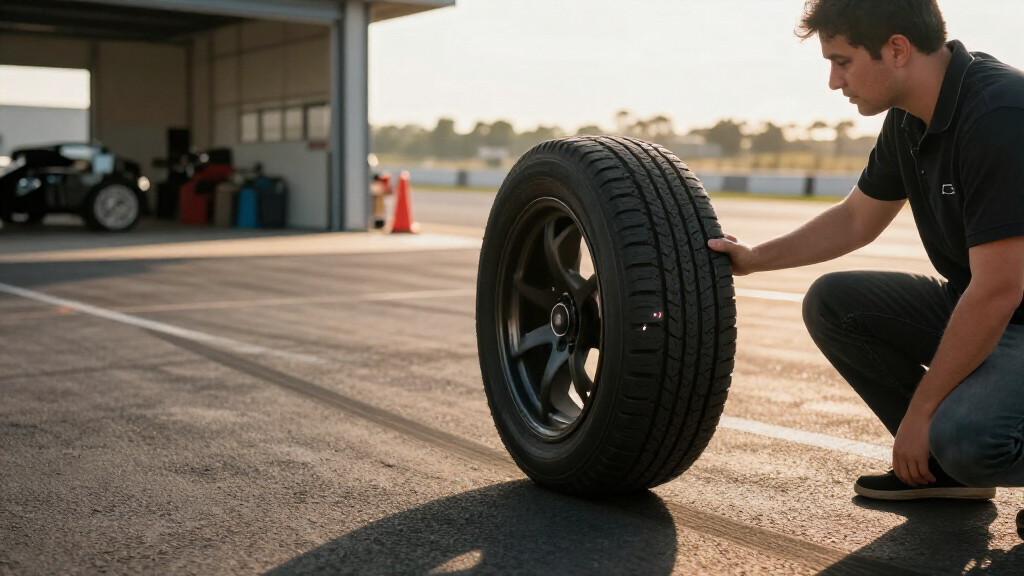
The tire contains an embedded Bluetooth sensor, described in The Drive’s report as slightly larger than an Apple AirTag and shaped like a starfish. A receiver mounted on the axle relays information to the car’s onboard computer. The system collects data including pressure, temperature, grip and tire wear.
According to the report, the car uses that information to adjust how its anti-lock braking system (ABS) and electronic stability program (ESP) intervene. The premise is that systems calibrated around broad assumptions about different tires can instead respond to the particular tire fitted and the grip available at that moment. Evo also reported improved steering control during a wet handling test, where the driver maintained control for longer rather than sliding into understeer.
The reported stopping-distance result came from a 68-mph-to-zero test. The source describes the improvement as especially apparent in wet conditions, but does not provide a full test protocol, repeated-run results or detailed vehicle and tire specifications. The finding should be read as a result from that test, not a guaranteed reduction for all Cyber Tire-equipped vehicles.
How Tire Data Can Change Braking
Vehicle safety systems such as ABS and stability control can only respond effectively when they have useful information about the conditions at the tire-road contact. Pirelli’s approach supplies those systems with live tire measurements, rather than relying only on generalized calibration intended to cover a range of tire types and conditions. If the approach works consistently across vehicles, it could help cars make more precise braking and traction decisions, particularly when grip changes on wet roads.
The reported 5.7-meter difference is large enough to attract attention because it represents space a driver may not have during an emergency stop. But one controlled test does not establish how much the system would change stopping distances in everyday traffic, across different cars, or with worn tires and varied road surfaces. The report supports the potential of tire-linked control systems, while leaving their real-world performance to be tested more broadly.
As an affiliate, we earn on qualifying purchases.
From General Calibration to Live Grip Data
Automakers calibrate braking, traction and stability systems for a particular vehicle, but those systems may need to work with different tire types and in changing weather. The Drive’s account says this can mean relying on generalized tire data, rather than information about the precise tire and its current grip. Cyber Tire is designed to narrow that gap by identifying tire conditions and sending readings to the vehicle’s electronics.
The technology is currently associated with high-end cars, with the report naming Aston Martin, BMW, McLaren and the Pagani Utopia Roadster among vehicles associated with it. The source says the system may develop and reach wider applications, but provides no rollout schedule or confirmation of broader availability.
tire pressure and temperature monitor
As an affiliate, we earn on qualifying purchases.
As an affiliate, we earn on qualifying purchases.
What the Test Does Not Establish
The reported account does not give the test date, full methodology, number of runs, vehicle model or exact tire comparison. It also does not specify the speed and surface conditions for the wet handling test. Those omissions make it difficult to judge how repeatable the results are or how directly they apply to other cars.
It remains unclear how Cyber Tire performance compares across road surfaces, tire wear levels and weather, or how much the system’s benefits depend on a particular vehicle’s software and hardware. The reported improvement is not evidence that every driver will stop 5.7 meters sooner. The source also does not set out pricing, sensor servicing requirements or a timetable for broader adoption.
As an affiliate, we earn on qualifying purchases.
Wider Use Depends on Further Testing
The immediate next step is broader evidence: repeated tests across vehicles, tire models and road conditions would help show whether the reported stopping-distance and handling gains persist outside the racetrack test. More detail on the test setup and how the vehicle’s ABS and stability software used sensor readings would also help readers and automakers evaluate the result.
The Drive reports that Pirelli’s system is present on some high-end machinery and may expand over the coming years, but it gives no confirmed launch dates or list of future models. Until further testing and availability details emerge, the 5.7-meter result remains a promising finding from evo’s specific test rather than a universal performance claim.
As an affiliate, we earn on qualifying purchases.
Key Questions
What is Pirelli Cyber Tire?
It is a tire system with an embedded Bluetooth sensor that collects data such as pressure, temperature, grip and wear and sends it to the vehicle’s onboard electronics.
How much shorter was the reported stopping distance?
In evo’s reported test from 68 mph to zero, the Cyber Tire-equipped car stopped 5.7 meters, or 18.7 feet, sooner than it did on non-connected tires.
Does that mean every car will stop 5.7 meters sooner?
No. The figure describes one reported test. The source does not establish that the same reduction applies across other vehicles, tires, roads or weather conditions.
Which cars currently use the technology?
The report associates Cyber Tire with some high-end vehicles, naming Aston Martin, BMW, McLaren and the Pagani Utopia Roadster. It does not provide a complete fitment list or wider rollout schedule.
Source: rss
Halloween Picks
halloween
As an affiliate, we earn on qualifying purchases.