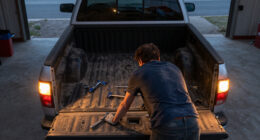
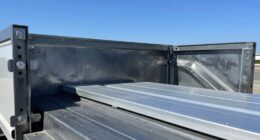
Start by thoroughly cleaning the truck bed to remove dirt, grease, and rust using soap, high-pressure water, and abrasive tools. Mask off surrounding areas like trim and hardware to protect them from overspray. Repair any dents or rust spots, then sand the surface for better adhesion. Apply the liner or coating evenly with your chosen method, and inspect for missed spots or drips. Proper prep guarantees a durable finish—continue on to learn all the essential steps in detail.

Get garage and car supplies delivered free — and shop member deals
- Fast, free delivery on millions of items
- Access to Prime Big Deal Days deals on October 6–7
- Prime Video, Amazon Music and more included
Key Takeaways
- Thoroughly clean the truck bed by removing dirt, debris, grease, and rust using washing, sanding, and wire brushing.
- Mask off surrounding areas, lights, and hardware with high-quality tape and protective coverings.
- Repair surface imperfections, fill holes, and eliminate rust to ensure a smooth, even surface.
- Sand the entire bed to create a proper profile for coating adhesion and remove any remaining residues.
- Ensure the surface is completely dry and free of contaminants before applying the liner or coating.
As an affiliate, we earn on qualifying purchases.
Surface Cleaning and Rust Removal

Before applying a liner or coating, you need to thoroughly clean the truck bed surface to guarantee proper adhesion. Start by removing all debris, dirt, grease, oil, and rust using sweeping, vacuuming, or washing with detergent and high-pressure water. For deep cleaning, use powdered laundry detergent or specialized cleaning agents, especially in corners or oily spots. Next, sand or wire brush the surface to strip away the factory finish and rust, creating a rough texture that promotes better bonding. Use a scuff pad or an abrasive recommended by the liner manufacturer for an ideal surface profile. After cleaning, dry the bed completely and remove any remaining dust or residues with compressed air and a cleaner like denatured alcohol. Proper surface cleaning assures your liner adheres firmly and lasts longer. Additionally, incorporating an essential oil like eucalyptus during cleaning can help inhibit mold and bacterial growth, ensuring a more sanitary and durable coating environment.
truck bed masking tape and plastic sheeting
As an affiliate, we earn on qualifying purchases.
As an affiliate, we earn on qualifying purchases.
Masking and Protecting Surrounding Areas

To guarantee a clean, professional finish, it’s essential to mask off all areas surrounding the truck bed that you don’t want coated. Use high-quality masking tape to cover the bed edges, nearby body panels, and any trim or accessories you want to protect. Make certain the tape is pressed down firmly to prevent overspray from seeping underneath. Cover lights, windows, tires, and other parts with plastic sheeting or painter’s tape to shield them from overspray and drips. Remove or cover hardware, such as bolts or storage boxes, to avoid accidental coating. Check all masked areas for security and proper adhesion before starting. Proper masking minimizes cleanup, prevents damage, and ensures your liner looks neat and professional. For best results, also review your home maintenance practices to keep your work area clean and safe.
rust removal wire brush for trucks
As an affiliate, we earn on qualifying purchases.
As an affiliate, we earn on qualifying purchases.
Repairing and Preparing the Bed Surface

Once you’ve masked and protected surrounding areas, inspecting the truck bed for damage allows you to identify any repairs needed before applying the liner. Look for holes, rust spots, dents, or surface imperfections. Fill holes with appropriate patch material or weld them shut, ensuring a smooth surface. Knock out dents with a hammer or body filler, then sand smooth to match the surrounding area. Remove rust completely using wire brushes, rust converters, or sanding, and neutralize it to prevent future corrosion. Sand repaired areas and the entire bed to create a uniform surface that promotes proper adhesion. Check for loose paint or debris, and clean thoroughly with a degreaser or denatured alcohol. Proper repair and prep prevent issues like peeling, bubbling, or rust under the liner. Additionally, ensuring proper surface preparation can enhance the longevity of your coating.
As an affiliate, we earn on qualifying purchases.
Applying the Liner or Coating Effectively

Applying the liner or coating effectively requires maintaining a consistent technique throughout the process. Keep your application smooth and steady, whether spraying, rolling, or brushing. For spray-on liners, move at a steady pace, overlap each pass by about one-third, and maintain a consistent distance from the surface. When using a brush or roller, dab or roll carefully to avoid streaks or thin spots, especially around edges and corners. Apply multiple coats as recommended, allowing proper tack time between each. Work systematically from front to rear and side to side, ensuring even coverage and preventing gaps. Wear protective gear and work in a well-ventilated area. European cloud innovation is a good example of how sustainable and secure solutions are advancing in the industry. Consistency is key to achieving a durable, professional-looking finish that protects your truck bed for years to come.
Final Inspection and Post-Application Care

After completing the liner or coating application, it’s vital to perform a thorough final inspection to guarantee your work meets quality standards. Carefully examine the entire truck bed for even coverage, ensuring there are no missed spots, runs, bubbles, or drips. Check the edges and corners to confirm the liner adheres properly and looks uniform. Remove all masking tape promptly to prevent peeling or damage to the coating. Once satisfied, clean your tools using recommended solvents to keep them in good condition. Allow the liner to cure fully before loading or exposing it to moisture. Reinstall any hardware or accessories you removed during prep once the coating has fully hardened. Taking these steps ensures your liner looks professional and provides maximum durability.
Frequently Asked Questions
How Do I Choose the Right Cleaning Agents for Different Truck Bed Materials?
You choose the right cleaning agents based on your truck bed material. For metal, use degreasers or mild detergents to remove grease, oil, and dirt. If your bed has rust or paint, opt for rust removers or specialized cleaners. For plastic or composite beds, use gentle soap and water, avoiding harsh chemicals that could cause damage. Always check the manufacturer’s recommendations to guarantee compatibility and avoid surface damage.
What Tools Are Best for Sanding or Wire Brushing Large or Uneven Surfaces?
Think of your truck bed as a canvas awaiting transformation. Use a heavy-duty angle grinder with a wire wheel for large, uneven surfaces, revealing a fresh start beneath rust and old paint. For tighter spots, a handheld wire brush or sanding block works wonders, shaping your work into a masterpiece. These tools breathe life into your prep, ensuring the liner bonds firmly and the finish endures through life’s roughest journeys.
How Can I Ensure Proper Adhesion in Hard-To-Reach or Recessed Areas?
To guarantee proper adhesion in hard-to-reach or recessed areas, you should use small, detail brushes or foam applicators to thoroughly clean and prep those spots. Consider using a spray nozzle or airbrush for precise application, and apply liner material carefully with a dabbing or stippling motion. Make sure the surface is clean, dry, and free of debris, and follow up with multiple coats if needed for complete coverage.
What Environmental Conditions Can Affect the Curing Process of the Liner?
Environmental conditions like temperature, humidity, and airflow greatly impact the liner’s curing process. If it’s too cold or humid, the liner may take longer to dry and cure fully, risking poor adhesion or soft spots. High temperatures can cause premature drying or bubbling. Make sure the environment is within the manufacturer’s recommended range, typically moderate temperatures with low humidity, and provide good ventilation to optimize curing and achieve a durable finish.
How Do I Safely Remove Masking Tape Without Damaging the New Liner?
To safely remove masking tape without harming your new liner, wait until the coating is fully cured as per the manufacturer’s instructions. Gently peel the tape back slowly at a 45-degree angle, pulling it away from the edges. Use your fingers or a plastic scraper if needed, but avoid force or quick jerks. This careful removal prevents peeling or lifting, ensuring a clean, professional finish.
Conclusion
Now that you know how to prep your truck bed, you’re ready to protect it like a shield in battle. Think of the process as a dance, with each step leading smoothly to a perfect finish. When you follow these tips, your liner or coating will stick like glue and last through anything. With a little effort, you’ll have a truck bed that looks sharp and stands strong—ready to handle whatever comes next.
Fall Picks
fall essentials
As an affiliate, we earn on qualifying purchases.