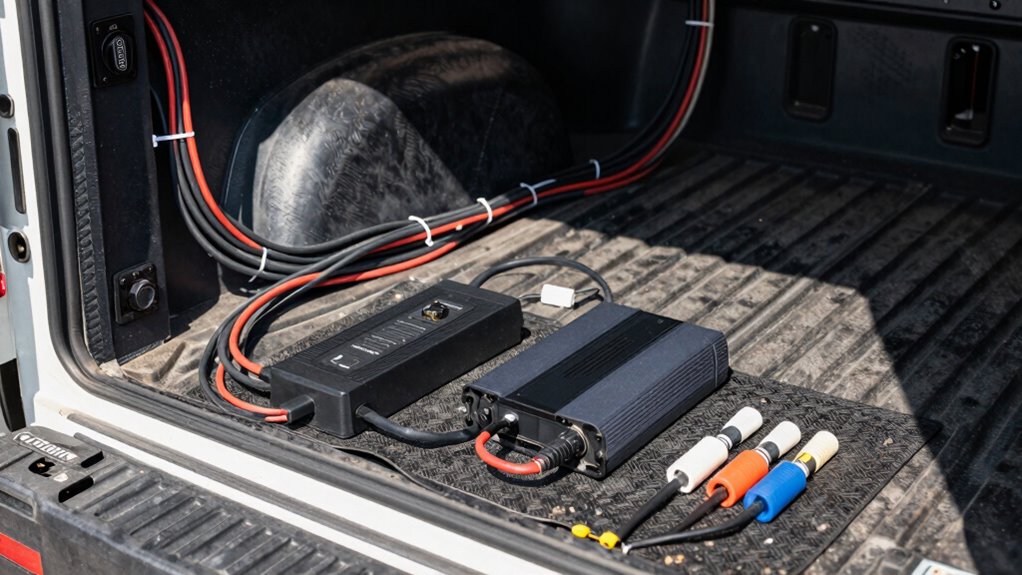

To plan electrical layouts in your truck bed, start by identifying your power needs and main sources, like solar panels or batteries. Map out device placement, keeping paths clear and accessible. Install weatherproof wiring, fuse protection, and a central control system for easy device management. Leave room for upgrades and future devices, and position solar panels for maximum sunlight. Following these steps helps create a safe, efficient setup that grows with your needs—more tips to optimize your system await you.

Get business pricing on garage and car supplies
- Business-only prices and quantity discounts
- Tax-exempt purchasing
- Multiple users, one account, clear invoices
Key Takeaways
- Assess power requirements and device placement to optimize accessibility and safety within the truck bed.
- Plan solar panel locations for maximum sunlight exposure and integrate with storage systems securely.
- Use weatherproof wiring, fuse protection, and proper mounting for safety and durability in outdoor conditions.
- Incorporate centralized control systems for easy management and protection of connected devices.
- Leave space and wiring capacity for future system expansions and technological upgrades.

Planning an electrical layout in your truck bed might seem intimidating, but with the right approach, it becomes a manageable task. The key is to start with a clear understanding of what you need to power and how you want your system to function. Whether you’re installing wireless charging stations or integrating solar power, the goal is to create a setup that’s efficient, safe, and durable. Begin by mapping out your main power sources and identifying the locations where you’ll place your devices. For wireless charging, decide where you will position charging pads or stations—ideally in accessible spots that won’t be obstructed or damaged during transport. This guarantees your devices stay powered without cluttering your space with cords or adapters.
Start by identifying your power needs and device locations for a safe, efficient truck bed electrical setup.
Next, consider the solar power integration. If you’re planning to harness solar energy, you’ll need to install solar panels—either mounted on the truck bed’s sides or the roof—and connect them to a power storage system, like a deep-cycle battery. Position your panels where they can receive maximum sunlight, typically away from shadows or obstructions. This setup allows you to generate sustainable energy, which can be stored and used to run various electrical devices in your truck bed. When wiring these components, prioritize safety by using marine-grade or weatherproof wiring and proper fuse protection. This prevents short circuits and damage from moisture, which are common concerns in outdoor environments. Additionally, understanding the importance of emerging trends in digital publishing can help you stay updated on new technologies and best practices that could enhance your electrical setup.
As you design your layout, keep in mind the importance of a centralized control system. A dedicated switch panel or a small inverter will give you easy access to turn devices on and off without hassle. When integrating wireless charging, ensure that the charging pads are wired directly to your power source with appropriate voltage regulation. This prevents overcharging and extends the lifespan of your devices. For solar power, include a charge controller to manage energy flow and prevent overcharging the batteries. Use secure mounting brackets and weatherproof enclosures to protect your components from dust, water, and vibrations during travel. Incorporating proper wiring practices early in your planning can save you time and prevent issues down the line.
Furthermore, researching current technological advancements can provide insights into more efficient and innovative solutions for your electrical system. Finally, plan for future expansion by leaving some space and wiring capacity open. This way, you can add more devices or upgrade your system later without major rework. By carefully considering device placement, power sources, and safety measures, you’ll develop an electrical layout that’s both functional and reliable, making your truck bed more versatile and ready for any adventure.
As an affiliate, we earn on qualifying purchases.
Frequently Asked Questions
What Tools Are Essential for Installing Truck Bed Electrical Systems?
You’ll need essential tools like wire strippers, crimping tools, and a multimeter to install your truck bed electrical system. Having wiring diagrams handy helps guarantee correct connections. Don’t forget to check your battery and perform regular battery maintenance to keep everything running smoothly. A drill, screwdrivers, and zip ties also make installation easier. With these tools, you can confidently set up a safe, efficient electrical system in your truck bed.
How Do I Ensure the Electrical System Is Weatherproof?
You tighten your grip on the wiring, knowing the stakes are high. To guarantee your system stays dry, use weatherproof connectors and water-resistant wiring, sealing every connection meticulously. Think of it as armor against rain and mud, safeguarding your setup. Remember, a tight seal now prevents costly repairs later. Keep your electrical system protected, and you’ll enjoy reliable performance no matter the weather.
What Safety Precautions Should I Take During Installation?
During installation, you should prioritize safety by properly grounding your system using effective grounding techniques to prevent electrical shocks. Always guarantee your wires are neatly routed away from sharp edges, heat sources, and moving parts to avoid damage and short circuits. Use insulated tools and wear protective gear. Double-check all connections, secure wires firmly, and test the system before finalizing. Taking these precautions helps ensure a safe, reliable electrical setup in your truck bed.
Can I Upgrade the Electrical System Later Easily?
Did you know that over 60% of truck owners upgrade their electrical systems within five years? You can definitely upgrade your electrical system later, and it’s usually straightforward if you plan for it. Focus on battery management and power distribution to guarantee your system can handle added components. Proper wiring and space allocation make future upgrades easier, so start with a flexible design that allows for seamless improvements down the line.
How Do I Troubleshoot Common Electrical Issues in Truck Beds?
To troubleshoot common electrical issues in your truck bed, start by checking your battery maintenance—ensure terminals are clean and connections are tight. Next, consult wiring diagrams to trace potential faults. Look for loose or damaged wires, blown fuses, or corrosion. Use a multimeter to test voltage at key points, and systematically eliminate issues. Regular inspections and proper maintenance help prevent and resolve electrical problems efficiently.
weatherproof marine-grade wiring for trucks
As an affiliate, we earn on qualifying purchases.
As an affiliate, we earn on qualifying purchases.
Conclusion
Planning your electrical layout carefully isn’t just about convenience—it’s essential for safety and efficiency. Many believe that simply installing wiring without proper planning is enough, but evidence shows that well-thought-out systems prevent electrical failures and hazards. By investing time in proper planning, you guarantee your truck bed’s electrical system is reliable and durable. Remember, a thoughtfully designed electrical setup isn’t just a good idea; it’s a smart, safety-first approach that pays off in the long run.
solar panel mounting brackets for trucks
As an affiliate, we earn on qualifying purchases.
As an affiliate, we earn on qualifying purchases.
truck bed power inverter with control panel
As an affiliate, we earn on qualifying purchases.
As an affiliate, we earn on qualifying purchases.
Fall Picks
fall essentials
As an affiliate, we earn on qualifying purchases.