Your truck bed might feel too short because standard lengths of about 6.4 to 6.6 feet often aren’t enough for larger items like full sheets of plywood or multiple motorcycles. Shorter beds work for small equipment, but larger cargo may require a longer bed for secure, efficient transport. If you want to understand how different use cases impact your truck’s capacity and when a longer bed is needed, keep exploring for more practical insights.
Key Takeaways
- Standard truck beds (~6.4–6.6 ft) comfortably fit 4×8 sheets, but shorter beds may struggle with larger cargo.
- Shorter beds are ideal for small equipment but limit hauling capacity for larger items or multiple motorcycles.
- Longer beds (8+ ft) provide ample space for bulky furniture, large appliances, and multiple cargo items.
- Internal features like wheel wells can reduce usable space, making beds feel shorter than their actual measurements.
- Your perception of a “short” truck bed depends on the specific cargo dimensions and how the bed’s length matches your hauling needs.
Understanding Standard Truck Bed Lengths and Sizes
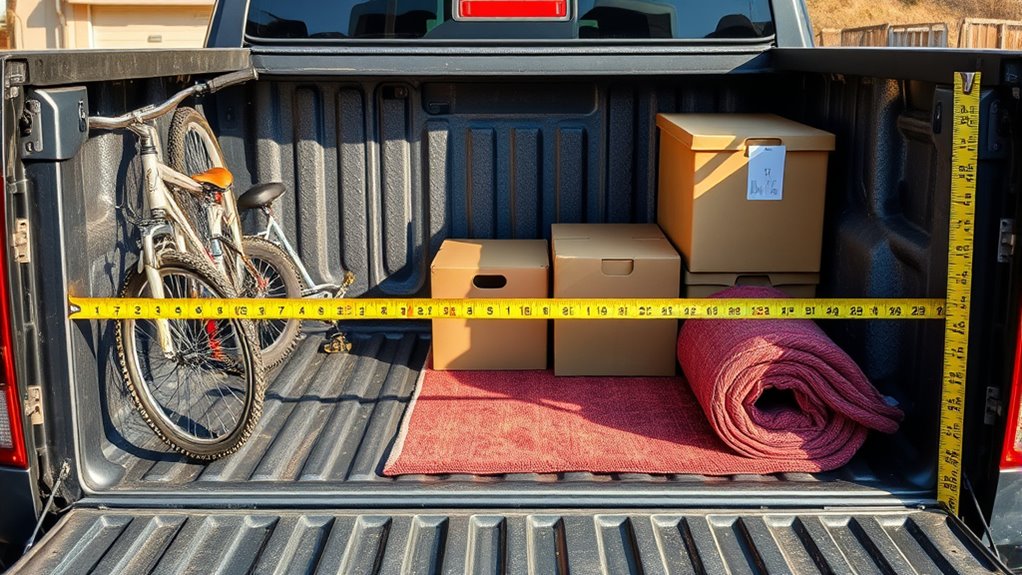
Understanding standard truck bed lengths is essential when choosing a pickup for both work and personal use. Typically, these beds measure between 6.4 and 6.6 feet, offering a balance of cargo space and maneuverability. With this size, you can easily fit a full sheet of plywood (4×8) with the tailgate closed, making it versatile for various tasks. Standard beds also accommodate motorcycles or small equipment, providing enough room without making the truck unwieldy. Keep in mind, bed dimensions can vary slightly by manufacturer and model year, but this size range remains common across many popular trucks. Knowing these measurements helps you choose the right truck for your needs, whether it’s hauling furniture, landscaping supplies, or daily commuting. Field‑of‑view and imaging‑scale examples from deep-sky imaging can help illustrate how different bed sizes compare in practical use.
Comparing Common Use Cases With Actual Cargo Dimensions
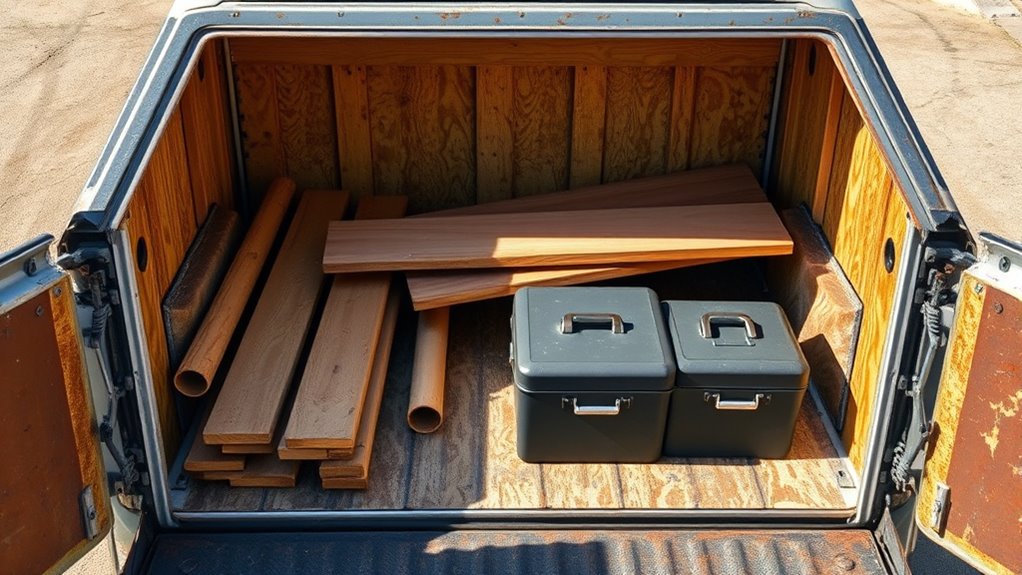
When choosing the right truck bed for your needs, it’s important to compare common use cases with actual cargo dimensions. For instance, a short bed (around 5.5 to 5.8 feet) works well if you’re hauling small equipment or steering through tight urban spaces. However, fitting a full sheet of plywood (4×8 feet) usually requires lowering the tailgate or opting for a standard or long bed. Motorcycles, which typically measure 80 to 90 inches, can often fit in a short bed with some careful positioning, but larger items benefit from a longer bed. Keep in mind that cargo width, bed height, and truck design influence how easily your items fit. Understanding these real-world dimensions helps you pick the bed that matches your hauling needs without feeling cramped. Additionally, truck bed measurements play a crucial role in ensuring your cargo fits securely and safely.
Why Short Beds Might Feel Insufficient for Your Needs

Short beds can quickly feel limiting if you regularly haul larger or bulky items, as their length often restricts how much you can carry in one trip. If you’re frequently transporting full sheets of plywood, furniture, or large equipment, a short bed might force you to make multiple trips or leave items unsecured. This can be frustrating, especially when time is tight. Additionally, bulky items like ladders or large boxes may not fit comfortably without risking damage or the need to fold, lower, or remove the tailgate. For those with bigger hauling needs, the limited length can also reduce confidence in securing items safely. Moreover, high contrast ratios in projectors enhance the visibility of details in dark scenes, which is important for viewing comfort during long sessions. Ultimately, if your typical cargo exceeds the short bed’s capacity, it’s worth considering a longer bed to meet your practical requirements.
How Standard and Long Beds Accommodate Larger Items

Standard and long truck beds provide considerably more space for larger items, making them better suited for demanding hauling tasks. With a standard bed measuring around 6.4 to 6.6 feet, you’ll find it easier to transport full sheets of plywood (4×8) without lowering the tailgate. You can also fit larger furniture pieces or multiple bags of landscaping materials comfortably. Long beds, often 8 feet or more, give you even more room, easily accommodating bulky items like large appliances, multiple motorcycles, or extended lumber bundles with room to spare. These beds reduce the need for multiple trips, streamline your workload, and provide flexibility for bigger projects. Whether for work or recreational hauling, longer beds handle larger items more efficiently, saving you time and effort. Additionally, choosing a best-rated vacuum can help keep your truck interior clean from dust and debris after hauling messy loads.
Real-World Cargo Fit: Plywood, Motorcycles, and More

Understanding how truck bed lengths translate to real-world cargo is essential for choosing the right vehicle. If you’re hauling plywood, a standard 4×8 sheet measures 96 inches, fitting easily in a standard bed with the tailgate closed. Short beds, around 5.5 to 5.8 feet, often require you to lower the tailgate or angle the sheet. For motorcycles, which typically range from 80 to 90 inches, a long bed provides ample space, allowing you to transport multiple bikes comfortably. Short beds can fit a single motorcycle with the tailgate down, but space may be tight. Larger, bulkier items like furniture or appliances generally demand a standard or long bed for a secure, full load. Knowing these dimensions helps you plan and avoid surprises on pickup day. Additionally, understanding the vehicle’s bed length can help you determine whether it meets your specific cargo needs.
Factors That Can Make Your Truck Bed Seem Shorter Than Expected
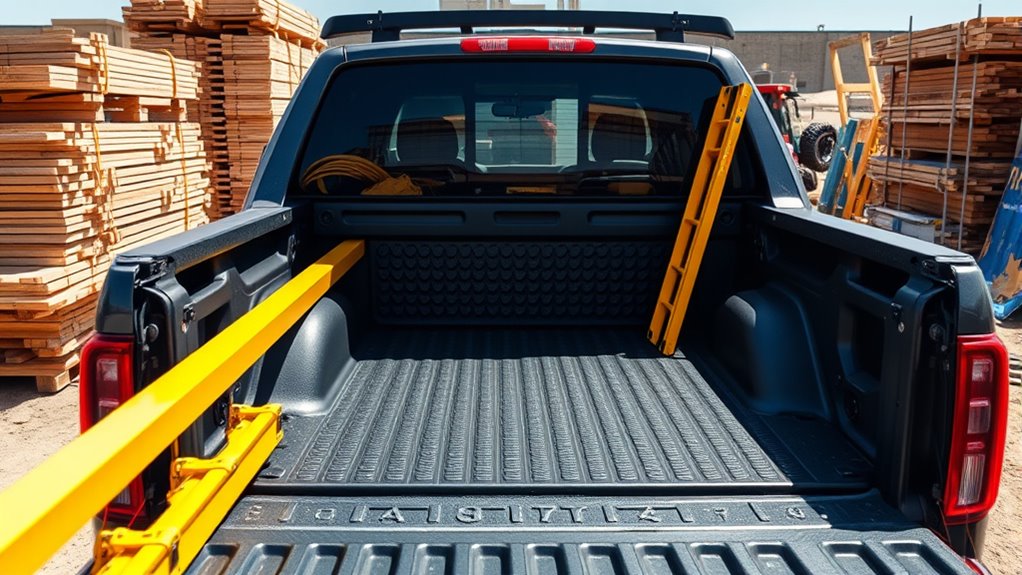
Several factors can make your truck bed seem shorter than its listed length, even if the physical dimensions are accurate. First, the presence of wheel wells or internal structures reduces usable space, making the bed feel more cramped. Bed width differences between styleside and flareside designs also impact cargo fit and perception. Additionally, the truck’s cab and wheelbase influence how much of the bed is visible or accessible, which can make it seem smaller. If your truck has a taller bed height or internal features like tie-down points, stacking cargo becomes more challenging, contributing to the impression of reduced length. Moreover, the internal dimensions and design features such as gelato flavors can vary between models, affecting how much cargo you can comfortably load, even if the overall bed length remains the same. Ultimately, model year and manufacturer variations can alter internal dimensions, affecting how much cargo you can comfortably load, even if the overall bed length remains the same.
Frequently Asked Questions
Can Bed Length Vary Significantly Between Different Truck Manufacturers?
Yes, bed length can vary considerably between different truck manufacturers. You might find that a short bed from one brand measures closer to 5.8 feet, while another offers a similar model with a 5.5-foot bed. Factors like design choices, model year, and bed style influence these differences. So, it is crucial to check specific manufacturer specs to guarantee your truck meets your cargo needs accurately.
Do Bed Width and Height Impact Cargo Capacity More Than Length?
Yes, bed width and height can impact your cargo capacity more than length. You’ll find that a wider bed offers more lateral space for larger or multiple items, while taller beds give you vertical room to stack or secure taller cargo. Together, these dimensions influence how much and what you can haul, sometimes more than length alone, especially when dealing with bulky or stacked loads.
Are There Aftermarket Options to Extend a Truck Bed’s Length?
You can definitely extend your truck bed’s length with aftermarket options, turning it into a custom highway for your cargo. You might consider bed extension kits or add-on rails designed to slide or bolt onto your existing bed. These mods act like a sleeve, giving you extra space without sacrificing your truck’s core. Just make certain your truck’s frame and weight capacity can handle the added length before you start.
How Does Cab Style Affect Overall Bed Length and Usability?
Your cab style directly impacts overall bed length and usability. If you have a crew cab or double cab, expect a shorter bed to accommodate the larger passenger space, reducing cargo capacity. Conversely, a regular cab usually offers a longer bed, maximizing cargo area. This means you’ll need to balance passenger comfort with cargo needs, as changing cab styles can make your truck more versatile or more specialized for hauling or daily driving.
What Are the Legal Limits for Truck Bed Lengths in Different Regions?
In most regions, legal limits for truck bed lengths depend on local laws. For example, in California, the total vehicle length can’t exceed 65 feet, meaning your truck’s bed plus cab must stay within that. In contrast, many states don’t specify bed length but regulate overall vehicle length. Always check your state’s specific regulations before customizing or hauling large loads to avoid fines or legal issues.
Conclusion
Did you know that over 60% of truck owners find their beds feel too short for real-world hauling? It’s clear that standard lengths often fall short for larger or awkwardly shaped cargo. By understanding your truck’s size and typical use, you can choose the right bed length. Don’t let limited space hold you back—upgrading or customizing your bed might be the game-changer you need for bigger projects and smoother rides.