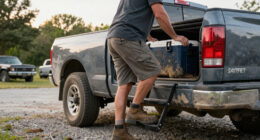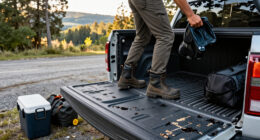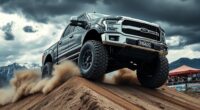
When choosing between stepside and fleetside truck beds, you’ll notice that stepside beds have outside wheel wells providing a vintage look but reducing interior space, while fleetside beds have inside wheel wells for a cleaner look and maximum cargo capacity. Beyond these, the length of the bed—short, standard, or long—affects maneuverability and hauling power. To get the full picture of every style’s features and uses, continue exploring what makes each option unique.

Get business pricing on garage and car supplies
- Business-only prices and quantity discounts
- Tax-exempt purchasing
- Multiple users, one account, clear invoices
Key Takeaways
- Understand that Stepside beds have exterior wheel wells creating a vintage look, while Fleetside beds have interior wheel wells maximizing cargo space.
- Recognize how wheel well placement impacts interior capacity, overall aesthetics, and vehicle aerodynamics.
- Know the common truck bed lengths (short, standard, long) and their best uses for cargo capacity or maneuverability.
- Identify special configurations like flatbeds, dually setups, and extended beds for specific industrial or towing needs.
- Consider design and load capacity differences to choose the best truck bed style suited to your needs and aesthetic preferences.
As an affiliate, we earn on qualifying purchases.
Exploring the Distinctive Features of Stepside and Fleetside Beds
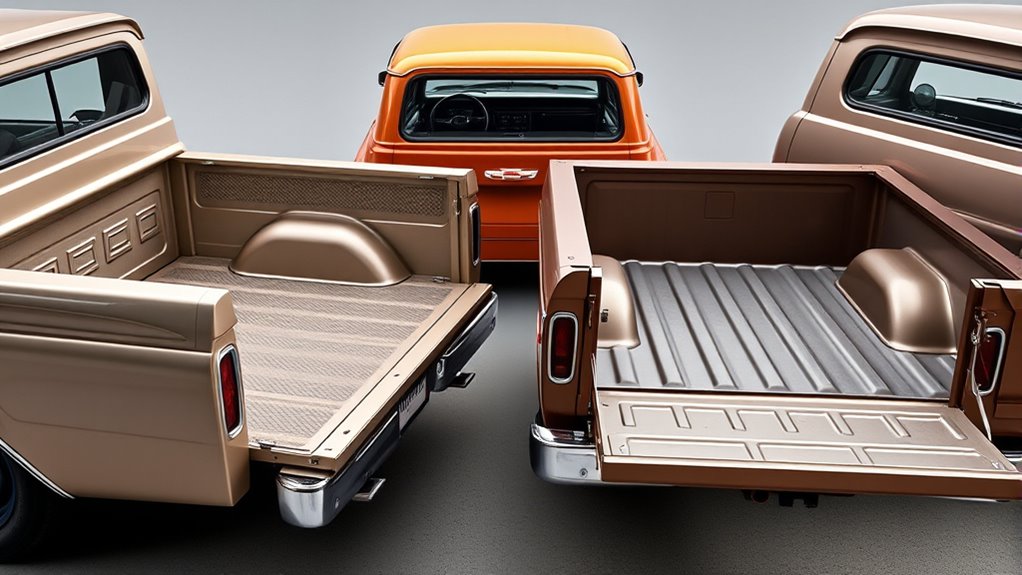
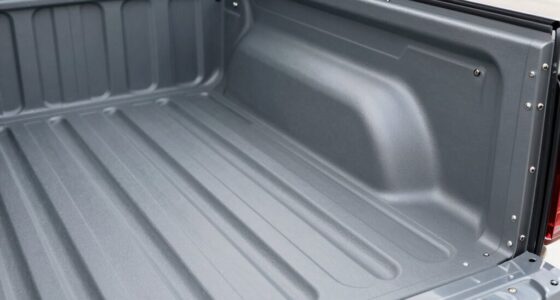
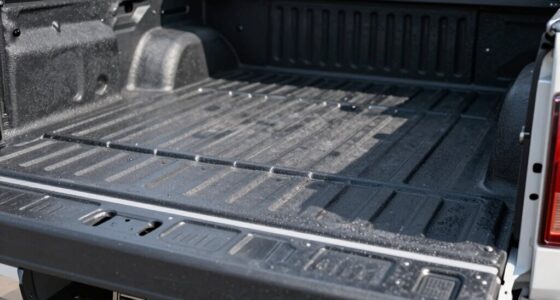
When choosing between stepside and fleetside beds, understanding their distinctive features helps you select the right style for your needs. Stepside beds, also called flareside or sportside, have wheel wells positioned outside the cargo area, creating a rectangular interior space free of obstructions. Their protruding exterior wheel wells give a unique, vintage look, but they’re less aerodynamic. Fleetside beds, or styleside beds, feature wheel wells integrated inside the truck bed, maximizing cargo space with a seamless interior. This design offers a cleaner appearance and better aerodynamics, making it popular on modern trucks. The main difference lies in wheel well placement, directly impacting interior capacity, visual style, and aerodynamics—key factors in choosing the right bed style for your truck. Additionally, color accuracy in the design and paint matching can influence the overall aesthetic appeal of your vehicle. Recognizing the truck bed styles can further help you make an informed decision that aligns with your specific needs and preferences. Understanding design implications of each style allows you to weigh factors like customization options and ease of modification for your truck. For instance, aesthetic versatility can be a crucial consideration depending on your style preferences or branding needs. Being aware of ear wax odor and other scent-related clues can also be useful if you’re inspecting a used vehicle for unusual smells that might indicate underlying issues.
As an affiliate, we earn on qualifying purchases.
Understanding the Versatility of Standard, Short, and Long Truck Beds
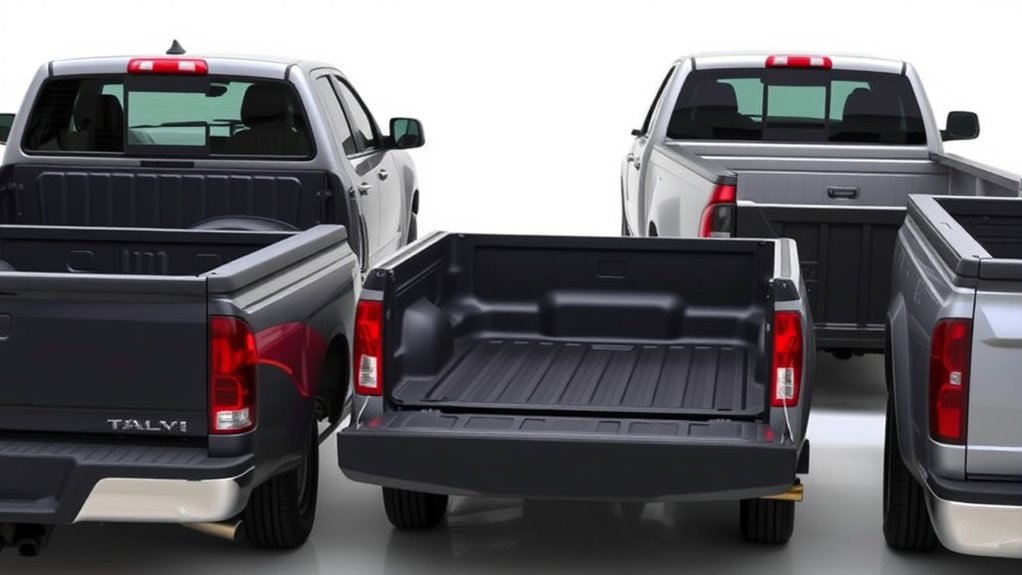
Standard, short, and long truck beds each serve different needs by offering varying lengths and cargo capacities. Your choice depends on what you prioritize: cargo space, maneuverability, or versatility. Here’s how they differ:
Different truck beds offer varying lengths to suit your cargo, maneuverability, and versatility needs.
- Short beds (5-6.5 feet): Perfect for city driving, fitting into tight spaces, and daily commuting. Ideal if you rarely haul large loads.
- Standard beds (6.5-8 feet): Offer a balance of cargo capacity and drivability, suited for both personal use and light commercial tasks.
- Long beds (8-10 feet): Maximize cargo space, perfect for heavy-duty hauling, construction, or farm work, but less maneuverable in urban settings.
Knowing these differences helps you select the bed length that best fits your lifestyle and work needs.
As an affiliate, we earn on qualifying purchases.
Special Configurations and Their Practical Applications
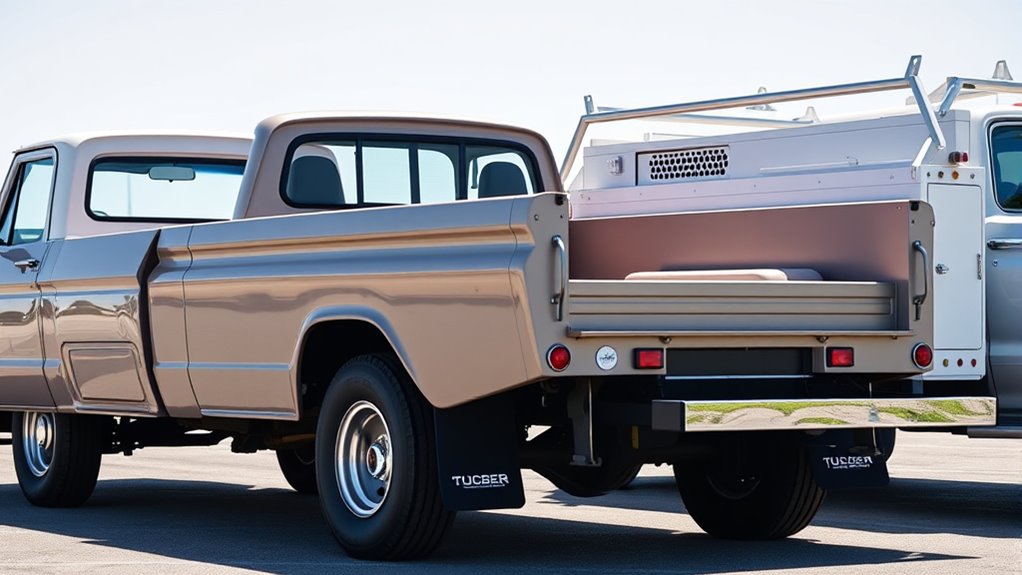
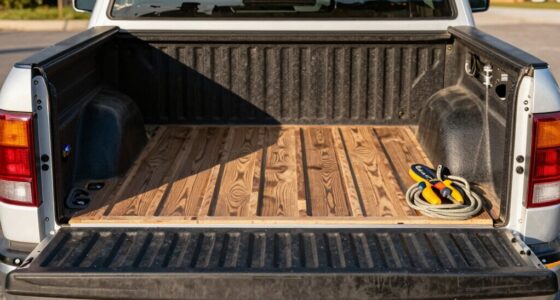
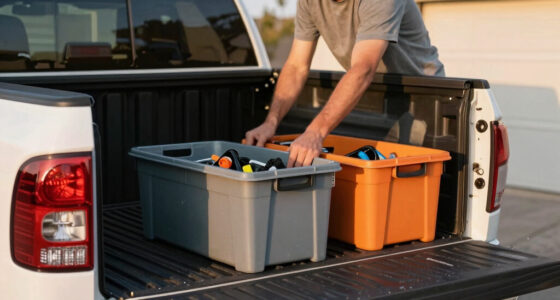
Special configurations like extended beds, dually setups, and specialized flatbeds are designed to meet specific work and utility needs. If you do heavy hauling or construction work, an extended bed offers extra length for tools and materials, boosting capacity. Dually setups with dual rear wheels provide greater stability when carrying heavy loads, ideal for towing or industrial use. Flatbeds and dump beds cater to industries like farming, construction, or towing, offering versatility for different cargo types. Crew cab beds reduce cargo space to fit four-door passenger seating, perfect for work crews needing both passenger and cargo functions. Chassis cabs and super beds serve specialized roles, enabling customization for commercial purposes. Additionally, understanding truck bed configurations can help you select the most suitable setup for your specific needs. Knowing the load capacity of different truck beds is crucial for safety and efficiency. Choosing the right configuration depends on your workload, cargo size, and the environment you operate in.
As an affiliate, we earn on qualifying purchases.
Frequently Asked Questions
Which Bed Style Offers Better Fuel Efficiency, Stepside or Fleetside?
Fleetside beds generally offer better fuel efficiency than stepside beds. You’ll notice that fleetside designs have a more aerodynamic shape because their wheel wells are integrated inside the bed, reducing wind resistance. In contrast, stepside beds protrude with outside wheel wells, creating more drag. So, if you’re looking to save fuel, choosing a fleetside bed can make a noticeable difference in your truck’s overall efficiency.
How Do Bed Styles Affect Towing Capacity and Payload?
Imagine hauling heavy loads, feeling the truck’s strength beneath you. Bed styles influence towing capacity and payload because fleetside beds, with their inside-mounted fenders, maximize cargo space and often support higher weights. Stepside beds, with external wheel wells, may limit payload slightly but add style. Your choice impacts how much weight you can tow or carry, so consider the bed design based on your hauling needs.
Are There Specific Industries That Prefer One Bed Type Over Others?
You’ll notice industries prefer certain bed types based on their needs. Construction and farming businesses favor long beds for maximum cargo space, while urban delivery or service providers often choose short or fleetside beds for easier maneuverability. Recreational users and hobbyists might prefer stepside beds for style and accessibility. Your choice depends on whether you prioritize cargo capacity, ease of driving, or aesthetic appeal for your specific industry or activity.
Can Bed Configurations Be Customized for Specialized Work Purposes?
Can you imagine a truck bed perfectly tailored for your needs? Yes, bed configurations can be adapted for specialized work purposes. You can add toolboxes, tie-downs, or even swap out standard beds for flatbeds, dump beds, or utility beds. Whether you’re in construction, farming, or towing, customizing your truck bed guarantees it fits your unique workload, boosting efficiency and making your work easier and more organized.
What Maintenance Differences Exist Between Stepside and Fleetside Beds?
You’ll find that maintenance differs mainly in cleaning and repairs. Stepside beds have protruding wheel wells outside the cargo area, making them easier to access for cleaning and damage repairs but more exposed to external damage. Fleetside beds have integrated fender wells inside, offering a smoother exterior but sometimes making interior access for repairs trickier. Overall, stepside beds require more attention to exterior damage, while fleetsides focus on interior maintenance.
Conclusion
So, after all that, you might think choosing the right truck bed is just a matter of style. But here’s the irony: whether you opt for a classic stepside or a practical fleetside, it’s really about what suits your needs—or perhaps just what looks coolest. In the end, your truck’s bed isn’t just a feature; it’s a reflection of your personality. Who knew such a simple choice could carry so much weight?
Halloween Picks
halloween
As an affiliate, we earn on qualifying purchases.