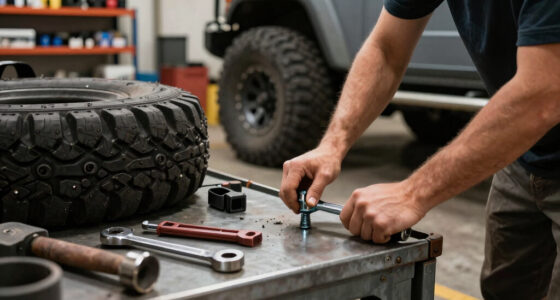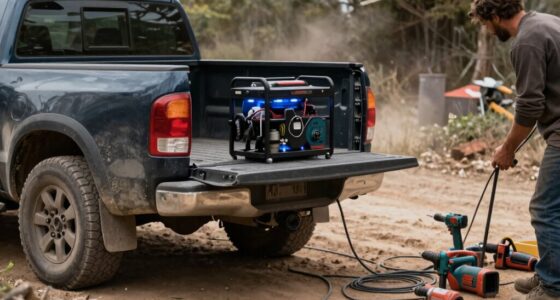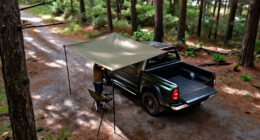
To keep dust out of your truck bed sleeping area on dirt roads, start by choosing heavy-duty rubber seals and gaskets that fit snugly around your tailgate and bed opening. Properly install them by cleaning surfaces first, pressing seals firmly in place, and sealing gaps with waterproof tape or silicone. Add extra barriers like bed skirts or fabric flaps for extra protection. Regularly inspect and maintain seals to make certain they stay effective. Keep going to learn even more ways to protect your space.

Get business pricing on garage and car supplies
- Business-only prices and quantity discounts
- Tax-exempt purchasing
- Multiple users, one account, clear invoices
Key Takeaways
- Install rubber seals around the tailgate perimeter to fill gaps and prevent dust ingress.
- Use waterproof tape or silicone caulking around holes and penetrations for extra protection.
- Cover the truck bed with a secure tonneau or topper to block larger dust entry points.
- Regularly inspect and clean seals, replacing damaged ones to maintain an effective dust barrier.
- Add bed skirts, flexible barriers, or droppers to seal gaps when the tailgate is closed.
As an affiliate, we earn on qualifying purchases.
Selecting the Right Seals and Gaskets for Dust Prevention
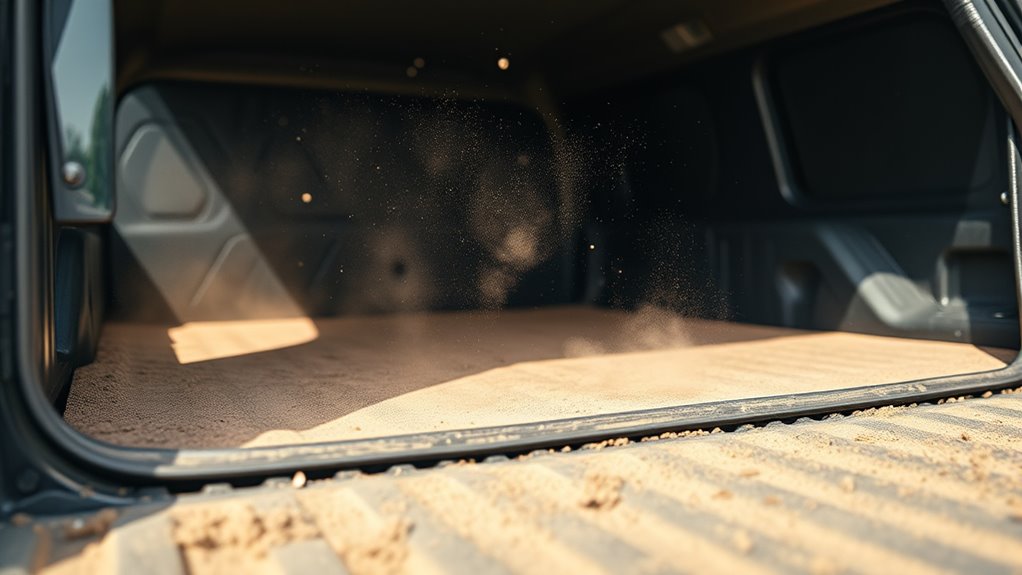
Choosing the right seals and gaskets is essential for effectively preventing dust from entering your truck bed. You want rubber seals that can compress to fill gaps around the tailgate perimeter, blocking over 90% of dust infiltration when installed correctly. Opt for universal tailgate seals that work with various covers, including tonneaus and toppers. Heavy-duty, weather-resistant materials ensure durability against rain, snow, and dirt. Select seals with enough thickness to handle different gap sizes, and consider waterproof tapes or silicone caulking for extra protection around holes and penetrations. Properly chosen seals adapt to your truck’s specific gaps, providing a tight fit that minimizes dust entry. Additionally, selecting high-quality materials ensures long-lasting performance in harsh conditions. Remember, quality materials and correct sizing are key to maintaining a dust-free bed on rough dirt roads.
As an affiliate, we earn on qualifying purchases.
Proper Installation Techniques for Effective Dust Sealing

To guarantee your dust seals perform effectively, proper installation is essential. First, clean all surfaces thoroughly to remove dirt, grease, and debris, ensuring the seal adheres properly. When applying peel-and-stick gaskets, align them carefully along the tailgate perimeter, pressing firmly to eliminate air pockets and gaps. For rubber seals, cut them to fit precisely, then compress them evenly during installation. Use waterproof tape or silicone caulking around holes and penetrations to seal any remaining gaps. When installing tubing or plugs, ensure they fit snugly and are secured tightly. Always follow manufacturer instructions, double-check the seal’s placement, and press firmly to ensure full contact. Proper installation guarantees maximum dust protection and extends the lifespan of your sealing solutions. Additionally, consulting installation planning resources can help you achieve the best results and ensure your dust seals remain effective over time.
truck bed tonneau cover with dust protection
As an affiliate, we earn on qualifying purchases.
As an affiliate, we earn on qualifying purchases.
Enhancing Bed and Tailgate Protection With Additional Barriers
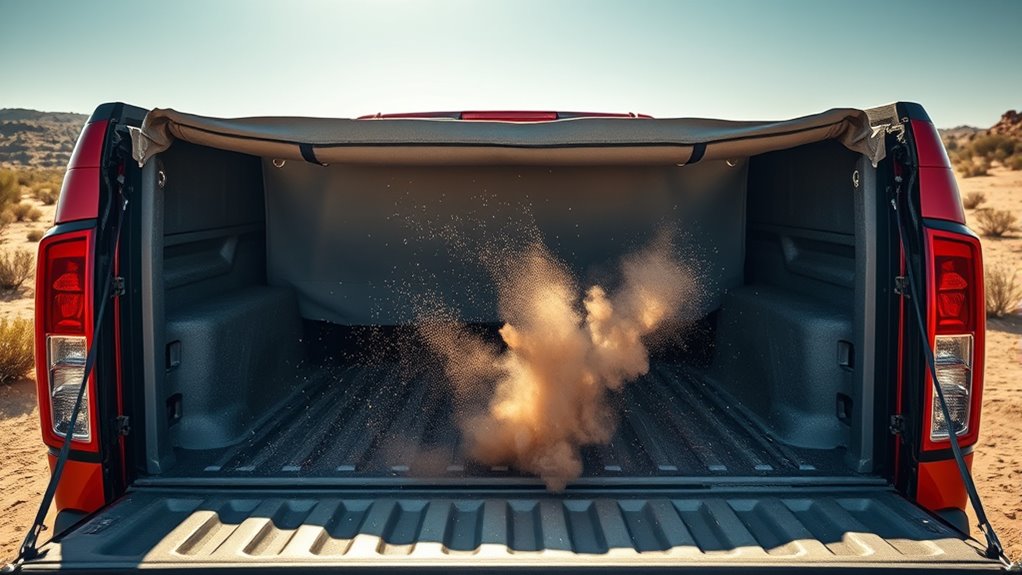
Adding extra barriers to your truck bed and tailgate can considerably boost dust protection beyond standard seals. You can install supplementary components like bed skirts, tailgate droppers, or custom weather barriers to seal gaps effectively. These barriers block residual dust particles that might bypass seals, creating a more airtight environment for your sleeping area. Consider attaching flexible rubber flaps or fabric barriers at tailgate edges. For visual clarity, here’s a quick guide:
| Barrier Type | Installation Method | Benefits |
|---|---|---|
| Bed Skirts | Secure with clamps or Velcro | Blocks dust ingress from sides |
| Tailgate Droppers | Attach flexible strips or fabric | Seals gaps when tailgate is closed |
| Weather Barriers | Use weather-resistant materials | Protects against wind-blown dust |
In addition, choosing energy-efficient materials for these barriers can help maintain your vehicle’s overall dust resistance while supporting sustainability goals.
truck bed bed skirt for dust prevention
As an affiliate, we earn on qualifying purchases.
As an affiliate, we earn on qualifying purchases.
Maintaining and Inspecting Seals to Ensure Long-Term Effectiveness

Regularly inspecting and maintaining your tailgate seals is essential to keep dust out of your truck bed over the long term. You should check for cracks, tears, or gaps that may develop over time. Replace worn or damaged seals promptly to prevent dust infiltration. Keep seals clean by wiping away dirt and debris that can compromise their flexibility. Use a flashlight to spot hidden issues and ensure proper compression. Consider reapplying weather-resistant lubricant to maintain flexibility and adhesion. When inspecting, imagine these areas:
- Cracks or tears in the rubber seal
- Gaps between the seal and tailgate frame
- Compression loss due to hardened or deformed seals
- Dirt buildup preventing proper sealing
- Signs of wear or deterioration after rough trips
Additionally, understanding the contrast ratio of your sealing components can help you evaluate their effectiveness in resisting dust penetration. Regular checks and timely replacements help preserve dust-proof integrity on dirt roads.
Combining Cover Options and Bed Liners for Maximum Dust Defense

Pairing your truck bed cover with bed liners creates a layered defense against dust infiltration. A secure cover, like a tonneau or topper, minimizes openings where dust can enter, especially when fully closed. Combining this with a drop-in or spray-on bed liner traps dust and debris inside the bed during travel, preventing it from settling on your gear or mattress. Bed liners also protect the truck’s surface from scratches and wear, extending its lifespan. For even better dust control, seal any gaps around the bed, tailgate, or topper with rubber seals or waterproof tape. Incorporating connected equipment such as dust sensors can help monitor dust levels and improve your setup over time. Together, these options form a thorough barrier that markedly reduces dust entry, keeping your sleeping area cleaner and more comfortable on dirt roads. Proper combination makes a noticeable difference in dust management.
Frequently Asked Questions
How Often Should I Reseal My Truck Bed for Optimal Dust Protection?
You should reseal your truck bed every 6 to 12 months for maximum dust protection. Regular inspections are key—check for cracks, gaps, or worn seals after rough terrain or seasonal changes. If you notice any deterioration, reapply waterproof tape, silicone, or replace seals promptly. Consistent maintenance ensures your truck bed stays dust-free, especially during extended dirt road adventures, keeping your sleeping area clean and protected.
Can I Use DIY Materials to Improve Existing Dust Seals?
Yes, you can turn your truck bed into a dust fortress using DIY materials. Think of waterproof tape and silicone as your armor, sealing gaps like a skilled craftsman. Peel-and-stick gasket products are like a snug glove for your tailgate, blocking dust from sneaking in. With a little effort, these DIY solutions create a barrier that keeps dirt out, giving you a cleaner, more comfortable sleeping area on those rough dirt roads.
What Are the Best Practices for Sealing Electrical Penetrations?
You should seal electrical penetrations with waterproof tape or silicone caulking to prevent dust entry. Remove any loose debris, then apply the tape around the penetration, ensuring a tight seal. For added protection, layer silicone over the tape for long-term durability. Regularly inspect and reseal as needed, especially after rough driving. This approach keeps dust out and maintains the integrity of your truck bed’s protective barriers.
Do Different Truck Bed Materials Require Specific Sealing Techniques?
Think of your truck bed like a ship’s hull—different materials need different seals to stay watertight or dustproof. Steel beds often require durable rubber seals and silicone caulk, while aluminum beds benefit from lightweight, weather-resistant tapes. I once sealed an aluminum bed with waterproof tape, and it held up despite rough dirt roads. Match your sealing method to your bed material for the best dust protection.
How Do I Prevent Moisture Buildup Around Sealed Areas?
To prevent moisture buildup around sealed areas, make certain all seals are properly installed and remain intact. Use waterproof tape and silicone caulking to seal gaps, and check regularly for any cracks or deterioration. Ventilate the truck bed when possible, and avoid trapping moisture inside by keeping the area dry. Applying weather-resistant materials and resealing as needed will help maintain a dry, moisture-free environment around your sealed areas.
Conclusion
By choosing the right seals, installing them properly, and adding extra barriers, you can keep dust out of your truck bed sleeping area even on dirt roads. Regularly inspecting and maintaining your seals guarantees they stay effective over time. Combining cover options and bed liners gives you the best defense against dust invasion. Remember, it’s better to be safe than sorry—stay proactive and keep your sleeping space clean so dust doesn’t sneak up on you when you least expect it.
Columbus Day / Indigenous Peoples' Day Picks
long weekend sales
As an affiliate, we earn on qualifying purchases.