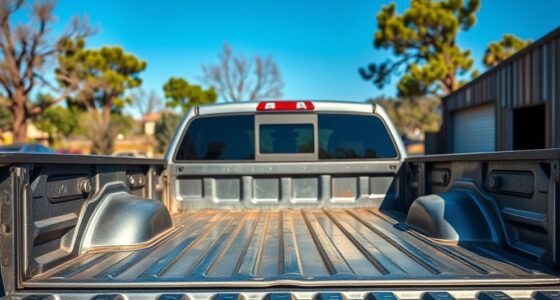
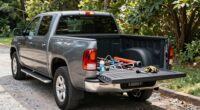
To fit recovery gear into your truck bed efficiently, you should organize everything in designated containers like heavy-duty bins or mounted storage solutions. Keep essential tools within easy reach, and use labels for quick identification. Secure loose items with tie-downs or bungee cords to prevent shifting. Protect your gear from the elements with water-resistant storage. With a well-planned setup, you’ll be prepared and safe on every off-road adventure—continue to find out how to optimize your truck bed storage further.
Get ready for Prime Big Deal Days — try Prime free
Exclusive member deals on October 6–7, plus fast free delivery. Cancel anytime.
As an affiliate, we earn on qualifying purchases.
Key Takeaways
- Use designated storage containers or mounting brackets to organize recovery gear securely in the truck bed.
- Divide gear into specific compartments, such as straps, shackles, and tools, for quick access.
- Label storage bins clearly for easy identification and rapid retrieval during emergencies.
- Secure loose items with tie-downs or bungee cords to prevent movement during transit.
- Incorporate foam inserts or padded cases to protect gear from damage and reduce noise.
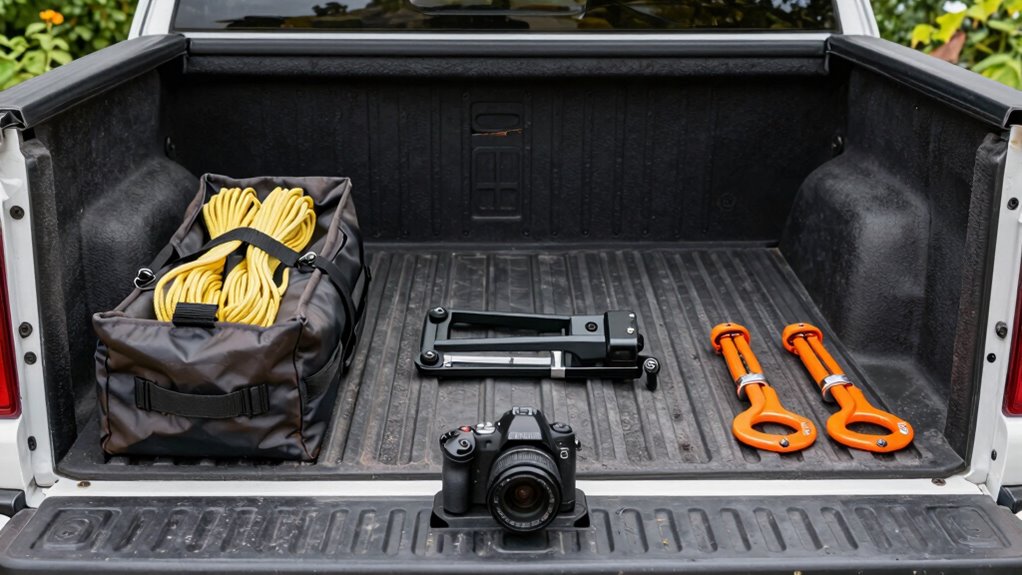
Having recovery gear readily available in your truck bed is essential for tackling off-road challenges and unexpected situations. When you’re venturing into rough terrain, the last thing you want is to be unprepared. Properly organizing your recovery gear not only helps you access what you need quickly but also ensures safety for everyone involved. Safety precautions should always be your top priority; this means securing your equipment so it doesn’t become a hazard during transit or while in use. Using designated storage containers, like heavy-duty bins or mounting brackets, keeps gear in place and prevents items from shifting around. This careful equipment storage reduces the risk of injury or damage and ensures your gear is ready when you need it most. Additionally, clear labeling of storage containers can further improve accessibility and efficiency during emergencies.
Organize and secure your recovery gear for quick access and safety during off-road adventures.
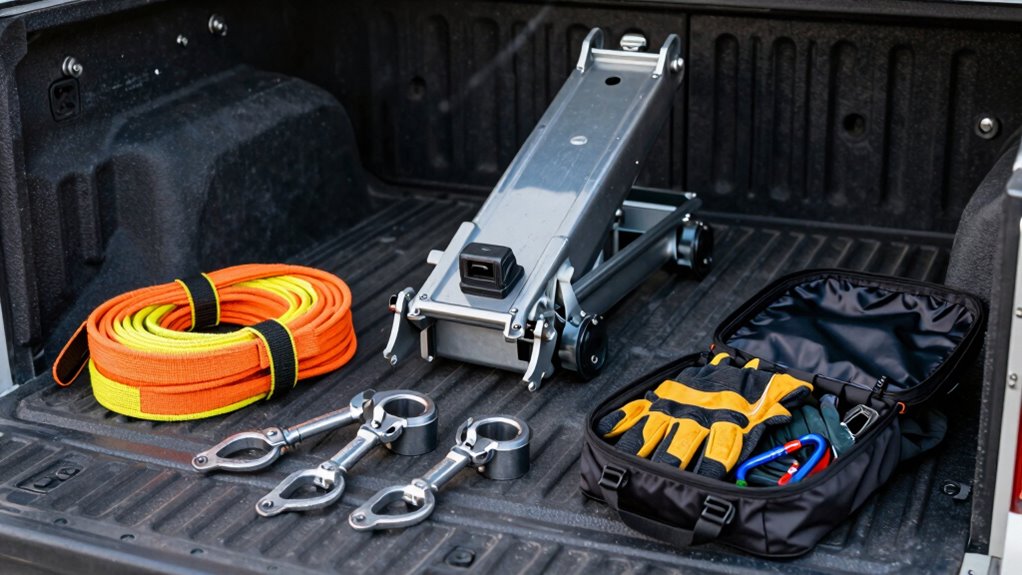
In your truck bed, space is limited, so efficient equipment storage is key. You should consider compartmentalizing your recovery gear; for example, keeping straps, shackles, and gloves in one bin and air compressors or winches in another. This way, you can quickly locate what you need without rummaging through clutter. Foam inserts or padded cases also help prevent gear from banging around, which prolongs the life of your equipment and minimizes noise. When planning your truck bed setup, think about accessibility. Items you use more frequently should be stored within easy reach, while less-used tools can be secured in the back or underneath. Incorporating organized storage solutions can further streamline your setup and boost efficiency. Properly labeling and arranging your recovery gear also enhances safety by making it easier to identify and access essential tools quickly. Furthermore, considering water-resistant storage options can protect your gear from elements like rain or mud, extending its usability in challenging conditions. Proper equipment storage isn’t just about convenience; it’s about maintaining safety standards that protect you and your fellow off-roaders.
Safety precautions extend to how you handle and store your recovery gear. Always double-check that your straps are in good condition—no frays or tears—and that shackles and hooks are not damaged. Before heading out, inspect your gear thoroughly, so you’re not caught off guard with a broken or unsafe piece. Secure loose items with bungee cords or tie-downs to prevent movement that could cause damage or injury. Also, ensure your recovery gear is visible and organized, so you can quickly identify what’s needed during an emergency. Proper equipment storage isn’t just about convenience; it’s about maintaining safety standards that protect you and your fellow off-roaders.
By incorporating proper gear organization, you can further streamline your setup and reduce the time spent searching for specific tools or parts. Ultimately, your truck bed setup should promote quick access, secure storage, and safety. Thoughtfully organizing your recovery gear with safety precautions in mind means you’ll be prepared for whatever off-road adventures throw your way. Having a well-planned setup minimizes risks and keeps your focus on the trail, knowing you’ve got everything you need right at your fingertips.
truck bed recovery gear storage containers
As an affiliate, we earn on qualifying purchases.
As an affiliate, we earn on qualifying purchases.
Frequently Asked Questions
What Are the Best Materials for Recovery Gear Storage Containers?
For storage organization and material durability, tough, weather-resistant plastics like polyethylene or polypropylene are your best options. These materials withstand rough conditions, resist corrosion, and keep your recovery gear protected from dirt and moisture. Rubberized or foam-lined containers also offer extra shock absorption. Avoid flimsy materials that can crack or break easily. Investing in durable, well-made storage containers guarantees your recovery gear stays organized and ready for action whenever you need it.
How Do I Secure Recovery Gear to Prevent Movement During Transit?
Imagine your recovery gear as a symphony waiting to be released—every piece must stay in harmony. To secure it, you should use straps, bungee cords, or tie-downs, anchoring gear to built-in tie points or secure storage containers. Proper gear organization and smart storage solutions prevent movement, ensuring safety during transit. Regularly check and tighten straps, and consider foam padding to minimize shifting, so your gear stays ready for action.
Can Recovery Gear Be Customized for Specific Truck Bed Sizes?
Yes, recovery gear can be customized for specific truck bed sizes. You can opt for custom fit storage solutions that perfectly match your truck’s dimensions, ensuring a secure and organized setup. Customizing your gear allows you to optimize space, keep equipment easily accessible, and prevent movement during transit. With tailored storage options, your recovery gear stays protected and ready for use whenever you need it, enhancing overall safety and convenience.
What Safety Precautions Should I Follow When Storing Recovery Gear?
Stay safe with your storage strategies by following essential safety protocols. Secure your recovery gear properly to prevent shifting or damage, and avoid clutter that could cause injury. Prioritize gear organization, ensuring heavy items are stored low and evenly distributed. Regularly inspect your equipment for wear and tear, and always handle recovery gear with care. By practicing these precautions, you keep yourself protected and your gear ready for action.
How Often Should Recovery Gear Be Inspected or Replaced?
You should inspect your recovery gear at least every three to six months, following a regular maintenance schedule. Look for signs of wear, damage, or deterioration. Replacement criteria include frayed straps, cracked shackles, or compromised ropes. If you notice any of these issues, replace the gear promptly to guarantee safety and reliability during recovery situations. Regular inspections keep your gear in top condition and help prevent accidents.
water-resistant truck bed storage box
As an affiliate, we earn on qualifying purchases.
As an affiliate, we earn on qualifying purchases.
Conclusion
Having recovery gear in your truck bed isn’t just convenient—it’s essential. Properly organizing your gear guarantees quick access during emergencies, and a well-thought-out setup can make all the difference. Did you know that over 70% of off-road accidents happen within 50 miles of home? Being prepared with the right recovery gear can help you navigate these situations safely and confidently. Make certain your truck bed is ready for anything—because safety always comes first.
heavy-duty tie-down straps for trucks
As an affiliate, we earn on qualifying purchases.
As an affiliate, we earn on qualifying purchases.
As an affiliate, we earn on qualifying purchases.
Fall yard work Picks
leaf blowers
As an affiliate, we earn on qualifying purchases.