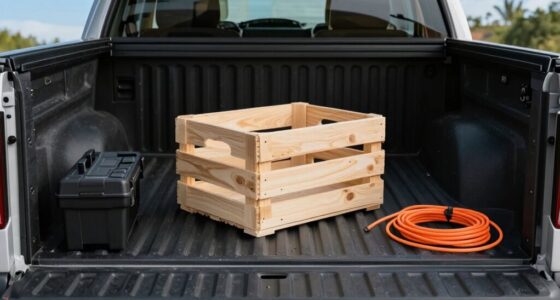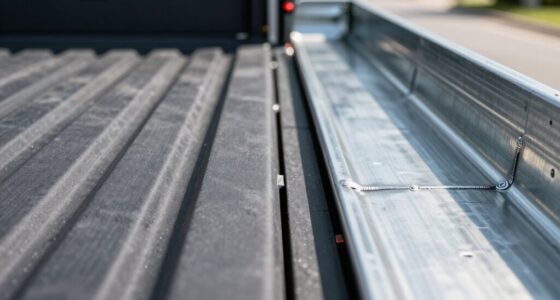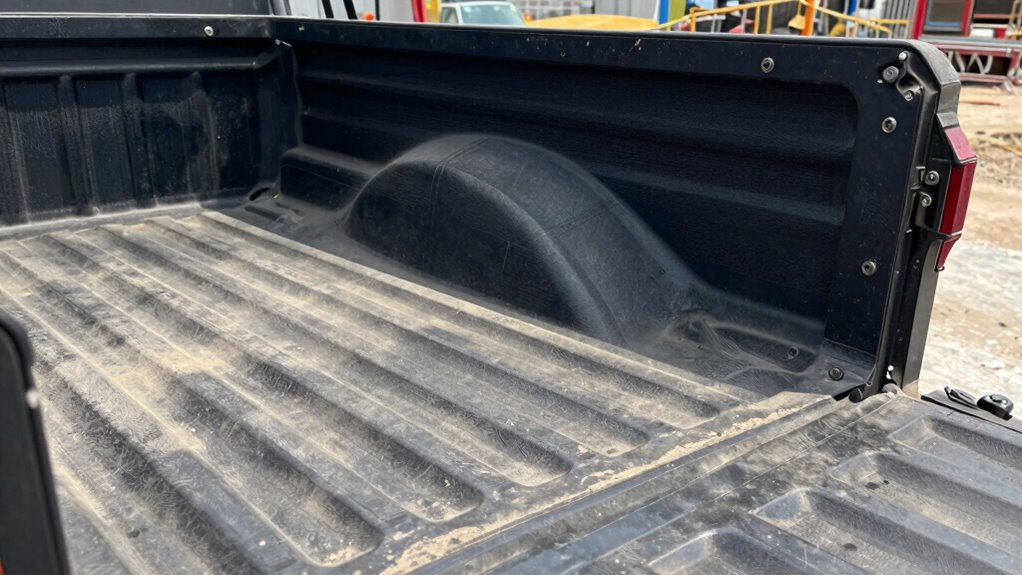

If your truck bed feels unstable under load, it’s likely due to worn suspension parts, such as shocks, struts, or springs, which weaken stability. Poor tire condition or incorrect pressure can also cause uneven handling and sway. Additionally, uneven tire wear worsens the problem. Regular inspections and proper maintenance can fix these issues and restore your truck’s stability. Keep going to find out how to identify and solve these common problems effectively.

Get business pricing on garage and car supplies
- Business-only prices and quantity discounts
- Tax-exempt purchasing
- Multiple users, one account, clear invoices
Key Takeaways
- Worn or broken suspension components reduce stability and cause excessive sway when carrying loads.
- Uneven or worn tires compromise grip, leading to instability under load.
- Improper tire pressure (over or underinflation) affects load distribution and vehicle responsiveness.
- Excessive load or uneven weight distribution strains suspension and tires, causing instability.
- Lack of regular maintenance and inspections allows suspension and tire issues to worsen, impairing stability.

If your truck bed feels unstable when you load it, you’re not imagining things. That wobbling or shifting sensation can be unsettling, and it often points to underlying issues that need addressing. One common cause is suspension problems. Your truck’s suspension system is designed to absorb shocks, maintain stability, and support loads evenly. When parts like shocks, struts, or springs wear out or break, they lose their ability to stabilize the vehicle. This causes the truck bed to sway more than it should when you add weight, especially during turns or on uneven terrain. If you notice your truck feels more jouncy or bouncy than usual, it’s a sign to check the suspension system. Addressing suspension issues can restore stability and improve your overall driving experience. Additionally, suspension wear can lead to uneven tire wear, which further impacts handling and safety. Ensuring your suspension is in good condition is essential for vehicle stability under load and for safe driving.
Another critical factor that impacts how stable your truck feels under load is tire pressure. Underinflated tires increase the contact patch with the road, making your vehicle feel softer and less responsive. Overinflated tires, on the other hand, can reduce grip and cause the truck to bounce or feel jittery, especially when loaded. Proper tire pressure guarantees even weight distribution and better handling. It’s a good habit to regularly check your tire pressure, particularly before hauling heavy loads. Not only does correct pressure improve stability, but it also extends tire life and enhances safety. Keep a reliable gauge handy and follow the manufacturer’s recommended PSI for your specific truck model.
Other factors may include uneven or worn-out tires, which can contribute to instability. If your tires are unevenly worn or damaged, they won’t grip the road properly, resulting in unpredictable handling when loaded. Similarly, if your truck’s suspension components are old or damaged, replacing them can make a significant difference. It’s wise to get a professional inspection if you’re unsure about the condition of your suspension or tires.
As an affiliate, we earn on qualifying purchases.
Frequently Asked Questions
Can the Type of Cargo Affect Bed Stability?
Yes, the type of cargo can affect bed stability. If you don’t pay attention to cargo placement and weight distribution, your truck bed can become unbalanced, making it feel unstable under load. Heavy or unevenly distributed cargo shifts easily, especially during turns or stops. To keep your truck stable, evenly distribute weight and secure your cargo properly, ensuring that the load doesn’t shift as you drive.
Does Weather Impact Truck Bed Stability Under Load?
Yes, weather can impact your truck bed’s stability under load. Imagine hitting the road on a rainy day—wet conditions can make cargo slip, especially if your cargo distribution isn’t perfect. The bed material also plays a role; metal beds might handle moisture differently than composite ones. So, always check the weather forecast and adjust your cargo to maintain balance, ensuring a safe, smooth ride.
How Does Truck Bed Design Influence Stability?
Your truck bed’s design directly influences its stability. If it uses durable materials, it resists bending and warping under load, maintaining balance. Structural reinforcement, like cross members and reinforced sidewalls, adds extra strength, preventing flexing that causes instability. When your truck bed combines material durability with solid reinforcement, it provides a stable platform, ensuring safer hauling and reducing the chances of wobbling or shifting during transport.
Are Aftermarket Accessories Safe for Load Stability?
Aftermarket accessories can be safe for load stability if you choose compatible options and guarantee proper accessory installation. You need to verify aftermarket compatibility with your truck model to prevent weight imbalances or interference with the bed’s structural integrity. When installed correctly, accessories like tie-downs, bed extenders, or racks can improve load security. Always follow manufacturer instructions and consider consulting a professional to maintain your truck’s stability and safety under load.
What Are Early Signs of Bed Instability?
Like a ship caught in a storm, you notice early signs of bed instability when cargo shifts unexpectedly, causing visible movement or leaning. You might also feel the truck’s bed wobbling or hear rattling sounds. These signs indicate your bed requires reinforcement. Addressing cargo shifting early and adding bed reinforcement can stabilize loads, prevent damage, and ensure safe driving. Ignoring these signs could lead to more serious instability down the road.
As an affiliate, we earn on qualifying purchases.
Conclusion
So, if your truck bed feels unstable when loaded, don’t brush it off. Addressing uneven weight distribution, checking your suspension, and securing your cargo properly can make all the difference. Remember, a well-balanced truck isn’t just safer—it’s more reliable, too. Don’t let small issues snowball into big problems; stay proactive and keep your load steady. After all, a stitch in time saves nine, and your truck’s stability is worth every effort.
As an affiliate, we earn on qualifying purchases.
As an affiliate, we earn on qualifying purchases.
Fall Picks
fall essentials
As an affiliate, we earn on qualifying purchases.