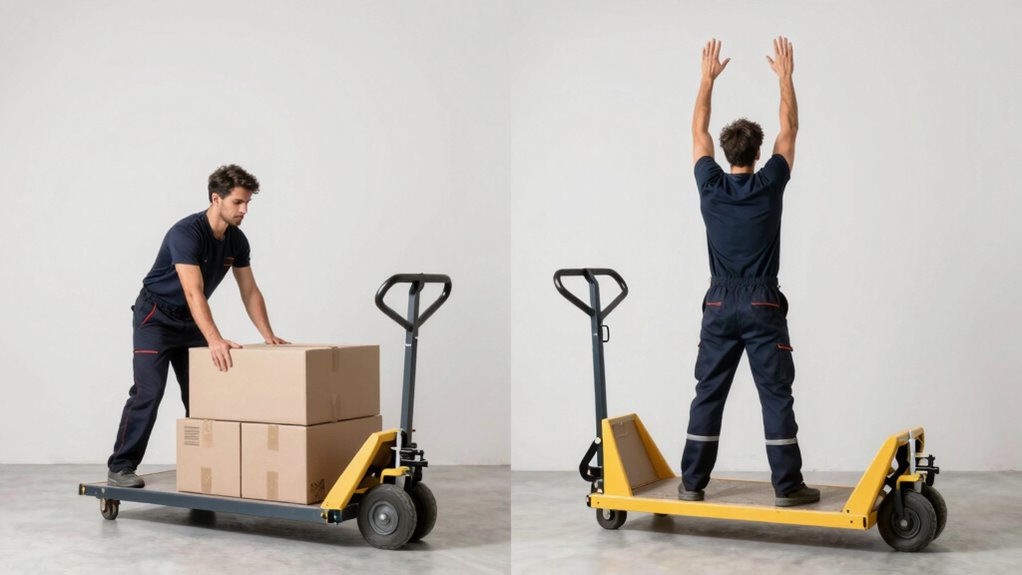

Your bed height greatly affects how much effort you need when loading or unloading items. If the bed is too high, you’ll strain your arms and shoulders by reaching overhead, while a too-low bed causes you to bend at the waist, increasing back pressure. When it’s set at a proper height, your movements are more natural, leveraging your leg muscles and maintaining better posture. Keep exploring to discover how to optimize your bed height for safer, easier tasks.

Get business pricing on garage and car supplies
- Business-only prices and quantity discounts
- Tax-exempt purchasing
- Multiple users, one account, clear invoices
Key Takeaways
- Proper bed height aligns with natural body movements, reducing the effort needed to lift or load items.
- Incorrect height causes awkward postures, increasing muscle strain and energy expenditure during loading tasks.
- Optimal height allows for stable footing and proper leverage, minimizing back and arm effort.
- The right bed height supports ergonomic positioning, especially when handling heavier or larger objects.
- Maintaining proper bed height decreases long-term fatigue and injury risk during repeated loading activities.

Have you ever noticed how the height of a bed influences how much effort it takes to load or unload items? The answer lies in the way bed height impacts your body’s movements and strain. When a bed is too high, you may have to lift your arms overhead or bend your knees more than comfortable, increasing fatigue and risking injury. Conversely, if it’s too low, you might have to bend excessively at the waist, putting strain on your back. Understanding these dynamics helps you choose a bed height that aligns with ergonomic principles, which prioritize your body’s natural movement patterns to reduce strain and prevent injury. Proper body mechanics can significantly improve your safety and efficiency during these tasks.
Applying ergonomic principles in selecting your bed height isn’t just about comfort; it’s also about safety considerations. When you load or unload items from a bed that’s correctly positioned, you minimize awkward postures that can lead to muscle strains or slips. For example, a bed at a height that allows you to keep your back straight while lifting reduces the risk of back injuries. It’s essential to keep in mind that safety considerations extend beyond immediate comfort—they also involve long-term health. Repeatedly loading or unloading at an improper height can contribute to chronic pain or musculoskeletal issues. Additionally, understanding ergonomic design principles can help you make better choices for other household tasks as well.
To optimize safety and efficiency, you should aim for a bed height that allows you to work with your elbows close to your body and your feet flat on the ground. This positioning helps you leverage your leg muscles rather than your back, which is critical for reducing fatigue. When the bed height is suitable, you won’t have to reach excessively or twist your torso, both of which can compromise your safety. Also, consider the weight and size of the items you’re handling; heavier or bulkier objects require more careful positioning, making the right bed height even more vital. Proper ergonomic alignment ensures that your movements remain natural and comfortable, reducing the likelihood of strain.
Adjusting your bed height to fit ergonomic principles makes loading and unloading easier and safer. It minimizes unnecessary effort, reduces the risk of injury, and promotes better posture during physical tasks. Remember, safety considerations are paramount—taking the time to choose the right height now can prevent discomfort and injury in the future. Whether you’re loading bedding, moving boxes, or handling everyday items, your body’s alignment and the effort required depend heavily on the bed’s height. Choosing wisely ensures that your body stays protected and your tasks become less strenuous.
adjustable bed height for ergonomic loading
As an affiliate, we earn on qualifying purchases.
As an affiliate, we earn on qualifying purchases.
Frequently Asked Questions
How Do You Measure the Ideal Bed Height for Loading?
To measure the ideal bed height for loading, you should perform an ergonomic measurement by evaluating your natural lifting position and the distance from your waist to the bed surface. Use height customization tools or adjustable beds to find a height that minimizes strain and maximizes comfort. Keep in mind, the best bed height aligns with your body’s needs, reducing effort and preventing injury during loading tasks.
Does Bed Height Impact Safety During Loading?
Did you know that improper bed height increases the risk of falls by 30%? When you choose the right height, you promote ergonomic posture, making loading safer and reducing strain. It also helps prevent falls, which are a leading cause of injury during loading tasks. By setting your bed at a suitable height, you improve overall safety, protect yourself from accidents, and guarantee safer, more efficient loading processes.
Are There Specific Bed Heights for Different Types of Loads?
Yes, there are specific bed heights for different types of loads in material handling. You should adjust bed height based on ergonomic design principles to reduce strain and prevent injury. For heavier loads, a lower bed height makes lifting easier, while lighter or fragile items benefit from a higher position. Tailoring bed height guarantees safer, more efficient handling, minimizing effort and maximizing safety during the loading process.
How Does Bed Height Affect Long-Term Back Health?
Did you know that improper bed height can increase your risk of developing back problems over time? If your bed is too high or low, it forces you to adopt poor posture correction habits, leading to increased muscle strain. Maintaining a suitable bed height helps you maintain proper alignment, reducing long-term back health issues. By adjusting your bed height, you support healthier posture and lessen muscle strain, promoting better back health in the long run.
Can Adjustable Beds Improve Loading Efficiency?
Adjustable beds can considerably improve loading efficiency by enhancing ergonomic design and loading ergonomics. When you set the bed height to a comfortable level, you reduce strain and effort, making it easier to lift or move items. This customization helps prevent injuries and fatigue, allowing you to work more efficiently. With adjustable features, you can tailor the bed to your specific tasks, optimizing your overall loading and unloading process.
bed height ergonomic lifting aid
As an affiliate, we earn on qualifying purchases.
As an affiliate, we earn on qualifying purchases.
Conclusion
So, next time you lift your mattress, picture yourself as a mountain climber scaling a gentle hill or a steep ascent. Lowering the bed makes the climb easier, like strolling along a smooth trail, while raising it feels like tackling a rugged peak. Adjusting that height isn’t just about comfort—it’s about easing your effort, turning a formidable task into a simple, effortless glide. With the right height, loading becomes less of a chore and more of a breeze.
bed height lifting assistance tools
As an affiliate, we earn on qualifying purchases.
As an affiliate, we earn on qualifying purchases.
As an affiliate, we earn on qualifying purchases.
Fall Picks
fall essentials
As an affiliate, we earn on qualifying purchases.