TL;DR

Get business pricing on garage and car supplies
- Business-only prices and quantity discounts
- Tax-exempt purchasing
- Multiple users, one account, clear invoices
Former Honda exterior design lead Don Herner has recounted the first-generation Ridgeline’s development in a YouTube interview with Jack Bontatibus. Herner says the concept began as an internal “Advanced Capabilities Vehicle,” not a conventional truck project, and explains how engineering priorities shaped its design and features.
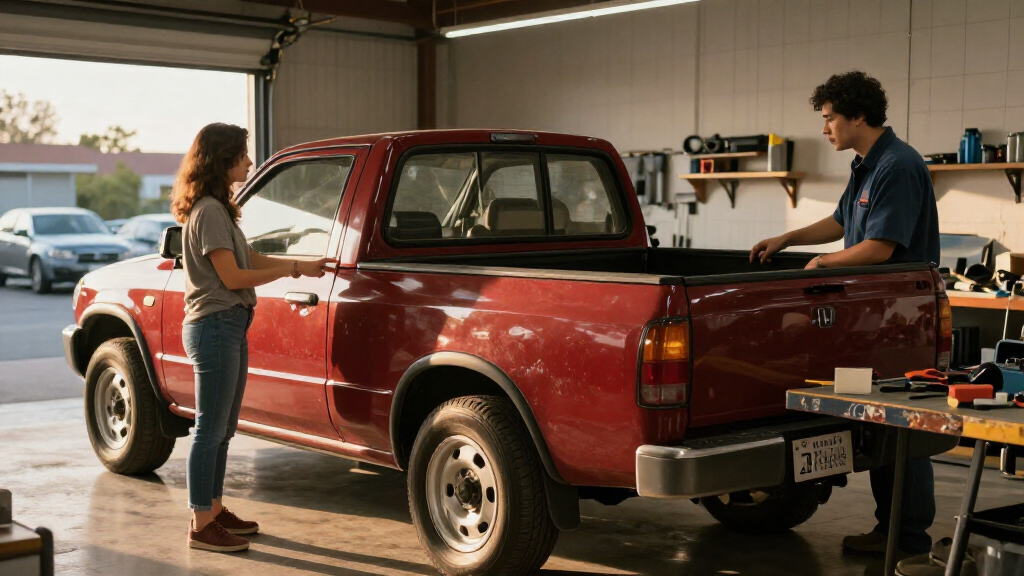
Don Herner, the exterior design lead for the original Honda Ridgeline, has described how the pickup took shape in a YouTube interview with Jack Bontatibus. Herner says the project was not initially treated inside Honda as a conventional truck program: the team called it the “Advanced Capabilities Vehicle,” a label that helps explain why the 2006-model-year Ridgeline departed from pickup norms.
As reported by The Drive, Herner said the project began with designers sketching ideas during a quiet period, rather than with a formal truck brief. A marketing executive later saw the sketches and promoted them as the basis for a production vehicle. Herner recalled that Honda lacked a transmission robust enough for the gigantic wheels and tires that designers initially explored, so the engineering team pushed for smaller wheel-and-tire combinations.
The first-generation Ridgeline used a 3.5-liter V6 paired with a five-speed automatic transmission. The source report lists output at 255 horsepower and 252 pound-feet of torque, with a 5,000-pound towing capacity and 1,550-pound payload capacity. Herner said engineers prioritized torque at the wheels and tested the cargo bed under heavy loads to identify the point at which the rear suspension would fail.
The truck’s fiberglass cargo box and long dual-action tailgate mechanism reflected a focus on durability, Herner said. The original also included fold-up rear seats and a storage space between the dashboard and center console. The Ridgeline was based on a modified version of the then-current Odyssey platform, and its production required changes to Honda assembly lines because it was the company’s largest production vehicle at the time, according to The Drive.
How Honda Reframed the Pickup
Herner’s account offers a design-side explanation for why the original Ridgeline looked and worked differently from many pickups of its era. Honda chose a unibody structure, integrating the cab and bed rather than using the traditional body-on-frame layout. The company’s approach put emphasis on packaging, everyday utility and engineered durability, rather than simply following conventional truck styling and hardware.
That distinction matters because the Ridgeline created a separate place for Honda in the pickup market. The current model remains unibody and retains several ideas associated with the original, including its dual-action tailgate and in-bed storage concept, although the current truck has more conventional styling. Herner’s interview connects those continuing features to the goals and constraints that shaped the first model, rather than presenting them as styling quirks alone.
2006 Honda Ridgeline truck bed cargo net
As an affiliate, we earn on qualifying purchases.
As an affiliate, we earn on qualifying purchases.
From Sketches to the 2006 Model
The first-generation Ridgeline arrived in 2005 as a 2006 model and was Honda’s first production vehicle with a pickup bed, according to the source report. Its styling made its integrated cab and bed especially visible, while its modified Odyssey platform marked a departure from conventional truck construction. The project also introduced a new production challenge for Honda, which had to modify assembly lines to build the larger vehicle.
Herner joined Honda after graduating from California’s ArtCenter College of Design and interning in General Motors’ Corvette design studio. His other work included the third-generation Acura Integra and the first-generation Acura RDX; he later worked at Fisker. The Drive reports that Herner linked the early Ridgeline and RDX ideas to designers having limited work at the time and beginning to sketch independently.
Honda’s internal “Advanced Capabilities Vehicle” label was not used publicly. Herner also recalled that the company explored a collaboration with Nike, which then had an “Advanced Capability Gear” line. The idea, as described in the interview, shows how far the team’s early framing stood from a standard pickup program.
“This never really started out to be a truck project per se, because Honda doesn’t make a transmission robust enough to turn gigantic wheels and tires.”
— Don Herner, first-generation Ridgeline exterior design lead, in an interview with Jack Bontatibus
2006 Honda Ridgeline dual action tailgate replacement parts
As an affiliate, we earn on qualifying purchases.
As an affiliate, we earn on qualifying purchases.
What the Interview Leaves Open
The account is based on Herner’s recollections in the interview as summarized by The Drive; the supplied material does not include a Honda statement or independent documentation of each development decision. It also does not provide the interview’s publication date, a full transcript, or further detail on the proposed Nike collaboration and why it did not proceed.
The source report says a next-generation Ridgeline is expected to look more like a truck, but it provides no launch date, specifications, or official design details. It remains unclear how much of the original model’s distinctive engineering and utility features would carry into a future generation.
2006 Honda Ridgeline all-weather floor mats
As an affiliate, we earn on qualifying purchases.
As an affiliate, we earn on qualifying purchases.
Future Ridgeline Design Questions
No specific next milestone for the Ridgeline is given in the source material. The interview’s immediate contribution is historical: it sets out how the first-generation truck’s design team balanced visual ideas with engineering limits, durability targets and practical features. Any account of a future model’s appearance or equipment should wait for official Honda information.
For readers following the model, the key point to watch is whether a future Ridgeline keeps the original’s unibody construction and utility-focused details as its exterior moves toward more familiar pickup styling. The source does not confirm what Honda plans to retain.
As an affiliate, we earn on qualifying purchases.
Key Questions
Who discussed the original Honda Ridgeline’s development?
Don Herner, the first-generation Ridgeline’s exterior design lead, discussed the project in an interview with YouTuber Jack Bontatibus.
What did Honda call the project internally?
Herner said Honda used the name “Advanced Capabilities Vehicle” internally. It was not the name used publicly for the production pickup.
When did the first-generation Ridgeline arrive?
The Ridgeline arrived in 2005 as a 2006 model, according to The Drive’s report.
What features from the original are still associated with the Ridgeline?
The current Ridgeline retains a dual-action tailgate and other utility-focused ideas associated with the original. The source report does not provide a full feature-by-feature comparison.
Has Honda confirmed details about the next-generation Ridgeline?
No next-generation specifications or release timing are included in the source material. The report says it may have more conventional truck styling, but gives no official details to confirm its design or equipment.
Source: rss
Halloween Picks
halloween
As an affiliate, we earn on qualifying purchases.