When hauling, choose a dually truck if you need maximum stability, higher payload capacity over 5,000 pounds, and towing over 30,000 pounds. Duallys have wider beds and multiple rear wheels, ideal for heavy equipment and long distances. If maneuverability, urban driving, or easier parking matter more, a single rear wheel truck with smaller beds is better. Understanding these differences will help you pick the right fit for your hauling needs and circumstances.
Key Takeaways
- Dually trucks typically have 8-foot beds, offering more cargo capacity and stability, while SRW trucks have multiple bed length options, including shorter ones.
- Duallys handle higher payloads over 5,000 pounds with better weight distribution, ideal for heavy equipment and large loads.
- Towing capacity is greater in dually trucks, exceeding 30,000 pounds, providing enhanced trailer stability and control.
- SRW trucks are easier to maneuver and park, especially in urban settings, due to their narrower width and tighter turning radius.
- Operating costs for dually trucks are higher due to increased tire wear, fuel consumption, and maintenance, but they excel in heavy-duty hauling.
heavy duty dually truck bed
As an affiliate, we earn on qualifying purchases.
As an affiliate, we earn on qualifying purchases.
Bed Length Options and Configuration Differences
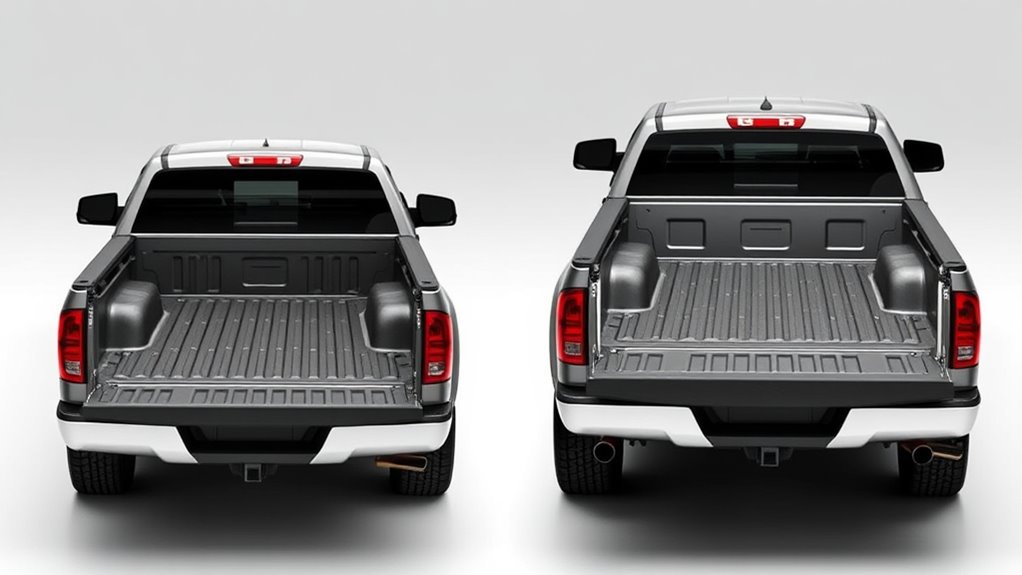
When choosing between single rear wheel (SRW) and dually trucks, bed length options play a significant role in meeting your hauling needs. Dually trucks typically come with longer beds, usually 8 feet, to match their extended wheelbase for stability and cargo capacity. In contrast, SRW trucks offer a broader range of bed lengths—5.5, 6.5, and 8 feet—depending on the cab style, giving you more flexibility for different loads. The 8-foot bed is standard on most dually models, maximizing space for large or long cargo. Shorter beds are generally not available on dually trucks, which can limit options for those needing a more compact setup. Your choice depends on whether you prioritize maximum cargo space or maneuverability. Additionally, bed length choices can influence vehicle stability and handling, especially when hauling heavy or oversized loads.
single rear wheel truck camper shell
As an affiliate, we earn on qualifying purchases.
As an affiliate, we earn on qualifying purchases.
Payload Capacity and Heavy Lifting Capabilities

Your choice between single rear wheel and dually beds directly impacts payload capacity and heavy lifting. Dually trucks typically handle higher weights, making them ideal for demanding loads and equipment. Understanding weight distribution benefits can help you select the right setup for your hauling needs. Additionally, knowing the definition of haute couture can give you insight into the importance of craftsmanship and precision, much like selecting the appropriate truck setup ensures optimal performance.
Payload Limits Comparison
Dually trucks outperform single rear wheel (SRW) models in payload capacity, making them ideal for heavy-duty lifting and hauling. With ratings often exceeding 5,000 pounds, dually trucks can handle larger, heavier loads without compromising stability. The dual rear wheels distribute weight evenly, reducing stress on the suspension and frame, allowing you to carry more safely. In contrast, SRW trucks typically top out around 3,000 to 4,000 pounds, limiting their ability to manage the heaviest cargo. If your work involves frequent hauling of substantial loads or equipment, a dually offers the extra capacity you need. Keep in mind, this increased payload capability also means better control and reduced bounce when transporting heavy or bulky items over long distances. Additionally, the enhanced load distribution provided by dually tires contributes to improved vehicle longevity and safety under demanding conditions.
Heavy Equipment Handling
Heavy equipment handling demands trucks with exceptional payload capacity and robust lifting capabilities. Dually trucks excel here, offering higher payload ratings—often over 5,000 pounds—and distributing weight evenly across dual rear wheels. This reduces strain on the suspension and frame, making it easier to lift and transport heavy machinery. Conversely, SRW trucks typically max out around 3,000–4,000 pounds, which can limit heavy equipment handling. The table below highlights key differences:
| Feature | Dually Trucks | SRW Trucks | Impact on Handling |
|---|---|---|---|
| Payload Capacity | >5,000 pounds | 3,000–4,000 pounds | Better for heavy loads |
| Wheel Configuration | Dual rear wheels | Single rear wheel | Distributes weight evenly |
| Heavy Equipment Towing | Higher capacity, stable | Lower capacity, less stable | More suitable for heavy lifting |
Additionally, payload capacity plays a crucial role in determining a truck’s suitability for heavy-duty tasks.
Weight Distribution Benefits
The way weight is distributed across a truck’s rear axle considerably impacts its payload capacity and ability to handle heavy lifting. With dual rear wheels, weight spreads more evenly, which offers clear advantages. Additionally, European cloud innovation emphasizes the importance of sustainable and efficient solutions, much like optimizing weight distribution enhances vehicle performance. 1. Higher Payload Limits: Dually trucks often carry over 5,000 pounds, making them ideal for heavy loads. 2. Enhanced Stability: The wider stance reduces sway, so your truck stays steadier under pressure. 3. Better Heavy Lifting: The balanced weight distribution helps prevent suspension strain, allowing you to lift and haul more confidently. In contrast, single rear wheel trucks may struggle with very heavy loads, risking bounce and instability. If heavy lifting and payload capacity are priorities, a dually setup offers significant weight distribution benefits.
dually truck towing hitch
As an affiliate, we earn on qualifying purchases.
As an affiliate, we earn on qualifying purchases.
Towing Power and Trailer Handling
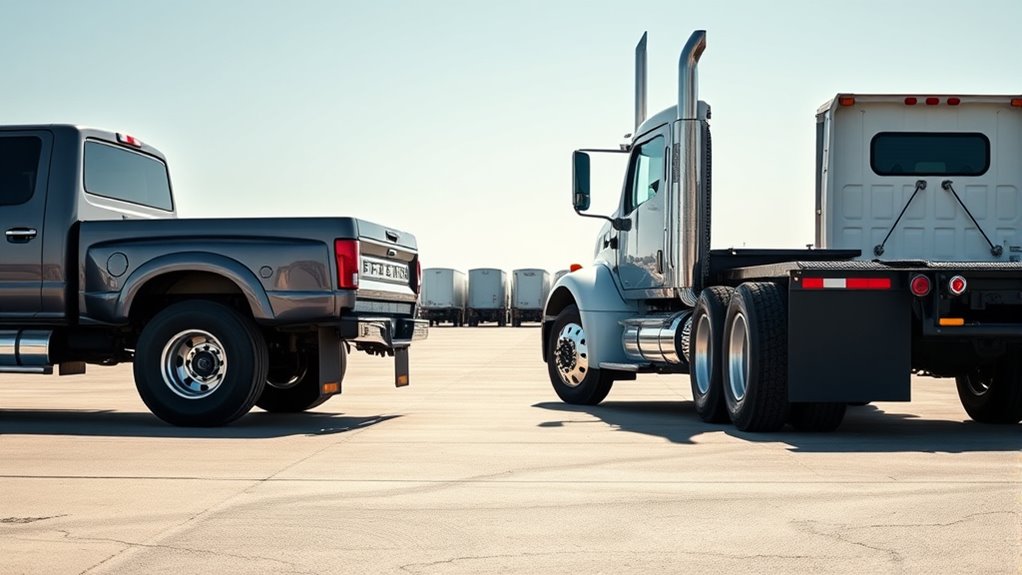
When it comes to towing power and trailer handling, the configuration of your truck’s rear wheels plays a crucial role in performance. Dually trucks provide higher towing capacities, often exceeding 30,000 pounds, thanks to their extra rear wheels that distribute weight more evenly. This distribution of weight enhances stability and safety when hauling heavy loads. This stability helps you control large trailers or fifth wheels more confidently, especially on long hauls or challenging terrain. In contrast, single rear wheel trucks typically max out around 18,000 to 20,000 pounds, making them suitable for moderate towing. The wider stance and additional traction of duallys reduce sway and improve handling under heavy loads. However, this increased capacity comes with a need for more space during maneuvers, and they require careful driving in tight or urban environments.
truck bed extender for dually
As an affiliate, we earn on qualifying purchases.
As an affiliate, we earn on qualifying purchases.
Maneuverability and Urban Driving Considerations

When driving a dually truck, you’ll notice it needs more space to turn and maneuver in tight city streets. Its wider stance makes parking and steering through narrow spaces more challenging compared to a single rear wheel truck. Consider how these differences impact your daily urban driving before choosing the right setup. Additionally, the hydraulics and steering dynamics of a dually can require more careful handling in confined areas.
Turning Radius Differences
Dually trucks tend to have a larger turning radius compared to single rear wheel (SRW) models, which can make maneuvering through tight spaces more challenging. This wider stance and longer wheelbase demand more space to complete turns. You’ll notice this when parking or navigating narrow streets. Consider these points:
- Tight turns require more room, making city driving trickier.
- Parking becomes a challenge in small spaces or crowded lots.
- Maneuverability is reduced, especially in urban environments with tight corners.
While SRW trucks are more agile and easier to turn around in confined areas, dually trucks excel in stability but at the expense of maneuverability. Planning your routes and parking options becomes essential with a dually.
City Parking Challenges
Maneuvering city streets with a dually truck can be a real challenge due to its wider stance and longer wheelbase. Steering through tight corners and narrow parking spaces demands more attention and planning. The extra width makes it harder to fit into standard parking spots and can limit your options in crowded lots. You might find yourself needing more space to make turns or back into parking spots comfortably. Urban environments often require quick, precise maneuvers, which dually trucks can struggle with. Conversely, single rear wheel trucks are more agile and easier to park in tight spots. If city driving is frequent, you’ll appreciate the maneuverability of SRW trucks, making daily parking and navigating congested streets less stressful. Additionally, understanding urban driving challenges can help you choose the right truck for your needs.
Stability and Road Handling Under Load
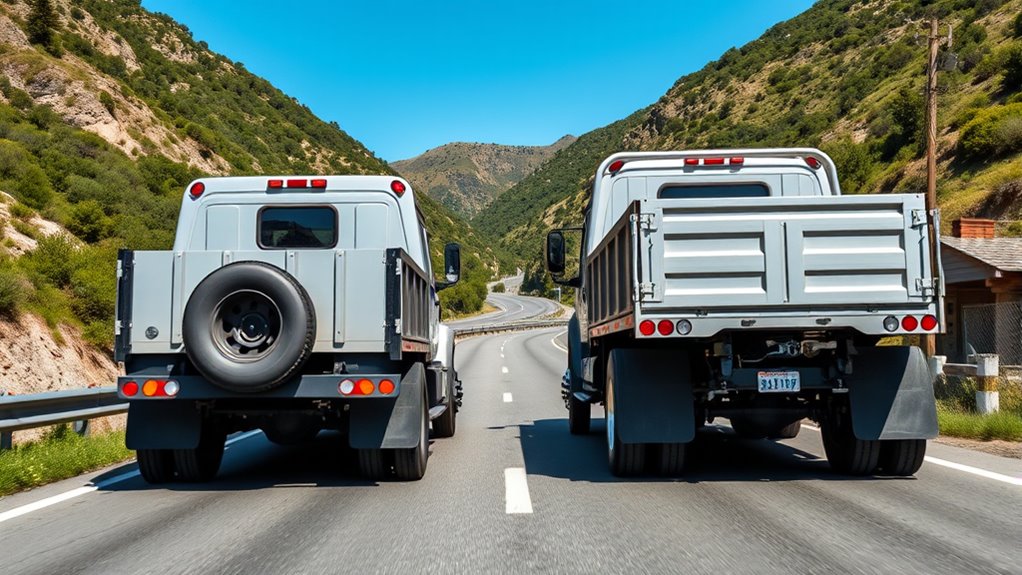
Under load, the stability and road handling of a truck are essential for safety and control. You’ll notice that dually trucks excel here because their wider stance and extra rear wheels reduce sway. This means you’ll experience:
- Better control on uneven terrain or crosswinds, preventing dangerous fishtailing.
- Reduced trailer sway when towing heavy loads, keeping you steady.
- Enhanced confidence during long hauls, especially with heavy payloads or large trailers.
- The wider footprint of dually trucks also helps distribute weight more evenly, improving overall stability.
While single rear wheel trucks are more agile and easier to maneuver in tight spaces, they may feel less stable under heavy loads. Dually trucks, although wider and less nimble, provide superior stability, making them the safer choice when hauling substantial weight.
Maintenance, Operating Costs, and Long-Term Investment
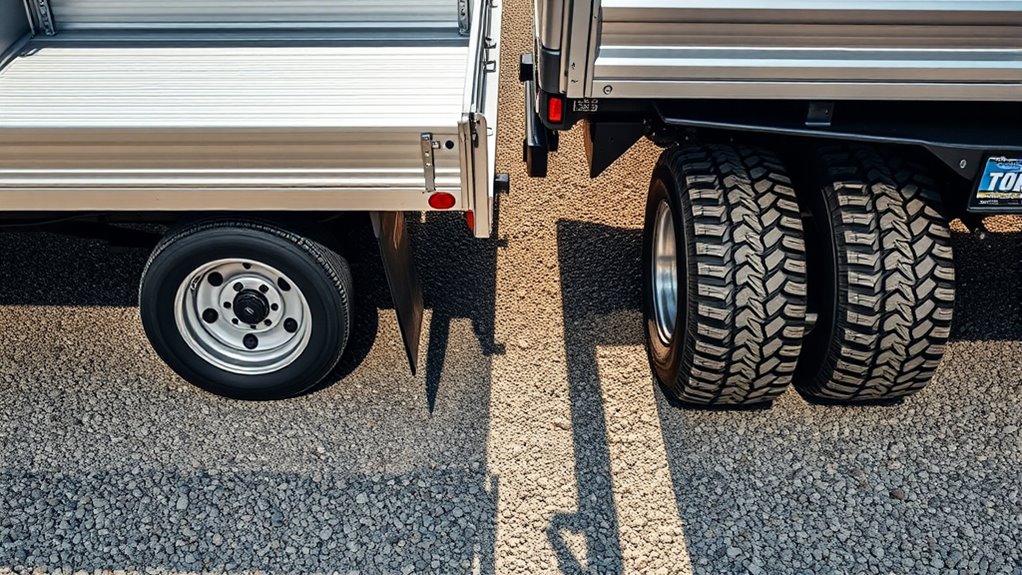
While the stability benefits of dually trucks under heavy loads are notable, they also come with higher maintenance and operating costs over time. You’ll need more tires—six instead of four—leading to increased replacement expenses. Fuel consumption also rises due to the added weight and rolling resistance. Maintenance intervals are similar, but parts and labor tend to be pricier for dually trucks. Long-term, the initial investment is higher, but their durability and payload capacity can offset costs if you frequently haul heavy loads. Here’s a quick comparison: | Cost Aspect | Single Rear Wheel | Dually (DRW) | |———————-|————————–|——————————| | Tires | 4 tires | 6 tires | | Fuel Efficiency | Better | Slightly worse | | Maintenance Costs | Lower | Higher | Additionally, understanding vehicle specifications can help in making an informed decision about long-term investments.
Suitability for Different Types of Hauling Tasks
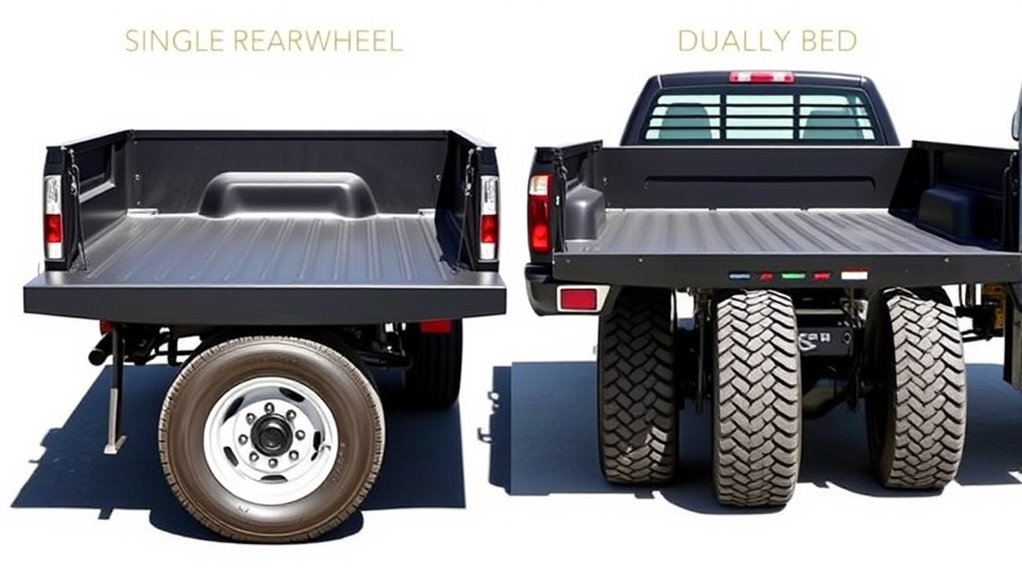
Dually trucks excel in heavy-duty hauling tasks that require maximum payload and towing capacity, making them ideal for commercial applications like transporting construction equipment, large trailers, or multiple loads. If you’re tackling these jobs, a dually’s stability and strength are unmatched. Consider these points:
- For transporting heavy machinery or multiple trailers, the extra weight distribution makes a big difference.
- When towing large fifth wheels or long-distance hauls, the enhanced stability ensures safer, smoother trips.
- If your work involves frequent heavy loads, the higher payload capacity prevents suspension stress and reduces wear.
While single rear wheel trucks work well for lighter, urban, or personal hauling, duallys are better suited for demanding, heavy-duty tasks. Choose based on your hauling needs.
Practical Benefits and Limitations for Various Users

Choosing between single rear wheel and dually trucks depends largely on your specific needs and how you plan to use the vehicle. If you want better maneuverability for city driving, tight spaces, or parking, a single rear wheel truck offers a tighter turning radius and easier handling. It’s also more cost-effective for daily commuting and light hauling. On the other hand, if you frequently haul heavy loads, tow large trailers, or require maximum stability, a dually provides higher payload and towing capacities, along with better control on highways. However, dually trucks are less nimble and require more space for turns. Consider your typical tasks, budget, and driving environment to determine which configuration aligns best with your hauling needs.
Frequently Asked Questions
Can You Customize Bed Lengths on Dually Trucks?
You can’t typically customize bed lengths on dually trucks beyond what’s offered by the manufacturer. Most dually models come with standard options, usually an 8-foot bed, to accommodate their design and payload capacity. If you need a different size, you’ll usually have to choose from the available factory options or consider aftermarket modifications, though these can be costly and may affect warranty or vehicle performance.
How Do Tire Replacements Compare Between SRW and Dually?
Tire replacements on dually trucks cost more and take longer than on SRW trucks. With six tires instead of four, you’ll spend more on tires and labor. Visualize this: replacing six tires is like changing two sets of tires, doubling the effort and cost. The wider rear axle also makes access trickier, so expect a bit more time and expense compared to the simpler, more affordable process on single rear wheel trucks.
Are Dually Trucks More Fuel-Efficient for Long Hauls?
Dually trucks aren’t more fuel-efficient for long hauls; in fact, they tend to consume more fuel. The extra weight from the additional rear wheels and wider stance increases rolling resistance and engine workload, reducing efficiency. While they offer better stability and higher towing capacity, their increased weight, larger tires, and aerodynamic profile mean you’ll spend more on fuel over long distances. If economy is a priority, a single rear wheel truck might be a better choice.
What Are the Parking Challenges With Dually Trucks?
Parking a dually truck is 50% more challenging than a standard SRW due to its wider stance and longer wheelbase. You’ll need extra space for turning, especially in tight spots or crowded lots. Maneuvering becomes tougher, and narrow parking spots are often off-limits. To avoid headaches, plan ahead, choose larger parking areas, and be prepared for more careful navigation when parking your dually.
Do Dually Trucks Require Special Maintenance for Dual Wheels?
Yes, dually trucks need special maintenance for the dual wheels. You should regularly check and rotate all six tires to guarantee even wear and prevent blowouts. Keep an eye on tire pressure, as it’s vital for safety and performance. Also, inspect the dual wheel hubs and lug nuts more often, since they bear more load. Proper maintenance helps prolong your truck’s lifespan and keeps you safe on the road.
Conclusion
Choosing between a single rear wheel and dually bed depends on what you need. If you’re hauling heavy loads regularly, a dually offers more stability like a sturdy anchor. But for everyday tasks and tight spaces, a single rear wheel might be easier to maneuver. Know your priorities, and you’ll pick the right setup—it’s like choosing the right tool for the job. Either way, understanding the differences helps you make smarter hauling decisions.