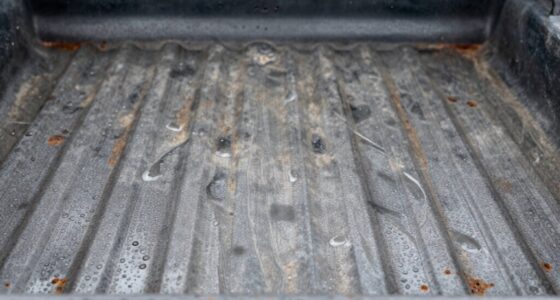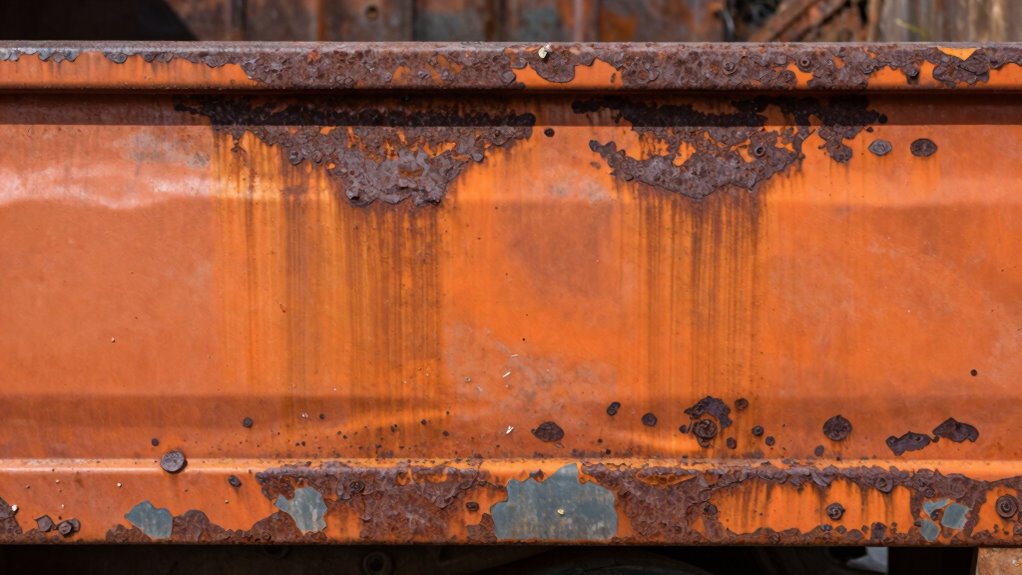

Road chemicals like salt and de-icers cause rust and corrosion on your truck bed over time. They settle into crevices and seams, breaking down protective layers and accelerating damage. Moisture and air exposure only make this worse, weakening your truck’s metal and causing holes or flaking paint. If you want to learn how to prevent these issues and protect your truck longer, there’s more you should know.

Get garage and car supplies delivered free — and shop member deals
- Fast, free delivery on millions of items
- Access to Prime Big Deal Days deals on October 6–7
- Prime Video, Amazon Music and more included
Key Takeaways
- Road salts and de-icers cause rust and corrosion by breaking down protective oxide layers on metal surfaces.
- Chemicals settle into crevices, accelerating localized corrosion and structural damage over time.
- Continuous exposure promotes rust formation, leading to holes, flaking paint, and weakened truck bed integrity.
- Chemical reactions with metals and moisture intensify corrosion, especially if protective coatings are compromised.
- Without proper maintenance, road chemicals significantly reduce the lifespan and resale value of truck beds.

Road chemicals, such as salt and de-icers, are essential for safety during winter months, but they can also cause significant damage to your truck bed if you’re not careful. When these chemicals are applied to icy roads, they often splash up onto your vehicle, settling into crevices and seams. Over time, this exposure accelerates corrosion, especially if your truck bed isn’t protected properly. The harsh salts and chemicals react with the metal, breaking down the protective oxide layer and exposing raw metal to moisture and air. This process leads to rust formation, which weakens the structural integrity of your truck bed and can cause holes or flaking paint.
Salt and de-icers damage your truck bed by causing rust and corrosion over time.
To combat this, corrosion prevention becomes a priority. Regular washing is your first line of defense—removing salt and chemicals early helps prevent them from penetrating the metal surface. Using a high-pressure hose to rinse the underside and inside the bed is particularly effective, as these areas are most vulnerable. But washing alone isn’t enough for long-term protection. Applying protective coatings provides a more durable barrier. These coatings, such as bed liners or specialized rust inhibitors, seal the metal and prevent corrosive agents from coming into contact with the surface. When selecting protective coatings, choose products designed specifically for corrosion prevention; they are formulated to withstand harsh winter conditions and resist chemical breakdown. Additionally, understanding how road chemicals interact with metals can help you choose the best protective measures for your vehicle. Knowing about corrosion mechanisms further emphasizes the importance of proper maintenance. Investing in quality protective coatings also offers the benefit of preserving your truck bed’s appearance and resale value. Coatings like spray-on bed liners or paint with rust inhibitors can be applied professionally or as DIY projects. Regular reapplication or touch-ups keep the protective barrier intact, especially after harsh winter seasons. Additionally, inspecting your truck bed after winter storms allows you to catch early signs of corrosion. Small chips or scratches in the coating should be promptly repaired to prevent rust from taking hold. It’s also helpful to understand the chemical reactions involved to better prevent damage and choose the right protective strategies. Proper maintenance and understanding of chemical reactions between road salts and metal surfaces can further extend your truck’s lifespan.
Ultimately, understanding how road chemicals affect your truck bed over time underscores the importance of proactive measures. Combining consistent cleaning routines with high-quality protective coatings gives your vehicle a fighting chance against corrosion. These preventative steps not only extend the lifespan of your truck bed but also save you money on costly repairs down the line. When you take these precautions seriously, you ensure that your truck remains durable and functional, even through the toughest winter conditions.
As an affiliate, we earn on qualifying purchases.
Frequently Asked Questions
Can Protective Coatings Prevent Chemical Damage to Truck Beds?
Yes, protective coatings can prevent chemical damage to your truck bed. They provide a barrier that enhances chemical resistance, shielding the metal from corrosive substances found on roads. Applying high-quality protective coatings regularly helps maintain your truck bed’s integrity, preventing rust and deterioration caused by salts, oils, and other chemicals. This proactive approach extends your truck bed’s lifespan, keeping it in great condition despite exposure to harsh road chemicals.
How Often Should Truck Beds Be Inspected for Chemical Corrosion?
Think of your truck bed as a shield guarding your vehicle’s core. You should inspect it for chemical corrosion every three to six months, especially after harsh winter or rainy seasons. Regular vehicle maintenance, including checking for rust and damage, acts like armor to prevent corrosion. Catching issues early keeps your truck strong, extending its life and ensuring your cargo stays protected from the silent damage caused by road chemicals.
Are There Specific Chemicals More Damaging to Certain Truck Bed Materials?
Yes, certain chemicals cause more damage depending on your truck bed’s material. For instance, salt accelerates chemical reactions that lead to rust on steel beds, causing rapid material degradation. Acidic substances, like de-icing agents, can eat away at aluminum surfaces, weakening the structure. Knowing which chemicals are more damaging helps you take preventive measures, such as regular cleaning or protective coatings, to extend your truck bed’s lifespan.
What Are the Long-Term Effects of Road Salt on Truck Bed Structural Integrity?
Long-term exposure to road salt causes rust formation on your truck bed, weakening its metal over time. As rust develops, it leads to metal fatigue, reducing the bed’s structural integrity and increasing the risk of cracks or holes. If you don’t regularly clean and treat your truck bed, salt can accelerate deterioration, ultimately compromising its durability and safety. Regular maintenance is essential to protect it from these damaging effects.
Can Regular Cleaning Reverse Chemical Damage to Truck Beds?
Think of your truck bed as a battlefield, where chemicals wage war over time. Regular cleaning can’t fully reverse the damage, but chemical neutralization and thorough cleaning alternatives can halt further corrosion. By consistently removing salt and chemicals, you protect your truck’s armor. While cleaning won’t erase all scars, it considerably slows deterioration, giving your truck a fighting chance to stay strong and durable for years to come.
As an affiliate, we earn on qualifying purchases.
Conclusion
So, next time you see a rusted, damaged truck bed, remember it’s not just time that’s to blame—it’s those harsh road chemicals. Some say these chemicals accelerate corrosion faster than you’d expect, making your truck vulnerable sooner. While a bit of skepticism is healthy, the evidence shows that regular exposure does indeed speed up wear and tear. Protect your investment by washing off chemicals and applying protective coatings—you’ll thank yourself later.
high pressure hose for vehicle cleaning
As an affiliate, we earn on qualifying purchases.
As an affiliate, we earn on qualifying purchases.
As an affiliate, we earn on qualifying purchases.
Fall Picks
fall essentials
As an affiliate, we earn on qualifying purchases.