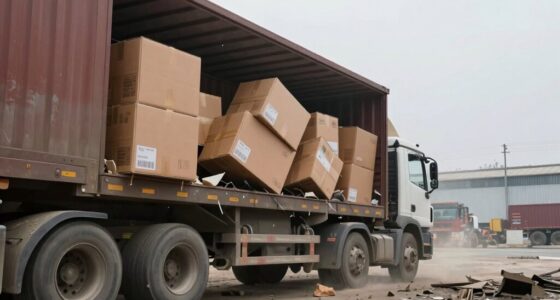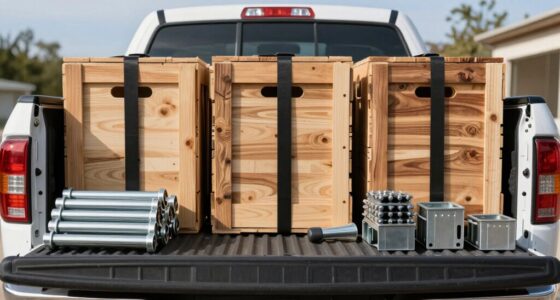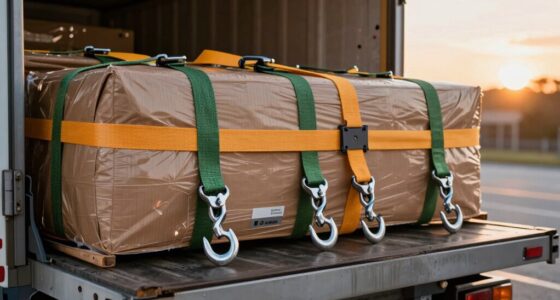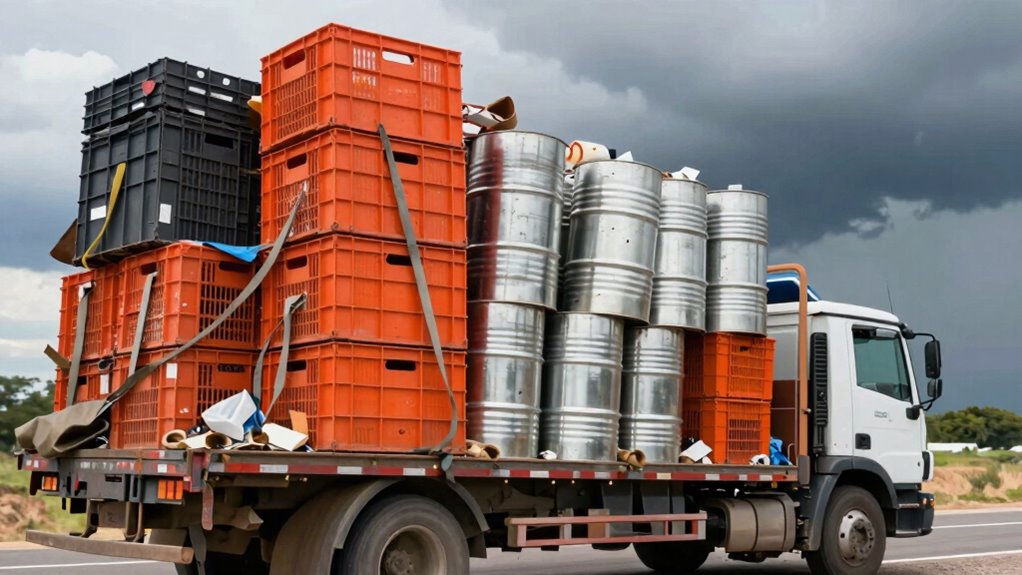

Unsecured loads can shift or fall during transit, causing accidents that lead to costly damages, injuries, and even fatalities. When you neglect proper load securing, you risk fines, legal liabilities, and damage to your reputation. These incidents often result in vehicle repairs, delays, and increased insurance premiums, all adding up to significant expenses. By understanding how to keep loads stable, you can avoid these costly problems. Keep going to learn how to protect yourself and your business.

Get business pricing on garage and car supplies
- Business-only prices and quantity discounts
- Tax-exempt purchasing
- Multiple users, one account, clear invoices
Key Takeaways
- Unsecured loads can shift or fall, causing accidents that result in costly repairs, fines, and legal liabilities.
- Cargo falls can damage other vehicles or infrastructure, leading to expensive property repairs and delays.
- Incidents involving unsecured loads increase insurance premiums and potential legal claims.
- Load instability causes vehicle damage and downtime, raising maintenance costs and operational expenses.
- Neglecting proper securement risks reputational damage and loss of customer trust, impacting future business profitability.

Have you ever wondered what can go wrong when loads are not properly secured? It’s a question worth considering because the consequences can be costly, dangerous, and disruptive. When cargo safety isn’t prioritized, and load stability is compromised, the risks extend far beyond damaged goods. You could be causing accidents that threaten lives, damage infrastructure, and result in hefty fines or legal liabilities. Securing your loads isn’t just a best practice—it’s essential for protecting everyone on the road and maintaining operational efficiency.
Proper load securing saves lives, prevents costly accidents, and keeps operations running smoothly. Safety first on every journey.
Unsecured loads are notorious for shifting during transit, which can throw off the balance of your vehicle. This instability puts extra stress on your vehicle’s suspension, tires, and brakes, increasing wear and tear. Over time, this leads to higher maintenance costs and potential breakdowns. More critically, when loads aren’t stable, they can fall off entirely, creating hazards for other drivers. This is where cargo safety becomes a serious concern. An unstable load can unexpectedly spill onto the roadway, causing accidents, injuries, or even fatalities. These incidents often result in traffic delays, property damage, and, worst of all, loss of life. Recognizing load stability in transport safety can help you adopt better practices and avoid preventable accidents.
The financial implications of unsecured loads are significant. If a load falls off and causes an accident, you’re likely to face hefty fines, insurance claims, and legal costs. Damage to your reputation can also be long-lasting, especially if your company is seen as negligent. Beyond legal penalties, there are operational costs: repairs, vehicle downtime, and increased insurance premiums. These expenses quickly add up, making the initial savings from skipping proper securing methods a false economy. Additionally, understanding cargo securement techniques can help prevent these costly incidents before they happen. Incorporating load securing standards into your protocols is also crucial for consistent safety compliance and risk reduction. Maintaining awareness of load stability principles can further enhance your safety practices.
Moreover, improper load securing can lead to logistical setbacks. When a load shifts or falls, it halts delivery schedules and forces you to spend additional time on cleanup and recovery. This disrupts your workflow, affects customer satisfaction, and can even damage relationships with clients. In the long run, the expense and hassle of dealing with these problems far outweigh any short-term convenience you might think you’re gaining by neglecting proper cargo safety procedures. Understanding the role of load stability in transport safety can help you adopt better practices and avoid preventable accidents.
Ultimately, ensuring load stability isn’t just about compliance; it’s about responsible operations. Properly securing your cargo safeguards not only your investment but also the lives of everyone on the road. By prioritizing cargo safety and implementing reliable securing techniques, you prevent costly accidents, protect your business reputation, and contribute to safer roads for all. The costs of neglecting these practices are simply too high to ignore.
As an affiliate, we earn on qualifying purchases.
Frequently Asked Questions
How Do I Properly Secure Different Types of Loads?
To properly secure different types of loads, you need to follow safety protocols and focus on load anchoring techniques. Use appropriate straps, ropes, or chains to fasten your cargo tightly, ensuring it won’t shift during transit. For fragile or irregular loads, add padding or cushioning. Always check that your securing devices are in good condition and properly attached, and double-check your work before hitting the road to prevent costly accidents.
What Are the Legal Weight Limits for Unsecured Loads?
You need to check your state’s legal weight limits for unsecured loads, which often depend on vehicle type and road regulations. Load certification guarantees your load complies with these limits, helping you avoid penalties. Improperly secured loads can increase insurance liability if accidents happen, so always follow weight restrictions and secure your cargo properly. Staying within legal limits protects you financially and keeps everyone safe on the road.
How Can I Prevent Load Shifts During Transit?
A stitch in time saves nine. To prevent load shifts during transit, you should secure your cargo properly and use load monitoring tools to track movement. Regularly check straps and tie-downs, especially on long trips. Consider cargo insurance for added protection. By staying vigilant and proactive, you minimize the risk of accidents, costly fines, and damage, ensuring a safe, smooth journey every time.
What Safety Equipment Is Recommended for Securing Loads?
You should use safety equipment like ratchet straps, tie-downs, and load bars to secure loads effectively. Before transit, perform a thorough load inspection to guarantee everything’s tight and stable. Also, prioritize safety training for your team so they understand proper securing techniques. Regular inspections and proper equipment use minimize shifting, preventing accidents and costly damages. Staying vigilant and prepared keeps everyone safe and your load secure during transportation.
Are There Specific Regulations for Unsecured Loads in Different States?
You might think regulations are the same everywhere, but they’re not! Each state has its own rules for unsecured loads, often more strict than others, aiming to prevent chaos on the roads. You need to handle cargo insurance and load documentation meticulously to stay compliant. Ignoring state-specific laws can lead to hefty fines or accidents, so always check local regulations and guarantee your load is secured to avoid those costly, catastrophic problems.
As an affiliate, we earn on qualifying purchases.
Conclusion
If you neglect to secure your loads, you’re opening the door to costly problems, much like leaving a window unfastened in a storm. Unsecured items can shift, fall, or cause accidents that lead to fines, repairs, or injuries. Think of it as safeguarding your own peace of mind and wallet—because just like a sturdy lock keeps intruders out, properly securing your loads keeps problems at bay. Stay vigilant, stay safe, and avoid costly surprises.
As an affiliate, we earn on qualifying purchases.
As an affiliate, we earn on qualifying purchases.
Halloween Picks
halloween
As an affiliate, we earn on qualifying purchases.