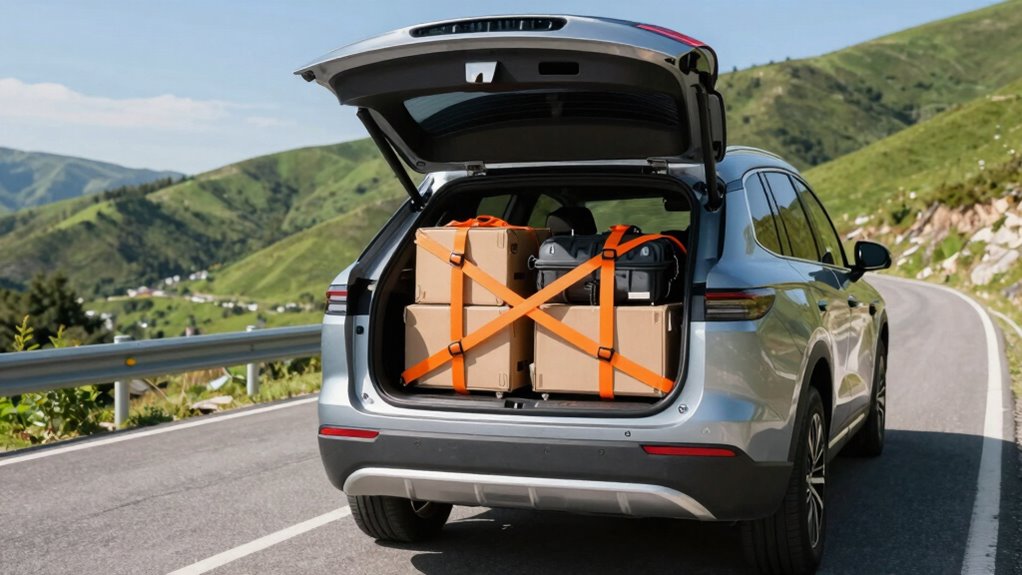

To prevent cargo shift on long trips, you need to secure your items with high-quality tie downs attached to designated points inside your vehicle. Distribute the weight evenly, placing heavier items at the bottom and closer to the center, while lighter items go on top. Keep tension on your straps and regularly check them during stops. Proper organization and securement help maintain stability, so your trip stays safe and smooth—there’s much more to guarantee your cargo stays put as you go.

Get business pricing on garage and car supplies
- Business-only prices and quantity discounts
- Tax-exempt purchasing
- Multiple users, one account, clear invoices
Key Takeaways
- Use high-quality, durable tie downs attached to secure points inside the vehicle.
- Distribute weight evenly, placing heavier items low and centered.
- Maintain tension on tie downs throughout the trip and check regularly during stops.
- Organize cargo to prevent shifting side to side or front to back.
- Regularly inspect and tighten tie downs if cargo shifts or loosens during transit.
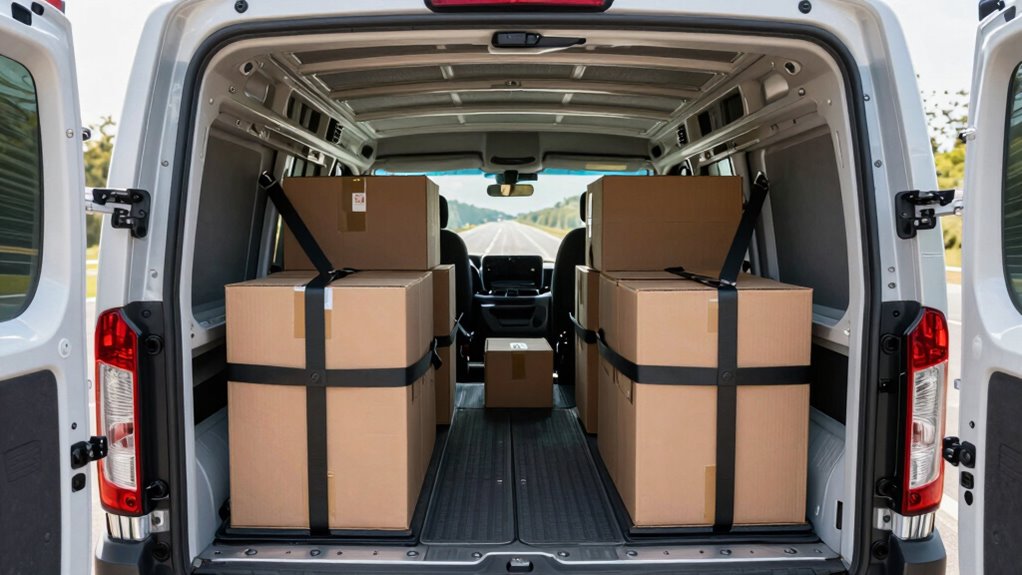
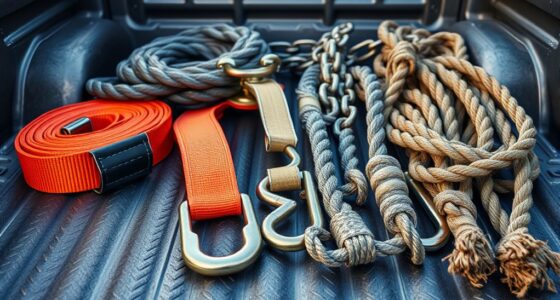
Long road trips can be enjoyable, but cargo shift can turn a smooth journey into a dangerous ordeal. When your vehicle is loaded, how you secure your cargo is critical. Proper cargo tie downs are essential because they keep everything in place, preventing items from shifting during sudden stops or sharp turns. You want to make sure you’re using high-quality, durable tie downs that can handle the weight of your cargo. Attach them to secure points on your vehicle’s interior or cargo area, and make sure they’re tight enough to hold everything firmly without causing damage. It’s tempting to just throw things in the back, but taking the time to properly secure your cargo with tie downs makes all the difference in maintaining stability during your trip. Additionally, understanding the importance of cargo safety can help you better prevent accidents caused by shifting loads.
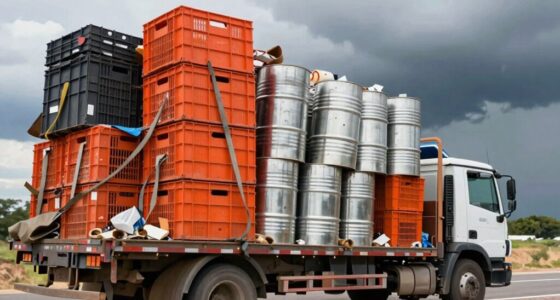
Weight distribution is another key factor. You should aim to evenly spread the load across your vehicle’s cargo area. Heavy items should be placed on the bottom, closer to the vehicle’s center, to lower the center of gravity and improve stability. Lighter items can be stacked on top but should be secured just as carefully. When your load is uneven, it can cause the vehicle to sway or become difficult to control—especially at higher speeds or during lane changes. Before hitting the road, take a moment to organize your cargo, ensuring that the weight is balanced side to side and front to back. This helps to prevent cargo shift, which is an essential aspect of vehicle safety. Proper load securing techniques are vital to prevent accidents and ensure a smooth ride. Regularly inspecting your tie downs and straps during stops can further help maintain safe conditions throughout your journey.
cargo tie down straps heavy duty
As an affiliate, we earn on qualifying purchases.
As an affiliate, we earn on qualifying purchases.
Frequently Asked Questions
What Types of Cargo Are Most Prone to Shifting?
You should watch out for lightweight, loose, or oddly shaped cargo, as they’re most prone to shifting during a long drive. Items with uneven cargo weight are especially risky. To prevent this, use effective securing techniques like strapping, bracing, and padding. Properly distributing cargo weight helps maintain vehicle balance, reducing movement. Always double-check your securing methods before hitting the road to make certain everything stays in place throughout your trip.
How Does Vehicle Type Affect Cargo Stability?
Think of your vehicle like a ship—different hulls handle cargo differently. Your vehicle type greatly impacts cargo stability; trucks, SUVs, and vans often have more space for secure load distribution, reducing shift risks. Using cargo netting and proper load distribution techniques helps keep everything stable, especially in taller or more flexible vehicles. On a trip, I once saw a van’s load shift dangerously—showing how essential vehicle-specific strategies are for safety.
Are There Specific Routes More Prone to Cargo Shift?
Certain routes are more prone to cargo shift due to route hazards and weather impact. You should watch for roads with sharp turns, uneven surfaces, or steep grades, as these increase movement risks. Bad weather like rain, snow, or high winds can further destabilize your cargo. Planning your trip around safer, well-maintained routes and checking weather forecasts helps you avoid these hazards, keeping your cargo secure during long road trips.
What Are the Legal Requirements for Securing Cargo?
You must follow legal requirements that mandate proper weight distribution and securing techniques to prevent cargo shift. Guarantee your cargo is evenly distributed to maintain vehicle stability, and use appropriate restraints like straps and tie-downs. Check local regulations, which often specify minimum tie-downs and securement methods for different cargo types. By adhering to these rules, you minimize risks and stay compliant, protecting yourself and others on the road.
How Often Should Cargo Straps Be Inspected During a Trip?
Ever wondered how often you should check your cargo tie downs? You should inspect them at regular intervals, ideally every 2-3 hours during your trip. Proper load distribution helps minimize movement, but cargo tie downs can loosen or wear over time. By frequently checking your straps and adjusting as needed, you guarantee load stability and safety. Remember, consistent inspections keep your cargo secure and your journey worry-free.
As an affiliate, we earn on qualifying purchases.
Conclusion
By taking these simple steps, you can keep your cargo secure and your trip smooth sailing. Remember, a well-packed vehicle is a safe vehicle—don’t let your cargo be the loose cannon that throws everything off course. Regularly check your load and use proper restraints; it’s better to be safe than sorry. After all, it’s better to prevent a problem than to deal with the fallout later. Keep your cargo steady, and enjoy your journey!
adjustable ratchet straps for trucks
As an affiliate, we earn on qualifying purchases.
As an affiliate, we earn on qualifying purchases.
cargo organization and securing tools
As an affiliate, we earn on qualifying purchases.
As an affiliate, we earn on qualifying purchases.
Fall Picks
fall essentials
As an affiliate, we earn on qualifying purchases.