When loading a truck bed alone, start by clearing the space and laying out all items to visualize fit. Use proper lifting techniques, bending your knees and lifting with your legs, and employ tools like dollies for heavy objects. Place heavier items at the front and lighter ones on top or towards the rear for balance. Secure everything with straps or tie-downs, checking each connection. Keep safety in mind and follow these tips to make the process smoother—you’ll find even more helpful strategies as you go.

Get business pricing on garage and car supplies
- Business-only prices and quantity discounts
- Tax-exempt purchasing
- Multiple users, one account, clear invoices
Key Takeaways
- Clear and organize the truck bed, laying out items to plan efficient placement before loading.
- Use proper lifting techniques, bending knees and lifting with your legs to avoid injury.
- Load heavy items at the front near the cab and lighter items on top or towards the rear for balance.
- Secure each item with straps or tie-downs to prevent shifting during transit.
- Utilize assistive devices like dollies to move heavy objects safely and reduce strain.
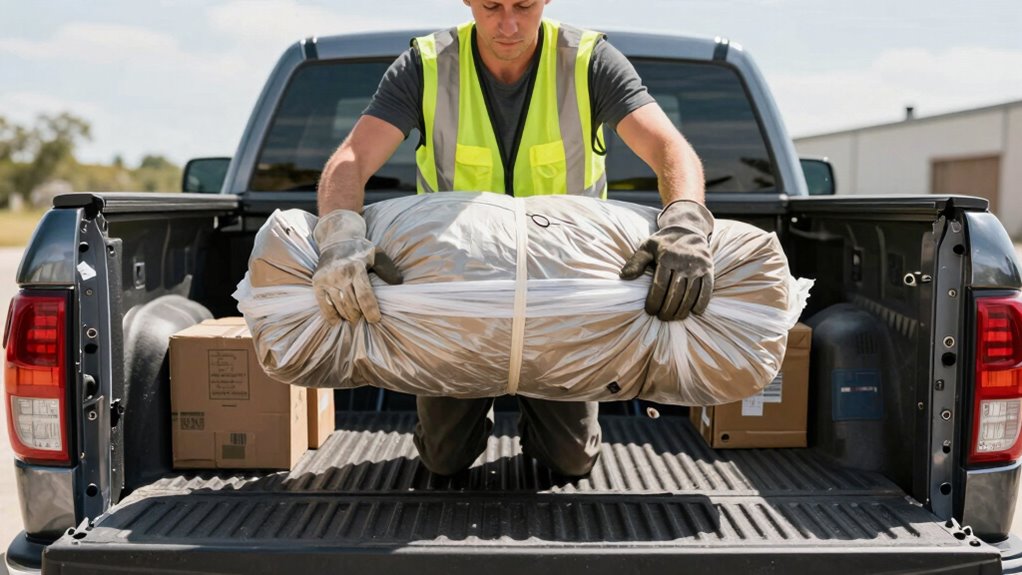
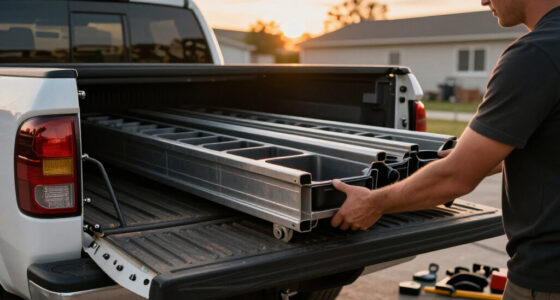
Ever wondered how to efficiently load a truck bed on your own? It’s a common challenge, especially when you’re handling everything without help. The key is to plan ahead so you can lift heavy objects safely and secure cargo properly once it’s in the truck. Start by clearing out the truck bed and laying out all the items you plan to load. This gives you a clear workspace and helps you visualize how everything will fit, saving time and effort later.
When lifting heavy objects, always prioritize safety. Use proper techniques—bend your knees, keep your back straight, and lift with your legs, not your back. If an item is too heavy or awkward, look for tools like dollies or hand trucks that can assist you. These devices reduce strain and help you move bulky items more easily. If you don’t have a helper, consider breaking larger items into smaller, more manageable pieces. This makes lifting safer and more manageable for you alone. Additionally, understanding weight distribution principles can make the process safer and more efficient, especially since knowing how to balance loads is crucial for safe transport. Being aware of load shifting techniques can also help prevent accidents during transit.
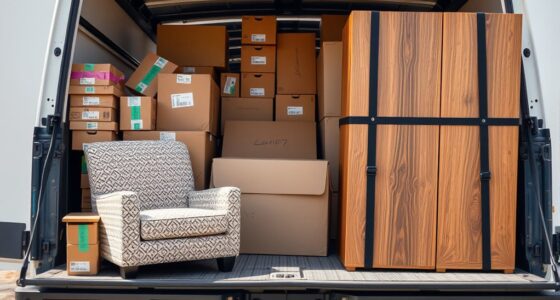
As you start placing items in the truck bed, think about the weight distribution. Heavy objects should go at the front or bottom of the bed, close to the cab, to prevent the load from shifting during transit. Lighter items can be stacked on top or towards the rear. Always keep in mind that balancing the load isn’t just about preventing damage to your cargo—it also affects your truck’s handling and safety on the road. Use tie-downs, straps, or bungee cords to secure each piece as you load it. The goal is to prevent any movement while driving, which can cause damage or accidents. Additionally, weatherproofing your cargo can help protect your items from rain or moisture during transport.
Securing cargo properly is essential, especially when you’re alone. Make sure all straps are tight and hooks are secured to solid anchor points in the truck bed. Double-check each connection before you start driving. If you’re stacking items, consider placing a tarp or blanket between layers to avoid shifting and protect fragile items. It can also be helpful to periodically revisit your secured load during stops to ensure everything remains tight and in place. Additionally, leaving enough space to access essential areas of your truck for future adjustments or additional loading can save you time and effort later. Being familiar with cargo management techniques can further ensure your load remains stable and secure during transit. Remember, a well-secured load not only protects your cargo but also keeps you safe on the road. Practicing these skills and techniques can significantly streamline your solo loading process.
As an affiliate, we earn on qualifying purchases.
Frequently Asked Questions
What Tools Can Help With Loading a Truck Bed Alone?
You can use tools like a hand truck, ramps, and straps to help with loading a truck bed alone. These tools improve your loading techniques by making heavy items easier to move and secure. Always follow safety precautions, such as wearing gloves and ensuring the vehicle is stable. Ramps reduce strain, while straps keep everything in place during transport, making the process safer and more efficient when you’re working solo.
How Do I Secure Items Properly in a Solo Load?
Securing your load is like anchoring a ship in a storm—confidence comes from the right tools. Use cargo nets to hold bulky items in place and tie down straps for smaller or heavier objects. Tighten straps firmly, ensuring they’re snug but not damaging. Double-check all anchors before driving. Properly secured cargo prevents shifting, keeps you safe, and protects your vehicle—and your peace of mind.
What’s the Best Way to Lift Heavy Objects Alone?
To lift heavy objects alone, use proper loading strategies and prioritize safety precautions. Bend your knees, keep your back straight, and lift with your legs rather than your back to prevent injury. Position yourself close to the object, secure a firm grip, and use your leg muscles to lift smoothly. If the item is too heavy, consider using tools like a dolly or ask for help to avoid accidents.
How Do I Prevent Items From Sliding During Transport?
To prevent items from sliding during transport, focus on truck bed organization and load stability. Use ratchet straps or bungee cords to secure items tightly, ensuring they won’t shift with movement. Place heavier objects on the bottom and lighter ones on top to maintain balance. Adding non-slip mats or bed liners also helps keep items in place. Regularly check and tighten straps during transit to prevent any movement and keep your load safe.
Are There Ergonomic Tips for Loading Efficiently Alone?
To load efficiently alone, focus on ergonomic tips that protect your muscles. Start with muscle strengthening exercises to prepare your body for lifting, and incorporate stretching exercises to increase flexibility. When lifting, bend at your hips and knees instead of your waist, keeping the load close to your body. Use your leg muscles rather than your back, and take breaks if needed to avoid strain. Proper technique reduces injury and makes loading easier.
heavy duty cargo straps for trucks
As an affiliate, we earn on qualifying purchases.
As an affiliate, we earn on qualifying purchases.
Conclusion
Now that you’ve mastered loading your truck bed solo, remember to keep safety first—think of it as your own personal Iron Man suit. Use proper lifting techniques, secure your load, and don’t rush the process; patience is key. With these tips, you’ll be a one-person hauling pro in no time, even if you’re channeling a bit of 19th-century grit. Before you know it, you’ll be saying, “Houston, we have no problem,” every time you load up.
dolly hand truck for moving heavy objects
As an affiliate, we earn on qualifying purchases.
As an affiliate, we earn on qualifying purchases.
As an affiliate, we earn on qualifying purchases.
Halloween Picks
halloween
As an affiliate, we earn on qualifying purchases.