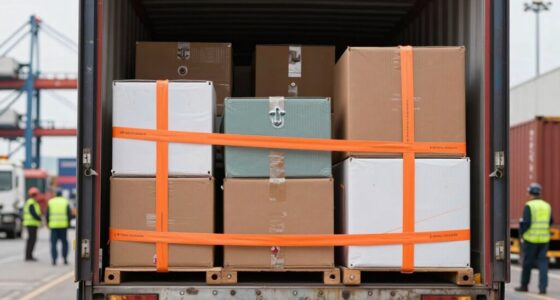
Even at low speeds, cargo movement remains dangerous because minor mishandling or equipment errors can cause accidents. Poor communication, limited visibility, and tight spaces increase the risk of injuries or cargo falling. Small miscalculations or inattentiveness can lead to shifting loads or collisions. Proper safety practices and attention are essential, as hazards don’t disappear with speed. If you keep exploring, you’ll discover how to better protect yourself and your work environment.

Get business pricing on garage and car supplies
- Business-only prices and quantity discounts
- Tax-exempt purchasing
- Multiple users, one account, clear invoices
Key Takeaways
- Mishandling equipment at low speeds can still cause accidents and cargo shifts.
- Limited visibility and poor communication in confined spaces increase collision risks.
- Improper training or procedures can lead to hazards despite slow movement.
- Cargo instability and equipment malfunctions pose dangers even at reduced velocities.
- Safety lapses, such as neglecting inspections, elevate risks during slow cargo handling.
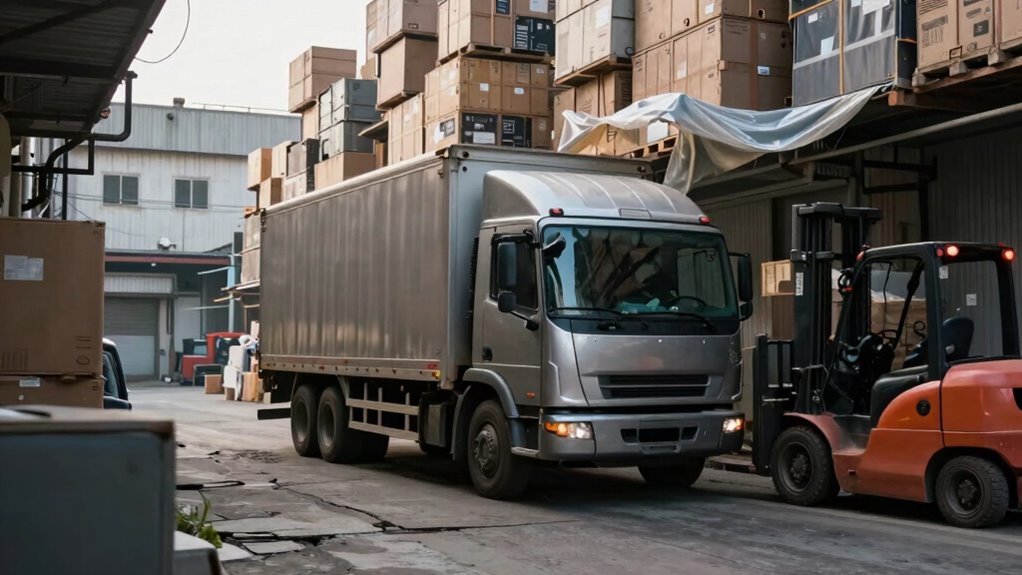
Have you ever considered that moving cargo at low speeds can still pose significant dangers? It’s a common misconception that slow-moving freight is inherently safe, but the reality is quite different. Even at reduced velocities, mishandling equipment or neglecting safety protocols can lead to accidents, injuries, or damage. Handling equipment, such as forklifts, conveyor belts, and pallet jacks, may seem straightforward when operating slowly, but if used improperly or without proper training, these tools can quickly become hazardous. A slight miscalculation or inattentiveness can cause the cargo to shift unexpectedly, leading to falls or crushing injuries. Additionally, these incidents often happen quietly, without the immediate sense of urgency that comes with high-speed operations, which can cause operators to overlook potential risks until it’s too late.
Another critical factor contributing to danger at low speeds is the importance of regulatory compliance. Regulations are in place to guarantee that everyone involved in cargo movement — from operators to supervisors — adheres to safety standards designed to prevent accidents. When these rules are in place but not followed diligently, even slow, deliberate movements can become risky. For example, failing to conduct proper inspections of handling equipment or neglecting load stability checks can result in cargo falling or tipping over, causing injuries or property damage. Regulatory compliance also involves maintaining equipment in good condition and following proper procedures, which reduces the likelihood of mechanical failure or operator error. If you operate without regard to these standards, you increase the chance of accidents, regardless of speed. Adherence to safety standards is essential in minimizing risks during cargo handling.
It’s also crucial to remember that low-speed movement often occurs in confined spaces or near other workers, where the margin for error is slim. A slow-moving load might seem less threatening, but if visibility is poor or communication is lacking, accidents can happen. For instance, if you don’t signal intentions clearly or fail to ensure that the path is clear, the cargo could unexpectedly hit a worker or obstacle. Moreover, the inertia of cargo isn’t negligible. Even moving slowly, a heavy load can cause serious injuries if it shifts or falls unexpectedly. That’s why it’s essential to use proper handling equipment, follow safety protocols, and stay vigilant at all times. Recognizing the importance of proper handling practices ensures that safety is maintained regardless of the cargo’s speed. Being aware of the behavior of heavy loads during movement helps in anticipating and preventing potential accidents.
In essence, moving cargo at low speeds isn’t inherently safe; it requires the same level of caution, discipline, and adherence to safety standards as high-speed operations. Handling equipment must be operated correctly, and regulatory compliance should be strictly maintained to prevent avoidable accidents. Recognizing that dangers persist regardless of speed helps you stay alert and prioritize safety in every step of cargo movement, protecting yourself and your colleagues from harm.
Products Worth Considering

VIOFO A229 Plus 2K Front and Rear Dash Cam with Dual STARVIS 2 Sensors and HDR

NOCO Boost GB150 3000A UltraSafe Jump Starter, 12V Lithium Battery Booster

Autel Home EV Charger up to 50A J1772 Hardwired Level 2 Charger with 25 ft Cable
As an affiliate, we earn on qualifying purchases.
Frequently Asked Questions
How Do Cargo Types Influence Danger Levels During Low-Speed Movement?
You should know that cargo types considerably influence danger levels during low-speed movement. Hazardous materials pose a higher risk because they can leak, ignite, or explode if not properly secured. Cargo stability also matters; unstable loads can shift unexpectedly, causing accidents or damage. Even at low speeds, improper handling of hazardous or unstable cargo increases the risk of spills, fires, or injuries, so always prioritize secure packaging and careful monitoring.
What Safety Measures Can Reduce Risks at Low Cargo Speeds?
Think of cargo handling as tending a delicate garden—you need the right tools and care. To reduce risks at low speeds, follow strict safety protocols, such as securing loads properly and maintaining clear communication. Regular inspections and training help prevent accidents. By treating cargo with respect and attention, you guarantee safe movement, preventing mishaps that could cause damage, injuries, or delays, even at slow speeds.
Are There Specific Environments More Hazardous for Low-Speed Cargo Movement?
Certain environments, like tight spaces or uneven surfaces, make low-speed cargo movement more hazardous. Environmental factors such as poor lighting, uneven flooring, or limited space increase the risk of accidents. Worker training is essential, as it guarantees you understand how to navigate these environments safely. By recognizing hazards and following proper procedures, you reduce the chance of collisions or injuries, even at low speeds, guaranteeing safer cargo handling practices.
How Does Cargo Weight Distribution Affect Safety During Transport?
Imagine a tightrope walker balancing carefully—if their center of gravity shifts, they risk falling. Similarly, improper cargo weight distribution causes weight imbalance, affecting a vehicle’s stability. When the center of gravity isn’t aligned properly, even low-speed transport becomes hazardous, risking tipping or loss of control. You must guarantee cargo is evenly distributed to maintain stability, protect safety, and prevent accidents during transit.
Can Technology Improve Safety in Low-Speed Cargo Handling?
Yes, technology can improve safety during low-speed cargo handling. Automated sensors detect weight shifts, instability, or obstacles, alerting you before accidents happen. Using protective gear, like gloves and helmets, provides an extra layer of safety. Combining these tools helps you respond quickly to hazards, reducing injury risks. Embracing these advancements guarantees safer cargo movement, even at slow speeds, by keeping you informed and protected throughout the process.
Conclusion
Even at low speeds, cargo movement can be dangerously unpredictable. A recent study shows that nearly 60% of cargo-related accidents happen during loading, unloading, or slow movement, often leading to injuries or fatalities. You might think slow means safe, but the risk of shifting loads, falling objects, or imbalance remains high. Always stay alert and follow proper safety protocols—because even at a crawl, cargo can turn hazardous in a split second.