To keep your cargo secure in your truck bed, identify strong anchor points like D-rings or stake pockets and attach durable straps such as ratchet straps rated for your load. Use even tension and crisscross patterns to prevent shifting, and regularly check the straps and hardware during transit. Ensuring proper hardware installation and choosing the right straps makes a big difference. Keep everything tight and in good shape, and you’ll learn how to keep it all secure every time.
Key Takeaways
- Use high-quality ratchet straps with at least 2-inch webbing and a safe breaking strength for secure fastening.
- Distribute at least four anchor points evenly across the cargo to prevent shifting during transit.
- Tie straps in crisscross or diagonal patterns to resist lateral and forward movement effectively.
- Regularly inspect straps and hardware for wear, fraying, or damage, and tighten or replace as needed.
- Cover cargo with tarps or nets and pad contact points to protect and stabilize loads against weather and debris.

Rhino USA Integrated Cargo Magic Bed-Mounted Retractable Ratchet Straps for Ford Trucks (2015+ F-150 & 2017+ F-250) – BoxLink Compatible, Removable, 360° Swivel, Heavy-Duty Tie Downs
FORD BOXLINK COMPATIBLE (2015+ TRUCKS) Designed specifically for 2015+ Ford F-150 and 2017+ F-250 pickup trucks, this system…
As an affiliate, we earn on qualifying purchases.
As an affiliate, we earn on qualifying purchases.
Understanding Your Truck Bed and Cargo

To effectively secure items in your truck bed, you first need to understand its structure and the nature of your cargo. Your truck bed is built with a combination of surfaces, anchor points, and mounting options, each influencing how you secure loads. Recognize whether your cargo is heavy, bulky, or delicate, as this affects your choice of tie-down points and hardware. The bed may feature factory stake pockets, D-rings, or frame-mounted anchors, which are stronger than the bed surface itself. Consider the shape and weight distribution of your cargo—large or uneven loads require more strategic placement of tie-downs. Knowing your truck’s layout and cargo characteristics helps you select appropriate anchor points and plan a secure, stable cargo setup. Understanding truck bed features is essential for effective cargo management, and identifying the factory anchor points can make securing your load much easier and safer.

PAMAZY 6PCS Heavy Duty Steel D Rings Tie Down Anchors, Ultra Durable 3500 Pound Breaking Strength Surface Mount Hooks Securing Cargo for Trailer, Truck Bed, with Screws & Bolts
✔️ MAXIMUM PROTECTION OF GOODS DURING TRANSPORT: Tie down anchors are used mainly to secure on vehicles such…
As an affiliate, we earn on qualifying purchases.
As an affiliate, we earn on qualifying purchases.
Selecting the Right Tie-Down Hardware
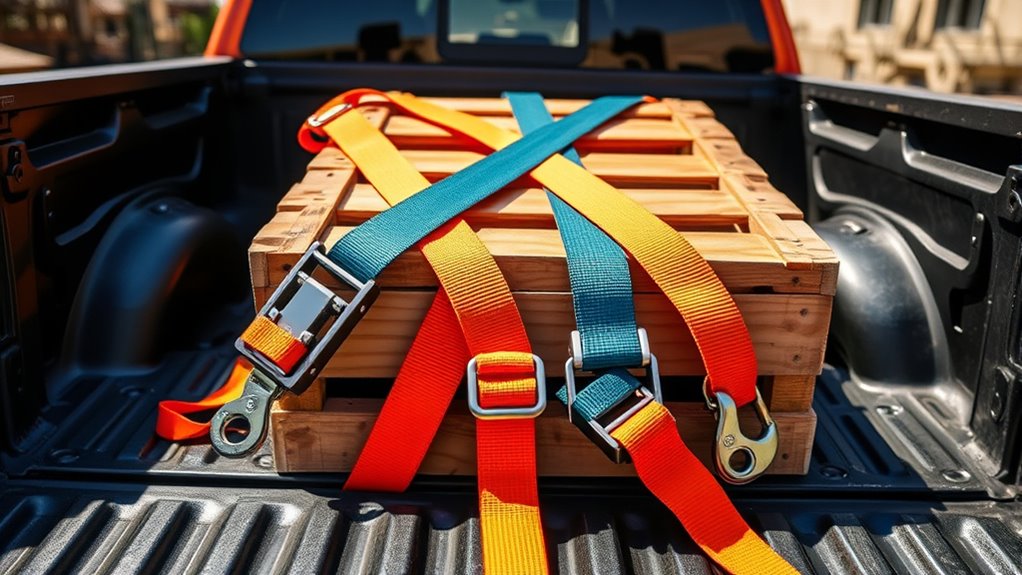
Choosing the right tie-down hardware is key to securing your cargo effectively. First, consider your truck’s anchor points—frame-mounted tie downs offer the most strength, attaching directly to the frame, while bed-mounted options are less stable. For a low-profile look, retractable tie-downs fold away when not in use. If your truck has factory stake pockets, use stake pocket anchors to avoid drilling. D-rings, hooks, and rope rings are versatile options that attach to various surfaces. Use ratchet straps for secure tightening and load stability, ensuring they have a weight rating exceeding your cargo. For lighter loads or quick fixes, bungee cords work temporarily. Always match hardware to your cargo’s size and weight, and opt for durable, weather-resistant materials to withstand outdoor conditions. Additionally, selecting hardware designed for modern vehicle compatibility can enhance safety and ease of use. Considering load distribution is also important to prevent shifting during transit, especially for larger or irregularly shaped items. Using high-quality, eco-friendly Suprem fabric materials for any soft covers or protective gear can also help in maintaining durability and environmental sustainability.

Tranqun Cargo Net for Pickup Truck Bed, XXL Waterproof Truck Bed Tarp Cover & Net Kit, 4' x 6' Stretches to 8' x 12', Complete Cargo Securing Set with D-Rings, Hooks & Rope
All-Weather Protection: This all-in-one kit not only keeps your cargo securely in place but also provides reliable protection…
As an affiliate, we earn on qualifying purchases.
As an affiliate, we earn on qualifying purchases.
Properly Installing Your Anchor Points
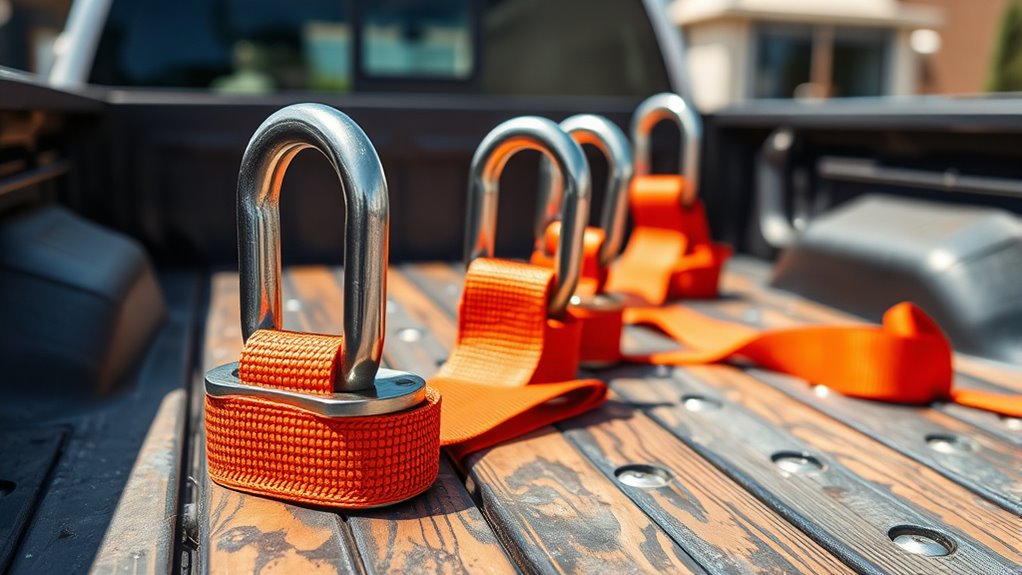
Proper installation of your anchor points is essential for guaranteeing your cargo stays secure during transport. You want sturdy, reliable attachment points that won’t fail under load. Use vehicle-specific brackets for frame-mounted anchors, ensuring they bolt directly to the frame. For stake pockets or existing hardware, confirm they are rated for your load. Secure tie-down straps to these fixed points, maintaining recommended tension levels. Spread at least four anchor points evenly across your load for stability. To visualize, consider this setup:
| Anchor Point Type | Location | Hardware Needed |
|---|---|---|
| Frame Mount | Truck frame | Bolts, brackets |
| Stake Pocket | Bed sides | Factory pockets |
| D-ring | Bed surface | Mounting plates |
| Bed Cleats | Bed floor | Bolts, cleats |
| Molle Panel | Bed wall | Panel, screws |
Proper installation ensures your cargo remains secure during every trip. Using appropriate hardware and following manufacturer guidelines further enhances load security. Ensuring that the hardware used is rated for your cargo weight capacity is crucial for safety and reliability. Additionally, regularly inspecting your anchor points for signs of wear or damage helps maintain their load-bearing capacity over time. Incorporating proper load distribution techniques can further prevent shifting and improve overall safety. Remember that vehicle-specific hardware options are designed to match your truck model for optimal safety.

Stake Pocket D Ring, 18000lbs D Rings Heavy Duty Stake Pocket Tie Down for Trailers and Flatbeds Trucks, Removable Trailer Tractor Tie Down Accessories Anchor for Flatbed Cargo Trucks, 4 Pack
【UNRIVALED STRENGTH】 The stake pocket d ring boasts a remarkable breaking strength of 18,000 lbs(Maximum Load) and a…
As an affiliate, we earn on qualifying purchases.
As an affiliate, we earn on qualifying purchases.
Choosing the Best Straps for Your Load

Selecting the right straps for your load guarantees that your cargo stays secure throughout the trip. For most situations, ratchet straps offer the versatility and adjustable tension you need to keep items tight and stable. Choose straps with a webbing width of at least 2 inches for heavier loads, as wider straps distribute pressure more evenly. Polyester webbing resists stretching, UV rays, and abrasion, making it ideal for outdoor use. For lighter, quick-securements, bungee cords can help, but don’t rely solely on them for heavy or hazardous cargo. Always select straps with a breaking strength rated above your load’s weight—aim for a safety margin. Heavy-duty straps with higher load ratings provide extra security, especially for oversized or valuable items. Proper strap safety ensures your load stays put and reduces the risk of accidents. When selecting straps, consider European cloud solutions that prioritize innovative, sustainable materials for eco-friendly cargo securing options.
Securing Cargo With Effective Tying Techniques
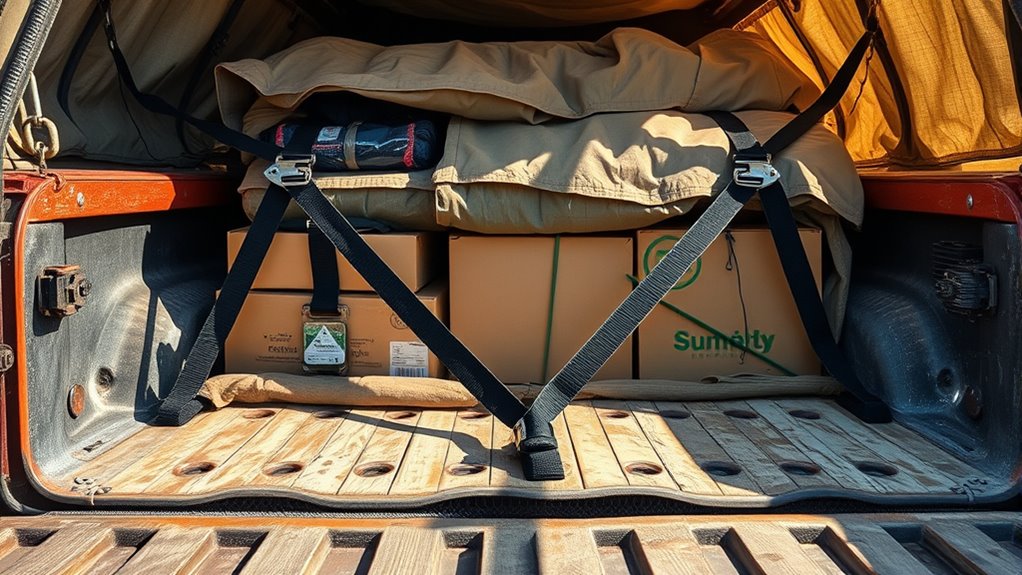
Effective tying techniques are essential to keep your cargo secure and prevent shifting during transit. Start by using a crisscross or diagonal pattern with your straps, which helps restrict lateral and forward movement. Confirm each strap is tightened evenly, but avoid over-tightening that could damage your cargo or straps. Use ratchet straps for precise tension control, and secure loose ends with strap keepers to prevent flapping. Regularly inspect anchor points and straps during your trip to catch any slack or wear. For added security, pad straps that contact sensitive cargo surfaces, preventing damage. Properly spaced, multiple tie-down points distribute the load evenly, enhancing stability. Additionally, understanding load distribution is crucial for preventing cargo from shifting or tipping during transit. Applying the right tie-down techniques ensures your cargo remains stable, even on rough roads. Mastering these techniques ensures your cargo stays put, no matter the road conditions.
Maintaining and Inspecting Your Tie-Down System
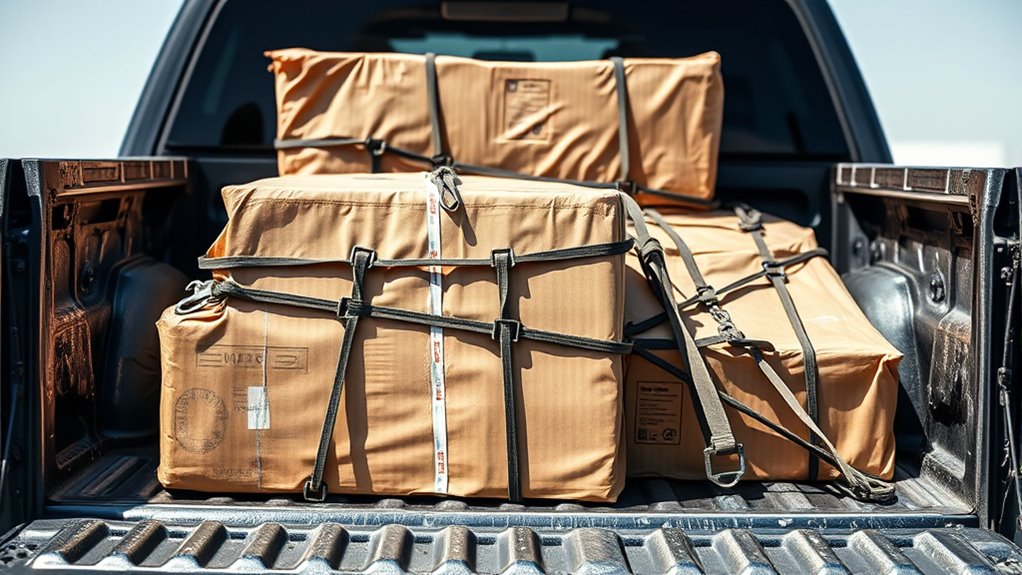
You should regularly inspect your tie-down system to catch any signs of wear or damage before your trip. Check the tension of your straps to guarantee they still hold the cargo securely, and tighten if needed. If you find any damaged hardware, replace it immediately to prevent accidents and keep your load safe. Additionally, ensuring your straps maintain proper high tension levels optimizes their holding power and prevents slippage during transit. Regularly reviewing your vacuum features to consider, such as durability and maneuverability, can also help you select the most effective securing methods for your cargo. Being aware of sticking wall decor options can help you better understand how to secure items that are part of your cargo, especially if they are delicate or valuable. Incorporating proper ventilation methods can also prevent moisture buildup that might weaken your tie-downs over time.
Regular Inspection Schedule
Regularly inspecting your tie-down system is essential to guarantee cargo stays secure during transport. You should check your straps, hardware, and anchor points before every trip and periodically during long hauls. Look for signs of wear, fraying, or damage on straps, especially near buckles and connection points. Ensure all hardware, like D-rings, hooks, and anchors, are firmly attached and free of rust or corrosion. Tighten any loose straps and replace any that show signs of deterioration. Confirm that anchor points haven’t shifted or loosened over time. Establish a routine inspection schedule—such as before each trip or weekly during prolonged use—to catch issues early. Incorporating routine maintenance can help extend the lifespan of your tie-down system and prevent unexpected failures. Regular checks help prevent load shifts, accidents, and damage, keeping your cargo secure and your trip safe. Paying attention to visual and auditory cues can also assist in early detection of potential problems. Additionally, inspecting hardware integrity regularly ensures that all components remain reliable and safe for use. Utilizing visual inspections can help you identify issues before they develop into larger safety concerns.
Check Strap Tension
Checking strap tension is a critical step to guarantee your cargo remains secure during transport. You should regularly verify that each strap is tight enough to prevent movement but not so tight that it damages your load. Use a tension gauge or simply press down on the load to see if there’s any shifting. Tighten ratchet straps carefully, ensuring they’re snug without over-tensioning. Remember, straps can loosen over time due to vibration or road conditions, so frequent checks are essential during long trips. Inspect all straps and anchor points for signs of wear, fraying, or slack. Proper tension helps maintain load stability, reduces the risk of accidents, and prolongs the life of your tie-down system. Consistent tension checks keep your cargo secure from start to finish. Additionally, choosing the right self-watering planters can help prevent overwatering and shifting of your load if transporting plants or delicate items.
Replace Damaged Hardware
Damaged hardware can compromise the security of your cargo and the safety of your trip. If you notice rust, cracks, or deformation, it’s time to replace it. Faulty hardware can fail under load, causing your cargo to shift or fall.
Here’s what to check and replace:
- Corroded or rusted hooks and D-rings – Replace to maintain strength and prevent snapping.
- Bent or cracked stake pocket anchors – Swap out for sturdy, undamaged ones.
- Worn or frayed straps – Replace with new webbing to ensure secure tension.
- Damaged or loose bolts and fasteners – Tighten or replace to keep hardware firmly attached.
Regularly inspecting and substituting compromised hardware keeps your load secure and your trip safe. Never ignore signs of wear or damage.
Additional Tips for Safe and Secure Transport

To make certain your cargo stays secure during transport, it’s pivotal to use the right combination of hardware, technique, and accessories. Always double-check anchor points before loading, ensuring they’re rated for your cargo weight. Use even tension on all straps to prevent shifting. Regularly inspect straps and anchor points during transit. Consider padding between straps and delicate items to avoid damage. Use a variety of hardware like D-rings, stake pocket anchors, or bed cleats for versatile securing options.
| Tip | Hardware/Method | Purpose |
|---|---|---|
| Double-check tension | Ratchet straps | Prevent cargo movement |
| Use multiple anchor points | D-rings, stake pockets | Enhance stability |
| Cover cargo with tarps | Cargo nets, tarps | Protect from weather and debris |
| Regularly inspect securement | Visual checks | Maintain safety throughout transport |
Frequently Asked Questions
How Do I Choose Between Bed-Mounted and Frame-Mounted Tie Downs?
You should choose between bed-mounted and frame-mounted tie downs based on your cargo’s weight and stability needs. Frame-mounted tie downs attach directly to the truck frame, offering stronger, more secure anchoring for heavy loads. Bed-mounted options are easier to install but less sturdy, suitable for lighter cargo. For maximum security and heavier loads, go with frame-mounted tie downs, ensuring they’re properly installed on the vehicle’s frame.
Can I Use Multiple Types of Hardware Together for Better Security?
Yes, you can definitely use multiple hardware types together for better security. Combining options like frame-mounted tie downs, D-rings, and stake pocket anchors creates a more stable and versatile setup. Just make sure all hardware is rated for your cargo’s weight, and attach straps securely to these anchor points. Using different hardware guarantees your load stays put, even during sharp turns or bumpy roads, giving you peace of mind.
What’s the Ideal Tension Level for Different Cargo Weights?
For most truck loads, aim for about 300 pounds of tension per strap, especially for larger or heavier cargo like campers or furniture. For lighter loads, reduce tension to avoid damage, around 150-200 pounds. Always tighten straps evenly, ensuring they’re snug but not over-tightened, which can harm your cargo or hardware. Regularly check tension during transit, adjusting as needed to keep everything secure and stable.
How Do Weather Conditions Affect Tie-Down Hardware and Straps?
Weather conditions can considerably impact your tie-down hardware and straps. Rain, snow, or humidity cause metal components to rust and weaken over time, reducing their strength. UV rays from the sun degrade synthetic straps like polyester, making them brittle and prone to cracking. Cold temperatures can make straps less flexible and more likely to snap, while ice and moisture can cause slipping. Regularly inspect and replace damaged hardware and straps to keep your load secure.
Are There Legal Regulations for Securing Cargo in My Truck Bed?
They say, “Better safe than sorry,” and that’s especially true when it comes to cargo regulation. You need to follow federal and state laws that specify how securely your load must be tied down, including load limits, strap ratings, and proper placement. Check your local regulations before hauling, because failing to secure your cargo properly can lead to fines, accidents, and damage. Stay compliant to keep yourself and others safe.
Conclusion
Remember, your cargo’s safety depends on how well you strap it down—think of your truck bed as a fortress and your straps as the guards. When you choose the right hardware, install it correctly, and secure your load with care, you’re not just transporting items; you’re protecting yourself and others. Don’t let a loose load be the weak link—because in the end, a secure cargo isn’t just a choice, it’s your guarantee of a safe journey.