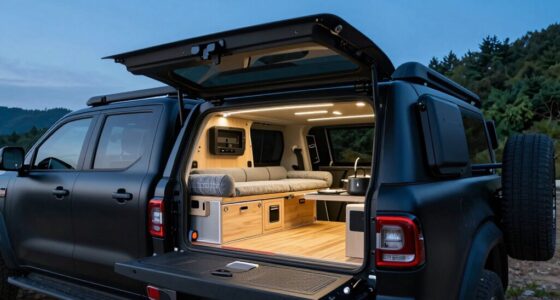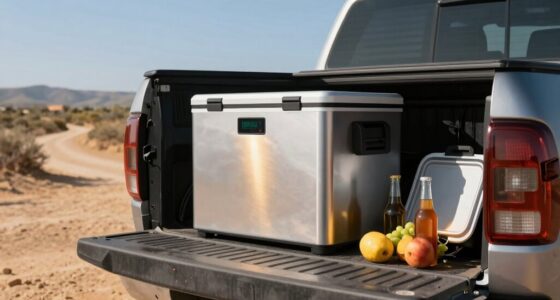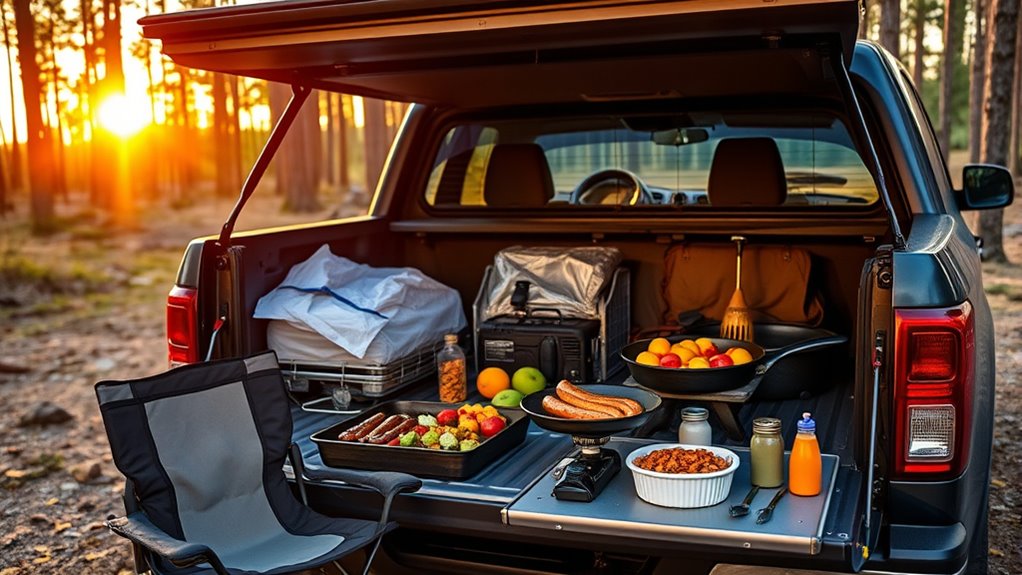

For truck bed camping without a big kitchen, focus on no-cook staples like hummus with pita, canned foods, jerky, fresh fruits, and pre-made salads that need no heating. Add minimal gear like a small pot or foil packets for warm meals. Make simple wraps, sandwiches, or canned tuna with shelf-stable ingredients for easy, no-refrigeration options. Keep it simple, versatile, and safe—continue on to discover more ideas for tasty, hassle-free meals while on the road.

Get business pricing on garage and car supplies
- Business-only prices and quantity discounts
- Tax-exempt purchasing
- Multiple users, one account, clear invoices
Key Takeaways
- Use no-cook staples like hummus, fresh veggies, canned foods, and high-protein snacks for quick, easy truck bed meals.
- Prepare foil packet meals or heat canned foods with a portable stove or fire pit for simple warm options.
- Create wraps and sandwiches with shelf-stable ingredients, deli meats, and cheese for portable, no-refrigeration meals.
- Incorporate minimal gear like small pots, foil, and canned foods to reduce cleanup and maximize convenience.
- Store foods properly and combine no-cook and warm meals for variety and safety during truck bed camping.
As an affiliate, we earn on qualifying purchases.
No-Cook Meal Staples for Easy Truck Bed Dining
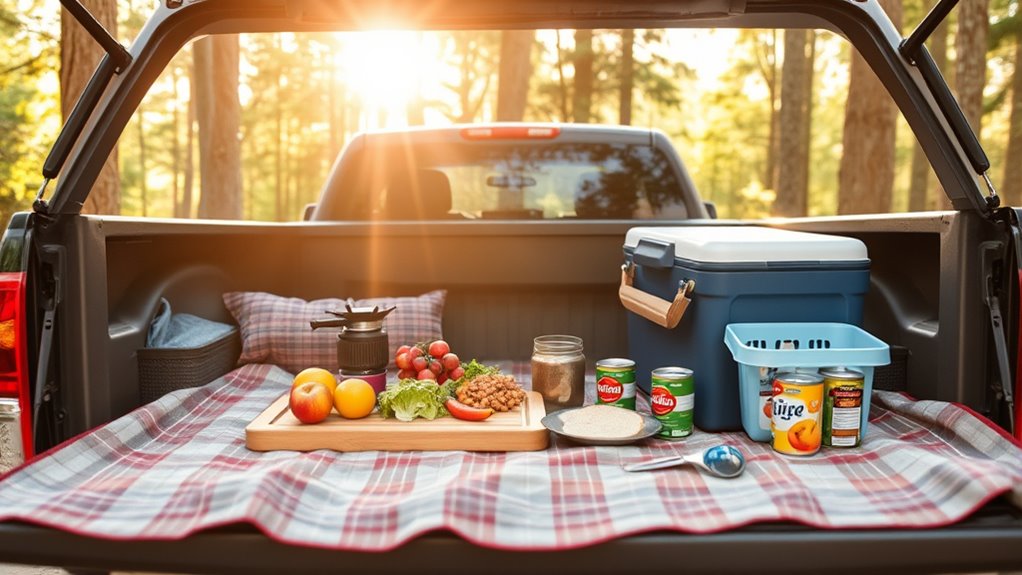
When it comes to truck bed camping without a stove, having the right meal staples on hand makes all the difference. Stock up on easy, no-cook options like hummus with pita bread and fresh veggies, which give you nutrition without heating. Canned foods such as baked beans, chili, or soups are convenient—just open and enjoy. High-protein snacks like beef jerky and meat sticks keep your energy up with minimal effort. Fresh fruits and veggies, paired with ranch or peanut butter, make hydrating, healthy snacks. Pre-made salads and dips like tuna or chicken salad are portable and ready to eat. Additionally, understanding the importance of color accuracy in your food presentation can make your meals look more appealing even when prepared quickly. These staples require little to no preparation, making your camping experience simpler and more enjoyable.
As an affiliate, we earn on qualifying purchases.
Simple Warm Meals With Minimal Equipment
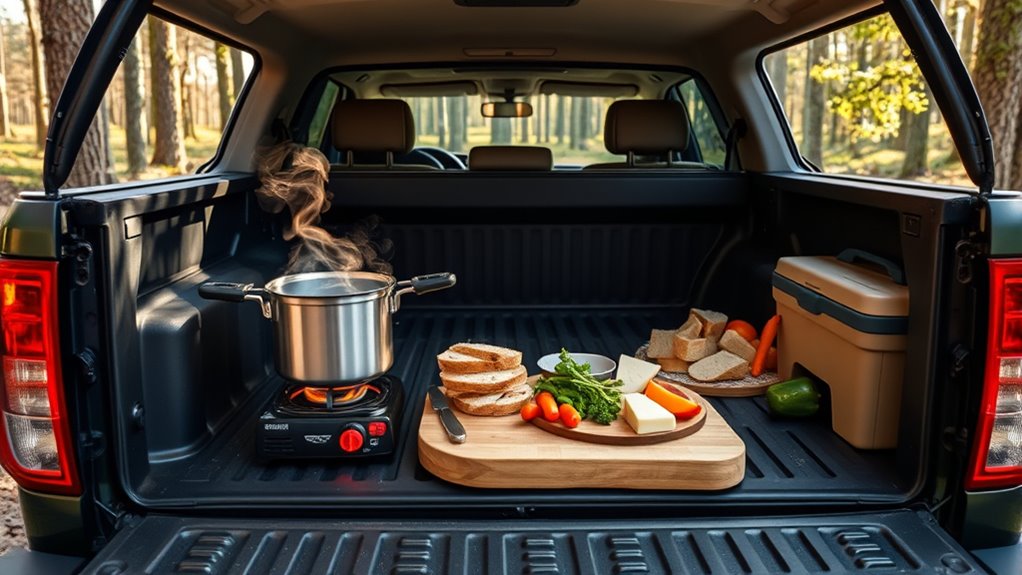
After stocking up on no-cook staples, adding warm meals to your truck bed menu is simple with minimal gear. You only need a small pot or kettle to heat water, which can be used for instant noodles, canned soups, or instant oatmeal. A portable stove or fire pit works well for boiling water quickly and safely. Pre-cooked foods like canned chili or baked beans can be warmed directly in their cans, using a lightweight can opener. For more hearty options, foil packet meals are perfect; you combine ingredients, fold them into foil, and cook over a small flame or fire. These meals are quick, require little cleanup, and keep your setup minimal while delivering satisfying, warm food at the end of a day outdoors. Proper food storage is also essential to keep your meals safe and fresh during your trip.
As an affiliate, we earn on qualifying purchases.
Delicious Wraps, Sandwiches, and No-Refrigeration Options
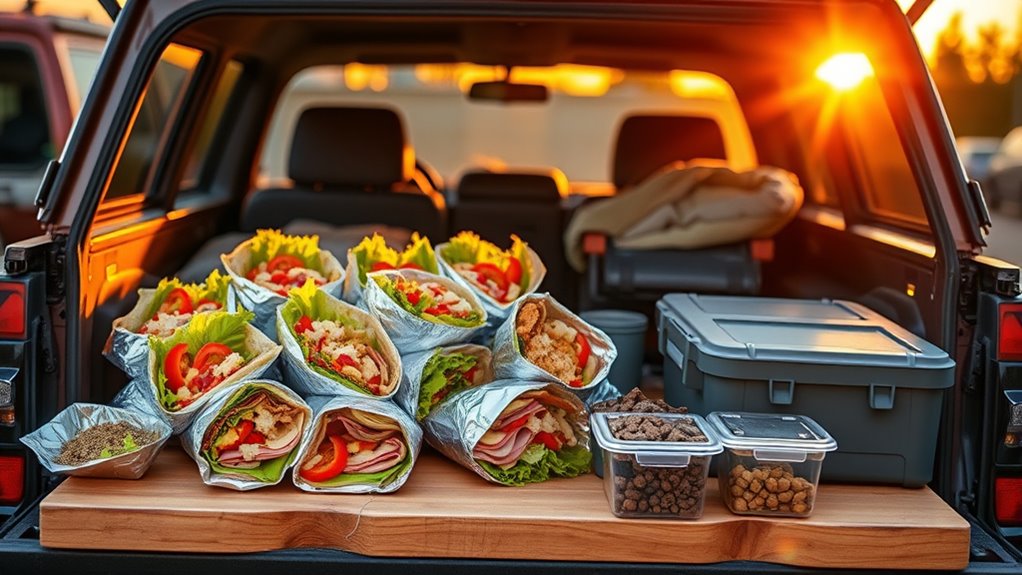
Opting for wraps and sandwiches is an effortless way to enjoy satisfying, no-refrigeration meals on the trail. You can quickly assemble these handheld favorites with shelf-stable ingredients, making mealtime convenient and mess-free. For a protein boost, try turkey wraps with deli meat, cheese, and crunchy veggies, or canned tuna mixed with mayo in a bun or tortilla. Bacon, avocado, and tomato sandwiches offer a flavorful, longer-lasting option when cooked at home beforehand. Beef or jerky-filled wraps with cabbage leaves provide a no-cook, low-prep solution. Keep condiments like mustard or relish in small packets to add flavor without extra weight. These meals are portable, filling, and adaptable, letting you enjoy a satisfying bite without needing refrigeration or complex cooking gear. Incorporating brewing methods can also enhance your trail coffee experience, keeping you energized throughout your trip.
As an affiliate, we earn on qualifying purchases.
Frequently Asked Questions
How Long Do No-Cook Ingredients Typically Last Without Refrigeration?
No-cook ingredients typically last from several days up to a week without refrigeration, depending on the item and storage conditions. Dry goods like rice, grains, and canned foods stay good longer, often weeks or months. Fresh produce and dairy, however, spoil within a few days, especially in warm weather. To maximize shelf life, keep items in a cool, shaded spot, and use coolers or insulated bags for perishables.
What Are the Best Portable Cooking Tools for Minimal Equipment?
Imagine a trusty Swiss Army knife—the ultimate symbol of versatility. You need a compact, multi-purpose tool that combines a small stove or portable burner, a lightweight pot, and a durable spatula. These essentials let you simmer, boil, and sauté with minimal gear. Lightweight, easy to pack, and reliable, they turn a simple meal into a satisfying adventure, letting you cook up warmth and comfort even in the tightest, most remote spots.
How Can I Keep Perishable Foods Fresh During Multi-Day Trips?
You can keep perishable foods fresh during multi-day trips by using a high-quality cooler with plenty of ice or ice packs. Pack perishable items in airtight containers and limit opening the cooler to maintain cold temperatures longer. Store the cooler in a shaded, cool spot, and consider using frozen items to help keep everything cold. Also, prioritize fresh foods that are less perishable, and plan to consume perishables early.
Are There Vegan or Vegetarian Options That Require No Cooking?
Imagine a garden in your backpack—no soil needed. You can enjoy vegan or vegetarian meals that require no cooking, like granola bowls topped with fruit and nut butters, or veggie wraps packed with fresh vegetables and vegan spreads. Salad kits and pasta salads are ready to eat. Snack on crunchy veggie sticks with hummus or nut butters. These options keep your trip plant-powered, simple, and delicious—no fire or stove required.
What Emergency Snacks Are Most Reliable for Long Camping Stays?
For long camping stays, you want emergency snacks that are reliable and easy to carry. Pack energy bars, fruit leathers, and trail mix for quick energy boosts. Crackers, pretzels, and foil-pack tuna offer long shelf life and convenience. Hard candies and fig bars provide instant sugar boosts. Always include some canned or dried fruits, nuts, and small packs of jerky or plant-based protein snacks to keep your energy steady during unexpected delays.
Conclusion
Camping in your truck bed doesn’t mean sacrificing flavor or convenience. While you skip the full kitchen, you gain freedom and simplicity, turning basic ingredients into satisfying meals. It’s a reminder that sometimes, less is more—no refrigeration, no fuss, just ingenuity. So, embrace the challenge, enjoy the ease, and discover that even in the smallest spaces, big flavors can thrive. After all, the best meals often come from the simplest ideas.
Evergreen bestsellers Picks
bestsellers
As an affiliate, we earn on qualifying purchases.