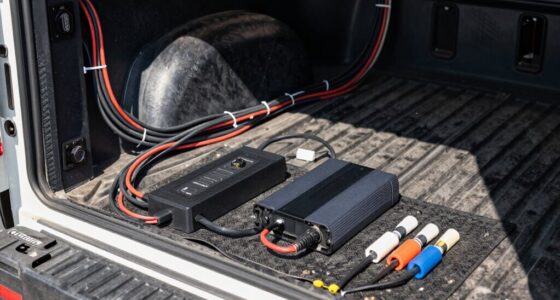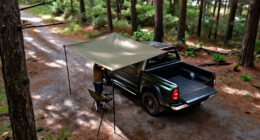

To safely use heaters around your truck bed at night, select a heater with safety features like auto shut-off, tip-over, and carbon monoxide detectors. Keep it at least three feet from bedding and flammable materials, and make certain proper ventilation to prevent dangerous gas buildup. Regularly check and maintain safety devices, vents, and exhausts, and always keep a fire extinguisher nearby. Following these tips helps keep you safe and warm — more important points await if you continue.

Get business pricing on garage and car supplies
- Business-only prices and quantity discounts
- Tax-exempt purchasing
- Multiple users, one account, clear invoices
Key Takeaways
- Select heaters with safety features like auto shut-off, tip-over sensors, and carbon monoxide detectors, and install them securely away from flammable materials.
- Ensure proper ventilation by maintaining unobstructed vents and directing exhaust gases outside to prevent dangerous gas buildup.
- Regularly inspect safety devices, fuel lines, and vents, and keep fire extinguishers and CO detectors accessible and functional.
- Keep heaters at least 3 feet from bedding and flammable items, and position detectors at breathing level near sleeping areas.
- Monitor air quality with CO detectors, follow manufacturer instructions, and be prepared to shut off heaters and evacuate if unsafe conditions occur.
heater with auto shut-off and tip-over sensors
As an affiliate, we earn on qualifying purchases.
As an affiliate, we earn on qualifying purchases.
Choosing the Right Heater for Your Truck Bed
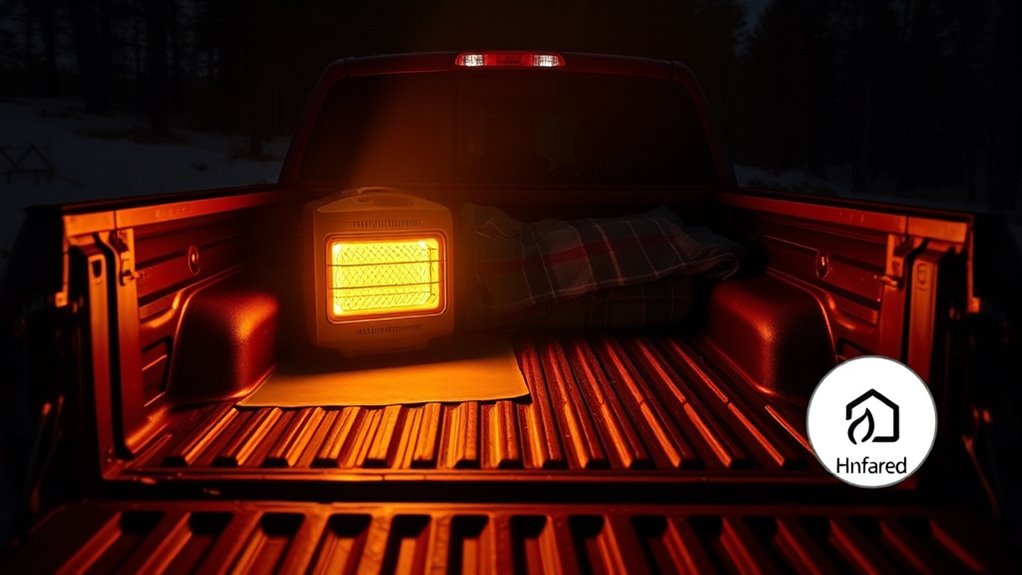
Choosing the right heater for your truck bed depends on your climate, power sources, and safety preferences. If you face extreme cold, diesel heaters are effective but require ventilation and maintenance. Propane heaters are popular because they are efficient and easy to use, especially in North America, and catalytic models add safety by eliminating open flames. Electric heaters are ideal if you have reliable shore power or a strong battery bank, but they need constant power supply. Consider safety features like automatic shut-off, tip-over sensors, and carbon monoxide detectors when selecting your heater. Your choice should balance warmth, safety, and practicality, ensuring it fits your environment and setup. Proper heater selection helps keep you warm and safe during nighttime truck bed use.
carbon monoxide detector for truck bed
As an affiliate, we earn on qualifying purchases.
As an affiliate, we earn on qualifying purchases.
Understanding Essential Safety Features
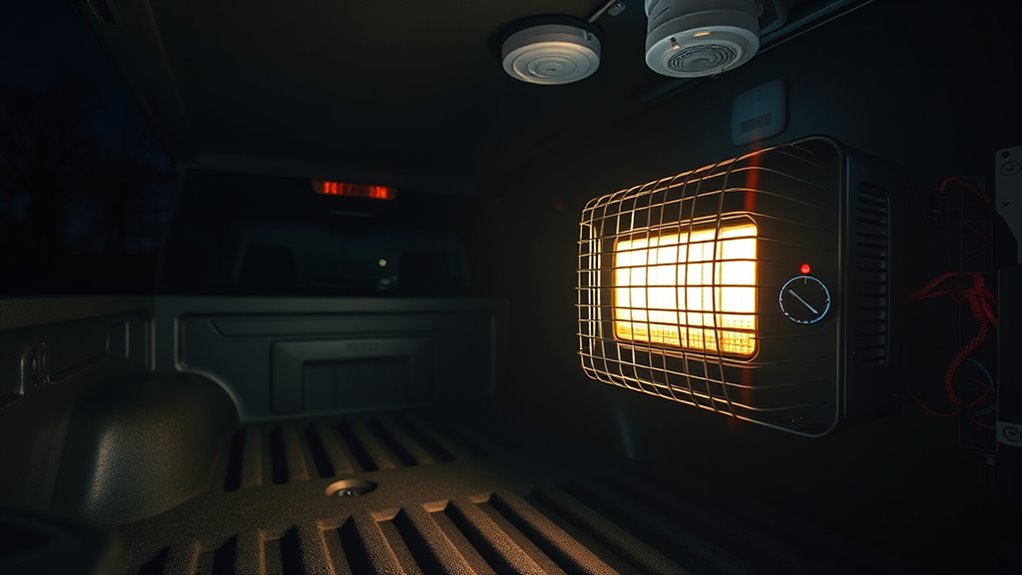
To guarantee safe use of heaters around your truck bed at night, understanding and prioritizing essential safety features is crucial. These features protect you from hazards like fires, gas buildup, or oxygen depletion. Here are key safety features to look for:
- Automatic shut-off: Turns off the heater if it overheats or tips over, preventing fires.
- Overheating protection: Stops operation when internal temps become unsafe, avoiding damage and danger.
- Carbon monoxide monitoring: Detects dangerous gas levels, alerting you to remove the heater or ventilate.
- Low-oxygen shut-off sensors: Prevent heater operation in oxygen-depleted environments, reducing suffocation risk.
- Natural airflow considerations: Proper ventilation reduces the risk of dangerous gas buildup in enclosed areas.
Prioritize heaters with these features, and always test safety devices before use to ensure your safety at night.
portable propane heater for camping
As an affiliate, we earn on qualifying purchases.
As an affiliate, we earn on qualifying purchases.
Proper Ventilation and Exhaust Management
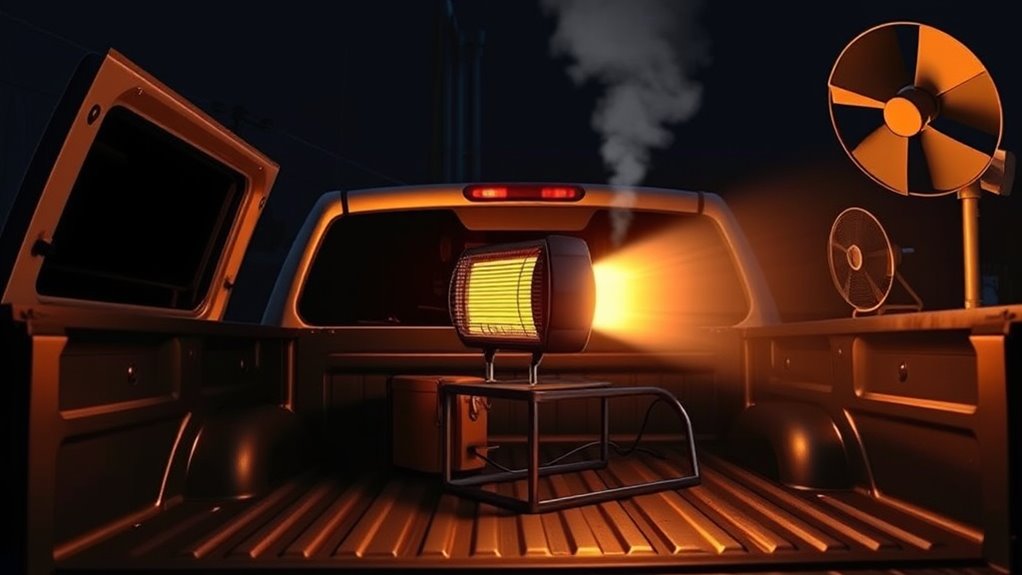
Proper ventilation and exhaust management are essential for safe heater use in your truck bed at night because fuel-burning heaters produce dangerous gases that can accumulate quickly. You must guarantee fresh air flows into the space and exhaust gases vent directly outside. Always position your heater so that combustion fumes are directed away from your sleeping area, and never vent into the truck bed or cab. Keep vents unobstructed and check for blockages regularly. When using a fuel-burning heater, draw combustion air from outside whenever possible. Remember, electric heaters don’t produce combustion gases but still require good airflow for safety. Proper ventilation reduces the risk of carbon monoxide buildup and ensures a safe, warm environment throughout the night. Understanding ventilation is crucial for preventing dangerous gas buildup and maintaining a safe sleeping environment.
electric heater with safety features
As an affiliate, we earn on qualifying purchases.
As an affiliate, we earn on qualifying purchases.
Correct Installation and Placement Guidelines
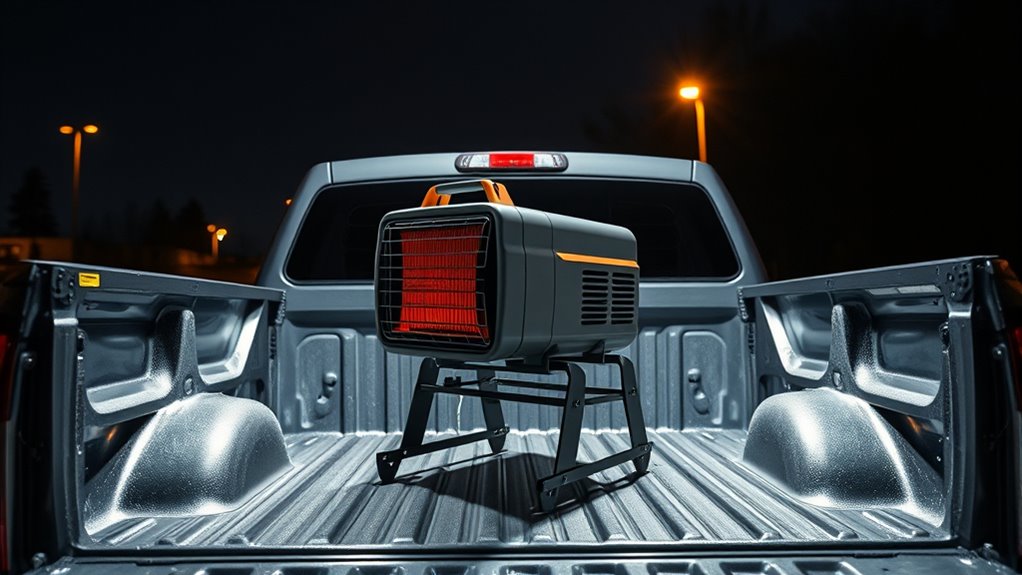
Guaranteeing your heater is correctly installed and positioned is essential for safe and efficient operation in your truck bed at night. Proper placement minimizes fire risks and ensures even heat distribution. Additionally, conducting a proper safety inspection before use helps identify potential hazards and confirms all safety measures are in place. Keep the heater at least 3 feet away from bedding, curtains, and other flammable materials. Mount the heater securely to prevent tipping or movement during driving or sleeping. Position it where airflow isn’t obstructed, avoiding blocked intake or exhaust vents. Follow the manufacturer’s instructions precisely, especially for permanent installations or complex systems.
Regular Maintenance and Safety Checks
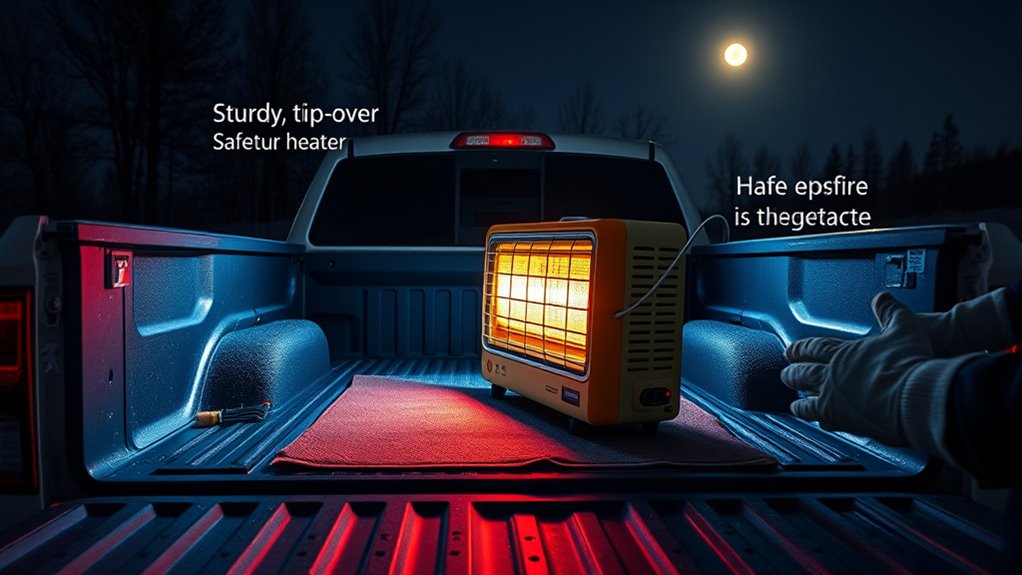
Regular maintenance and safety checks are vital for keeping your heater operating safely and efficiently. Before each use, inspect fuel lines for leaks or cracks, making sure connections are tight. Clean filters and heating elements to prevent buildup that can reduce performance or cause overheating. Check safety features like automatic shut-off, tip-over sensors, and carbon monoxide detectors to confirm they work correctly. Test these devices regularly, especially before overnight use. Look for signs of damage or wear, and replace parts as recommended by the manufacturer. Keep vents and exhaust paths clear of debris or obstructions to prevent carbon monoxide buildup. Performing these checks helps prevent malfunctions, reduces fire risk, and guarantees your heater functions properly, keeping you safe during cold nights outdoors. Additionally, paying attention to heater technology can improve safety and efficiency during operation.
Safe Practices for Nighttime Heating
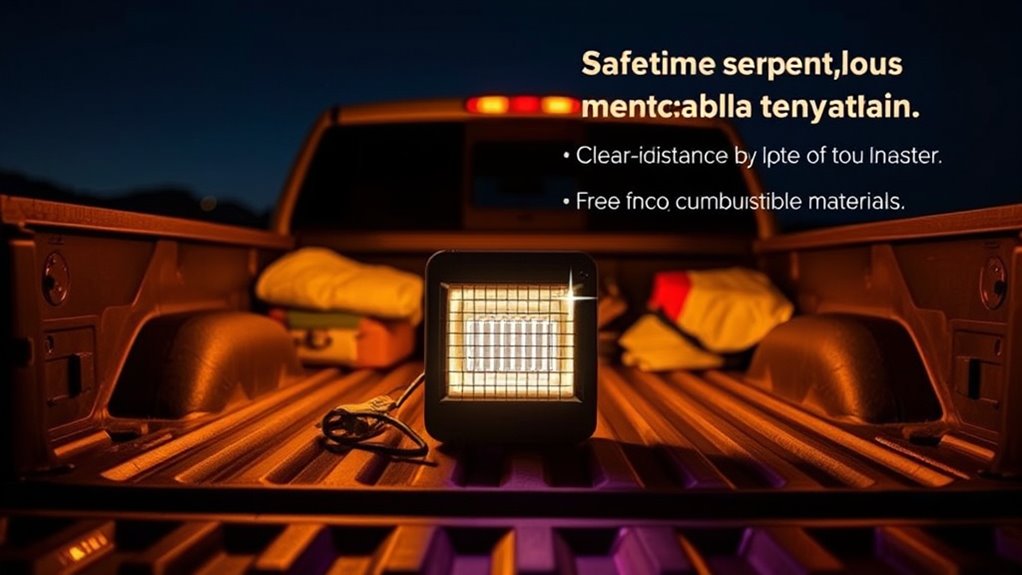
When heating your truck bed at night, always prioritize safety by never leaving the heater unattended while you sleep. To guarantee safe nighttime heating:
- Use heaters with automatic shut-off features to prevent overheating.
- Keep a working carbon monoxide detector and smoke alarm inside your truck bed.
- Maintain proper ventilation—draw combustion air from outside and vent exhaust gases outside.
- Store fuel cylinders outside the sleeping area, away from heat sources and flammable materials.
- Ensure your heating setup complies with safe installation practices and local codes to prevent hazards.
Avoid open flames or unvented heating devices. Set timers or use heaters with automatic shut-off to reduce risks. Regularly check safety devices and ensure your heater is properly installed. Staying vigilant helps keep you safe during cold nights.
Emergency Measures and Safety Equipment
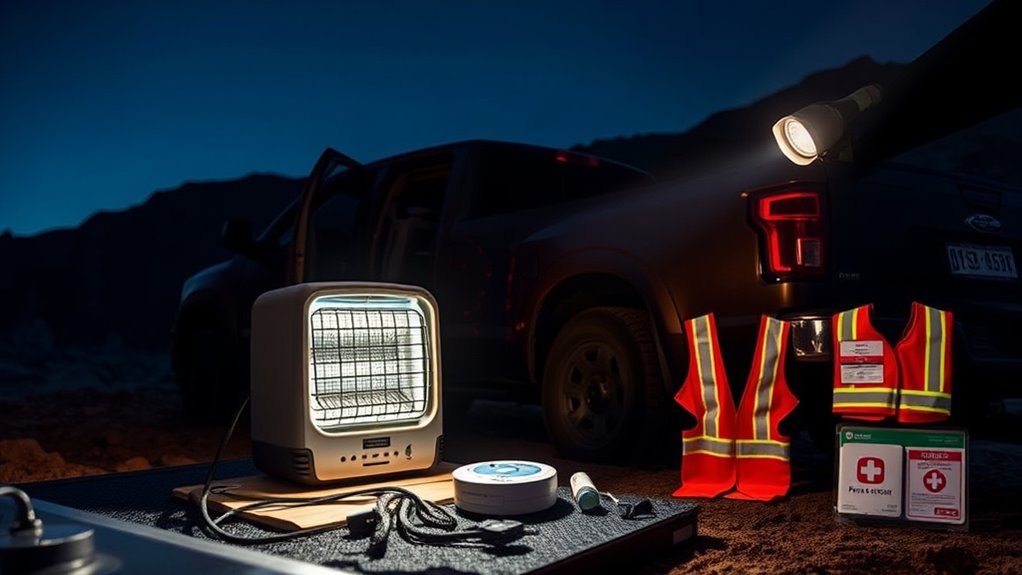
You should be prepared for emergencies by knowing how to quickly shut off your heater if something goes wrong. Keep a portable fire extinguisher nearby to handle any fires that might start, and install a carbon monoxide detector to alert you to dangerous gas buildup. Being ready with these safety tools can make all the difference if an incident occurs during the night. Additionally, regularly testing your safety equipment ensures it functions properly when needed, especially considering the safety protocols associated with portable heaters.
Emergency Shut-off Procedures
In emergency situations, promptly shutting off the heater can prevent accidents and reduce hazards. You need to act quickly if you notice signs of danger. Follow these steps:
- Deactivate the heater immediately using the control panel or power switch.
- Disconnect fuel sources if safe to do so, ensuring no leaks or spills.
- Activate built-in safety features, like emergency shut-off buttons or sensors, if available.
- Evacuate the area and ventilate the space to disperse any dangerous gases.
- Familiarize yourself with emergency procedures specific to your heater model to ensure a swift response during crises.
Always familiarize yourself with your heater’s emergency shut-off locations and functions beforehand. Keep safety equipment like carbon monoxide detectors and fire extinguishers nearby. Acting swiftly can prevent fire, poisoning, or other serious hazards during a crisis.
Portable Fire Extinguishers
Having a portable fire extinguisher readily accessible is essential for quickly controlling fires that may start from heaters or other equipment in your truck bed. Keep it within easy reach, ideally mounted on the wall or stored in a designated, visible spot. Choose an extinguisher rated for Class B and Class C fires, which cover flammable liquids and electrical fires common with heaters. Regularly check the pressure gauge and ensure the extinguisher is fully charged. Familiarize yourself with its operation, and inspect it before each trip. In case of a fire, act fast—shout, evacuate if necessary, and use the extinguisher to suppress flames. Having this safety device nearby can prevent minor fires from escalating, protecting both your truck and your safety at night. Additionally, understanding fire safety equipment and its proper use can significantly reduce risks during emergencies.
Carbon Monoxide Detectors
Carbon monoxide detectors are essential safety devices that alert you to dangerous gas buildup when using heaters in your truck bed. You should always have one installed and tested before each trip. To make certain your safety, follow these guidelines:
- Install detectors at breathing level, near your sleeping area.
- Check batteries regularly and replace them promptly.
- Test the detector monthly to confirm it functions properly.
- Replace the unit every 5-7 years, or as recommended by the manufacturer.
Keep the detector away from heaters directly, but within the space to monitor air quality effectively. Remember, a working carbon monoxide detector provides critical early warning, preventing poisoning and ensuring you sleep safely through the night. Proper placement of detectors can maximize their effectiveness in detecting dangerous gas levels.
Frequently Asked Questions
Can I Leave My Heater Unattended Overnight?
You shouldn’t leave your heater unattended overnight. Always turn it off before sleeping to prevent fire hazards or carbon monoxide buildup. Use timers or automatic shut-off features if available, and keep safety devices like a carbon monoxide detector nearby. Regularly check your heater’s safety functions before bedtime, and never ignore manufacturer instructions. Keeping a close eye on your heater guarantees your safety and peace of mind during overnight use.
What Is the Safest Fuel Type for Truck Bed Heaters?
Like a guardian watching over a sleeping child, propane heaters are the safest choice for your truck bed. They combine efficiency with built-in safety features like automatic shut-offs and tip-over sensors, reducing fire risk. Catalytic propane models further enhance safety by eliminating open flames. Always make certain of proper ventilation and never leave them unattended. With propane, you’re choosing a dependable, balanced protector that keeps you warm without unnecessary danger.
How Often Should Safety Devices and Detectors Be Tested?
You should test safety devices and detectors at least once a month to make certain they’re working properly. Regular testing helps catch any malfunctions early, keeping you safe during nighttime use. Check your carbon monoxide detectors, smoke alarms, and safety shut-off features consistently. Replace batteries annually and follow manufacturer instructions for testing procedures. Doing this regularly gives you peace of mind and ensures your heater setup remains safe throughout your trips.
Are Catalytic Heaters Completely Safe for Enclosed Spaces?
Catalytic heaters are safer for enclosed spaces because they don’t produce open flames, reducing fire risks. Imagine a cozy, warm truck bed filled with gentle heat, not flickering flames. They operate quietly, relying on chemical reactions, which minimizes carbon monoxide output if properly ventilated. However, you still need detectors and ventilation to guarantee safety. Always follow manufacturer instructions, and never leave the heater unattended during use.
How Do I Handle Heater Malfunctions During the Night?
If your heater malfunctions during the night, immediately turn it off to prevent hazards like fire or carbon monoxide buildup. Use your safety features, such as tip-over or overheat sensors, to shut it down automatically. Keep your carbon monoxide and smoke detectors active and alert. Ventilate the area if possible, and never leave the heater unattended. If you suspect a leak or malfunction, address it before restarting and consider professional inspection.
Conclusion
By following these safety tips, you’ll turn your truck bed into a cozy haven without risking disaster. Always choose the right heater, guarantee proper ventilation, and perform regular checks—your safety depends on it. When you prioritize these precautions, you’ll enjoy warm nights without fear, like having a fortress of safety around you. Stay vigilant and smart—because in the cold, a single mistake can turn your peaceful night into a nightmare.
Columbus Day / Indigenous Peoples' Day Picks
long weekend sales
As an affiliate, we earn on qualifying purchases.