Using snow chains on a 4×4 truck can drastically improve traction in severe winter conditions, making your drive safer and more manageable. Chains are most effective on icy or packed snow surfaces and can prevent slipping during acceleration, braking, and turns. However, they must be installed correctly and used where appropriate, as deep snow can limit their effectiveness. Want to learn how to install and choose the right chains? Keep exploring for more useful tips.
Key Takeaways
- Snow chains significantly improve traction and safety on icy or packed snow surfaces for 4×4 trucks.
- Proper installation and regular checks are essential for effective and safe use of chains on a 4×4 vehicle.
- Use chains in accordance with local laws and road conditions, especially on mountain passes or snowy roads.
- Chains are less effective in deep, soft snow where tires sink below chain level.
- Avoid using chains on dry pavement to prevent tire and road damage, and remove them promptly after conditions improve.
snow chains for 4×4 trucks
As an affiliate, we earn on qualifying purchases.
As an affiliate, we earn on qualifying purchases.
How Snow Chains Improve Traction for 4×4 Vehicles
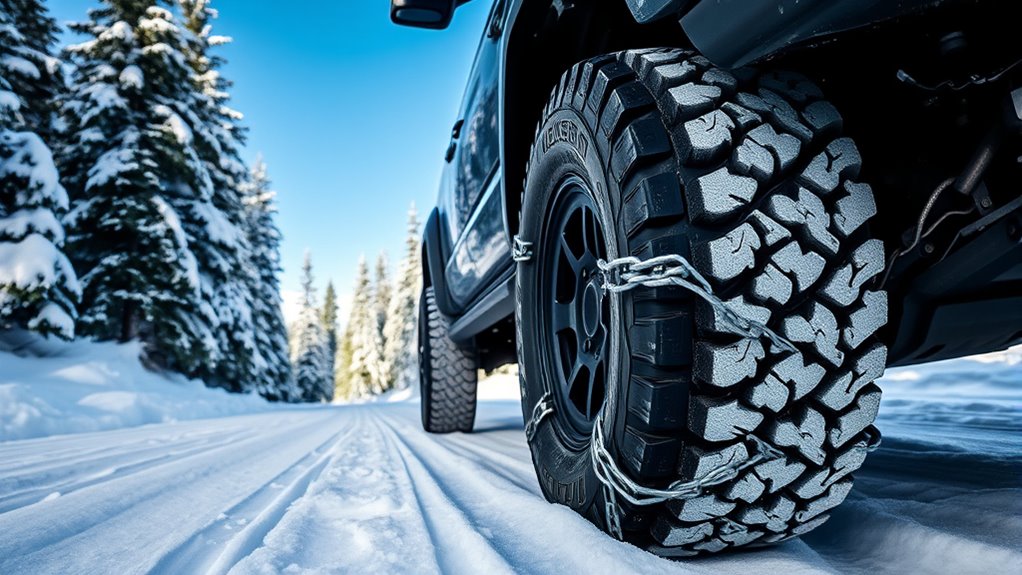
Snow chains directly enhance traction by increasing the grip between your 4×4 vehicle’s tires and icy or packed snow surfaces. When you install chains, metal links dig into the snow and ice, giving your tires a much better hold. This prevents slipping during acceleration, braking, and turning. Chains are especially effective on firm snow or ice where standard tires struggle. They help you maintain control and stability in severe winter conditions. By improving lateral grip, chains reduce the risk of skidding and sliding. They also allow you to navigate steep inclines and tricky patches more confidently. Overall, snow chains provide a vital boost in traction that keeps your 4×4 vehicle safer and more reliable on challenging winter roads. Additionally, using snow chains can optimize tire performance by ensuring consistent contact with the road surface, especially in low-traction environments.
best snow chains for winter driving
As an affiliate, we earn on qualifying purchases.
As an affiliate, we earn on qualifying purchases.
When and Where to Use Snow Chains on a 4×4 Truck
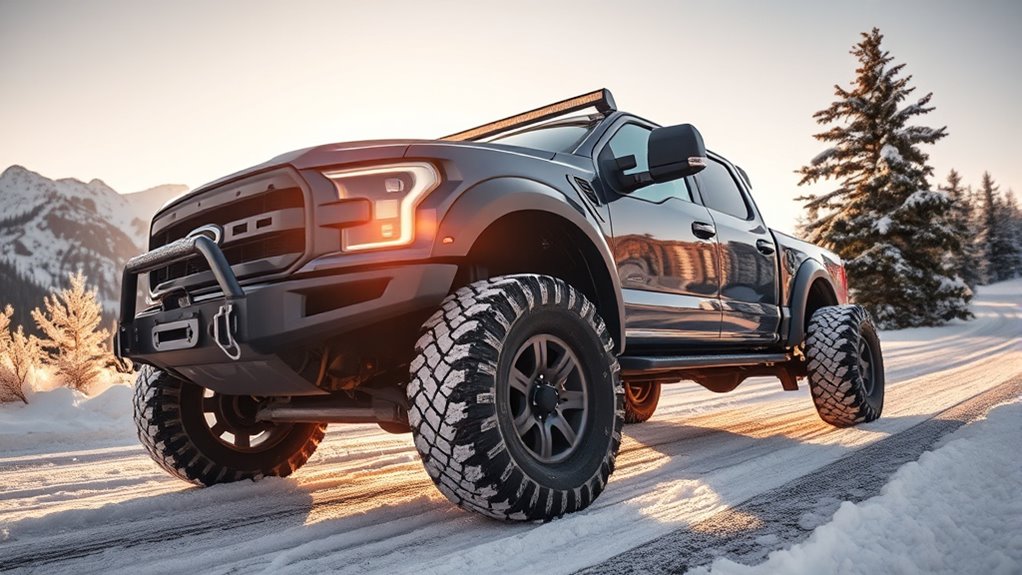
Knowing when and where to use snow chains on your 4×4 truck guarantees you get the maximum benefit in winter conditions. You should install chains when driving on icy roads, packed snow, or icy mountain passes, especially if signs or local regulations require them. Use chains on roads with a solid snow or ice base; they’re most effective there. Avoid using chains in deep, soft snow, where tires can sink and chains won’t grip well. Always check for chain restrictions before heading out, and remove them when driving on clear, dry pavement to prevent damage. In mountainous regions or areas prone to severe winter weather, carry chains as a safety precaution. Proper timing and placement ensure you maximize traction and stay safe during your winter journeys. Energy-efficient snow chains can also help reduce overall vehicle strain and improve fuel economy in winter conditions.
automatic snow chains for trucks
As an affiliate, we earn on qualifying purchases.
As an affiliate, we earn on qualifying purchases.
Proper Installation and Maintenance of Snow Chains

Proper installation and maintenance of snow chains are essential for ensuring your safety and maximizing their effectiveness. Always follow the manufacturer’s instructions carefully to ensure a secure fit. Before installing, check for any damage or wear on the chains and inspect your tires and wheel wells for clearance issues. When installing, tighten the chains evenly and ensure they sit snugly without slack, avoiding contact with brake lines or suspension parts. After use, remove the chains promptly to prevent damage to tires and roads. Regularly inspect for signs of wear, rust, or broken links, and clean them after each use to prevent corrosion. Proper storage in a dry, cool place helps extend their lifespan. Additionally, navigation and mapping features in modern snow chains can help improve installation accuracy and safety. Following these steps ensures reliable traction and safe driving in winter conditions.
mountain snow chain kit
As an affiliate, we earn on qualifying purchases.
As an affiliate, we earn on qualifying purchases.
Legal Requirements and Safety Guidelines for Chains
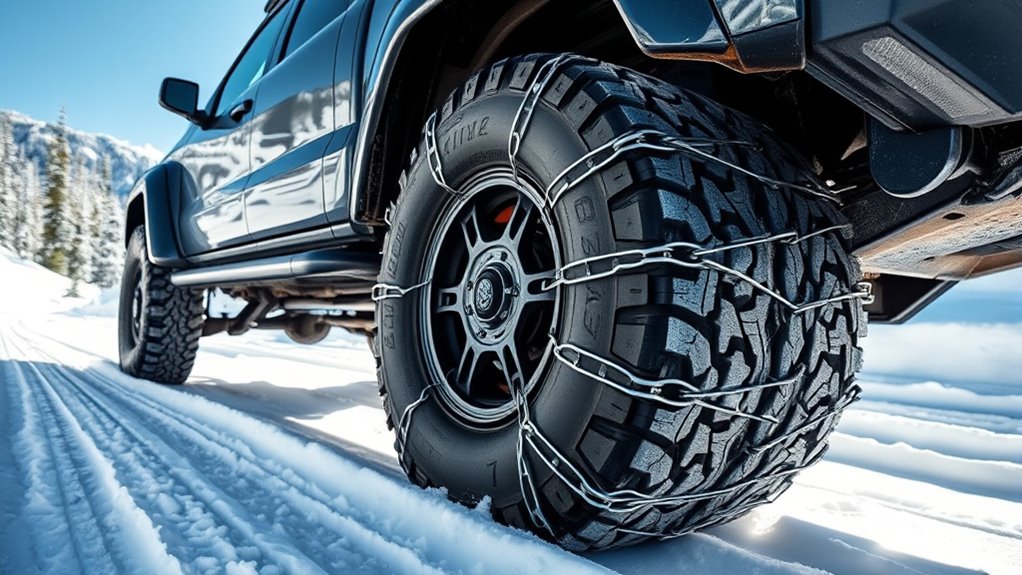
Following correct installation and maintenance practices helps guarantee your chains perform safely and effectively. To stay compliant and safe, you need to be aware of legal requirements and safety guidelines. You are trained on data up to October 2023. Mastering Deep-Sky Imaging can provide insights into equipment setup and maintenance that are applicable to maintaining your chains as well. 1. Check regional laws: Many areas mandate chains on at least one axle in severe winter conditions. 2. Follow manufacturer recommendations: Some vehicle brands require chains on all four wheels for 4×4 trucks. 3. Limit speeds: Drive under 35 mph when chains are engaged to prevent damage and accidents. 4. Regular inspections: Frequently check chains for wear, damage, or loosening, especially after rough terrain. Adhering to these guidelines minimizes risks like accidents or vehicle damage. Always stay updated on local laws and ensure your chains are properly installed before hitting icy or snowy roads.
Comparing Snow Chains to Other Traction Aids
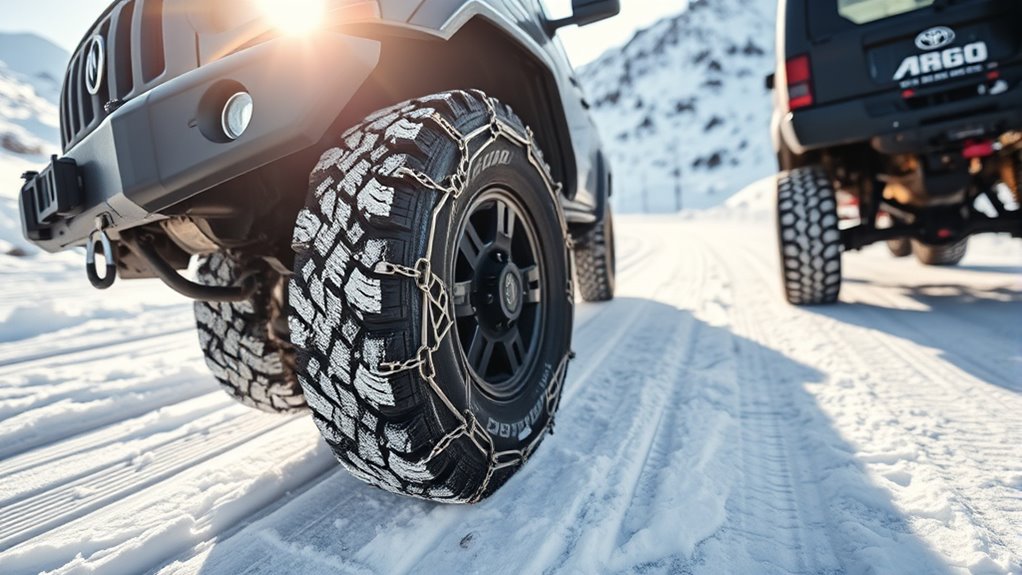
When choosing the best traction aid for winter driving, snow chains often stand out because they provide superior grip on ice and packed snow compared to other options. They deliver maximum traction where tire socks or traction mats fall short, especially on icy surfaces. Automatic chains are easier to install and remove, making them convenient for frequent use. Tire socks are lightweight and simple to put on but lack durability and effectiveness in severe conditions. Traction mats are portable but limited to specific situations and require stopping to deploy. Musher overtires offer continuous grip without removal but are less reliable on ice. Overall, chains deliver the best performance in challenging winter conditions, especially when maximum traction is essential.
Limitations and Challenges of Using Chains on a 4×4
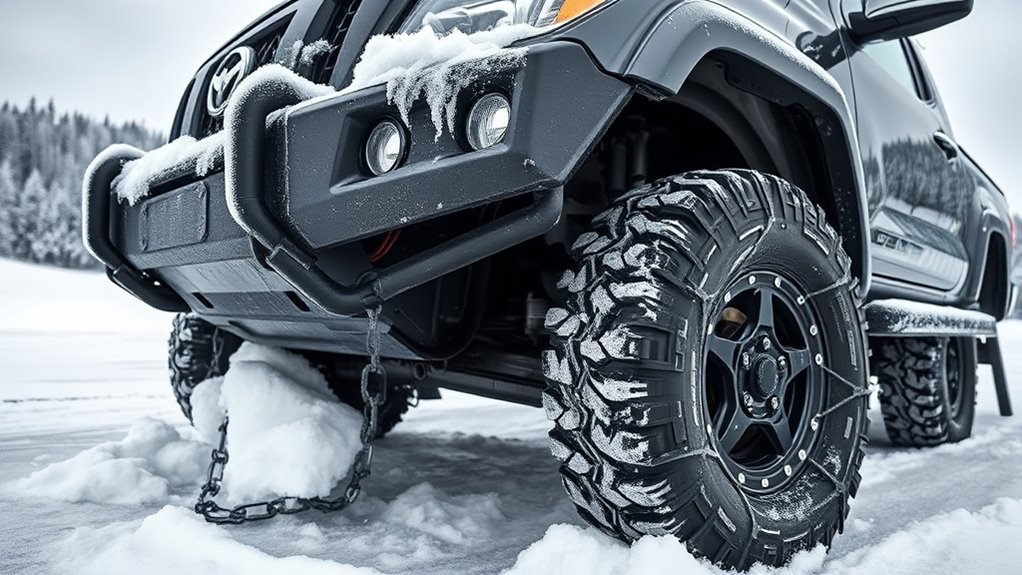
Using chains on a 4×4 vehicle can be challenging because they often require significant effort to install correctly, especially in cold or wet conditions. You may face these limitations:
- Difficulty in Deep Snow: Chains struggle in deep, soft snow where tires sink below the chain level.
- Installation Hassles: Putting chains on all four wheels is time-consuming and tricky, often requiring you to work outside in harsh weather.
- Clearance Issues: Some trucks don’t have enough space around the tires, making installation impossible or risky.
- Road Surface Damage: Using chains on dry pavement causes excessive wear on tires and can damage the road surface, leading to legal issues.
Being aware of these challenges helps you decide whether chains are right for your situation.
Expert Advice and User Experiences With Snow Chains
Experts agree that chains are essential for maintaining control on icy and packed snow surfaces, especially for 4×4 trucks. Users often share that properly installed chains markedly improve traction and safety, though they note challenges in deep snow or tough terrain. Many recommend automatic chains for convenience, but proper technique and regular checks are key for peak performance. Additionally, understanding modern kitchen technology can inspire innovative solutions for vehicle safety gear.
Professional Recommendations and Insights
Professional recommendations consistently emphasize that snow chains are essential for maintaining safety and control on 4×4 trucks in severe winter conditions. Experts agree that chains markedly improve grip on ice and packed snow, especially when driving in remote areas or on steep mountain roads. They advise you to:
- Install chains on all four wheels for balanced traction and handling.
- Use automatic or easy-to-install systems if you’re frequently driving in winter conditions.
- Remove chains promptly when roads are clear to prevent damage.
- Regularly inspect chains for wear and proper tension after use.
- Understanding the benefits of snow chains on 4×4 trucks can help you decide when and how to use them effectively.
Many professionals stress that proper installation and maintenance are critical. User experiences reinforce these points, showing chains dramatically improve safety but require careful handling to avoid damage or accidents.
Practical User Observations
Many drivers who have tried snow chains on their 4×4 trucks report noticeable improvements in traction and control during winter conditions. They often mention feeling more confident on icy and packed snow roads, especially when climbing hills or braking. Users appreciate automatic chain systems for quick, hassle-free installation, which is crucial during sudden snowstorms. However, some note that chains are less effective in deep snow where tires sink below the chain level. Many experienced drivers emphasize the importance of proper installation to prevent damage and ensure safety. They also warn about the noise and vibrations chains can cause at higher speeds. Overall, user observations highlight that chains considerably boost traction in severe conditions, but they require careful use, regular checks, and proper fitting for ideal performance. Additionally, understanding vehicle compatibility and proper chain sizing can significantly impact their effectiveness and safety.
Frequently Asked Questions
Can Snow Chains Damage My 4×4 Truck’s Tires or Suspension?
Yes, snow chains can damage your 4×4 truck’s tires or suspension if you don’t install or use them properly. Poor installation, driving at high speeds, or using chains on dry pavement can cause uneven tire wear, tire damage, or strain on suspension components. To avoid damage, make certain of correct installation, follow speed limits, and remove chains when not on snowy or icy roads. Regularly check for wear and damage after use.
How Do I Choose the Right Size and Type of Snow Chains?
Choosing the right snow chains is like fitting the key to a lock—you need precision. Measure your tires’ size, including width, diameter, and aspect ratio, and match these to the chain’s specifications. Opt for high-quality, compatible chains designed for your truck’s tire type and clearance. Consider automatic or quick-install systems for ease. Always follow the manufacturer’s guidelines to guarantee safety, durability, and effective traction in winter conditions.
Are Automatic Chains More Reliable Than Manual Installation?
Automatic chains are generally more reliable than manual ones because they’re easier to install and remove, reducing the risk of improper fitting. You won’t need to get out in cold or hazardous conditions, which improves safety. However, verify your vehicle is compatible with automatic systems. While they offer convenience, regular maintenance and checks are essential to keep them functioning properly and prevent unexpected failures during critical moments.
How Often Should I Check Chains for Wear or Damage?
Did you know that regular inspections can extend the life of your snow chains by up to 30%? You should check your chains for wear or damage after every 50 to 100 miles of driving in winter conditions. Look for broken links, excessive wear, or missing parts. Also, inspect them after use in rough terrain or on icy roads. Regular checks guarantee safety, peak performance, and prevent unexpected breakdowns.
Can I Drive With Chains on All Four Wheels Continuously?
You can drive with chains on all four wheels continuously if you’re in severe winter conditions, but it’s not recommended for everyday driving. Keep in mind, chains wear out quickly on dry pavement and can cause damage. Use them only when necessary, like on icy or packed snow roads, and remove them when driving on clear roads to prevent tire and road surface damage. Always follow safety guidelines and speed limits.
Conclusion
Think of snow chains as your trusty lantern in a winter forest—they illuminate the path when the snow hides the road. When used correctly on your 4×4 truck, they help you navigate icy terrain safely and confidently. But just like a lantern needs proper handling, chains require proper installation and care. With the right tools and awareness, you’ll find yourself guiding through winter’s challenges, turning icy obstacles into manageable trails ahead.