
To properly distribute weight in your truck bed, start by placing heavier items directly over the axle or near the cab for better stability. Spread the load evenly from side to side, avoiding uneven balance that could cause pulling. Stack lighter items on top of heavier ones and keep the load centered to maintain a low center of gravity. Regularly check and tighten straps to prevent shifting during your trip. Continue exploring for more tips on ensuring a safe haul.

Get garage and car supplies delivered free — and shop member deals
- Fast, free delivery on millions of items
- Access to Prime Big Deal Days deals on October 6–7
- Prime Video, Amazon Music and more included
Key Takeaways
- Spread weight evenly from side to side to maintain vehicle balance.
- Place heavier items directly over the axle or near the cab for stability.
- Avoid stacking all weight in the tailgate area to prevent imbalance.
- Distribute load to keep the front of the truck grounded for better steering.
- Regularly check and tighten securing devices to prevent shifting during transit.
Proper weight distribution in your truck bed is vital for safe driving, vehicle stability, and load longevity. When you load your truck, it’s important to consider cargo safety and adhere to the manufacturer’s weight limits. Overloading or unevenly distributing weight can compromise your truck’s handling, increase stopping distances, and put unnecessary stress on your suspension and tires. To keep yourself and others safe, always plan your load carefully.
Proper weight distribution ensures safe driving, vehicle stability, and longer load life. Plan and secure your cargo carefully.
Start by understanding your truck’s weight limits, which are typically specified in the owner’s manual. These limits include the maximum payload capacity and gross vehicle weight rating (GVWR). Respecting these limits isn’t just about avoiding fines; it’s about guaranteeing your vehicle maintains proper balance and control. Exceeding weight limits can cause the truck to become unstable, especially during turns or abrupt stops. When loading, weigh your cargo if possible, or estimate its weight carefully to prevent overloading.
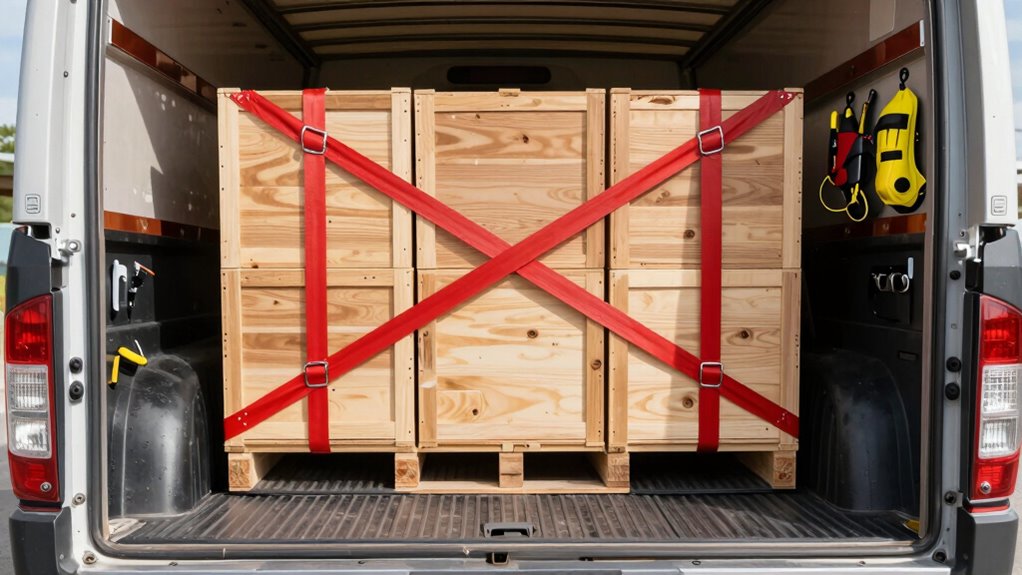
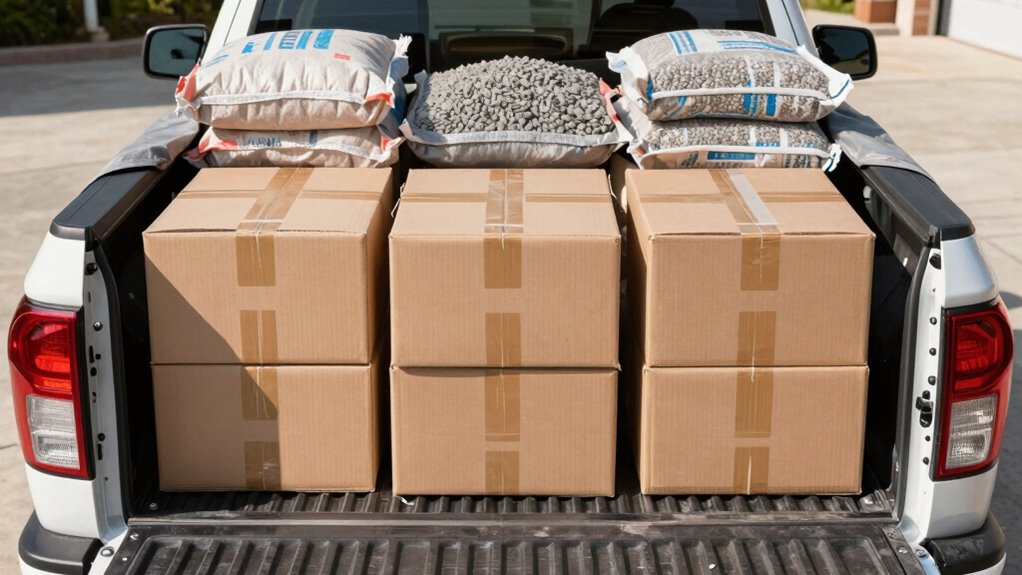
Cargo safety is your top priority. Secure all items tightly using straps, bungee cords, or nets to prevent shifting during transit. Shifting cargo can lead to dangerous weight imbalances, which affect steering, braking, and overall vehicle control. Place heavier items directly over the axle or close to the cab to maintain ideal weight distribution. This placement helps keep the center of gravity low and centered, reducing the risk of tipping or rolling over.
Distribute the weight evenly from side to side to maintain balance. If your load is unevenly distributed, your truck may pull to one side, making driving more difficult and unsafe. Use a level or a simple bubble level to check that the load is balanced across the bed. When stacking cargo, ensure heavier items are on the bottom and lighter items on top, preventing top-heavy loads that could shift or fall during transit.
Another key point is to avoid placing all the weight in the tailgate area. This can cause the front of your truck to lift, impairing steering and braking. Instead, aim for a balanced load that keeps the truck’s front end grounded. Regularly check your load during long trips, especially if driving over rough terrain or making frequent stops, to guarantee everything remains secure and properly distributed.
Being aware of your vehicle’s weight limits and understanding how to distribute loads properly will help ensure safety and vehicle longevity during transport.
As an affiliate, we earn on qualifying purchases.
Frequently Asked Questions
What Tools Are Best for Measuring Weight Distribution?
You should use a portable cargo scale or a load cell to measure weight distribution accurately. These tools help you check cargo stability and guarantee proper load balancing, preventing uneven weight that could affect driving safety. A digital scale provides precise readings, making it easier to adjust your cargo placement. Regularly measuring weight distribution allows you to maintain safe driving conditions and optimize your truck’s performance.
How Does Weight Distribution Affect Fuel Efficiency?
Think of your truck as a tightrope walker; if the load isn’t balanced, the journey becomes unstable. Proper load balancing shifts the center of gravity, making your vehicle more aerodynamic and stable. When weight is evenly distributed, your engine doesn’t have to work as hard to compensate, improving fuel efficiency. Keep your load centered and balanced, and you’ll glide smoother on the road, saving fuel and enhancing safety.
Can Uneven Weight Cause Damage to the Truck?
Uneven weight can definitely cause damage to your truck. It affects cargo stability and shifts the center of gravity, making the truck less stable and increasing wear on suspension and tires. When weight isn’t evenly distributed, you risk uneven tire wear, steering issues, and potential structural stress. To protect your vehicle, always make certain cargo is evenly spread and secured, maintaining a low, balanced center of gravity.
How Often Should I Check My Load During a Trip?
Imagine your truck’s bed as a ship’s deck, where cargo security and load balancing are vital. You should check your load every 50 to 100 miles or whenever you hit rough terrain. During stops, make sure everything’s securely fastened, and the load remains balanced. Regular checks help prevent shifting cargo, reducing the risk of accidents and damage, guaranteeing your trip stays safe and smooth.
What Are the Legal Weight Limits for Truck Beds?
The legal weight limits for truck beds vary by vehicle and jurisdiction, so you should always check local regulations to guarantee cargo safety and load security. Generally, most pickups have a maximum payload capacity ranging from 1,000 to 3,000 pounds. Exceeding these limits risks fines and accidents. Always distribute weight evenly in your truck bed and secure your cargo properly to maintain safety and compliance on the road.
cargo securing straps for trucks
As an affiliate, we earn on qualifying purchases.
As an affiliate, we earn on qualifying purchases.
Conclusion
Proper weight distribution in your truck bed isn’t just about safety—it can improve fuel efficiency and handling too. When you evenly spread the load, you reduce strain on your suspension and tires, making your drive smoother. Notably, studies show that improperly loaded trucks are 30% more likely to experience tire blowouts or accidents. So, take the time to distribute your cargo correctly; it’s a small step that makes a big difference in your safety and vehicle longevity.
As an affiliate, we earn on qualifying purchases.
As an affiliate, we earn on qualifying purchases.
Halloween Picks
halloween
As an affiliate, we earn on qualifying purchases.