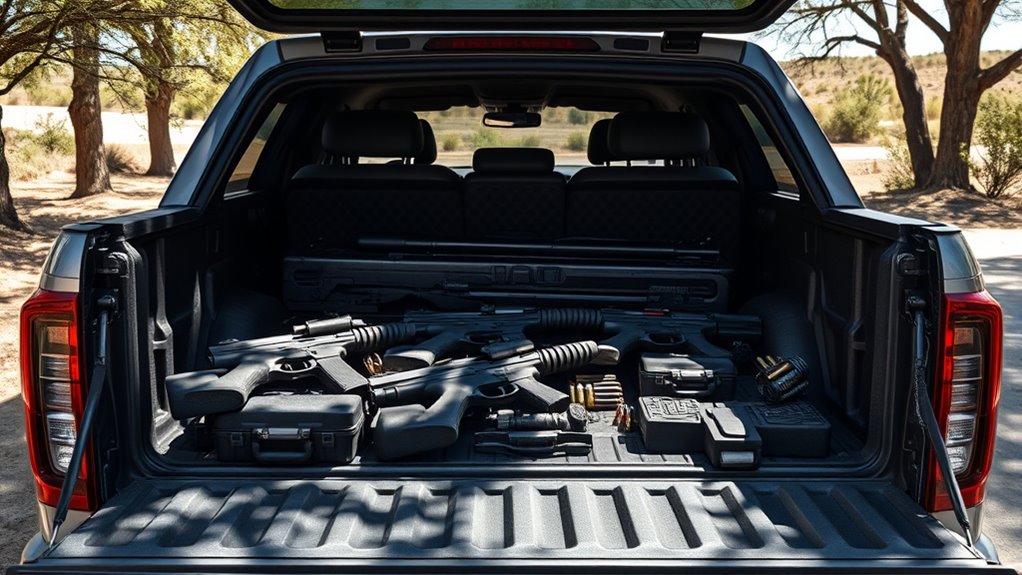

When carrying firearms or ammo in your truck bed, federal law requires unloaded guns to be in locked containers, separate from ammunition. Many states also have additional rules, like requiring firearms to be locked away and unloaded, with ammo stored separately. Proper storage, such as locking your firearm in a sturdy case and keeping ammunition out of reach, helps you stay compliant and safe. Discover more about legal methods for transporting firearms in your truck bed.
Key Takeaways
- Firearms must be unloaded and stored in a locked, secure container separate from ammunition during transport.
- Federal law permits lawful interstate transport of unloaded guns in a locked, inaccessible container.
- State laws vary; some allow loaded firearms without permits, others require guns to be unloaded and locked.
- Use sturdy, tamper-resistant lockboxes or safes for secure storage in the truck bed.
- Always research and comply with specific state and employer policies before transporting firearms or ammunition.
Federal Laws Governing Firearms in Vehicles
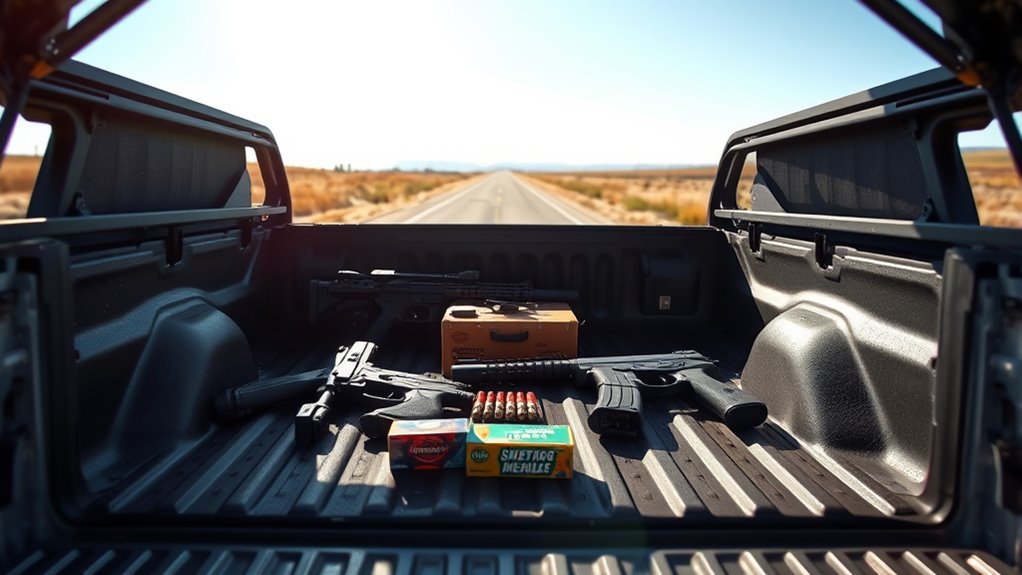
Federal laws set the minimum standards for carrying firearms in vehicles, but they can vary depending on your travel route and destination. You need to understand that the Firearm Owners Protection Act (FOPA) allows you to transport unloaded firearms in a locked container, separate from ammunition, when traveling interstate lawfully. Federal law distinguishes between “carrying” (loaded, accessible for self-defense) and “transporting” (unloaded and secured). Only transporting, with firearms locked away and not readily accessible, is protected across states. Firearms must be stored in a locked container, like a lockbox or a permanently affixed box, and ammo kept separately. While federal standards set a baseline, state laws may impose stricter restrictions, so you must stay informed about local regulations during your travels. Understanding firearm laws is crucial to ensure compliance and safety during transport.
Distinction Between Carrying and Transporting
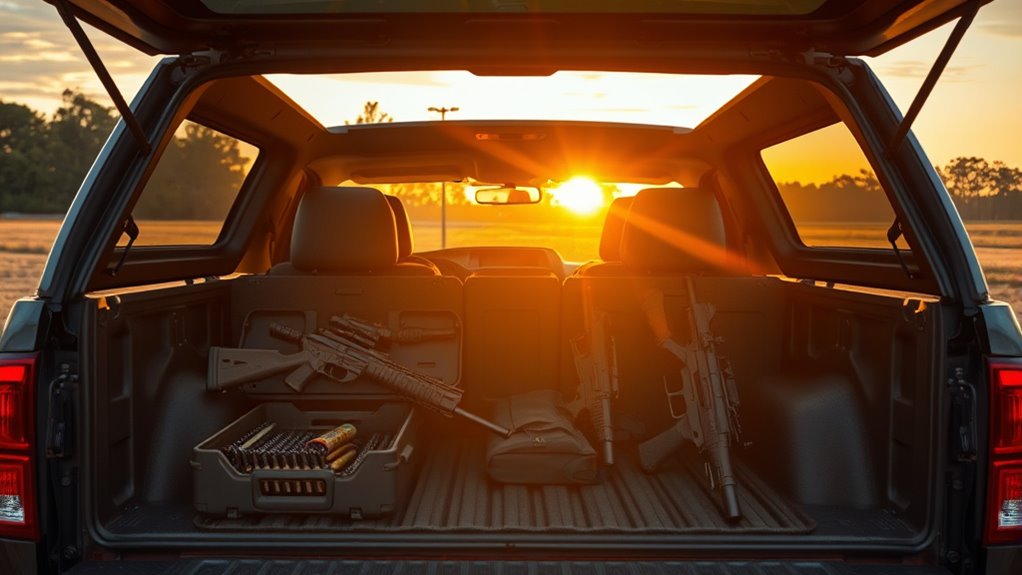
Understanding the difference between carrying and transporting firearms is key to staying compliant with the law. Carrying means having a loaded firearm readily accessible for self-defense, often within reach or in a visible area inside your vehicle. Transporting, on the other hand, involves moving an unloaded firearm secured in a locked container, separate from ammunition. Federal law permits transporting unloaded guns in a locked container when traveling interstate, provided they’re not accessible during transit. Loaded firearms generally aren’t allowed in vehicles unless permitted by specific laws or permits. If you’re carrying, ensure the firearm is unloaded and stored securely. Properly distinguishing between these categories helps you avoid legal issues, as carrying a loaded firearm without proper authorization can lead to serious penalties, while lawful transportation is typically permitted. Luggage & Bags and other travel safety guidelines can also be helpful when planning to carry firearms.
State Law Variations and Their Impact
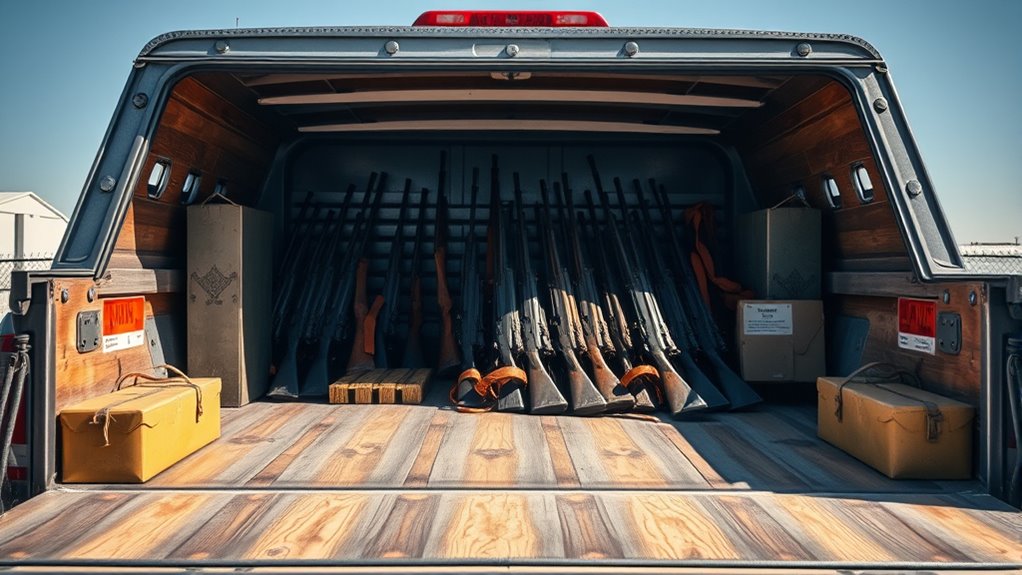
State laws considerably influence how you can carry or transport firearms in a truck bed, often adding restrictions beyond federal standards. Some states, like Texas, Florida, and Tennessee, permit loaded or unloaded firearms without permits (“constitutional carry”). In contrast, states like California, New York, and Illinois require firearms to be unloaded, locked in containers, and separated from ammo. Violating these rules can lead to serious penalties, including felony charges or vehicle forfeiture. You must research each state’s laws before crossing borders to avoid legal issues. Keep in mind, some states demand permanently affixed lockboxes or specific storage methods. Adhering to local laws is essential for legal and safe firearm transportation across state lines. Proper firearm storage and adherence to regulations can help prevent inadvertent violations and ensure safety during transport.
Storage Requirements for Firearms in Truck Beds
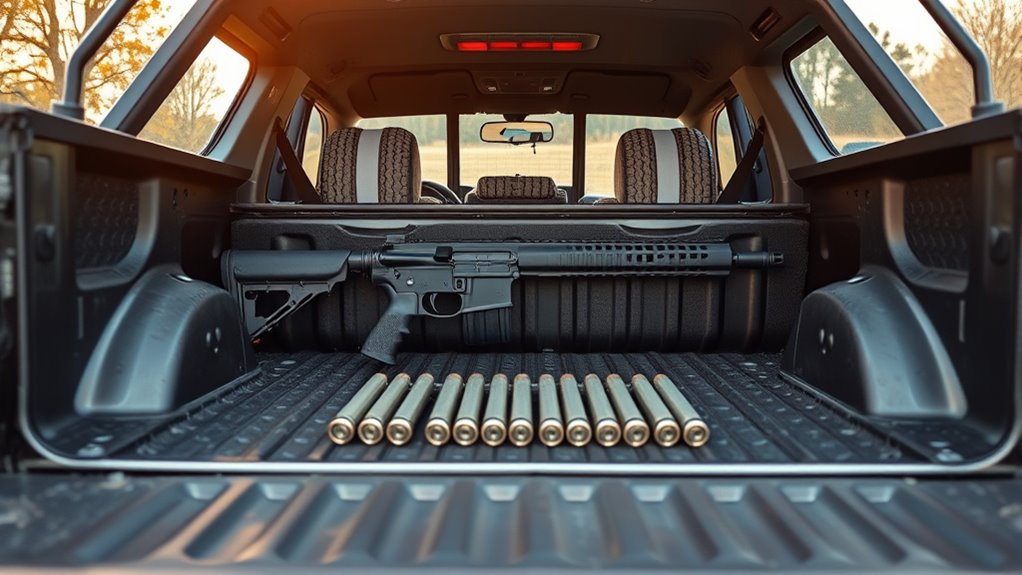
When storing firearms in your truck bed, you need secure locking methods like lockboxes or permanently affixed safes to prevent unauthorized access. It is crucial to keep ammunition separate, either locked away or stored in a different container, to meet safety regulations. Proper storage not only complies with federal laws but also helps you avoid legal issues while keeping your firearms secure during transport. Additionally, understanding storage requirements for firearms in truck beds can help ensure you meet all legal standards and maintain safety.
Secure Locking Methods
Secure locking methods are essential for legally transporting firearms in truck beds, especially since federal and state laws require firearms to be stored in locked containers that are not readily accessible. You should use sturdy lockboxes, gun cases, or permanently affixed locked compartments designed for firearm storage. These containers must prevent unauthorized access and be securely fastened to the vehicle. Avoid storing firearms in unlocked or easily removable containers, such as loose in the truck bed or in unlocked toolboxes. Remember, the lock must be effective, and the container should be resistant to tampering or theft. Proper locking methods not only help you stay compliant but also protect your firearms from theft or accidental access during transit. Using high-quality locking mechanisms can further ensure your firearms remain secure and meet legal requirements.
Separate Ammunition Storage
To comply with federal and many state laws, firearms must be stored separately from ammunition during transport in truck beds. You should keep the firearm unloaded and secured in a locked container or case, separate from the ammunition. Ammunition must also be stored in its own locked container or compartment, ideally away from the firearm. This separation helps guarantee compliance with legal requirements and reduces the risk of accidental discharge or theft. If your vehicle lacks a trunk, use a lockbox or a permanently affixed, secure container in the truck bed. Always verify your state’s specific laws, as some jurisdictions require different storage methods or permits. Proper separate storage protects you legally and enhances safety during transport. For added security, consider utilizing European cloud innovations in your storage solutions to ensure compliance and safety.
Proper Transportation of Ammunition
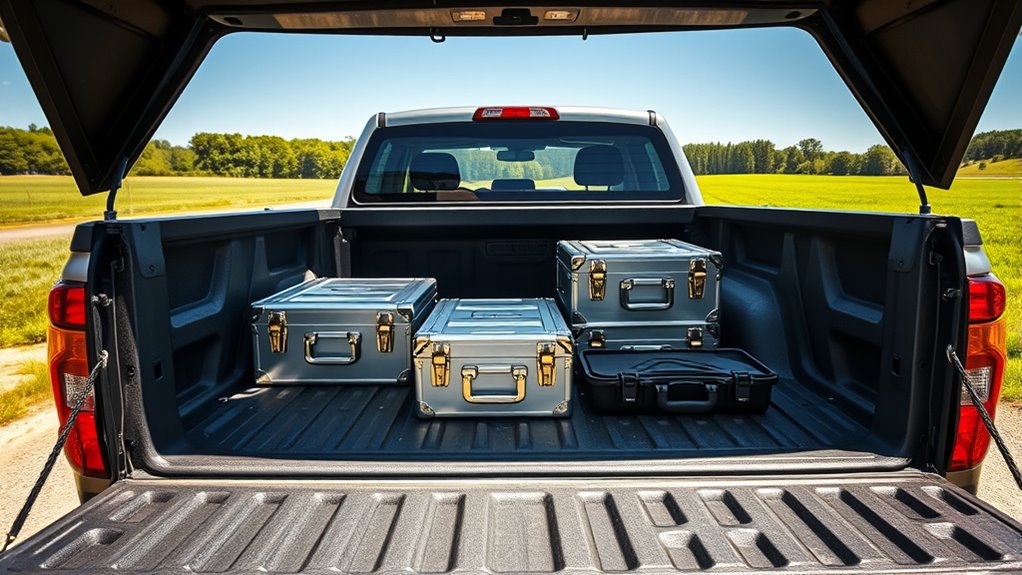
When transporting ammunition, you need to keep it separate from your firearm in a secure, locked container. Using proper locking methods guarantees the ammo stays protected and complies with legal requirements. Always confirm that your storage method meets federal and state standards before hitting the road. Additionally, understanding the net worth of individuals involved in firearm-related fields can provide context for their expertise and credibility.
Separate Storage Requirements
Have you ever wondered how to properly store ammunition when transporting firearms in a truck bed? Federal law requires that ammunition be stored separately from the firearm or secured together in a secure container. You shouldn’t keep ammo loose in the cab or in an unlocked compartment. If your vehicle has a trunk, store the ammunition there, away from the firearm. Without a trunk, use a locked container—like a lockbox, gun case, or a permanently affixed lockable toolbox in your truck bed. The goal is to prevent easy access and guarantee both items are secured during transit. Remember, the ammunition must be stored in a way that’s separate from the firearm and out of reach, complying with federal and state requirements. Proper storage methods help ensure legal compliance and safety during transport.
Secure Locking Methods
Ensuring that ammunition is securely secured during transport is essential for compliance with federal and state laws. You should store ammo separately from firearms, ideally in a locked container or compartment. Use purpose-built lockboxes, gun cases, or permanently affixed locked toolboxes in your truck bed to meet legal requirements. The container must be secured to prevent unauthorized access and guarantee it’s not readily accessible while driving. Avoid storing ammunition in the glove box, console, or any unlocked space. If your vehicle lacks a trunk, choose a lockable container outside the passenger area. Proper locking methods help prevent accidental discharge, theft, and legal violations. Always verify the specific locking requirements for your state and the jurisdictions you’ll travel through to stay compliant. Additionally, selecting the appropriate storage solutions can enhance safety and legal compliance during transport.
Permits and Legal Compliance Across States
Managing firearm permits and legal requirements across different states demands careful attention, especially for truck drivers who travel through multiple jurisdictions. Each state has its own laws about carrying or transporting firearms, with some allowing unloaded guns in locked containers without permits, while others require specific permits or have strict restrictions. You must research and comprehend these laws before entering each state to avoid violations, fines, or felony charges. Federal law sets minimum standards, but states can impose higher restrictions. If you’re carrying firearms, ensure they’re unloaded, locked away, and stored separately from ammunition. Keeping documentation of your permits and understanding the laws of every state you pass through helps you stay compliant and avoid legal trouble while on the road. Additionally, understanding firearm storage requirements in various states can help prevent accidental discharges or theft.
Employer Policies and Additional Restrictions
You need to understand your employer’s firearm policies before carrying a gun in your truck bed, as they may impose stricter rules than state or federal laws. These policies aim to reduce liability risks for the company and protect internal security. Always check with your employer and follow their guidelines to avoid potential disciplinary actions or legal issues.
Workplace Firearm Policies
Employers often establish their own policies regarding firearms in the workplace, which can be more restrictive than federal or state laws. These policies may prohibit firearms entirely or restrict where and how you can carry them while on company property. You might encounter rules that require firearms to be stored in specific areas or unloaded and out of sight. They can also impose bans on firearms in trucks parked on company premises, regardless of legal rights elsewhere. Visualize a workplace where:
- Firearms must be stored in secure lockers away from work areas
- Carrying loaded guns on company property is forbidden
- Only authorized personnel can transport firearms during work hours
- Signage clearly marks firearm restrictions at entrances
Understanding these policies helps you avoid violations and disciplinary action.
Employer Liability Risks
Since workplace policies can differ markedly from federal and state laws, failing to comply with employer-specific rules regarding firearms can expose you to serious liability risks. Many companies have strict policies prohibiting firearms in company vehicles or on company property, regardless of legal allowances. Violating these policies can lead to disciplinary action, termination, or legal consequences if an incident occurs. Employers may also face lawsuits if they fail to enforce firearm restrictions or if employees harm others while carrying unlawfully. To protect yourself, always review and follow your employer’s firearm policies. Even if laws allow certain behavior, disregarding company rules can put your job and legal standing at risk. Staying informed and compliant helps you avoid unnecessary liability and workplace conflicts.
Internal Security Measures
Workplace policies often impose stricter rules on firearm possession than federal or state laws, aiming to maintain safety and reduce liability. You must understand that your employer may prohibit firearms altogether or restrict them to certain areas, regardless of legal allowances. Internal security measures can include:
- Mandatory firearm storage in designated secure lockers or safes
- Prohibitions on carrying firearms in certain company zones or during work hours
- Regular training sessions on firearm safety and company policies
- Strict reporting procedures for firearm possession or incidents
These measures help protect employees and minimize risks. By complying with employer policies, you avoid disciplinary action and legal complications. Always review and follow your company’s security protocols to ensure you’re aligned with internal rules and legal requirements.
Legal Risks and Penalties for Violations
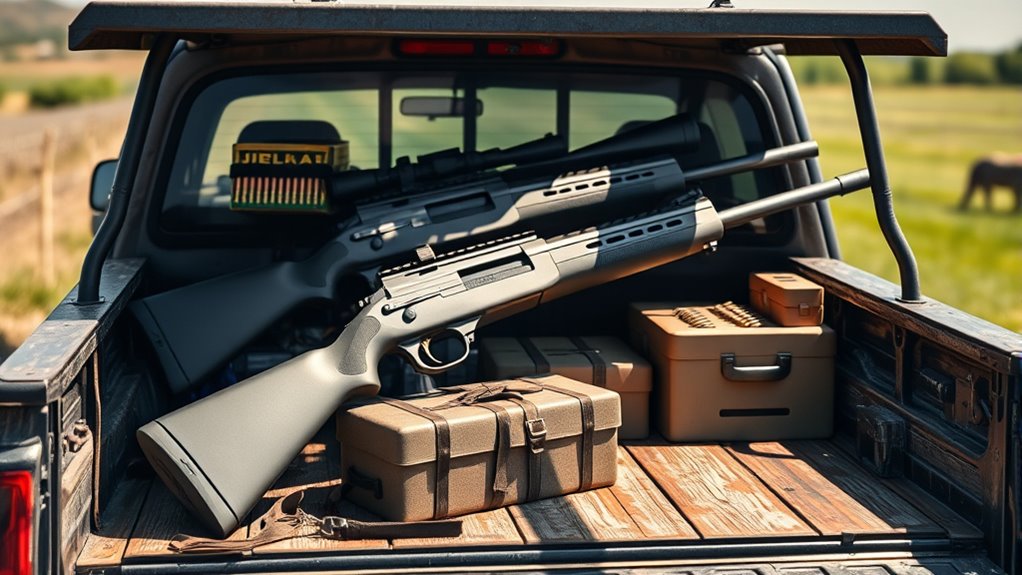
Violating firearm transport laws can lead to serious legal consequences, including criminal charges, fines, and even imprisonment. If you’re caught with loaded guns or firearms accessible without proper permits, authorities may classify it as a felony, jeopardizing your legal record and freedom. In states with strict laws, violations can result in vehicle forfeiture, hefty fines, or jail time. Federal penalties also apply if you fail to follow safe transport rules, especially during interstate travel. Law enforcement agencies scrutinize compliance at weigh stations and checkpoints, increasing the risk of detection. To avoid these penalties, you must understand both federal and state laws, properly secure firearms, and carry necessary permits. Failure to do so puts you at significant legal risk with potentially severe consequences.
Practical Tips for Safe and Lawful Transport

To guarantee you stay within legal boundaries and avoid serious penalties, it’s important to follow practical steps when transporting firearms in your truck. First, always unload your firearm before placing it in a locked container or storage area. Keep ammunition separate and secure in its own locked compartment or container. Use permanently affixed lockboxes or safes in your truck bed to meet legal requirements and prevent easy access. Regularly research the laws of each state you pass through to ensure compliance. Carry any necessary permits and keep documentation handy. Finally, consult your employer’s policies and consider legal advice for additional guidance.
Imagine:
- Locking your firearm in a sturdy, permanently mounted box
- Storing ammo in a separate, secure compartment
- Double-checking state laws along your route
- Keeping permits and documentation within reach
Staying Informed on Changing Firearm Laws
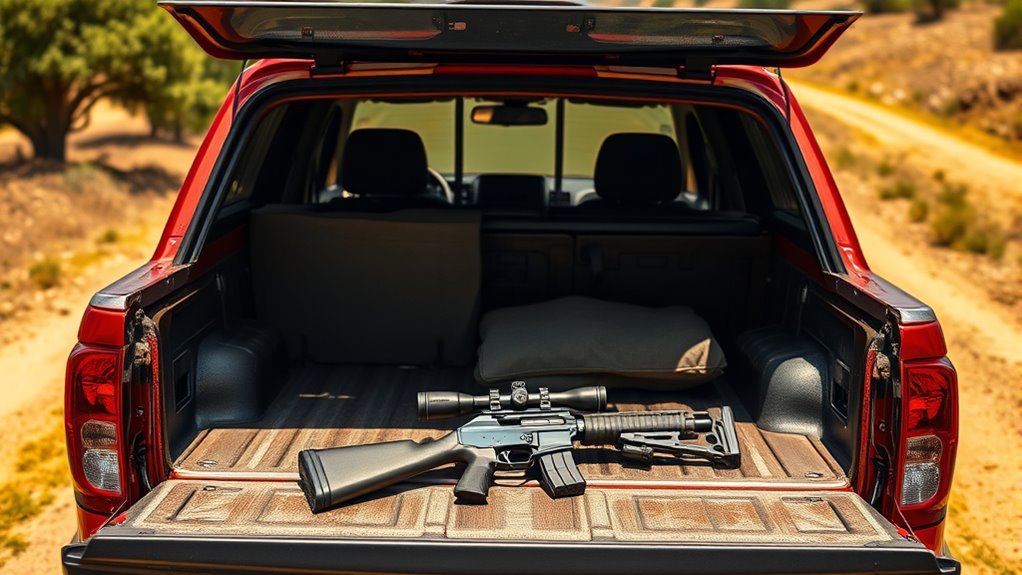
Staying informed on changing firearm laws is essential for truck drivers to avoid legal pitfalls and guarantee compliance during transit. Laws can vary widely from state to state and often change without much notice. You need to regularly check updates from federal agencies like the ATF, FMCSA, and state law resources for the latest regulations. Subscribing to legal newsletters, joining trucking associations, or consulting legal professionals can help keep you current. Before crossing state lines, research each state’s firearm laws—what’s permitted and what’s prohibited. Remember, even minor violations can lead to serious penalties, including fines, vehicle forfeiture, or criminal charges. Staying proactive with your knowledge guarantees you transport firearms safely and legally, reducing your risk and protecting your livelihood.
Frequently Asked Questions
Can I Carry a Loaded Firearm in My Truck Bed Legally?
You generally can’t carry a loaded firearm in your truck bed legally. Federal law requires firearms to be unloaded and transported in a locked container, separate from ammunition. Many states also restrict loaded guns in vehicles unless you have specific permits. Always check your state’s laws and make sure your firearm is unloaded, locked away, and stored separately from ammo. Staying compliant helps you avoid serious legal consequences.
Are There Specific Lockbox Requirements for Truck Beds in Certain States?
Yes, certain states have lockbox requirements for truck beds, which act like a fortress protecting your firearms. In California, for example, you must use permanently affixed lockboxes to secure handguns, ensuring they’re out of reach and out of sight. These state-specific rules are designed to keep firearms locked up tight, much like treasure in a vault, so always research and install approved lockboxes to stay compliant and avoid legal trouble.
How Do Federal and State Laws Interact Regarding Firearm Storage in Commercial Vehicles?
Federal and state laws interact by setting minimum standards and additional restrictions. You must follow federal rules that require unloaded firearms in locked containers, separate from ammo, when transporting across state lines. State laws may impose stricter rules, like requiring firearms to be unloaded and locked in trunks or permanently affixed lockboxes. Always research each state’s specific laws along your route, and verify your storage methods meet both federal and state requirements to stay compliant.
What Are the Consequences for Transporting Ammunition Improperly Across State Lines?
If you improperly transport ammunition across state lines, you risk serious legal consequences. For example, if you’re caught carrying loaded ammo in a state with strict laws like California, you could face felony charges, fines, or vehicle forfeiture. Even if you’re compliant federally, violating state rules can lead to arrest or prosecution. Always research each state’s laws, store ammo separately, and use locked containers to avoid legal trouble.
Do Employer Policies Override Federal or State Firearm Regulations for Truck Drivers?
Employer policies don’t override federal or state firearm laws, but they can impose stricter rules. You must follow federal and state regulations when carrying firearms, regardless of your employer’s policies. If your employer’s policies are more restrictive, you’re still bound by those rules. Always check both your employer’s policies and the applicable laws in each state you travel through to avoid legal issues or penalties.
Conclusion
So, next time you toss that gun or ammo into your truck bed, remember—you’re playing with legal fire, literally. Keep up with federal, state, and local laws, or risk turning your ride into a courtroom. Think of it as a fun game of legal roulette—except the house always wins if you ignore the rules. Stay informed, stay safe, and maybe leave the cowboy stunts for the movies.