Off-road jargon like lockers, articulation, and angles can seem complex, but they’re key to better performance. Lockers lock axle shafts, helping both wheels turn together for more traction. Articulation allows your wheels to stay in contact with uneven ground, improving grip. Angles like approach and departure determine how steep an obstacle you can conquer without damaging your vehicle. Understanding these terms and systems can make your off-road adventures safer and more confident, so keep exploring to learn even more.

Get business pricing on garage and car supplies
- Business-only prices and quantity discounts
- Tax-exempt purchasing
- Multiple users, one account, clear invoices
Key Takeaways
- Lockers lock axle shafts to ensure wheels turn together, improving traction on rugged terrain.
- Articulation allows wheels to flex and stay in contact with uneven surfaces, boosting grip and stability.
- Suspension upgrades increase wheel travel and flexibility, enhancing off-road maneuverability and obstacle clearance.
- Approach and departure angles define the vehicle’s ability to climb inclines and descend without damage.
- Traction control systems monitor wheel spin and automatically adjust brakes or throttle to maximize grip.
As an affiliate, we earn on qualifying purchases.
Understanding Locking Differentials and Lockers

Have you ever wondered how off-road vehicles gain the traction needed to conquer tough terrain? Locking differentials, or “lockers,” are key components that help achieve this. They lock the axle shafts together, ensuring both wheels turn at the same speed, even if one slips. Mechanical lockers physically lock, while electronic lockers activate with a switch or signals. Some vehicles use brake locking differentials, which apply brakes to a spinning wheel to transfer power to the other wheel. Lockers prevent wheel spin and improve grip on rugged surfaces, making them essential for rock crawling and steep climbs. By locking the axles, you get better control and stability, allowing you to tackle obstacles that would otherwise cause loss of traction. Proper functioning of lockers is crucial for maintaining vehicle stability on challenging terrains.
As an affiliate, we earn on qualifying purchases.
The Role of Articulation in Off-Road Performance
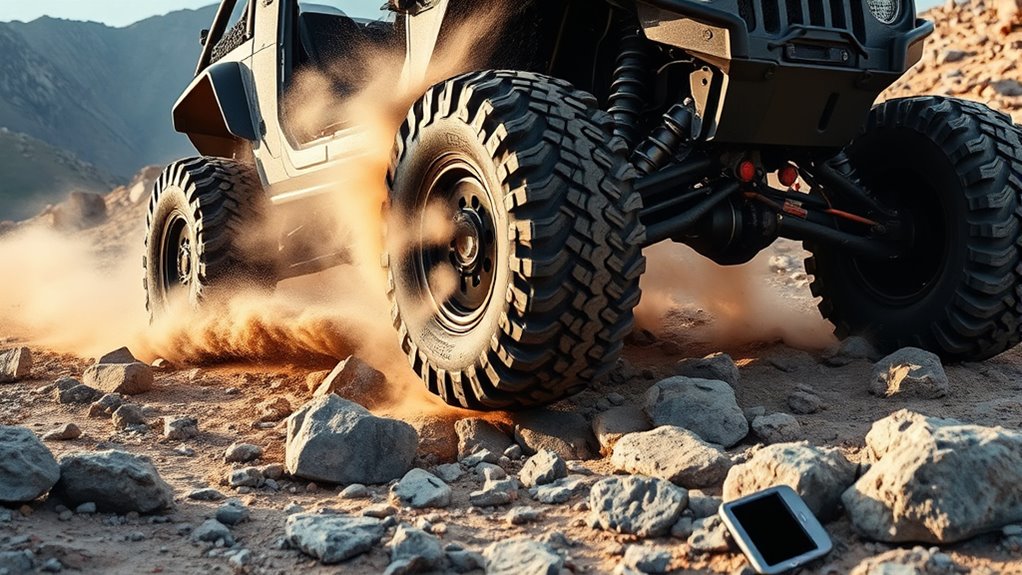
Your vehicle’s ability to flex over uneven terrain directly impacts traction and stability. When articulation improves, your wheels stay in contact with the ground, preventing slips and getting stuck. Upgrading suspension systems can markedly boost your articulation, making rough trails easier to conquer. Incorporating visual and auditory cues can also enhance your understanding of vehicle dynamics, leading to better control.
Flexibility Over Uneven Terrain
When tackling uneven terrain, suspension articulation plays a crucial role in maintaining traction and stability. It allows your wheels to stay in contact with the ground despite obstacles, reducing the risk of getting stuck. To maximize this, you should consider:
- Upgrading to aftermarket suspension components that increase flexibility.
- Using longer travel shocks to improve wheel movement over rough surfaces.
- Adjusting or adding limit straps to control suspension movement and prevent damage.
- Incorporating proper maintenance practices to ensure your suspension system remains in optimal condition.
Enhanced articulation helps your vehicle adapt to rocks, ruts, and uneven surfaces, keeping tires planted and grip consistent. This flexibility minimizes body roll and distributes weight evenly, ensuring safer, more confident off-road performance. Proper articulation is essential for tackling challenging terrains without losing traction.
Impact on Traction
In off-road situations, articulation directly influences how well your tires maintain contact with uneven surfaces. When your suspension flexes, each tire adapts to the terrain, maximizing grip. Greater articulation means your vehicle can handle rocks, ruts, and obstacles without losing traction or getting stuck. If your suspension is stiff or limited, some tires may lift off the ground, reducing contact and increasing the risk of slipping. Enhanced articulation allows all four tires to stay on the ground, distributing power more evenly and improving traction. This is especially crucial on steep or uneven trails, where maintaining contact prevents wheel spin and helps you push through challenging terrain. Proper articulation works hand-in-hand with other systems to keep you moving efficiently. Additionally, understanding your vehicle’s suspension components, such as articulation, can help optimize off-road performance and prevent damage.
Enhancing Articulation Systems
Enhancing articulation systems is key to boosting off-road performance, allowing your vehicle to better navigate uneven terrain. When your suspension flexes effectively, you maintain contact with the ground, improving traction and stability. To achieve this, consider: 1. Upgrading to aftermarket suspension components like long-travel shocks and flexible control arms for increased movement. 2. Installing adjustable coil-overs that let you customize ride height and articulation based on terrain. 3. Adding limit straps to control suspension travel, preventing damage while maximizing flex. These improvements enable your vehicle to adapt to rocks, ruts, and other obstacles more efficiently. Better articulation reduces the chances of getting stuck or losing grip, giving you increased confidence and control on challenging trails. Free Floating systems can also be incorporated to enhance suspension flexibility and performance.
off-road articulation suspension components
As an affiliate, we earn on qualifying purchases.
As an affiliate, we earn on qualifying purchases.
Navigating Approach and Departure Angles
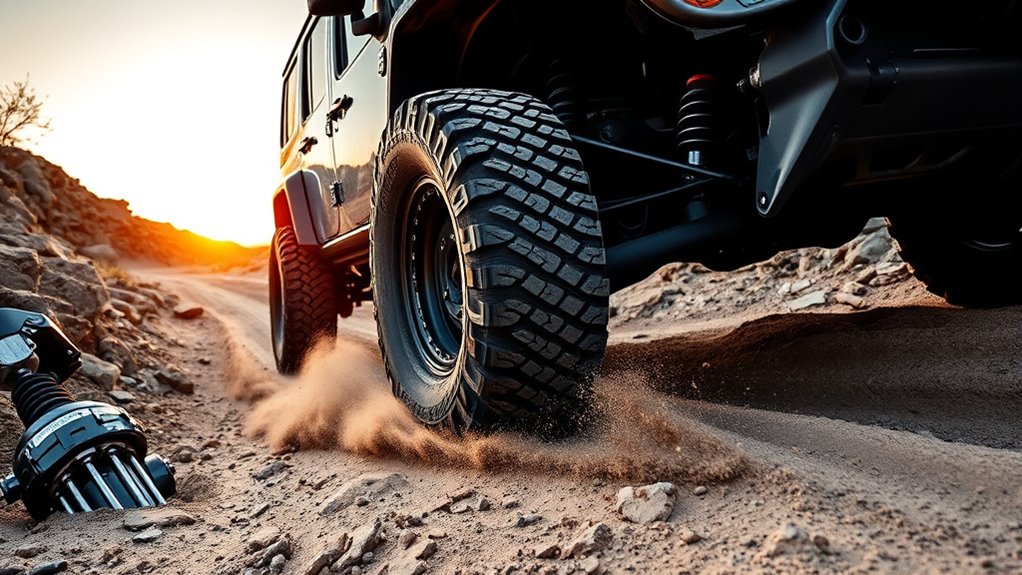
Controlling approach and departure angles is essential for off-road driving, as these angles determine how steep obstacles your vehicle can handle without damage. The approach angle is the steepest incline your front end can climb without hitting the bumper on the ground. The departure angle measures how steep a downhill you can descend without scraping the rear bumper. Larger angles give you more clearance over obstacles, reducing the risk of undercarriage damage. To improve these angles, you can install aftermarket bumpers, lift your vehicle, or trim body panels. Keep in mind that body modifications that increase angles may slightly reduce ground clearance or affect vehicle handling. Being aware of your approach and departure angles helps you choose routes suited to your vehicle’s capabilities and avoid costly mishaps. Additionally, understanding how approach and departure angles impact vehicle performance can help you better prepare for diverse off-road conditions.
off-road traction control system
As an affiliate, we earn on qualifying purchases.
As an affiliate, we earn on qualifying purchases.
Traction Control Systems and Their Functions

Traction control systems actively monitor wheel spin and intervene to maintain ideal grip on uneven terrain. When a wheel starts slipping, these systems step in to optimize traction. Here’s how they work:
- They detect wheel speed differences using sensors and identify loss of traction.
- They apply brakes to the spinning wheel to transfer power to the wheel with better grip.
- Some systems automatically adjust throttle and transmission settings for smoother control.
- Proper maintenance of these systems ensures consistent performance in challenging conditions.
This process helps you navigate challenging surfaces like mud, snow, or rocky trails more confidently. Electronic traction control, often integrated with ABS, enhances grip without driver input. Certain advanced systems, like CRAWL Control, automate throttle and brake inputs, letting you focus on steering through tough terrain.
Essential Suspension Components for Off-Roading
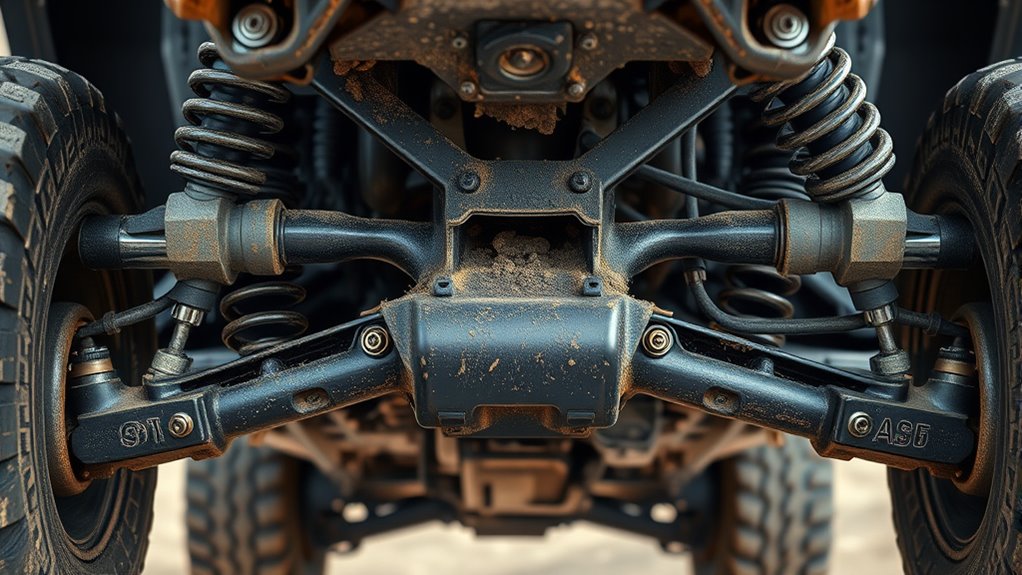
When taking your vehicle off-road, having the right suspension components is essential for overcoming rough terrain and obstacles. Bump stops prevent the suspension from bottoming out, protecting your vehicle’s undercarriage. Limit straps restrict suspension travel, reducing shock damage on large impacts. Coil-overs combine springs and shocks, offering improved shock absorption and ride quality. Dual shocks, common in off-road builds, increase durability and handling by providing extra support for rough terrain. Upgrading suspension components boosts articulation, allowing your wheels to stay in contact with uneven surfaces. This enhances traction and stability on challenging trails. Proper suspension setup also improves ground clearance, helping you clear rocks and ruts without getting stuck or damaging your vehicle. These components are crucial for maintaining control and comfort during off-road adventures. Additionally, understanding wiring basics is important for safely installing and upgrading your suspension systems.
Key Features of Off-Road Vehicles
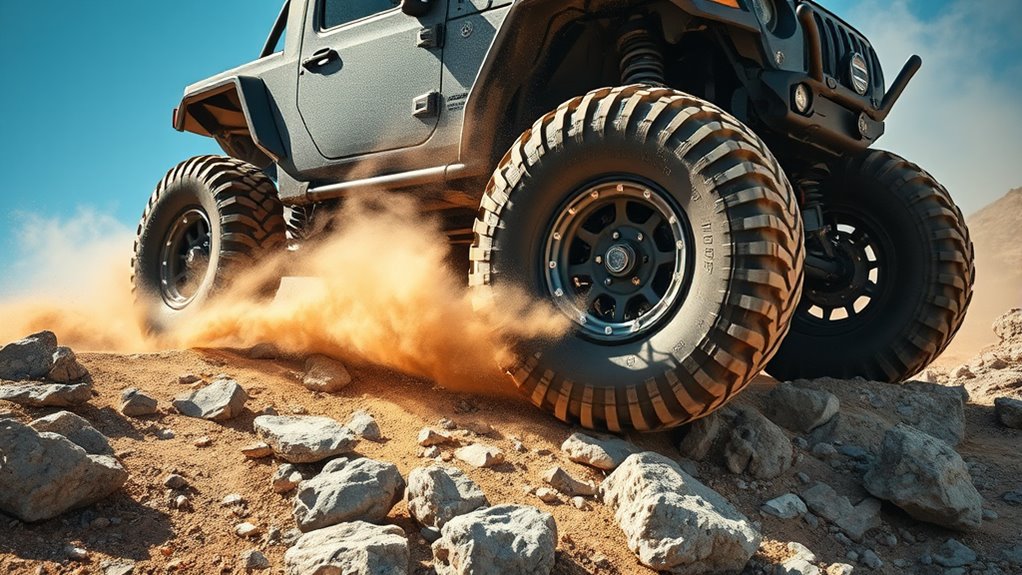
To conquer tough terrains, you need vehicles equipped with key features like lockers and enhanced suspension. Lockers guarantee both wheels get equal power, preventing slippage on rugged surfaces, while better suspension allows your vehicle to flex and handle uneven ground. Understanding these features helps you choose the right setup for your off-road adventures.
Lockers for Traction
Lockers are essential components in off-road vehicles that guarantee both wheels on an axle turn together, providing consistent power and grip. They prevent wheels from spinning freely when one loses traction, helping you tackle tough terrain. There are three main types:
- Mechanical lockers lock automatically or manually, physically connecting the wheels for maximum traction.
- Electronic lockers activate via switches or signals, engaging quickly when needed.
- Brake locking differentials use brakes on slipping wheels to mimic a locker effect, improving grip without mechanical parts.
Using lockers in challenging conditions ensures better control and prevents getting stuck. They’re especially valuable during rock crawling or crossing uneven surfaces, giving you confidence on the toughest trails. Hydrotherapy techniques can also be used to recover from off-road injuries or muscle strain, enhancing your overall recovery process.
Suspension for Articulation
Suspension for articulation is a critical feature that determines how well your vehicle can handle uneven terrain. When your suspension flexes properly, your tires stay in contact with the ground, maintaining traction on rocks, ruts, and other obstacles. Greater articulation allows your vehicle to adapt to steep angles without losing grip or risking damage. You can improve articulation by upgrading suspension components like longer control arms, adjustable shocks, or aftermarket coil-overs. These enhancements increase suspension travel, helping your vehicle navigate tricky off-road conditions. Proper articulation reduces the chance of getting stuck or damaging your undercarriage. It also provides a smoother ride over rough terrain, giving you better control and confidence on challenging trails. Innovative European cloud servers can support data-intensive off-road navigation systems, ensuring reliable performance in remote areas.
Enhancing Off-Road Capability With Modifications

Enhancing your off-road capability often starts with strategic modifications that improve traction, ground clearance, and articulation. These upgrades give you better control and confidence on tough terrains. First, installing a lift kit increases ground clearance and approach/departure angles, helping you clear obstacles safely. Second, upgrading tires to larger, more aggressive models boosts traction and stability. Third, adding aftermarket suspension components like coil-overs or sway bar disconnects improves articulation, allowing your vehicle to adapt to uneven surfaces. These modifications work together to maximize your vehicle’s off-road potential, making steep climbs, rocky paths, and muddy trails less challenging. With the right enhancements, you’ll navigate difficult terrain more efficiently and reduce the risk of getting stuck or damaging your vehicle.
Frequently Asked Questions
How Do Mechanical Lockers Differ From Electronic Lockers?
Mechanical lockers physically lock your vehicle’s axles together, ensuring both wheels turn equally, which boosts traction on tough terrain. Electronic lockers, on the other hand, use electrical signals to engage or disengage the locking mechanism remotely, offering convenience and control. You activate them with a switch, making them ideal for varying conditions. While mechanical lockers are simpler and more durable, electronic lockers provide quick, easy operation for smoother off-road adventures.
What Is the Ideal Articulation Angle for Challenging Off-Road Trails?
A word to the wise: “The devil’s in the details.” For challenging off-road trails, aim for an articulation angle of around 20 to 30 degrees. This range allows your vehicle to flex and handle uneven terrain without losing traction or risking damage. Keep in mind, the exact ideal depends on your vehicle’s suspension setup and terrain, but staying within this range helps you navigate obstacles more confidently.
How Do Approach and Departure Angles Impact Vehicle Safety?
You should pay close attention to approach and departure angles because they directly impact your vehicle’s safety on steep or uneven terrain. Larger angles help prevent your bumpers from hitting obstacles when climbing or descending, reducing the risk of undercarriage damage. By understanding and maximizing these angles with modifications like lift kits or bumpers, you guarantee safer navigation, especially on challenging trails where ground clearance and obstacle clearance are critical.
Can Suspension Upgrades Improve Both Articulation and Ground Clearance?
Did you know that suspension upgrades can boost ground clearance by up to 3 inches? Yes, they can improve both articulation and ground clearance. By installing components like coil-overs or aftermarket lifts, you allow your vehicle to flex more over uneven terrain while increasing clearance for obstacles. This combination reduces the risk of getting stuck and enhances your off-road performance, making your adventures safer and more enjoyable.
What Off-Road Features Are Essential for Extreme Rock Crawling?
For extreme rock crawling, you need lockers to guarantee both wheels turn equally, giving you maximum traction. High articulation helps your vehicle flex over uneven surfaces without losing grip. Large approach and departure angles prevent undercarriage damage when climbing or descending steep rocks. Plus, a sturdy suspension with bump stops and limit straps protects your vehicle from impacts. These features work together, enhancing your control and safety in the toughest off-road conditions.
Conclusion
Now that you know the off-road jargon, you’re ready to conquer any trail. Think of these features as your secret weapons—lockers, articulation, and angles—each playing a vital role in your adventure. Remember, understanding these elements isn’t just technical; it’s the key to revealing your vehicle’s true potential. So go ahead, embrace the challenge, and let your off-road journey be a story worth telling. After all, the trail’s calling—are you ready to answer?
Halloween Picks
halloween
As an affiliate, we earn on qualifying purchases.