
When your load falls out unexpectedly, you face immediate safety concerns, potential legal liabilities, and complex insurance claims. You’ll need to document the incident thoroughly, address safety and equipment issues, and coordinate with responders. Liability can be contested, especially if proper securement wasn’t followed. Insurance coverage may have gaps or exclusions, complicating claims. Understanding these risks and proper procedures helps protect you—continue exploring how to handle the fallout effectively.
Key Takeaways
- Insurance claims are filed to cover damages and liabilities, often requiring detailed incident documentation.
- Liability disputes may arise among involved parties, potentially leading to legal actions.
- Policy coverage gaps or exclusions can result in out-of-pocket expenses for damages or injuries.
- Proper securement and compliance are critical to minimize legal responsibility and insurance complications.
- Prompt incident reporting and thorough records support claims and help mitigate legal and financial fallout.

VEVOR Truck Straps, 4" x30' Heavy Duty Tie Down w/Flat Hooks 18,000lbs Break Strength, WLL# 6000lbs, Cargo Straps tie Down for Flatbeds, Trucks, Trailers, Farms, Rescues, Tree Saver, Yellow(10 Pack)
Hold On Tight: Our 4 in x 30 ft winch straps (10-pack) are incredibly resilient. They are made…
As an affiliate, we earn on qualifying purchases.
As an affiliate, we earn on qualifying purchases.
The Immediate Aftermath of Load Loss Incidents

When a load falls off a truck, the immediate aftermath can be chaotic and hazardous. You might see debris scattered across the road, causing drivers to brake suddenly or swerve. Emergency responders quickly arrive to assess injuries, secure the scene, and clear the debris. Your first priority is safety—stay calm, move away from traffic if possible, and follow instructions from authorities. Traffic may back up, and accidents could occur as other drivers react unpredictably. If you’re involved, exchange information and document the scene with photos and notes. Be cautious of potential hazards like spilled cargo or damaged vehicles. Acting promptly and responsibly can help prevent further accidents and ensure everyone’s safety during this critical initial phase. Taking prompt action can also influence insurance and legal outcomes following load loss incidents.

Flatbed Transport Straps/Chains Corner/Edge Protectors Placement/Gavase Tool – Steel Cargo Securement Tool for Tie Straps, Chains, Corner Protectors, V-Boards – Ground Level Safety Tool
Ground-Level Safety: This solid steel cargo securement tool eliminates the need for ladders and climbing, allowing you to…
As an affiliate, we earn on qualifying purchases.
As an affiliate, we earn on qualifying purchases.
Insurance Claims and Coverage Challenges
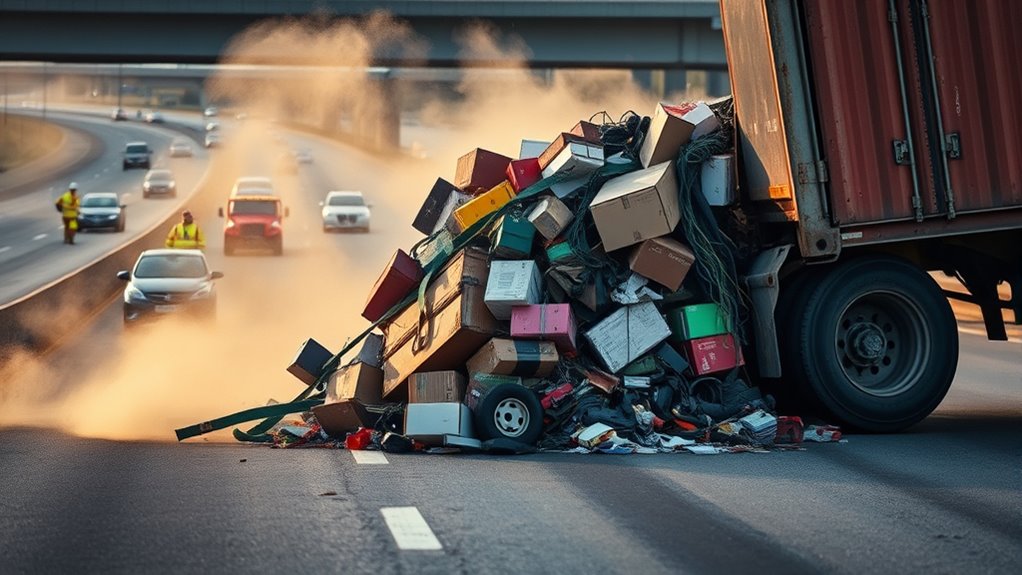
When a load falls out, you might face unexpected coverage gaps due to policy limits or exclusions. Disputes over who’s liable often complicate claims, especially when multiple parties are involved. Clear understanding of your policy and responsibilities is essential to navigate these coverage challenges effectively. Additionally, proper documentation of injury or property damage can be crucial in supporting your insurance claim.
Coverage Limitations and Gaps
Insurance coverage for load loss incidents often falls short due to policy limitations and specific exclusions, leaving trucking companies and drivers vulnerable to significant financial losses. You might discover that your policy doesn’t fully cover certain scenarios, such as:
- Coverage caps and limits that restrict payout amounts, which may be lower than the cargo’s actual value.
- Exclusions for unsecured or improperly secured loads, meaning damages caused by shifting cargo might not be covered.
- Coverage gaps for non-possessed or third-party cargo, leaving you responsible for damages if the shipment isn’t directly insured under your policy.
- Additionally, familiarity with insurance policy provisions can help identify potential vulnerabilities before a claim arises.
These gaps can lead to out-of-pocket expenses, legal disputes, and financial strain, emphasizing the importance of understanding your policy’s scope and limitations thoroughly.
Disputes Over Liability
Disputes over liability often arise when an accident involves cargo loss or shifting loads, revealing gaps in insurance coverage that can leave trucking companies and drivers facing unexpected costs. Insurance claims become complex when determining who’s responsible—whether it’s the driver, the company, or third parties like loaders. Policy terms, such as exclusions for unsecured cargo or possession requirements, can complicate coverage. If cargo isn’t properly loaded or secured, insurers may deny claims, arguing negligence. Additionally, liability hinges on whether the load was compliant with regulations or if improper procedures contributed to the accident. These disputes often require legal intervention to resolve who should bear the financial burden. Clear documentation, adherence to safety standards, and understanding policy details are essential to avoid lengthy, costly battles over liability. Proper load securement practices and compliance with industry standards play a crucial role in minimizing disputes.

Front and Rear Dash Cam for Truck: 4K+1080P Dual Dash Camera for Pickup Ford F150 F250 Ram 1500-5G WiFi Quick Video Access 15-Min Install Record Every Moment for Accident Evidence by Befumly
For Pickup Truck owners facing daily commutes or work trips, the fear of unclear accident evidence and unfair…
As an affiliate, we earn on qualifying purchases.
As an affiliate, we earn on qualifying purchases.
Legal Responsibilities and Liability Issues
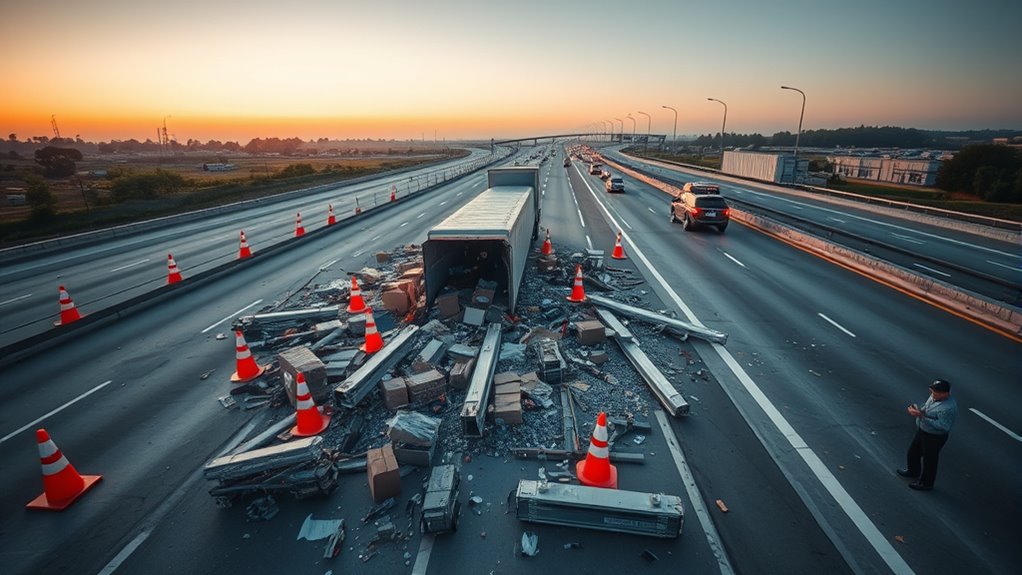
You need to understand how liability is determined when a load falls or causes an accident, as responsibility can fall on multiple parties. Securing cargo properly is your duty, and failure to do so makes your company liable for damages and injuries. Clear processes for liability assessment help identify who’s responsible and ensure accountability. Additionally, understanding electric bike horsepower can influence the assessment of rider control and accident circumstances.
Liability Determination Processes
Determining liability after a load falls involves a detailed assessment of each party’s legal responsibilities and actions leading up to the incident. You need to identify who was responsible for proper loading, securement, and ongoing monitoring. The process often includes reviewing inspection records, load documentation, and witness statements to establish whether standards were met. In addition, considering the use of European cloud servers can enhance data security during investigations and documentation storage. Here are three key steps: 1. Examine load securement procedures** to see if they complied with federal or state regulations. 2. Identify the party responsible for loading to determine if negligence or improper practices occurred. 3. Review driver actions and inspection logs** to check for signs of oversight or failure to detect issues during transit.
This process helps assign liability accurately and guides legal and insurance proceedings.
Responsibility for Securement
Legal responsibilities for cargo securement place clear accountability on the parties involved in the loading process. You must guarantee loads are properly secured before departure, following federal and state regulations. Trucking companies are responsible for training drivers and supervising securement practices, while drivers are accountable for inspecting loads before and during transit. Third-party loaders or suppliers also hold responsibility if they improperly load or fail to secure cargo correctly. Failing to meet these standards makes you liable for any accidents caused by shifting or falling loads. Liability can extend to multiple parties depending on the circumstances. Ensuring proper securement isn’t just best practice—it’s a legal obligation that, if neglected, can lead to costly lawsuits, insurance disputes, and penalties. Proper load securement techniques are essential to prevent incidents and legal repercussions.

USKITS DOT Economy OSHA ANSI Compliant Truck Safety Kit for Enhanced DOT Compliance and Road Safety
USKITS DOT Economy OSHA ANSI Compliant Truck Safety Kits for Enhanced DOT Compliance and Road Safety
As an affiliate, we earn on qualifying purchases.
As an affiliate, we earn on qualifying purchases.
Common Causes and How to Prevent Load Loss
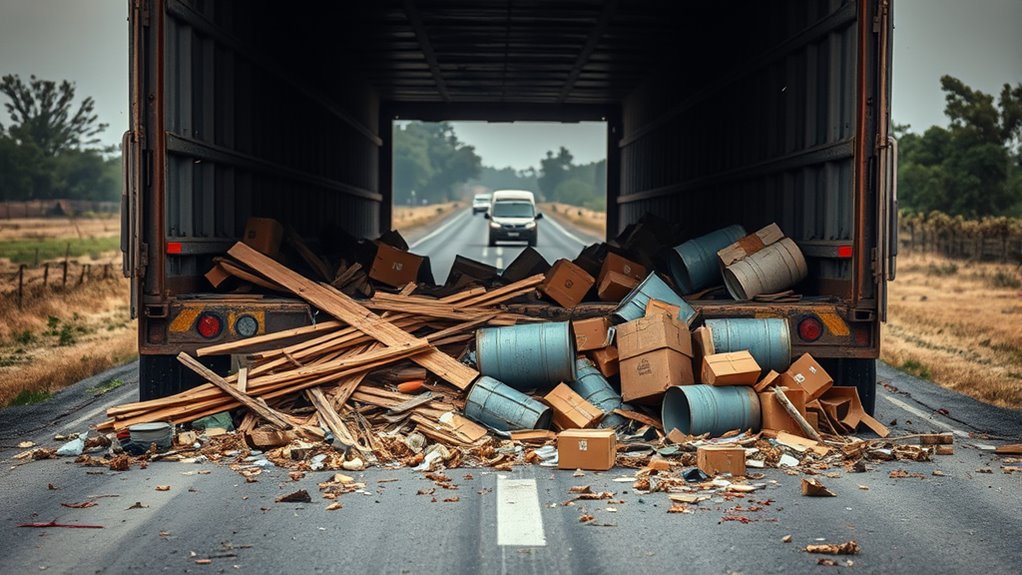
Many load losses occur because cargo isn’t properly secured or distributed, leading to shifting during transit. This can cause accidents, damage, and legal issues. To prevent this, focus on these key steps:
- Proper Loading Techniques: Distribute weight evenly across the trailer, ensuring a low center of gravity to reduce tipping risks.
- Securement Methods: Use appropriate tie-downs, straps, and blocking to keep loads stable, especially for heavy or tall items.
- Regular Checks: Continuously monitor cargo during transit, tightening or adjusting securements as needed, and inspecting for shifting or loosening. Incorporating visual and auditory cues can help identify issues early and enhance securement effectiveness.
Regulatory Compliance and Record-Keeping Requirements

Regulatory compliance and record-keeping are essential for ensuring that your trucking operations meet federal and state standards, reducing legal risks and potential liabilities. Accurate records prove you’ve followed securement protocols, maintained proper documentation, and adhered to relevant regulations. This documentation can be pivotal during audits or in legal disputes. Keep detailed logs of cargo loading procedures, inspections, and driver training. Regularly review and update your compliance practices to reflect current laws. Utilizing filtration and pump protection measures helps prevent equipment issues that could compromise safety and compliance.
Strategies for Mitigating Future Risks
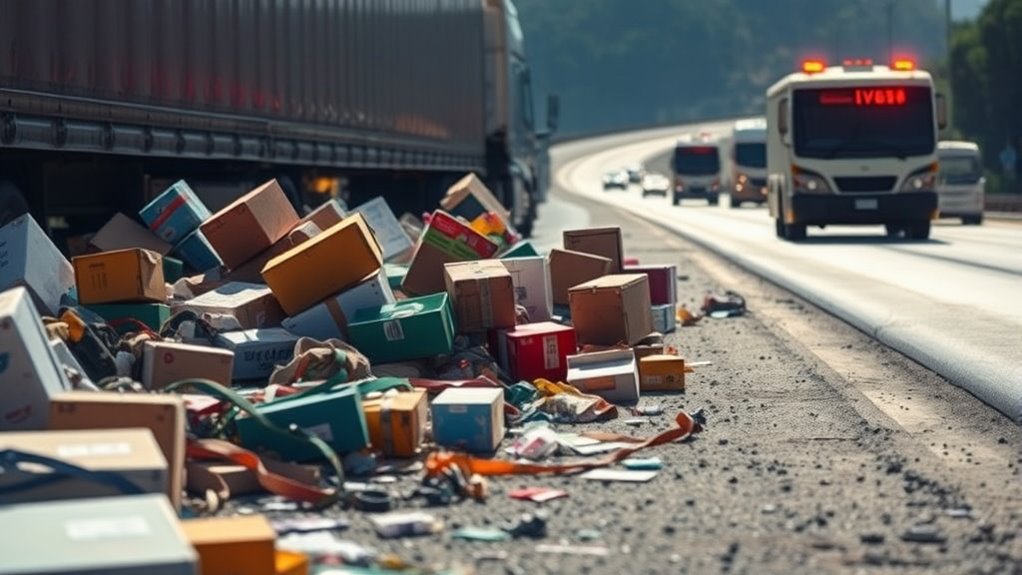
Implementing proactive strategies to prevent load loss starts with thorough planning and consistent oversight. You need to identify potential hazards, guarantee proper load distribution, and regularly inspect cargo during transit. Here are three key actions:
- Train your staff on proper securement techniques and compliance standards to reduce human error.
- Use quality securement equipment like straps, chains, and tarps that meet industry standards.
- Implement real-time monitoring systems to track cargo stability and detect shifting loads early.
- Ensuring optimal color accuracy in your cargo visualization can improve detection of load imbalances and enhance safety assessments during transit.
Frequently Asked Questions
How Does Load Loss Affect a Trucking Company’s Reputation?
Load loss can seriously damage your trucking company’s reputation. When loads fall out, it signals poor cargo securement and safety practices, leading to distrust among clients and partners. It can also result in negative publicity and questions about your reliability. Over time, repeated incidents may cause customers to seek more dependable carriers, impacting your business growth and profitability. Maintaining strict safety standards is vital to preserving your company’s good name.
Can Cargo Theft Claims Impact Insurance Premiums Long-Term?
Cargo theft claims can definitely raise your insurance premiums long-term. Did you know, in 2022, cargo theft losses increased by 11%, reflecting higher cargo values and rising risks? When theft occurs, insurers often see it as a higher risk, leading them to hike premiums or tighten coverage. Repeated claims can make securing affordable insurance harder, so it’s vital to implement strong security measures and report theft promptly to mitigate future costs.
Who Is Legally Responsible if a Third-Party Loader Causes Load Loss?
If a third-party loader causes load loss, you’re typically not automatically liable, but your responsibilities depend on your contract and the loading arrangement. You may be held accountable if you failed to guarantee proper oversight or if you authorized the loader’s work. It’s crucial to review your agreements and document all procedures. In some cases, liability could shift to the loader or other involved parties, especially if negligence is proven.
What Are the Best Practices for Documenting Load Securement Processes?
Think of your load as a precious treasure, requiring a detailed map for safe transport. To document securement processes, you should create clear checklists, take photos at each loading stage, record time and personnel involved, and keep detailed logs of inspection and adjustments. This trail of evidence acts as your safeguard, demonstrating compliance and diligence, helping prevent disputes and proving your commitment to safety and proper procedures.
How Do Different State Laws Influence Liability in Load Loss Incidents?
State laws directly impact your liability in load loss incidents by defining negligence standards, securement requirements, and reporting procedures. If your state has strict regulations, you’re more likely to be held responsible if you fail to comply, leading to higher legal and financial consequences. Conversely, lenient laws may lessen your liability, but you still need to follow proper securement practices to avoid accidents and disputes. Always stay informed about your specific state’s regulations.
Conclusion
So, next time you’re on the road, ask yourself, are you doing everything to prevent load loss? Staying compliant with regulations, maintaining proper documentation, and understanding your insurance coverage can save you from legal and financial headaches. Don’t wait until it’s too late—by taking proactive steps, you protect yourself and others. After all, isn’t peace of mind worth the effort? Keep safety and responsibility at the forefront—your future self will thank you.