
TL;DR

Get business pricing on garage and car supplies
- Business-only prices and quantity discounts
- Tax-exempt purchasing
- Multiple users, one account, clear invoices
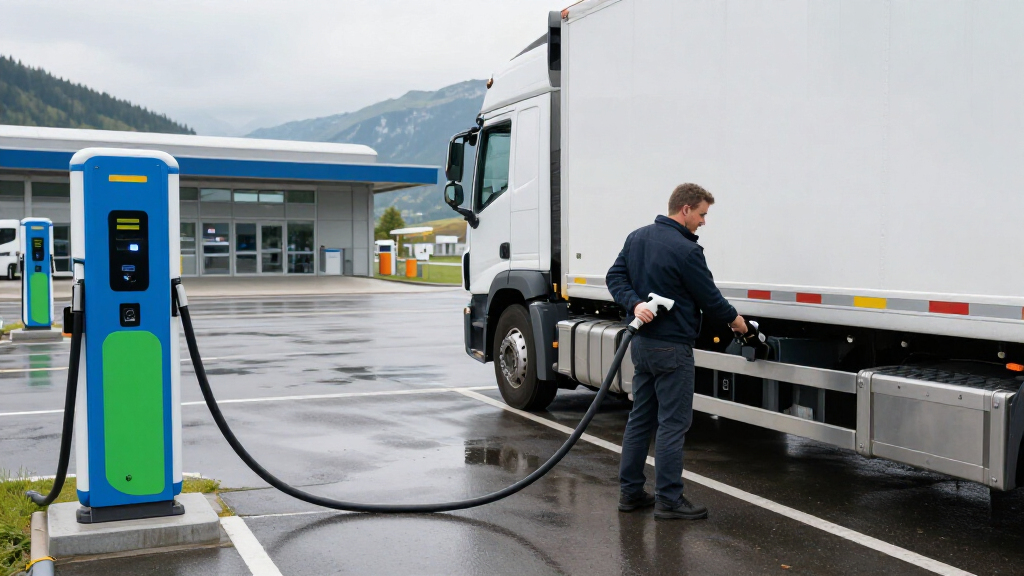
Siemens and OMV have deployed the SICHARGE FLEX charging system at a station in Kufstein, Austria. This high-power infrastructure supports both passenger cars and heavy-duty electric trucks on the critical Brenner transport corridor. The system currently offers 400 kW per truck point, with plans to expand to 1,200 kW.
Siemens and OMV have deployed a new high-power electric vehicle charging system in Kufstein, Austria, marking a significant step in supporting heavy-duty freight transport. The installation utilizes Siemens’ SICHARGE FLEX technology, which OMV is piloting at its public charging station located on the strategically vital Brenner Route. This development addresses the growing need for charging infrastructure for heavy-duty electric vehicles along major European transportation corridors.
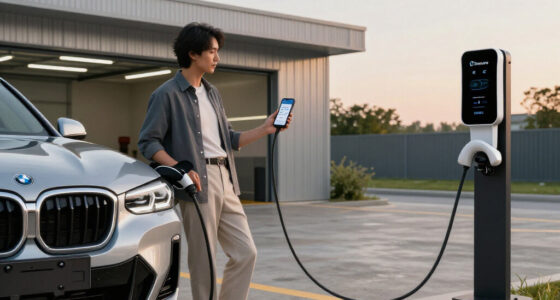
The newly installed SICHARGE FLEX system at the OMV station in Kufstein is designed to serve both passenger electric vehicles and commercial trucks. According to Siemens eMobility, the system features a distributed architecture with a total power output capacity ranging from 480 kW to 1.68 MW. In its current operational phase, the site offers four charging points for passenger cars and two dedicated points for trucks, each capable of delivering up to 400 kW. A dynamic power distribution mechanism allocates available electricity among connected vehicles based on real-time demand, ensuring efficient use of the station’s capacity.
OMV selected the Kufstein location specifically for its position on the Brenner Route, a primary freight corridor connecting Germany and Italy. The station is tailored to the needs of professional drivers, offering amenities such as showers, restaurants, and washing machines. Peter Vysny, VP of International Operations and eMobility at OMV, stated that heavy-duty electric vehicles require powerful charging options along major routes, making Kufstein an ideal site for this pilot deployment.
The system represents a scalable solution for both public charging and depot applications. Markus Mildner, CEO of Siemens eMobility, described the technology as a key pillar for sustainable transportation, noting that it can be precisely configured for various use cases. OMV operates public EV charging networks in several European markets, including Austria, Hungary, Slovakia, and Romania, positioning this pilot as a potential model for broader regional expansion.
Supporting Heavy-Duty Freight Electrification
The deployment of high-power charging infrastructure in Kufstein is significant because it directly supports the electrification of freight transport, a sector that has historically lagged behind passenger vehicles in adopting electric technology. Heavy-duty trucks consume significantly more energy and require much faster charging speeds to maintain operational efficiency. By providing up to 400 kW per truck point, with plans to increase to 1,200 kW, the station addresses the critical bottleneck of charging time for long-haul logistics.
This development matters for the broader European transport network because the Brenner Route is one of the most congested and economically important freight corridors in the continent. Establishing reliable, high-capacity charging infrastructure here helps build confidence among logistics companies considering the transition to electric fleets. It demonstrates that public-private partnerships, such as the one between Siemens and OMV, can effectively deploy the necessary hardware to support cross-border sustainable logistics.
Products Worth Considering

DEWALT 20V MAX XR Impact Driver, 1/4 Inch High Torque Brushless 3-Speed Cordless with LED Light, Extended Runtime (DCF845B)

Milwaukee M18 FUEL 1/2-Inch High Torque Impact Wrench with Friction Ring Kit

NOCO Boost GBX75 2500A UltraSafe Jump Starter, 12V Lithium Battery Booster
As an affiliate, we earn on qualifying purchases.
The SICHARGE FLEX Technology
The SICHARGE FLEX system was unveiled by Siemens in October 2025 as a distributed charging solution designed for flexibility. Unlike traditional fixed-power chargers, this system uses a modular approach that allows power to be shared dynamically among multiple vehicles. This architecture is particularly relevant for public stations where demand fluctuates, as it prevents stranded capacity and maximizes the utility of the grid connection.
OMV has been expanding its electric mobility footprint across Central and Eastern Europe, operating charging networks in Austria, Hungary, Slovakia, and Romania. As a pilot customer, OMV’s adoption of the new Siemens technology signals industry validation of the system’s reliability and scalability. The choice of Kufstein highlights the strategic focus on transit corridors where heavy-duty traffic is concentrated, rather than solely urban centers.
“The electrification of freight transport is a key pillar of a sustainable transportation system.”
— Markus Mildner, CEO of Siemens eMobility
Timeline for High-Power MCS Expansion
While the current phase of the Kufstein station is operational with 400 kW truck charging points, the timeline for the installation of the next phase remains unspecified. The source material confirms that four additional Megawatt Charging System (MCS) charge points for trucks are planned, with power outputs ranging from 600 kW to 1,200 kW. However, it is not clear when these higher-power units will be commissioned or if there are regulatory or grid connection hurdles that might delay this upgrade.
Additionally, the long-term performance data of the SICHARGE FLEX system under heavy-duty load conditions is still emerging. As OMV is a pilot customer, the results of this deployment will likely influence future decisions by OMV and other operators regarding the widespread adoption of this specific Siemens technology across their European networks.
Next Phase of Truck Charging Capacity
The immediate next step for the Kufstein station is the expansion of its heavy-duty charging capabilities. OMV and Siemens plan to add four additional MCS charge points for trucks, significantly increasing the available power per vehicle to between 600 kW and 1,200 kW. This upgrade is expected to further reduce charging times for electric trucks, aligning with the operational needs of long-haul drivers.
Stakeholders will be monitoring the utilization rates of the current 400 kW points and the operational stability of the dynamic power distribution system. Success in this pilot could lead to similar deployments at other OMV locations along major European transport arteries, potentially accelerating the infrastructure readiness for heavy-duty electric freight across the continent.
Key Questions
What is the maximum charging power available for trucks at the Kufstein station?
Currently, the station offers truck charging points with a capacity of up to 400 kW. A future phase will add points capable of 600 kW to 1,200 kW.
Why was Kufstein chosen for this pilot deployment?
Kufstein is located on the Brenner Route, a major transportation corridor between Germany and Italy, making it a strategic location for heavy-duty freight traffic.
What amenities are available for truck drivers at the station?
The station is tailored for truck drivers and offers amenities including showers, restaurants, and washing machines.
How does the SICHARGE FLEX system manage power distribution?
The system uses a dynamic power distribution mechanism that allocates available charging power among connected vehicles based on their specific needs and real-time demand.
Source: rss