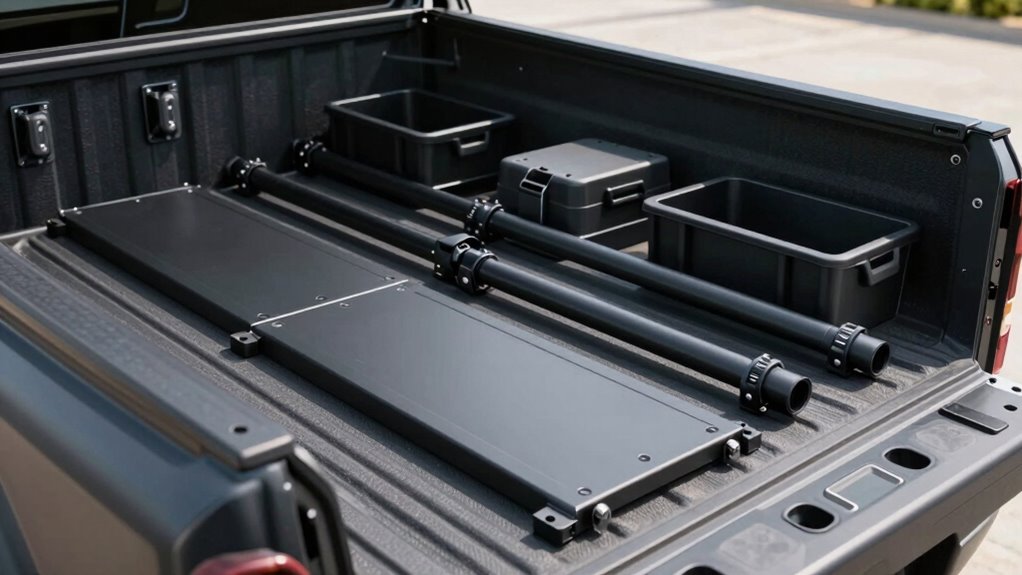

Start by evaluating your cargo needs—consider tools, gear, and materials to avoid overcomplicating your system. Measure your truck bed’s dimensions and plan access points like drawers or bins. Choose durable, adjustable containers that lock securely. Attach components with brackets or rails for stability. Test your setup with real loads and make adjustments as needed. Regular maintenance keeps everything working smoothly. Keep exploring to discover how to create an efficient, flexible modular system tailored to your tasks.

Get business pricing on garage and car supplies
- Business-only prices and quantity discounts
- Tax-exempt purchasing
- Multiple users, one account, clear invoices
Key Takeaways
- Measure truck bed dimensions and identify access points to inform modular component placement.
- Prioritize essential gear and plan storage around specific activity requirements.
- Select adjustable, durable containers with locking features for flexibility and protection.
- Secure components with appropriate brackets and ensure proper weight distribution for safety.
- Test the system with typical loads, then adjust and maintain for optimal performance.
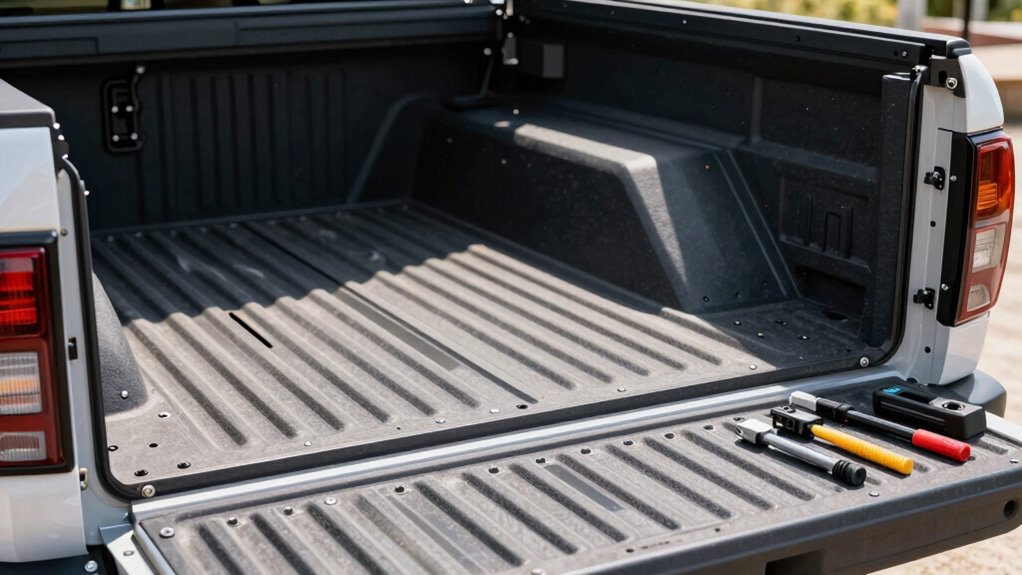
Have you ever wished your truck bed could adapt to different tasks effortlessly? Designing a modular truck bed system makes that possible, giving you flexibility and efficiency for any job. The key is understanding how to incorporate truck bed accessories and modular storage solutions that fit your specific needs. Start by evaluating what you typically carry—tools, gear, camping equipment, or construction materials—and then plan your system around those items. This initial step ensures your design is practical, avoiding unnecessary complexity and focusing on what truly matters.
Design a modular truck bed for maximum flexibility by assessing your gear and customizing your storage solutions.
Next, consider the layout of your truck bed. Measure dimensions carefully, including width, length, and height, to determine how much space you have for modular components. Think about how you want to access different sections—whether you prefer sliding drawers, stackable bins, or removable containers. This planning stage helps you identify where to install truck bed accessories like tie-down points, dividers, or mounting rails, which will secure your gear and prevent shifting during transit. Incorporating these accessories early ensures your system is stable and safe. Additionally, understanding industry standards for truck bed accessories can help you choose compatible components that ensure safety and durability.
Once you have the layout mapped out, focus on selecting modular storage solutions. Opt for stackable containers or adjustable compartments that can be rearranged based on your current needs. These solutions make your setup versatile, allowing you to quickly reconfigure your truck bed for different tasks. Be mindful of durability—choose materials that withstand weather, rough handling, and corrosion. Incorporate features like locking mechanisms or sealable lids to protect your gear from the elements and theft. It’s also beneficial to consider modular design principles to maximize adaptability and ease of reconfiguration.
Installation is your next step. Securely attach your modular components and truck bed accessories, ensuring everything is firmly fixed but also easy to remove or adjust when necessary. Use mounting brackets, rails, or clamps designed for modular systems to facilitate quick changes. As you assemble, keep weight distribution in mind; avoid overloading one side, which could compromise safety or damage your truck. Power tools can greatly simplify this process, making it faster and more precise.
Finally, test your system under real-world conditions. Load it with your typical gear, then drive around to see how everything performs. Make adjustments if certain components shift or don’t function as expected. Regular maintenance and reorganization keep your modular truck bed system efficient and reliable over time. By carefully planning and selecting the right truck bed accessories and modular storage solutions, you create a versatile setup that adapts seamlessly to whatever task comes your way, making every trip more organized and productive.
modular truck bed storage system
As an affiliate, we earn on qualifying purchases.
As an affiliate, we earn on qualifying purchases.
Frequently Asked Questions
What Materials Are Best for Durability and Weight?
You should choose materials like aluminum or high-strength steel for durability and weight optimization. Aluminum offers a great balance of lightweight and corrosion resistance, making it ideal for reducing overall weight without sacrificing strength. High-strength steel provides exceptional durability but adds more weight. Material comparisons show aluminum’s advantage for weight savings, while steel excels in toughness. Consider your specific needs—if weight is a top priority, aluminum is your best choice.
How Do I Secure Modular Components Safely?
Securely sealing your system starts with sturdy secure fasteners, preventing unwanted movement. Safety straps snap snugly over components, locking them into place and adding an extra layer of security. Double-check each connection, confirming fasteners are tight and straps are properly tensioned. This simple yet systematic security strategy ensures your modular components stay steadfast, safeguarding cargo and crews while maneuvering through muddy, mountainous, or mundane miles.
Can the System Be Customized for Different Truck Models?
Yes, you can customize the system for different truck models by focusing on universal compatibility and adjustable configurations. You’ll select modular components designed to fit various truck sizes and bed types, ensuring a seamless fit across models. Adjust the configurations to match your specific needs, whether for cargo, tools, or accessories. This flexibility allows you to create a tailored setup that works efficiently regardless of your truck’s make or model.
What Is the Estimated Cost of a Modular Bed System?
The estimated cost of a modular truck bed system varies based on several pricing factors, including materials, size, and customization options. Conducting a thorough cost analysis helps you understand expenses involved. Typically, you can expect to spend anywhere from a few hundred to several thousand dollars. Keep in mind that investing in quality components might increase initial costs but guarantees durability and long-term value for your specific needs.
How Long Does Installation Typically Take?
Installation typically takes about 2 to 4 hours, with many projects completed in just 3 hours. Notably, a well-planned installation can reduce downtime by 30%. Your time estimation depends on the system’s complexity and your experience. If you’re familiar with tools and instructions, expect it to be quicker. For first-timers, allocate extra time for troubleshooting or adjustments, ensuring a smooth, hassle-free setup.
adjustable truck bed containers with locks
As an affiliate, we earn on qualifying purchases.
As an affiliate, we earn on qualifying purchases.
Conclusion
Now that you’ve learned how to design a modular truck bed system, you’re equipped to turn your truck into a versatile, customized tool. Imagine the endless possibilities—each module a chapter in your vehicle’s story. With careful planning and creativity, you can craft a setup that adapts to every job and adventure. So, go ahead, build your dream system—because the road ahead is yours to shape, one module at a time.
truck bed mounting rails and brackets
As an affiliate, we earn on qualifying purchases.
As an affiliate, we earn on qualifying purchases.
As an affiliate, we earn on qualifying purchases.
Halloween Picks
halloween
As an affiliate, we earn on qualifying purchases.