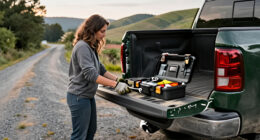
To build a DIY truck bed slide-out platform for toolboxes and coolers, select sturdy materials like 3/4″ plywood for the main structure and use smooth slides or conveyor rollers for easy movement. Measure your space carefully and plan for modular, adjustable sections to fit your gear. Secure everything firmly to your truck bed with rust-resistant fasteners and add weatherproof and noise-reducing finishes. Keep these tips in mind to create a durable, functional setup—if you keep going, you’ll discover even more details.

Get garage and car supplies delivered free — and shop member deals
- Fast, free delivery on millions of items
- Access to Prime Big Deal Days deals on October 6–7
- Prime Video, Amazon Music and more included
Key Takeaways
- Use durable, waterproof plywood and corrosion-resistant hardware to construct a strong, weatherproof slide-out platform for tools and coolers.
- Design modular, adjustable sections with sliding hardware like conveyor rollers or ball bearing slides for easy access and customization.
- Precisely measure cargo dimensions and truck bed space, leaving clearance gaps for smooth sliding and proper load distribution.
- Secure slides and rollers firmly to plywood and truck frame using galvanized or stainless steel fasteners, reinforcing mounting points as needed.
- Incorporate fold-down supports or hinges for stability and easy folding, and finish surfaces with waterproof sealants for longevity.
truck bed slide out platform kit
As an affiliate, we earn on qualifying purchases.
As an affiliate, we earn on qualifying purchases.
Selecting the Right Materials for Your Slide System

Choosing the right materials is essential to guarantee your truck bed slide-out system is durable, smooth, and cost-effective. Start with 3/4″ BCX sanded plywood for the main slide platforms and top drawer boxes, as it provides strength and a smooth finish. Use 1/4″ sanded plywood or 1/2″ flake board for the lighter parts like drawer bottoms or bed slide bases to keep weight down without sacrificing durability. Poplar wood, especially 3/4″ x 5 1/2″ or 7 1/2″ S4S, works well for drawer sides and rails thanks to its workability and strength. Incorporate aluminum L-channels and conveyor rollers for a low-profile, sturdy sliding mechanism. Additionally, rubber or diamond-pattern mats under slides improve grip and reduce noise, enhancing overall performance. Proper material selection ensures your slide system maintains smooth operation over time.
As an affiliate, we earn on qualifying purchases.
Designing a Modular and Custom Fit Layout

Designing a modular and custom fit layout allows you to optimize your truck bed for a variety of tools and gear. Start by identifying your essential items and measuring their dimensions to determine the best placement. Use adjustable modules that can be reconfigured or removed easily, such as separate drawers or platforms for different gear types. Incorporate flexibility with multiple sliding sections that can operate independently or together, giving you quick access to specific tools or coolers. Keep in mind the overall truck bed space to avoid overcrowding, and plan for easy access and weight distribution. Modular designs also simplify maintenance and future upgrades, ensuring your setup adapts to changing needs without major overhauls. This approach creates a versatile, organized, and efficient storage system tailored specifically to your requirements. Additionally, considering ventilation considerations can help preserve your tools and gear in the best condition.
As an affiliate, we earn on qualifying purchases.
Measuring and Planning Your Slide Clearances

How you measure and plan your slide clearances is crucial for smooth operation and proper fit. Start by measuring the width and length of your toolbox, cooler, or cargo to determine the platform size. Add a 1/8″ to 1/4″ gap on each side to allow smooth sliding without binding. Check the height of your load and plan for a platform height around 2″ to maintain bed clearance. Consider the space needed for hardware, rollers, and any mounting brackets. Account for any obstructions in the truck bed, like wheel wells or tie-downs, that could interfere with the slide. Use a tape measure, chalk line, and precise sketches to visualize the system. Planning thoroughly ensures your slide-out functions smoothly and fits securely without excessive play or binding. Incorporating auditory processing strategies during your planning can help identify potential issues and improve overall function.
As an affiliate, we earn on qualifying purchases.
Building Durable and Smooth Sliding Platforms

To guarantee your truck bed slide-out platform operates smoothly and lasts over time, focus on selecting quality materials and proper assembly techniques. Use 3/4″ BCX sanded plywood for the main platform, providing durability and a smooth finish. Incorporate aluminum L-channels and conveyor rollers for reliable sliding mechanisms, ensuring low-profile strength. Seal or finish the wood with waterproof coatings to prevent moisture damage and reduce wear. Attach hardware securely with stainless steel or galvanized fasteners to avoid rust and looseness. Add rubber matting or diamond-pattern mats beneath the platform for grip and noise reduction. Precision in measurement and tight assembly is essential—leave minimal play for smooth movement without sacrificing stability. Properly chosen materials and careful construction ensure your slide-out remains durable, functional, and easy to operate. Material quality is crucial for long-term durability and performance.
Assembling the Frame: Sides, Rails, and Supports

Start by choosing sturdy materials like plywood or poplar for your sides, rails, and supports to guarantee durability. Measure carefully and cut your pieces precisely to fit your truck bed’s dimensions, allowing for smooth movement. Securely assemble the frame using proper hardware and techniques to keep everything aligned and strong during use. Incorporating energy-efficient components can also help enhance the sustainability of your custom platform.
Selecting Appropriate Materials
Choosing the right materials for assembling the frame of your truck bed slide-out is essential for durability and smooth operation. You want materials that are strong, lightweight, and resistant to wear. Use 3/4″ BCX sanded plywood for the main platform and support structures, ensuring a smooth finish and sturdy base. Poplar wood works well for sides and rails due to its ease of workability and strength. Aluminum L-channels and conveyor rollers provide low-profile, durable sliding mechanisms. To enhance grip and reduce noise, add rubber mats under the slide. Consider the following materials for ideal results:
| Material Type | Purpose |
|---|---|
| 3/4″ BCX plywood | Platform, supports |
| Poplar wood | Sides, rails |
| Aluminum L-channels | Sliding hardware, frame reinforcement |
Accurate Measurement and Cutting
Measuring and cutting accurately is essential to guarantee your truck bed slide-out frame fits perfectly and operates smoothly. Begin by carefully measuring the dimensions of your truck bed, toolbox, and cooler to determine the size of each component. Use a precise measuring tape and double-check all measurements before cutting. Mark your cut lines clearly with a chalk line or pencil, ensuring straight, consistent lines for clean cuts. When cutting plywood or wood, use a sharp saw—either a circular saw or table saw—for straight, accurate edges. Always wear safety gear and verify measurements before making cuts. Keep your materials stable and secure during cutting to prevent errors. Accurate measurement and precise cuts lay the foundation for a sturdy, well-functioning slide-out platform. Paying attention to essential measurements ensures the overall success of your project.
Secure Assembly Techniques
To guarantee your truck bed slide-out platform operates smoothly and securely, proper assembly of the frame components is essential. Start by aligning the sides, rails, and supports accurately to ensure even movement. Use clamps to hold parts in place during assembly, then drill and secure with galvanized or stainless steel screws to prevent rust. Reinforce joints with corner brackets or L-shaped supports for added strength. When attaching the slides or rollers, ensure they’re level and firmly fastened to handle the load without wobbling. Tighten all fasteners securely but avoid overtightening, which can strip threads. Regularly check and tighten hardware after initial use to maintain stability. Properly assembled, your platform will slide smoothly, supporting your gear reliably for years to come. Additionally, selecting corrosion-resistant hardware is crucial for outdoor durability materials and fuel primers.
Installing Rollers, Slides, and Hardware

Choosing the right rollers and slides guarantees smooth operation and durability for your bed platform. You’ll need to secure all hardware tightly to handle the weight and repeated use. Proper installation is key to preventing wobble or jamming during sliding. Additionally, selecting simple, effective organizational systems can help maintain your setup and ensure long-term functionality.
Selecting Appropriate Rollers
Selecting the right rollers and hardware is essential for ensuring your truck bed slide-out functions smoothly and reliably. You want rollers that support the load without wobbling, and hardware that secures everything firmly. Consider conveyor rollers or small ball bearing drawer slides, which offer low-profile, durable options. Match roller size and weight capacity to your cargo, like coolers or tools. Use sturdy bolts and rust-resistant fasteners to prevent loosening over time. Here’s a quick guide:
| Roller Type | Load Capacity | Best For |
|---|---|---|
| Conveyor rollers | Heavy-duty | Large platforms, tools |
| Ball bearing slides | Medium to heavy | Cooler, toolbox drawers |
| Nylon rollers | Light to medium | Lighter loads, smooth glide |
Choose based on your weight needs and budget for a reliable, smooth slide.
Securing Hardware Properly
Properly securing your rollers, slides, and hardware is essential to guarantee smooth operation and long-term durability of your truck bed slide-out. Start by choosing the right fasteners—stainless steel or galvanized bolts and screws prevent rust and ensure strength. Attach slides and rollers firmly to the plywood platform and bed frame using pre-drilled holes, tightening all hardware securely. Use rivnuts or nuts with washers to distribute load evenly, avoiding wobble or looseness. Double-check alignment during installation to prevent binding or uneven wear. Tighten all fasteners to manufacturer specifications, but avoid overtightening, which could damage components. Regularly inspect and tighten hardware after initial use to maintain secure connections and ensure your slide functions smoothly over time. Ensuring proper hardware installation is critical to prevent future issues.
Securing the Slide System to Your Truck Bed

Securing the slide system firmly to your truck bed is essential for safe and reliable operation. Start by measuring and marking the exact placement of your slides and support rails. Use galvanized or stainless steel bolts and nuts to fasten the slides directly to the truck bed’s metal surface, ensuring a secure attachment. If attaching to plywood, reinforce the mounting points with L-shaped brackets or additional framing to distribute weight evenly. Drill pilot holes to prevent wood splitting and avoid over-tightening, which can damage components. For added stability, consider using rivnuts or threaded inserts for repeated removal or adjustments. Always double-check that the slide moves smoothly without wobbling or binding before fully tightening all fasteners. Proper securing guarantees safe operation and durability of your custom slide system. Additionally, paying attention to vacuum features can ensure that your tools and accessories stay securely in place during transit.
Enhancing Functionality With Hinges and Fold-Down Supports

Adding hinges and fold-down supports can substantially improve the versatility and stability of your truck bed slide system. Hinges allow you to fold down the platform or side panels, providing easier access to stored items or creating a work surface. Use sturdy, rust-resistant hinges like stainless steel or heavy-duty piano hinges for durability. Fold-down supports, such as removable legs or collapsible braces, help stabilize the platform when extended, preventing sagging or wobbling under load. Attach supports securely to the frame and platform, ensuring they lock in place when in use. This setup enhances safety and functionality, especially when working on or loading heavy gear. Properly installed hinges and supports make your slide-out platform more adaptable, reliable, and user-friendly.
Finishing Touches: Weatherproofing and Noise Reduction

Finishing touches like weatherproofing and noise reduction can substantially extend the lifespan and improve the usability of your truck bed slide-out platform. To weatherproof, seal all plywood surfaces with exterior-grade sealant or paint, especially on edges and joints. Applying a waterproof membrane or rubber matting underneath the platform helps prevent moisture damage. For added protection, consider using marine-grade plywood or coating the wood with sealants designed for outdoor use. Noise reduction is achieved by installing rubber mats or diamond-pattern anti-slip mats under the sliding components, which dampen vibrations and reduce squeaking. Smooth finishes on wood surfaces also help minimize noise during operation. These measures ensure your slide remains durable, quiet, and functional through various weather conditions.
Tips for Maintaining and Reconfiguring Your Bed Slide

Regular maintenance is key to keeping your truck bed slide-out platform operating smoothly and lasting longer. Check the rollers and slides regularly for dirt, debris, or rust, and clean or lubricate them as needed with silicone spray or light oil. Tighten any loose bolts or fasteners to prevent wobbling or misalignment. Inspect the wood for cracks or warping, and reseal or repaint surfaces that show signs of wear or weather damage. If you need to reconfigure your slide, measure carefully before adjusting dimensions or repositioning hardware. Modular designs make this process easier, allowing you to swap out sections or add new slides without starting from scratch. Proper upkeep guarantees your slide remains functional, safe, and adaptable for any gear or tool setup.
Frequently Asked Questions
How Much Weight Can My DIY Slide Platform Safely Support?
Your DIY slide platform can typically support between 200 to 500 pounds, depending on materials and construction. To guarantee safety, use sturdy plywood, strong rollers, and secure all hardware properly. Reinforce key load points with additional supports, and avoid overloading beyond the tested weight capacity. Regularly check for wear or damage, especially on moving parts, to maintain safe operation and prevent accidents.
What Are the Best Materials for Waterproofing the Slide System?
Did you know that properly waterproofed plywood can last up to 10 years outdoors? To keep your slide system protected, use marine-grade plywood sealed with exterior-grade polyurethane or epoxy resin. Applying waterproofing sealants or paint creates a waterproof barrier, preventing water damage. For added protection, consider using waterproof materials like king starboard or aluminum for critical components. Regular maintenance ensures your slide stays durable and rust-free over time.
Can I Add Locks or Security Features to My Bed Slide?
Yes, you can add locks or security features to your bed slide. You might install padlocks on the slide’s latch or use keyed locking mechanisms for added security. Reinforce slide areas with lockable hasps or latch bolts, and consider electronic locks or security alarms for more advanced protection. These modifications help prevent theft and make sure your gear stays secure when you’re away, giving you peace of mind.
How Do I Prevent the Slide From Rattling During Driving?
To prevent your slide from rattling during driving, make certain it fits snugly with a 1/8″ to 1/4″ clearance on all sides. Add rubber mats or diamond-pattern grips underneath to absorb vibrations and reduce noise. Secure the slide with locking mechanisms or latch systems to keep it steady when not in use. Regularly check bolts and hardware, tightening them as needed to maintain a tight, rattle-free fit.
What’s the Ideal Maintenance Schedule for DIY Truck Bed Slides?
You should check your DIY truck bed slides every three to six months, depending on usage. Lubricate the rollers and sliding mechanisms with a silicone spray or light machine oil to keep them moving smoothly. Inspect hardware, screws, and rails for tightness or corrosion, tightening or replacing as needed. Keep the slides clean by removing debris and dirt that could cause wear or noise. Regular maintenance guarantees smooth operation and prolongs the lifespan of your slides.
Conclusion
Building a DIY truck bed slide-out platform is a rewarding project that boosts your storage and accessibility. Did you know that a well-designed slide system can increase your truck’s cargo capacity by up to 30%? With the right materials, careful planning, and some elbow grease, you’ll create a durable, smooth-operating platform tailored to your needs. Keep up with maintenance, and your slide-out will serve you reliably for years to come.
Halloween Picks
halloween
As an affiliate, we earn on qualifying purchases.