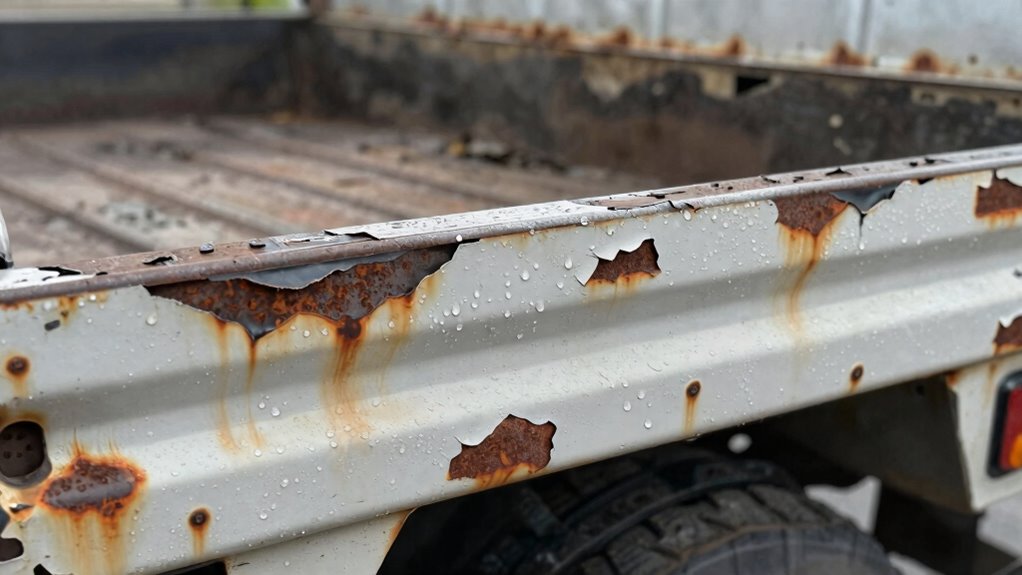

Pressure washing your truck bed can cause damage if you use too much pressure or get too close, which strips paint and forces water into cracks. This can weaken the metal, accelerate rust, and lead to peeling paint. Using the wrong nozzle or ignoring existing damage increases the risk. Proper technique and settings are key to avoiding this. Keep going to discover how to protect your truck bed effectively.
Key Takeaways
- Using high pressure can force water into seams and joints, causing internal corrosion.
- Incorrect nozzle choice or proximity can strip paint and damage protective coatings.
- Excessive pressure may chip paint, exposing metal and increasing rust risk.
- Failing to prepare the surface properly can worsen existing damage or scratches.
- Improper maintenance and settings can lead to surface deterioration and structural weakening.
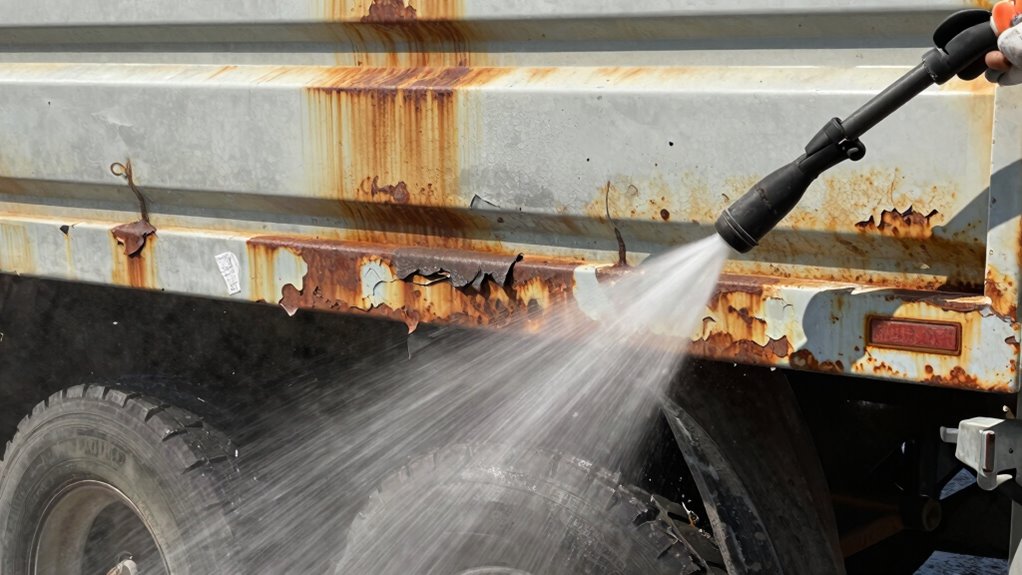
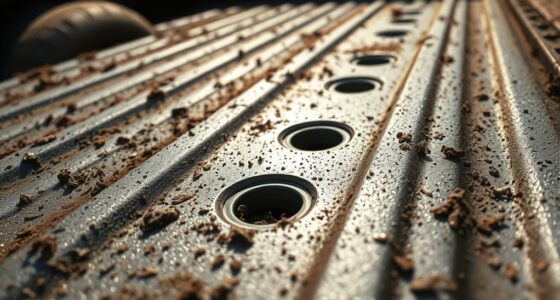
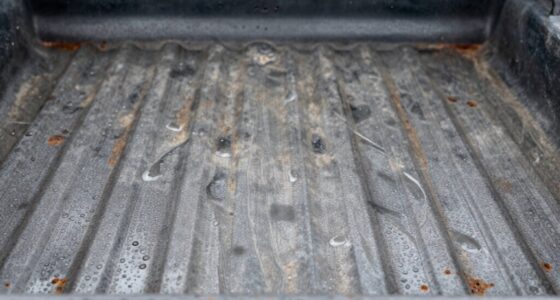
Pressure washing can be an effective way to clean your truck, but if not done correctly, it can also cause serious damage to your truck bed. One of the biggest risks is surface corrosion, which occurs when water seeps into tiny cracks and exposes metal to moisture. Over time, this moisture can lead to rust, weakening the structural integrity of your truck bed. High-pressure water streams can force water into areas that aren’t meant to get wet, especially around seams, joints, and damaged paint. If the protective coatings are compromised, corrosion can develop quickly, leading to costly repairs down the line.
Furthermore, another common issue is paint peeling. When you use excessive pressure or hold the nozzle too close to the surface, you risk stripping away the paint layer. This not only affects the appearance of your truck but also exposes the underlying metal to the elements, increasing the risk of surface corrosion. Once the paint peels, it becomes easier for moisture and dirt to accumulate, accelerating deterioration. Additionally, peeling paint diminishes the value and aesthetic appeal of your vehicle, and it can be expensive to repair or repaint later.
Excessive pressure or close nozzle distance can strip paint, exposing metal and increasing corrosion risk.
You might think that pressure washing is a quick fix for stubborn dirt and grime, but if you don’t adjust the pressure settings properly, you damage your truck’s finish. Many people overlook the importance of using the right nozzle or maintaining an appropriate distance from the surface. Using a nozzle with too narrow a spray or holding it too close can result in concentrated force that chips paint or forces water into vulnerable areas. This mistake can be especially damaging if your truck has existing scratches, chips, or weak spots in the paint, making them more likely to peel or worsen over time. Proper technique and pressure control are essential to prevent damage and maintain your vehicle’s condition.
Additionally, neglecting to prepare your truck before pressure washing can compound these problems. Failing to remove loose debris or scrub stubborn spots manually can mean you’re relying solely on high-pressure water to do the work, which increases the risk of damage. Properly maintaining your paint job and regularly inspecting for damage can help prevent surface corrosion and keep your vehicle looking its best. Understanding the importance of surface protection can help guide your cleaning process and avoid costly repairs. It’s also beneficial to be aware of pressure washer settings and their impact on delicate surfaces to ensure you don’t unintentionally cause harm.

AURORA CAR Pressure Washer Tips Turbo Nozzle Pressure Washer 4000 PSI Max
- Wide Compatibility: Suitable for most high-pressure cleaners
- Enhanced Cleaning Power: Rotating turbo nozzle for strong impact
- Durable Material: Rustproof ceramic core and brass
As an affiliate, we earn on qualifying purchases.
As an affiliate, we earn on qualifying purchases.
Frequently Asked Questions
Can Pressure Washing Void My Truck Bed Warranty?
Yes, pressure washing can void your truck bed warranty if it causes chemical damage or rust formation. High-pressure water can strip protective coatings, exposing metal to moisture and chemicals, accelerating rust. Always check your truck’s warranty terms and avoid using excessive pressure or harsh chemicals. Instead, opt for gentle cleaning methods and professional services to protect your truck bed’s integrity and keep your warranty intact.
What Types of Damage Are Common From Pressure Washing?
Imagine your truck bed as a delicate sculpture; pressure washing can chip away at it like relentless rain erodes stone. You risk surface erosion, where the finish wears thin, and sealant stripping, leaving your truck vulnerable to rust and damage. Too much force can also create tiny cracks or dents. Always use gentle techniques to protect your truck bed’s integrity, preserving its appearance and longevity.
Is There a Safer Alternative to Pressure Washing?
Yes, a safer alternative to pressure washing is gentle cleaning using eco-friendly methods. You can use soft brushes, microfiber cloths, or sponges with mild, biodegradable cleaners to clean your truck bed thoroughly without risking damage. These methods are effective at removing dirt and grime while protecting your truck’s paint and surface integrity. Plus, eco-friendly products are better for the environment, giving you a clean truck with peace of mind.
How Often Should I Clean My Truck Bed?
You should clean your truck bed at least once a month for ideal maintenance. Studies show that regular cleaning can extend the lifespan of your truck bed by preventing rust and corrosion. For best results, follow proper maintenance tips—use gentle cleaning methods and avoid high-pressure washers that can damage the surface. Consistent cleaning not only keeps your truck looking good but also preserves its value over time.
Can Pressure Washing Ruin the Paint or Finish?
Yes, pressure washing can ruin the paint or finish on your truck bed if you’re not careful. High-pressure water can cause paint peeling or surface etching, especially on older or already compromised paint. To protect your truck, use a lower pressure setting, keep the nozzle at a safe distance, and avoid focusing on delicate areas. This way, you’ll clean effectively without risking damage to your truck’s finish.

Rust-Oleum Automotive Truck Bed Coating Spray Paint, Black
- Suitable for Metal Surfaces: Truck beds, trailers, fenders, and more
- Stops Rust Formula: Provides long-lasting protection
- Easy-to-Use Spray Tip: Reduces finger fatigue and reaches hard spots
As an affiliate, we earn on qualifying purchases.
As an affiliate, we earn on qualifying purchases.
Conclusion
So, next time you’re tempted to blast away dirt with a pressure washer, remember that over 60% of truck owners have reported damage from improper cleaning. Pressure washing might seem quick and effective, but it can strip protective coatings or dent your truck bed if not done carefully. Protect your investment by opting for gentler cleaning methods or consulting a professional. Your truck’s longevity depends on how well you maintain it—so choose your cleaning techniques wisely.
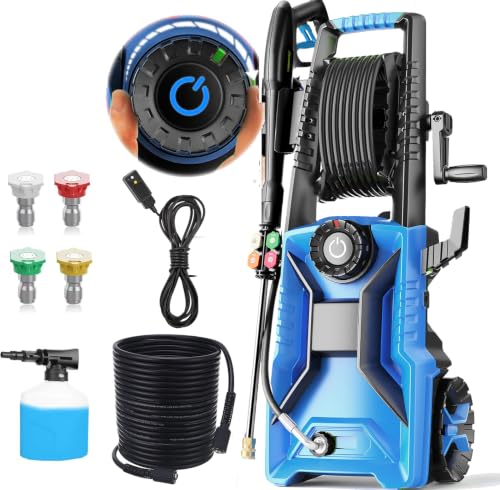
5000 PSI Adjustable Electric Pressure Washer, 2026 New Power Washer Pressure Adjustable (2500PSI-5000PSI) with 23ft Hose, 4 Nozzle and Detergent Tank for Cars, GFCI Protection, Upgraded Blue
- Powerful Adjustable Pressure: 2500PSI to 5000PSI range
- Customizable Cleaning Settings: Variable PSI for different tasks
- Complete Cleaning Kit: 23ft hose, 4 nozzles, detergent tank
As an affiliate, we earn on qualifying purchases.
As an affiliate, we earn on qualifying purchases.
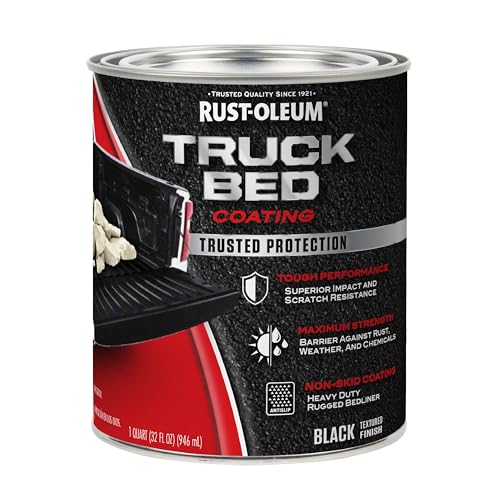
Rust-Oleum 342668 Stops Rust Truck Bed Coating, 1 Quart, Black
- Durable protective coating: Prevents scratches, rust, weather damage
- Fast-drying water-based formula: Forms to truck bed contours, resists rust and abrasion
- Quick drying and coverage: Dries in 1-2 hours, covers 40 sq ft
As an affiliate, we earn on qualifying purchases.
As an affiliate, we earn on qualifying purchases.