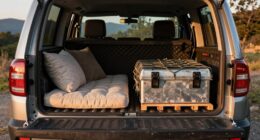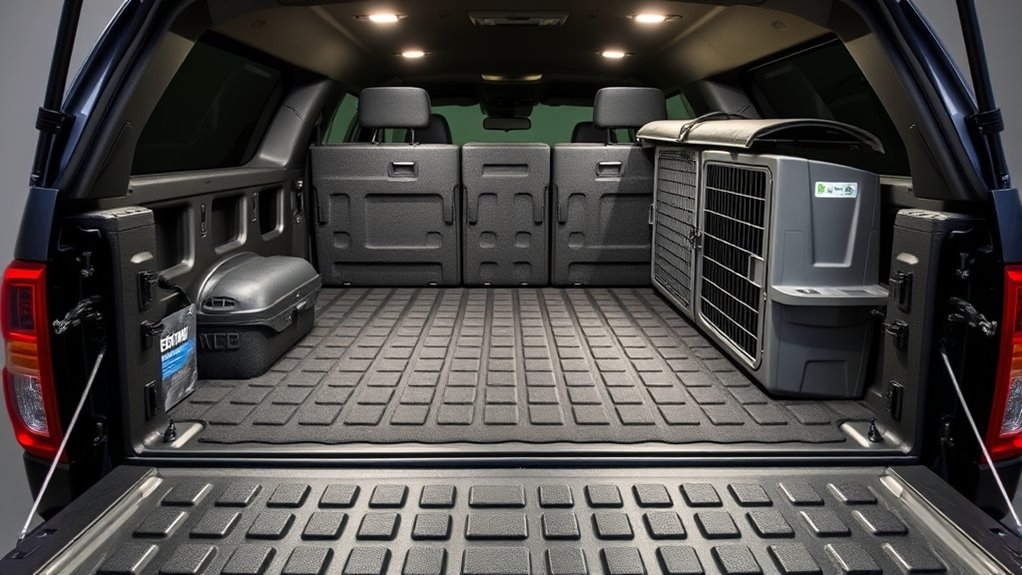

To create a dog-friendly truck bed for working K9s, start by thoroughly cleaning and inspecting the surface for hazards. Choose durable, certified kennels or containment systems that secure firmly to the bed with impact-resistant materials. Add cushions, insulation, and climate control like fans or vents to keep your dogs comfortable. Organize storage for gear, and install sturdy restraints and barriers for safety. For more tips on ensuring your K9s’ safety and comfort, keep exploring these essential steps.
Key Takeaways
- Install durable, impact-resistant kennels securely anchored with reinforced tie-downs and verified safety certifications.
- Incorporate climate control features like ventilation windows, fans, and insulation to maintain a comfortable environment.
- Use washable, fur-resistant bedding and non-slip mats for comfort and safety during transit.
- Add organized storage solutions such as lockable drawers and vertical racks for quick access to gear and supplies.
- Regularly inspect restraints, barriers, and mounting systems to ensure ongoing safety and security for working K9s.
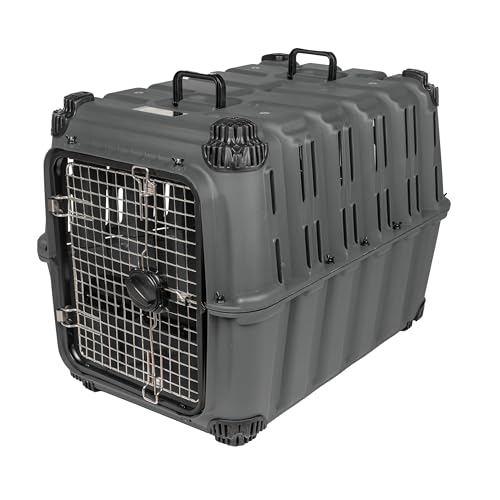
Mammoth Guardian Dog Kennel 36" Heavy Duty Travel & Outdoor Crate for Puppies, Small, Medium & Large Dogs, Secure 3 Bolt Lock, Adventure Ready for Hunting, Camping & Offroad – Gunmetal Gray
Shock resistant durability: Heavy-duty construction absorbs bumps, jolts, and rough terrain, keeping your dog safe whether you’re driving,…
As an affiliate, we earn on qualifying purchases.
As an affiliate, we earn on qualifying purchases.
Preparing a Safe and Clean Truck Bed Surface
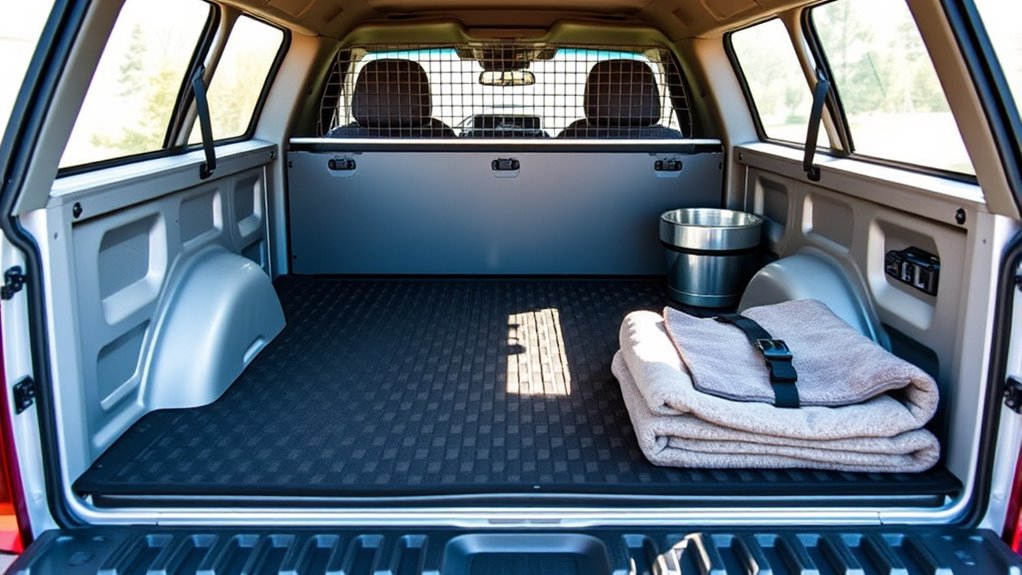
To guarantee your dogs travel safely and comfortably, start by thoroughly cleaning the truck bed to remove dirt, debris, and any sharp objects that could cause injury. Use a sturdy brush or broom to sweep out dust and loose particles. Check for any nails, screws, or jagged edges and remove or cover them. Vacuum the area to pick up small debris and fur. Consider washing the bed with water and a pet-safe disinfectant to eliminate bacteria and odors. Make sure the surface is dry before adding any padding or decking. A clean, smooth, and hazard-free truck bed creates a safer environment for your working dogs and helps prevent injuries during transport. Regular cleaning keeps the space hygienic and ready for each trip. Proper surface preparation is essential to ensure the durability and safety of your setup over time.

SportDOG Brand Contain + Train System – In-Ground Electric Dog Fence & Remote Trainer – Waterproof Collar – Tone, Vibrate, & Shock – from Parent Company Invisible Fence Brand – Up to 100 Acres
Easy to Install: Containment and training kit includes everything needed to cover 1 1/3 acres of land for…
As an affiliate, we earn on qualifying purchases.
As an affiliate, we earn on qualifying purchases.
Selecting and Securing Resistant Kennels and Containment Systems
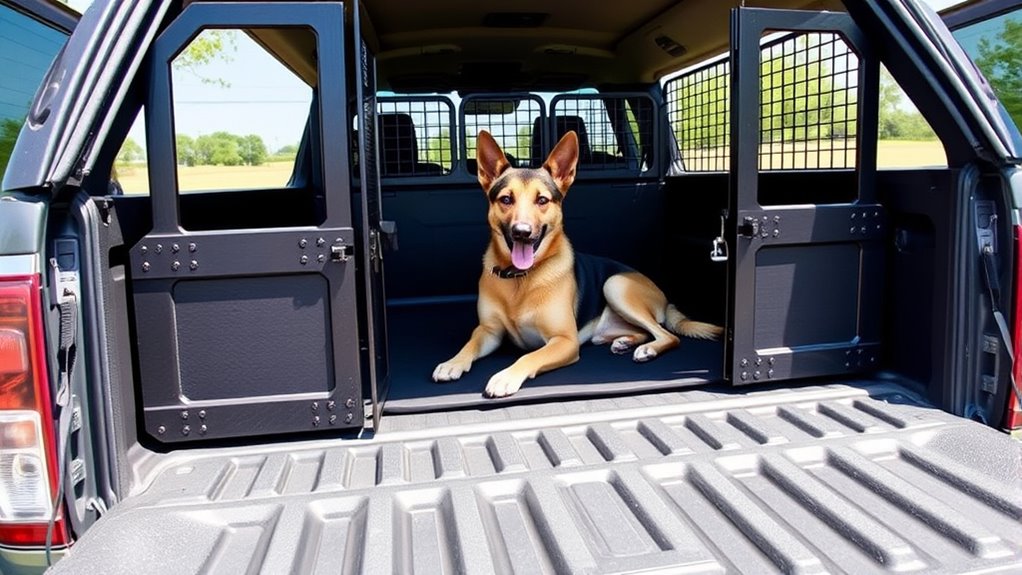
When choosing kennels and containment systems, focus on durable materials like heavy-duty plastic, metal, or reinforced composites that can withstand rough handling and weather. Securely mounting these kennels using proven techniques, such as reinforced tie-downs and brackets, guarantees they stay in place during transit. Always verify that the systems meet safety certifications and standards to provide reliable protection for your dogs. Additionally, selecting compact living solutions that are designed for space efficiency can help maximize your truck bed area while maintaining safety and accessibility.
Durable Material Choices
Choosing the right materials for kennel construction and containment systems is essential to guarantee durability and safety during transport. You need materials that withstand weather, impacts, and daily wear. Opt for heavy-duty metals like aluminum or stainless steel, which resist corrosion and damage. Use high-density plastics or reinforced composite panels for lightweight strength and resilience. Secure these materials firmly to prevent movement or damage. Consider adding rubber or foam padding inside kennels for extra comfort and shock absorption. Incorporating impact-resistant materials can further enhance safety during sudden stops or rough terrain. Here’s a quick comparison:
| Material Type | Benefits | Ideal Use |
|---|---|---|
| Aluminum | Lightweight, corrosion-resistant | Kennel frames and doors |
| Reinforced Plastic | Durable, impact-resistant | Walls and panels |
| Stainless Steel | Strong, rust-proof | Locks, hinges |
| Rubber/foam | Cushions, absorbs shocks | Interior padding |
Secure Mounting Techniques
Selecting and securing resistant kennels and containment systems requires careful attention to mounting techniques that prevent movement or dislodgment during transit. You need to guarantee your setup is stable under various driving conditions. Start by choosing kennels with reinforced, crash-tested designs that fit your truck bed dimensions. Use heavy-duty tie-downs, such as ratchet straps or steel anchor points, to firmly secure the kennels to the truck bed or built-in tie-down points. Additionally, consider adding rubber mats or padding beneath the kennels to reduce vibration and shifting. Make sure all fasteners are tight and check regularly during travel. Properly securing your containment system minimizes risk of injury, maintains safety, and keeps your working dogs comfortable and confident on the road. Incorporating field‑testing procedures ensures your setup remains secure under real-world conditions.
Safety Certifications and Standards
Ensuring your dog containment systems meet recognized safety standards is crucial for their reliability and your peace of mind. Look for kennels certified by organizations like the Center for Pet Safety or those tested for crashworthiness and durability. Choose models with heavy-duty construction, impact-resistant materials, and secure latches that prevent accidental opening. Verify that the containment system complies with industry standards such as ASTM or ISO safety certifications. Properly securing kennels with heavy-duty straps or mounting brackets that meet safety standards is essential to prevent movement during travel. Avoid using untested or homemade enclosures, as they might fail under stress. Regularly inspect and maintain your containment systems to guarantee ongoing compliance and safety, giving your working K9s a secure environment during every trip. Additionally, selecting water-resistant and durable materials can help prolong the lifespan of your enclosures in various weather conditions.

Treva 5-inch Pet Crate Fan for Cooling Dogs and Other Pets. 2 Cooling Speeds, Battery Powered
TWO SPEED OPERATION: To accommodate your pet the Treva pet crate fan features high and low speeds. The…
As an affiliate, we earn on qualifying purchases.
As an affiliate, we earn on qualifying purchases.
Enhancing Comfort With Cushions, Bedding, and Insulation
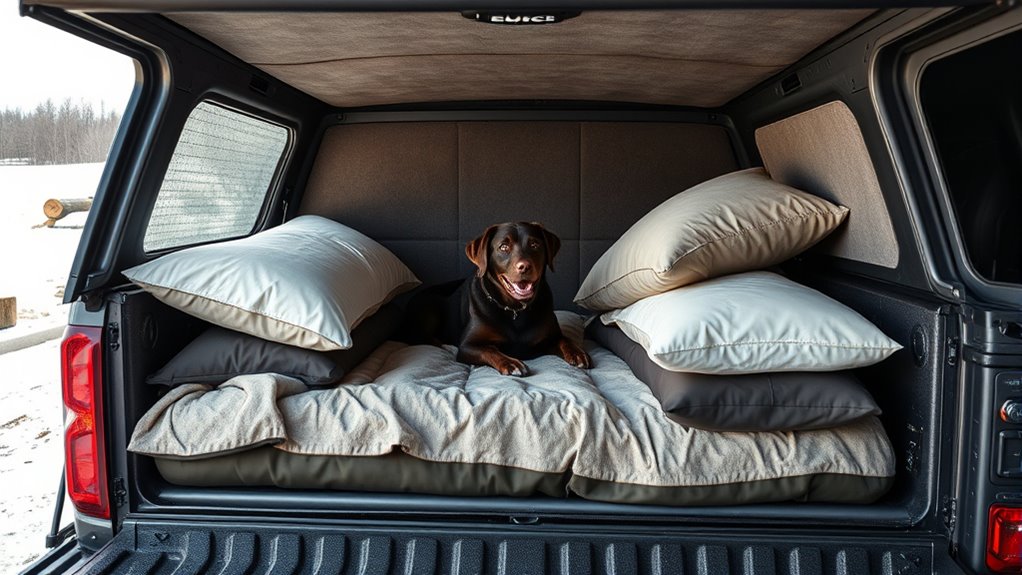
To keep your dogs comfortable during transport, choose soft, supportive materials like memory foam or cushioned mats that conform to their bodies. Insulation is key to maintaining a stable temperature, so consider using insulated panels or blankets to block extreme heat or cold. For easy cleanup, opt for bedding that’s washable and resistant to fur and liquids, ensuring a tidy and cozy space for your pups. Incorporating proper cargo organization can also help prevent shifting and keep your dogs secure during travel.
Selecting Soft, Supportive Materials
Enhancing your truck bed setup with soft, supportive materials is essential for keeping your dogs comfortable during transport. Using the right cushioning helps prevent pressure points and reduces stress. Focus on materials that are durable, washable, and comfortable. Consider adding:
- Memory foam or foam pads that conform to your dog’s body and provide support.
- Washable, water-resistant covers like moving blankets or heavy-duty upholstery fabric.
- Layered bedding such as foam mats topped with fleece or plush blankets for extra comfort.
These materials help create a cozy environment, minimize discomfort from hard surfaces, and are easy to clean. Proper cushioning also offers insulation from cold metal or plastic surfaces, ensuring your working dogs arrive ready for action. Incorporating supportive, supportive materials can also extend the lifespan of your setup by reducing wear and tear on the underlying surfaces.
Using Insulation Effectively
Insulation plays a crucial role in maintaining a comfortable environment for your dogs during transport, especially when temperature fluctuations are a concern. Proper insulation helps keep the interior warm in cold weather and cool in hot conditions, reducing stress and discomfort. Use insulated panels or foam barriers inside kennels or along the truck’s sides to regulate temperature swings. Cover metal or plastic surfaces with cushioned mats or bedding to prevent burns or chills. Wrap insulation around the kennel walls or the truck bed itself for added protection. Ensure the insulation is secure and covered with durable, washable materials to prevent chewing or damage. Incorporating temperature regulation techniques can further enhance comfort by actively managing interior climate conditions. Effective insulation creates a stable climate, helping your working dogs stay comfortable and focused during long or variable weather conditions.
Creating Easy-to-Clean Bedding
Creating bedding that’s easy to clean is key to maintaining a hygienic and comfortable environment for your dogs during transport. Choose materials that resist fur, dirt, and liquids, making cleanup quick and simple. Use washable covers or waterproof pads that can be removed and cleaned regularly. Consider layered options like rubber mats topped with blankets or foam padding for added comfort and ease of maintenance. To keep bedding fresh and odor-free, opt for materials that dry quickly and resist mold. Regularly inspect and replace bedding as needed to ensure cleanliness. Incorporate thermal behavior considerations to select materials that help regulate temperature and prevent overheating or chilling.

Dog Beds Crate Pad for Medium/Large Dogs Fit Metal,Ultra Soft, Washable & Anti-Slip Kennel Pad for Dogs Cozy Sleeping Mat,Gray 36inch
SIZE GUIDE: Ideal dog bed for wire dog crates.This pad measures approximately 36inch*23inch.Fit for dogs weighing 40 to…
As an affiliate, we earn on qualifying purchases.
As an affiliate, we earn on qualifying purchases.
Installing Proper Ventilation and Climate Control Solutions
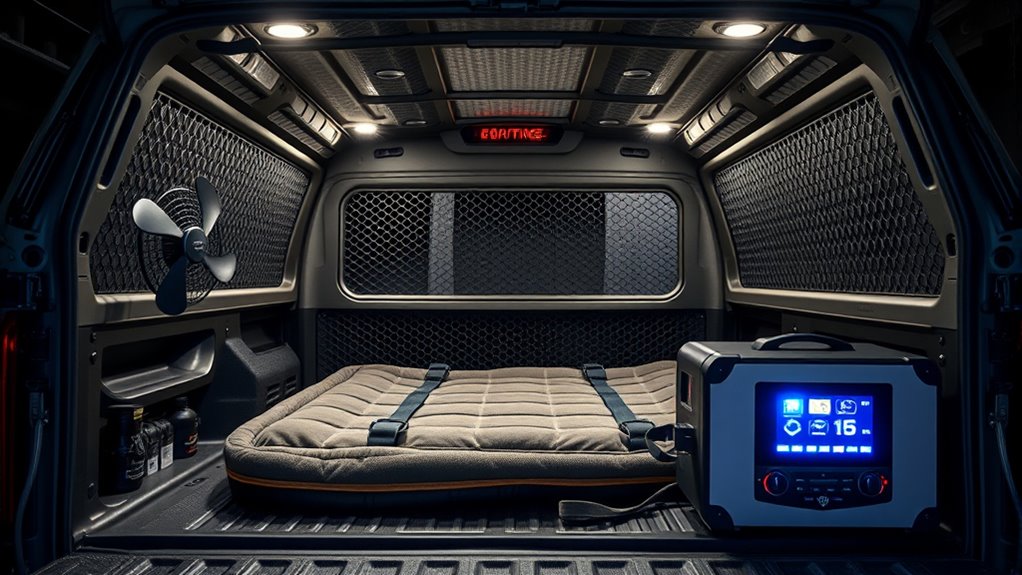
Proper ventilation and climate control are essential for keeping your dogs comfortable and safe during transport. Start by installing vented or screened windows in the truck cap to promote airflow while blocking insects and debris. Consider adding 12V fans or rooftop air conditioning units to maintain a steady temperature inside the truck bed. Regularly monitor the temperature, especially during stops, to prevent overheating or cold stress. Never leave dogs unattended in extreme heat or cold, as truck beds can quickly become unsafe. Use insulating materials on kennel walls or panels to moderate temperature swings. Proper ventilation reduces humidity and stale air, helping to prevent respiratory issues. Incorporating air purifiers can further improve air quality by removing airborne pollutants and allergens. These measures ensure your working K9s stay comfortable, healthy, and alert throughout the journey.
Organizing Storage for Efficient Access to Gear and Supplies
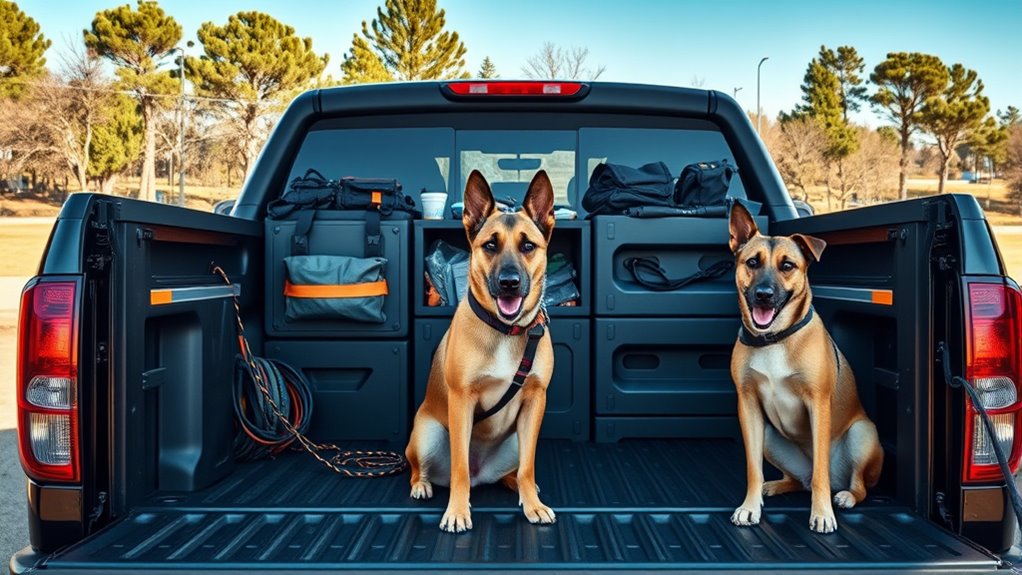
To keep your gear and supplies easily accessible during transport, thoughtful organization is essential. You want everything within reach without clutter or delays. Start by installing storage systems like deck drawers or lockable bins that fit beneath the kennels or along the truck sides. Use labeled containers for quick identification of items such as first aid kits, food, or cleaning supplies. Incorporate vertical racks or hooks for leashes, harnesses, and tools, keeping them organized and ready to grab. Prioritize accessibility by placing frequently used items near the top or in designated zones. Here are some key points to contemplate:
- Use labeled, waterproof containers for quick, organized access
- Install secure, lockable storage for valuable or perishable supplies
- Keep essentials like water, bowls, and snacks within easy reach
Implementing Safety Restraints and Barriers for Secure Transport
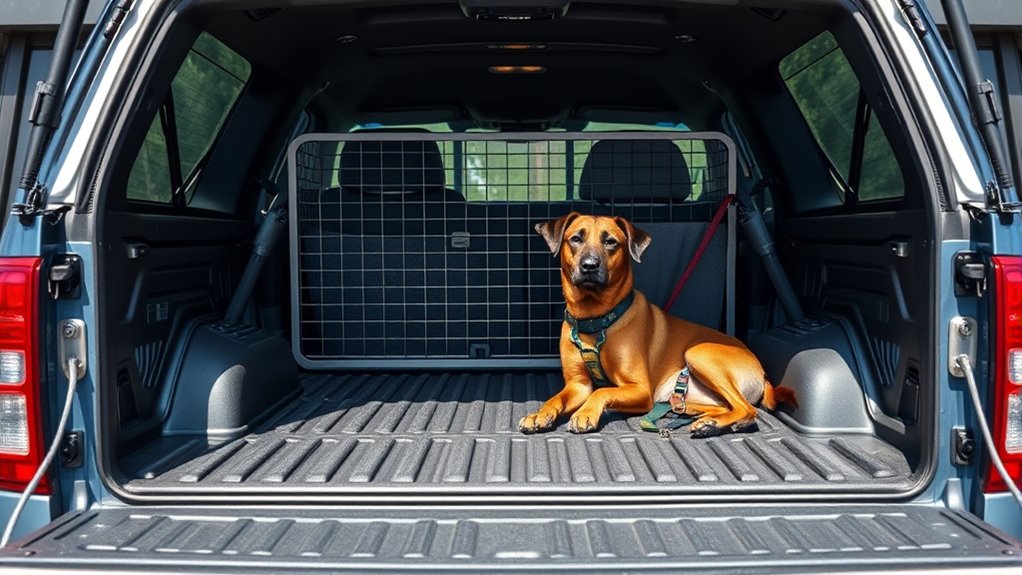
Implementing safety restraints and barriers is essential for keeping your dogs secure during transport. You should use crash-tested kennels or secure harnesses that attach to anchor points in the truck bed. Avoid letting dogs ride loose, as this increases the risk of injury or escape. Install sturdy barriers or partitions within the truck bed to separate multiple dogs, reducing stress and preventing fights. Use durable, well-secured tie-downs to keep kennels stable, especially on uneven terrain. Ensure restraints are comfortable and fit properly to avoid chafing or discomfort. Regularly check that all restraints and barriers are secure before each trip. This setup minimizes movement, protects your dogs from shifting hazards, and guarantees a safe, controlled environment during transit.
Improving Temperature Regulation and Monitoring During Travel
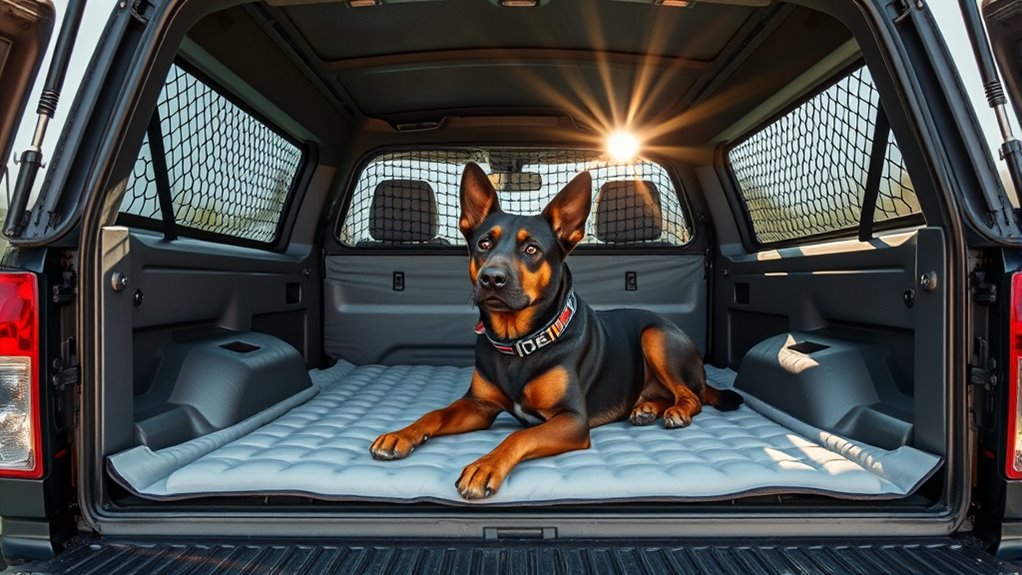
Maintaining a comfortable temperature inside your truck bed is essential for your dogs’ safety and well-being during transit. To do this effectively, you need reliable temperature regulation and monitoring. Install vented or screened windows to promote airflow and prevent overheating. Consider adding 12V fans or rooftop air conditioning units for consistent cooling, especially in hot weather. Use a thermometer or digital temperature monitor to keep track of conditions inside the truck bed at all times. This helps you make quick adjustments when needed. To further improve regulation, insulate kennel walls and lining, minimizing temperature swings. Additionally, avoid leaving dogs unattended during extreme heat or cold. Regularly check the temperature, and be ready to take action to keep your working K9s comfortable and safe.
Incorporating Mental Stimulation and Regular Breaks for Dogs
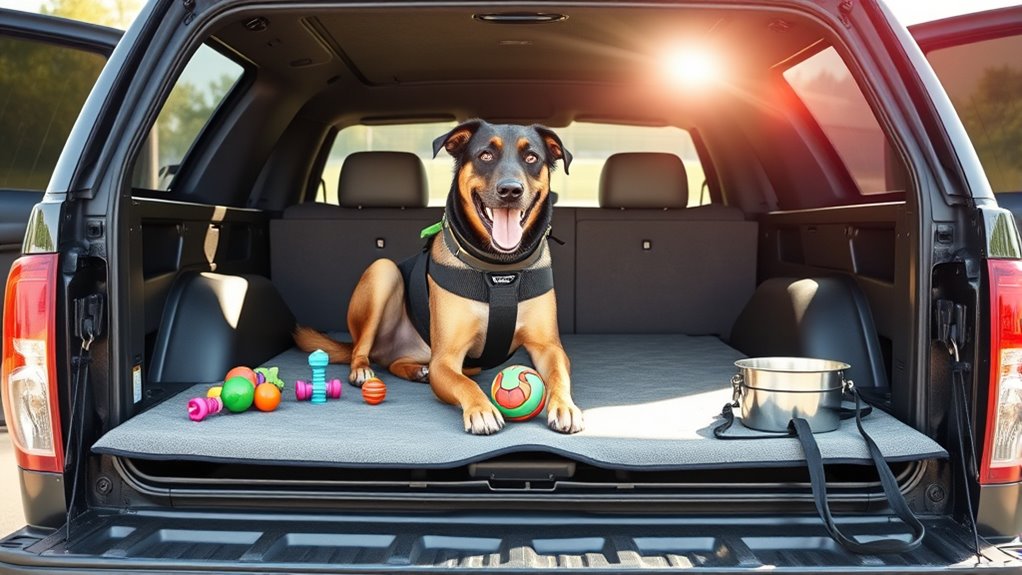
Ensuring your dogs stay mentally engaged during transport is crucial for their comfort and focus. Providing toys, especially puzzle or treat-dispensing ones, keeps their minds occupied and prevents boredom. Chew items can also help alleviate stress and promote relaxation. Regular breaks are essential—plan stops every couple of hours for dogs to hydrate, stretch, and relieve themselves. During breaks, encourage gentle play or walks to stimulate both mind and body. Use positive reinforcement to help dogs associate stops with comfort and safety. Training your dogs to be comfortable in the truck bed environment also reduces anxiety during travel. Monitor their behavior closely; signs of boredom or stress mean it’s time for a break or a mental activity to keep them calm and engaged throughout the journey.
Frequently Asked Questions
How Do I Prevent My Dogs From Slipping on the Truck Bed Surface?
To prevent your dogs from slipping on the truck bed surface, add non-slip mats or textured rubber flooring that grip their paws. You can also layer cushioning like memory foam toppers wrapped in durable covers for extra traction. Regularly clean the surface to remove dirt or debris that might cause slipping. Installing grip strips or tape in high-traffic areas further enhances stability, keeping your dogs safe and secure during transport.
What Are the Best Materials for Weatherproofing the Truck Bed for Dogs?
You should use weather-resistant materials like coated plywood or metal for the truck bed, as they withstand rain, snow, and temperature changes. Add cushioning, such as foam pads or rubber mats, to protect your dogs from rough surfaces. Seal all seams and edges with waterproof sealant, and consider installing a durable, waterproof bed liner. These steps guarantee your truck bed stays dry, comfortable, and safe for your working dogs in any weather.
How Can I Ensure Proper Airflow Without Causing Drafts Inside Kennels?
Think of your truck like a vintage radio—airflow is key, but you don’t want a draft to drown out the signal. To guarantee proper airflow without drafts, install vented or screened windows that allow fresh air in gently. Add rooftop fans or small vents that promote circulation without creating strong gusts. Regularly check airflow to keep your dogs comfortable, just like tuning a radio to the perfect station.
What Are Effective Methods to Keep Multiple Dogs Separated During Transport?
You can keep multiple dogs separated by installing sturdy partitions or barriers within the truck bed, creating individual enclosures for each dog. Use adjustable, crash-tested barriers that are secure and easy to clean. Guarantee each section has enough space for the dogs to lie comfortably and move slightly. Additionally, secure kennels or crates with tie-downs to prevent shifting during transit, reducing stress and preventing conflicts among the dogs.
How Often Should I Check the Temperature Inside the Truck Bed During Trips?
Think of your truck bed as a delicate balance beam—you need to keep it steady. You should check the temperature inside the truck bed every 15 to 20 minutes during trips, especially in extreme weather. This helps you catch any dangerous swings in heat or cold early, protecting your working dogs. Regular monitoring guarantees they stay comfortable and safe, no matter how rough the ride gets.
Conclusion
Creating a dog-friendly truck bed keeps your working K9 safe, comfortable, and ready for action. Did you know that properly secured dogs are 70% less likely to get injured during sudden stops? By preparing a clean surface, installing secure kennels, and ensuring good ventilation, you set your pup up for success. Regular breaks and mental stimulation boost their well-being too. With these tips, you’ll both enjoy safer, more efficient trips every time.