TL;DR

Get business pricing on garage and car supplies
- Business-only prices and quantity discounts
- Tax-exempt purchasing
- Multiple users, one account, clear invoices
A sponsored report published by Charged EVs describes how advanced materials, including structural flame-retardant foams, adhesives and sealants, can help address thermal and structural demands in cell-to-pack and cell-to-chassis batteries. The report outlines potential roles for these materials but provides no comparative test results or evidence that a specific design prevents thermal runaway in real-world use.
A sponsored report published by Charged EVs describes how structural flame-retardant foams, adhesives and sealants could help automakers manage heat and maintain battery integrity as designs move toward cell-to-pack and cell-to-chassis architectures. The report frames these materials as potential contributors to thermal protection and lightweighting, but the supplied material does not provide comparative test results or establish how well a particular product performs in a complete vehicle battery.
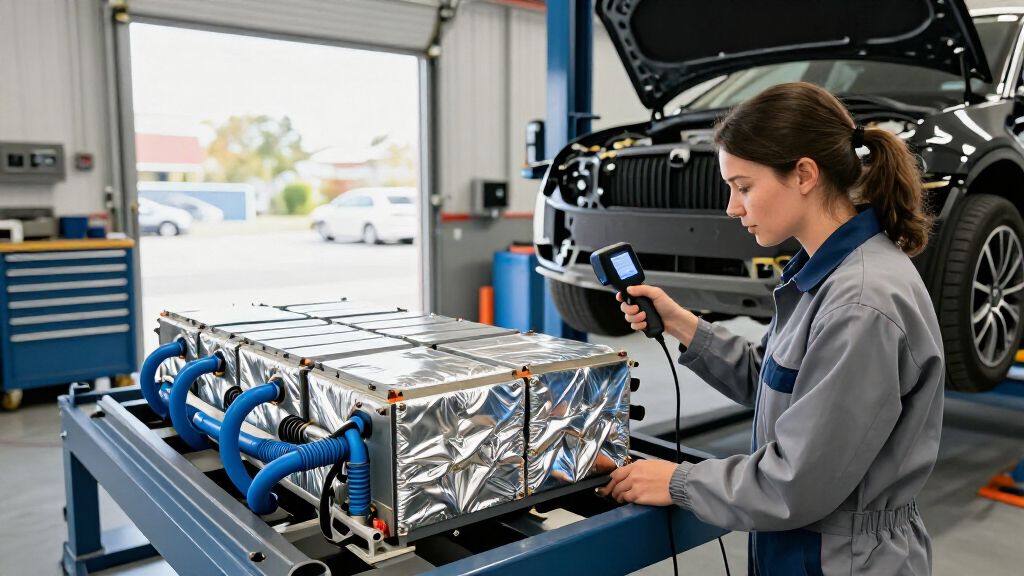
The report says traditional cell-to-module battery packs use housings around groups of cells, which can aid repair by allowing a faulty module to be replaced. Those housings also add weight, take up space and increase manufacturing complexity. Cell-to-pack designs remove module enclosures and place cells more directly in the pack, while cell-to-chassis designs integrate the battery into the vehicle structure. The report says both approaches can make more space available for active battery material and reduce components.
That integration also raises demands on materials that connect and protect cells. According to the report, they may need to supply structural support, electrical isolation and thermal management at the same time. Closely packed cells and higher power demands can produce heat; excessive temperatures can accelerate degradation, reduce efficiency and increase the risk of thermal runaway, in which a cell failure produces heat that may trigger failures in nearby cells.
The report highlights structural flame-retardant foams as materials that may replace some heavier supports while providing reinforcement, vibration resistance and insulation. It says such foams can be designed to slow thermal propagation between cells. It also discusses adhesives and encapsulation materials as components that may contribute to heat management while retaining structural performance. These are descriptions of possible material functions, not reported findings from a named vehicle or independent test.
Materials Face More Battery Duties
Battery architecture affects how much of a vehicle’s space and weight can be devoted to energy storage, but a more integrated structure can also leave fewer conventional barriers between cells. Materials that perform several functions could help manufacturers pursue lower weight and more usable pack space without giving up structural support or thermal safeguards. That matters to drivers because battery temperature and safety affect durability, charging and vehicle operation.
The report’s focus also extends beyond passenger cars. It identifies stationary energy storage, commercial fleets, heavy trucks, off-highway equipment and electric aviation as applications with related thermal-management challenges. The source material cuts off while discussing those sectors, however, and gives no specific deployments, performance data or product comparisons. Its broad implications should be read as an industry outlook rather than proof of outcomes.
EV battery thermal management foam
As an affiliate, we earn on qualifying purchases.
As an affiliate, we earn on qualifying purchases.
From Modules to Integrated Packs
Cell-to-module designs organize individual cells into modules and then combine the modules in a pack. As the report explains, this arrangement can make some repairs more localized, but module cases and related parts consume space and add mass. In a cell-to-pack design, cells are integrated more directly into the pack; in a cell-to-chassis design, the battery also becomes part of the vehicle’s structure.
The report links the shift to competing design goals: greater driving range, faster charging, lower cost, improved safety and more sustainable manufacturing. It argues that progress depends not only on cell chemistry but also on the architecture and materials around the cells. It further cites UL 94 V-0 as a flammability rating associated with rapid self-extinguishing and reduced flame spread. A material rating is one measure of material behavior; the supplied source does not show that a V-0 result alone establishes safety for an entire battery pack.
““Maintaining stable operating temperatures is no longer simply an engineering consideration.””
— Charged EVs sponsored report, sponsored by H.B. Fuller
flame-retardant adhesive for EV batteries
As an affiliate, we earn on qualifying purchases.
As an affiliate, we earn on qualifying purchases.
Performance Evidence Still Needed
The supplied report does not identify a specific foam, adhesive or sealant product, provide independent comparative testing, or quantify effects on pack weight, temperature uniformity, cost, range or manufacturing time. It also does not provide details of a vehicle program in which these materials have been adopted. Claims about slowing thermal propagation therefore remain general descriptions of intended material functions in this source, not verified results for a complete battery system.
It is also unclear which standards, test conditions or battery configurations underlie the report’s discussion of thermal protection. A flammability classification such as UL 94 V-0 does not, by itself, establish how a material performs during a battery thermal runaway event. The source material ends partway through its discussion of other electrification markets, leaving its treatment of those applications incomplete.
As an affiliate, we earn on qualifying purchases.
System-Level Testing Will Matter
The next meaningful evidence would include product-specific test results showing how materials perform under defined thermal, structural and electrical conditions, alongside the relevant battery design and test method. Automaker or supplier disclosures about production use, durability, repairability and manufacturing effects would help show whether the proposed material roles translate into practical benefits.
The report does not announce a new product, vehicle program, regulatory change or testing milestone, and it gives no timetable for further developments. For now, its contribution is an overview of how materials may fit into evolving battery architectures. Claims about safety and performance will need to be evaluated at the complete battery-system level, not inferred from a material description alone.
structural support foam for electric vehicles
As an affiliate, we earn on qualifying purchases.
As an affiliate, we earn on qualifying purchases.
Key Questions
What is the report’s main development?
It describes how flame-retardant foams, adhesives and sealants could help meet thermal and structural demands in cell-to-pack and cell-to-chassis EV batteries. It is a sponsored report, not an announcement of a specific new battery or vehicle.
What is the difference between cell-to-pack and cell-to-chassis?
Cell-to-pack designs integrate cells more directly into the battery pack, removing module housings. Cell-to-chassis designs go further by making the battery part of the vehicle’s structure, according to the report.
Do flame-retardant foams prevent battery fires?
The report says some foams are designed to slow or limit thermal propagation. It does not provide evidence that a particular material prevents fires or makes a complete battery system safe in every failure scenario.
Does a UL 94 V-0 rating prove a battery pack is safe?
No. The report describes V-0 as a flammability benchmark for a material. The supplied source does not establish that this rating alone predicts the safety of a complete battery pack during thermal runaway.
What evidence is missing?
The source includes no named product comparisons, independent test results, quantified performance data or confirmed vehicle deployments. Those details would be needed to assess real-world effects on safety, weight, cost and battery performance.
Source: rss
Fall Picks
fall essentials
As an affiliate, we earn on qualifying purchases.