TL;DR

Get business pricing on garage and car supplies
- Business-only prices and quantity discounts
- Tax-exempt purchasing
- Multiple users, one account, clear invoices
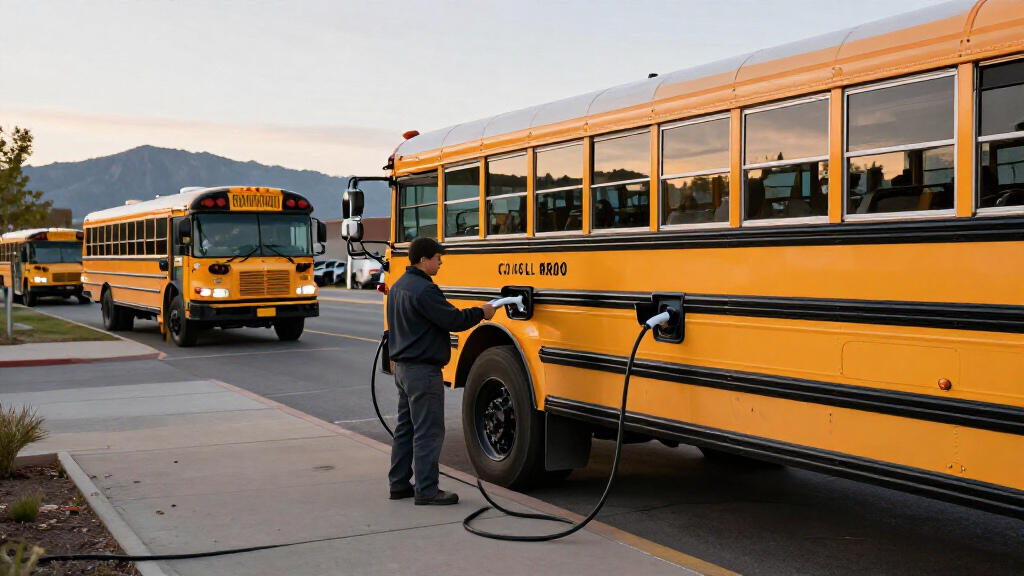
Jefferson County Public Schools has placed six electric school buses and six bidirectional chargers into service in Colorado. Xcel Energy contributed $3.4 million through its Electric School Bus Program, while Highland Electric Fleets is providing the buses, charging equipment and long-term services. The project will test how buses can return stored electricity to the grid when they are not being used for routes.
Jefferson County Public Schools has placed six electric school buses and six bidirectional chargers into service, beginning a Colorado demonstration of buses that can send stored electricity back to the grid when they are parked. Xcel Energy provided $3.4 million through its Electric School Bus Program, and the buses are scheduled to serve students during the current school year.
The school district, known as Jeffco Public Schools, serves about 75,000 students at 145 schools. The six buses are IC electric school buses. The report says they have been placed into service and will begin serving students during the current school year; it does not identify specific routes, schools or the date the first student trips will take place.
Xcel Energy’s $3.4 million contribution supports the district’s move to electric transportation. The utility says its statewide Electric School Bus Program is supporting the launch of 38 electric buses and 30 bidirectional charging systems in Colorado. The six buses and chargers in Jeffco are part of that broader program, rather than the full statewide count.
Highland Electric Fleets is supporting the district through its Electrification-as-a-Service model. According to the report, the company provides the buses, charging infrastructure and long-term services needed to operate the fleet. The project is intended to gather practical information on operating electric buses while testing how their batteries could provide electricity to the grid when the vehicles are not on the road.
Testing Buses as Grid Resources
The commissioning brings electric school buses and bidirectional charging into a working district fleet, where the equipment can be tested alongside ordinary school transportation needs. The buses are designed to do more than draw power for charging: when connected to compatible chargers and the grid, their batteries can also return electricity. That could make parked buses a source of flexibility for the electricity system, although the report does not quantify how much power the Jeffco fleet may supply or how often it will do so.
For students and families, the immediate change is the introduction of electric buses in student service. Jeffco Chief Operating Officer Jeff Gatlin said the buses would provide cleaner air for students and schools. Highland Electric Fleets Chief Commercial Officer Brian Buccella cited potential health benefits from replacing diesel buses, but those comments are a company representative’s claim about broader outcomes, not a measured result from this six-bus project.
The arrangement also shows how a district can obtain vehicles, chargers and operating support through a service model rather than treating bus purchases as the only part of electrification. The project’s findings may inform future decisions by school districts and utilities about costs, fleet operations and possible grid services. The source material does not report project costs beyond Xcel’s contribution, or set out a schedule for evaluating results.
As an affiliate, we earn on qualifying purchases.
Part of Xcel’s Colorado Program
The Jeffco project sits within Xcel Energy’s Electric School Bus Program, which the utility says is supporting a wider rollout of 38 electric school buses and 30 bidirectional charging systems in Colorado. The six buses and six chargers in this announcement represent one district’s contribution to that program. No details are provided about the other participating districts or the timetable for the statewide rollout.
Under Highland Electric Fleets’ Electrification-as-a-Service model, the provider supplies the buses and charging equipment as well as long-term services. In Jeffco, that support is intended to cover the equipment and operational needs of the new fleet. The source does not detail the contract terms, how long the service arrangement lasts, or how responsibilities are divided among the district, utility and provider.
Bidirectional charging lets an electric vehicle battery send energy back through compatible charging equipment. For school buses, the potential use case is to draw on batteries while buses are parked, subject to operational needs and the technical arrangements with the grid. The report describes this as a demonstration intended to produce real-world insights; it does not say that routine grid exports have already begun.
“These new electric buses will deliver cleaner air for our students and schools while giving us a hands-on look at how innovative energy solutions can benefit our entire Lakewood community.”
— Jeff Gatlin, chief operating officer at Jeffco Public Schools
As an affiliate, we earn on qualifying purchases.
Grid Exports Still to Be Tested
The report confirms that the buses and chargers have been placed into service, but it does not confirm that the vehicles have already sent electricity back to the grid. The timing, frequency and amount of any exports remain unreported, as do the technical arrangements governing when a bus would be available to discharge energy without affecting student routes.
Details are also missing on the project’s operating costs, the district’s savings or emissions results, and how the demonstration’s performance will be measured. Xcel’s $3.4 million contribution is stated, but the source does not specify whether that figure covers only Jeffco’s six buses and chargers or other project expenses. The health benefit cited by Highland is an attributed claim and is not presented as an outcome measured in Jeffco.
As an affiliate, we earn on qualifying purchases.
Buses Enter School-Year Service
The six buses are expected to begin carrying Jeffco students during the current school year. As they operate, the district, Xcel Energy and Highland Electric Fleets can gather the real-world operational information the project is intended to provide, including how charging equipment fits with bus schedules and whether grid exports can be integrated into fleet use.
The source does not give a date for a public results report or identify a formal evaluation milestone. Further information on route assignments, actual grid discharges, operating performance and the program’s wider Colorado rollout will be needed to establish what the demonstration achieves beyond placing the vehicles and chargers into service.
As an affiliate, we earn on qualifying purchases.
Key Questions
How many electric buses and bidirectional chargers did Jeffco commission?
Jefferson County Public Schools placed six electric school buses and six bidirectional chargers into service.
Who is funding and supporting the project?
Xcel Energy provided $3.4 million through its Electric School Bus Program. Highland Electric Fleets is supplying the buses, charging infrastructure and long-term services through its Electrification-as-a-Service model.
What does bidirectional charging allow the buses to do?
With compatible equipment and grid arrangements, the buses can store electricity in their batteries and send some of it back to the grid while parked. The report describes this as a capability the project will demonstrate; it does not confirm that grid exports have already begun.
When will the buses carry students?
The report says the six IC electric buses will begin serving Jeffco students during the current school year. It does not provide a specific first-service date or name the routes.
What results from the demonstration are known so far?
The confirmed development is that the six buses and six chargers have been placed into service. The source does not provide measured health, cost, emissions or grid-performance results; those outcomes remain to be reported.
Source: rss
Halloween Picks
halloween
As an affiliate, we earn on qualifying purchases.