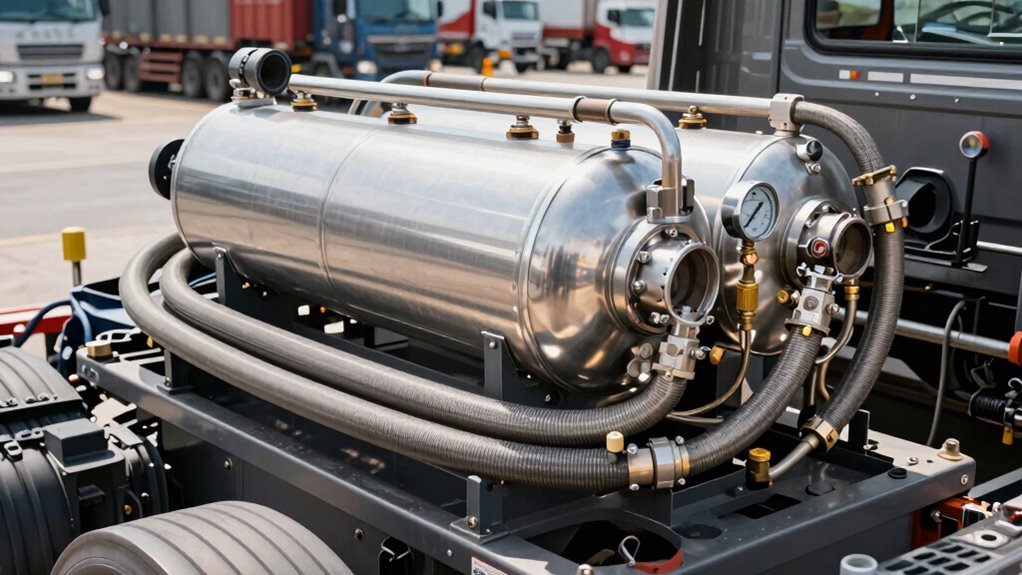

To keep your truck’s heavy-duty air system reliable, you need to perform regular maintenance like checking hoses, filters, and valves for leaks or dirt. Properly draining moisture and replacing worn parts prevent pressure loss and compressor damage. This guarantees your air brakes respond quickly and safely under heavy loads. Neglecting these steps can lead to costly repairs and system failures. Stay tuned—there’s more to know about maintaining peak performance and safety.

Get business pricing on garage and car supplies
- Business-only prices and quantity discounts
- Tax-exempt purchasing
- Multiple users, one account, clear invoices
Key Takeaways
- Regular maintenance prevents pressure loss, compressor failure, and extends the lifespan of the entire air system.
- Neglecting system checks can cause leaks, reduced pressure, and costly repairs.
- Proper inspection of hoses, filters, and valves ensures system reliability and safety.
- The air system powers critical brake functions, requiring consistent pressure for safe operation.
- Maintaining compressor efficiency and leak-free components is essential for optimal truck performance.
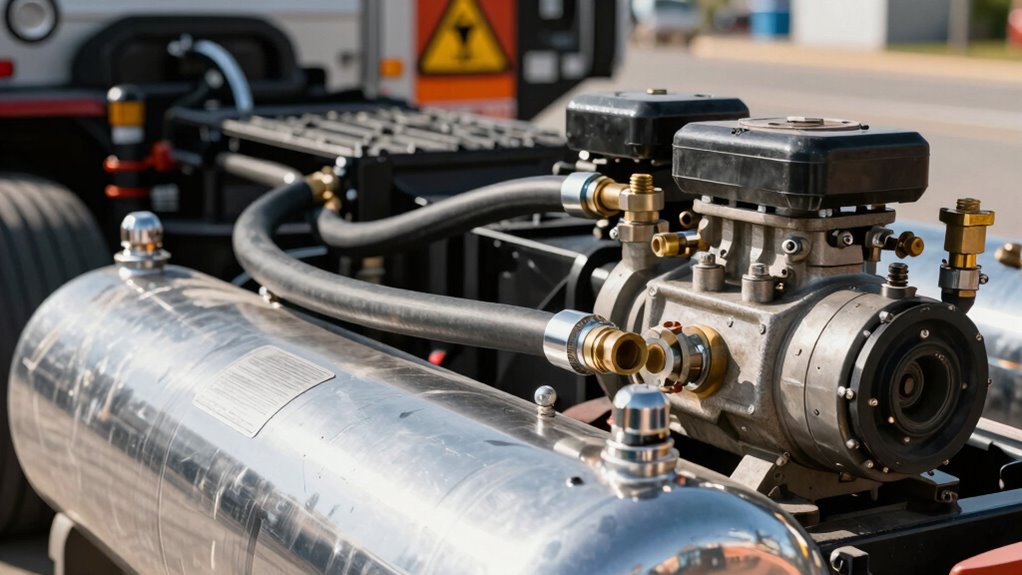
Have you ever wondered how heavy-duty trucks maintain their performance under demanding conditions? It all comes down to the robust and reliable air systems that power everything from brakes to suspension. At the heart of this system is the air compressor, which is responsible for generating the compressed air necessary for various functions. Proper air compressor maintenance is essential to keep these trucks running smoothly. Regular checks, draining moisture buildup, and replacing worn-out parts prevent issues like pressure loss or compressor failure. When the compressor works efficiently, it guarantees a consistent air supply, which directly impacts the truck’s overall performance and safety. Ensuring the air compressor is properly maintained and functioning optimally is crucial for safety and efficiency.
A well-maintained air compressor also prolongs the lifespan of the entire air system. Neglecting maintenance can lead to leaks, reduced pressure, and even compressor damage, all of which could cause costly downtime. Staying proactive with air compressor maintenance means inspecting hoses, filters, and valves frequently. It’s imperative to keep contaminants out, as dirt and moisture can impair compressor function. A clean, well-maintained compressor guarantees that your truck’s brake system and other pneumatic components operate reliably, especially during long hauls or tough terrains. Additionally, understanding the comparative advantage of efficient systems can help prioritize maintenance practices to maximize productivity. Regularly performing preventive maintenance helps identify potential issues early, avoiding expensive repairs later on. Implementing routine inspections can further enhance system reliability and safety.
Speaking of brakes, brake system integration plays a critical role in heavy-duty truck performance. The air system powers the air brakes, which are essential for controlling massive loads safely. When the air system functions properly, it delivers the right amount of pressure to the brakes, ensuring they respond quickly and effectively. Properly integrated brake systems also feature safety components like spring brakes and anti-lock braking systems (ABS), which rely heavily on consistent air pressure. Any fluctuation or failure in the air supply can compromise braking efficiency, making maintenance a top priority.
Guaranteeing seamless brake system integration involves more than just maintaining the compressor. It requires inspecting the entire pneumatic network—hoses, chambers, valves, and regulators. Any leaks or blockages can reduce brake responsiveness, risking safety on the road. Regularly testing the system’s pressure and performing leak checks help identify issues before they become dangerous. When your air compressor is in top shape and your brake system is properly integrated, you gain a truck that’s not only safer but also more reliable and efficient, especially under heavy loads or adverse conditions.
As an affiliate, we earn on qualifying purchases.
Frequently Asked Questions
How Often Should I Perform Maintenance on My Air System?
You should perform maintenance on your air system every 6 to 12 months, depending on usage and environmental conditions. Regular checks help extend the air system lifespan and prevent costly repairs. Follow your vehicle’s maintenance schedules closely, inspecting for leaks, moisture, and wear. Promptly address issues to keep your air system functioning at its best. Consistent maintenance ensures reliability and longevity, saving you time and money in the long run.
What Are Common Signs of Air System Failure?
Think of your truck’s air system as its heartbeat—when it falters, signs appear like warning lights. You might notice sluggish brake response, hissing sounds, or fluctuating pressure gauges. These are clues from air system components indicating trouble. Troubleshooting procedures involve checking for leaks, listening for compressor issues, or inspecting valves. Ignoring these signs risks system failure, so stay vigilant and act swiftly to keep your truck running smoothly.
Can Heavy-Duty Air Systems Be Retrofitted to Older Trucks?
Yes, heavy-duty air systems can be retrofitted to older trucks, but you need to check retrofit compatibility first. Upgrading your system involves installing new components compatible with your truck’s existing setup, which can improve performance and safety. Make certain to consult with professionals to guarantee a proper system upgrade, and verify all parts meet your truck’s specifications. This approach helps extend your truck’s lifespan and enhances overall efficiency.
What Are the Safety Precautions When Handling Compressed Air?
When handling compressed air, you should wear proper safety gear like goggles and gloves to protect against sudden releases or debris. Always check air quality to guarantee no contaminants are present that could cause injury or damage. Before working, release pressure safely and inspect hoses for cracks or wear. Keep a clear workspace, and never point air tools at yourself or others. These precautions help prevent accidents and ensure safe operations.
How Does Temperature Affect Air System Performance?
Did you know that a 10°F increase in temperature can cause air pressure in your system to rise by about 1 psi? Temperature fluctuations directly impact air system performance — as it warms, air expands, increasing pressure; as it cools, pressure drops. This can lead to system inefficiencies or failures. You need to monitor temperature changes closely, ensuring your compressor and safety valves are properly calibrated to maintain *best* performance.
truck air system maintenance kit
As an affiliate, we earn on qualifying purchases.
As an affiliate, we earn on qualifying purchases.
Conclusion
Think of your truck’s heavy-duty air system as its heartbeat—pumping essential power through every mile. When you keep it in top shape, you’re nurturing the lifeblood that keeps your journey strong and steady. Neglect it, and the flow falters, risking breakdowns and delays. Treat your air system like a trusted companion—care for it, and it’ll carry you through countless roads, a symbol of resilience and dependability on every highway you conquer.
air brake system components for trucks
As an affiliate, we earn on qualifying purchases.
As an affiliate, we earn on qualifying purchases.
heavy-duty truck hoses and valves
As an affiliate, we earn on qualifying purchases.
As an affiliate, we earn on qualifying purchases.
Halloween Picks
halloween
As an affiliate, we earn on qualifying purchases.