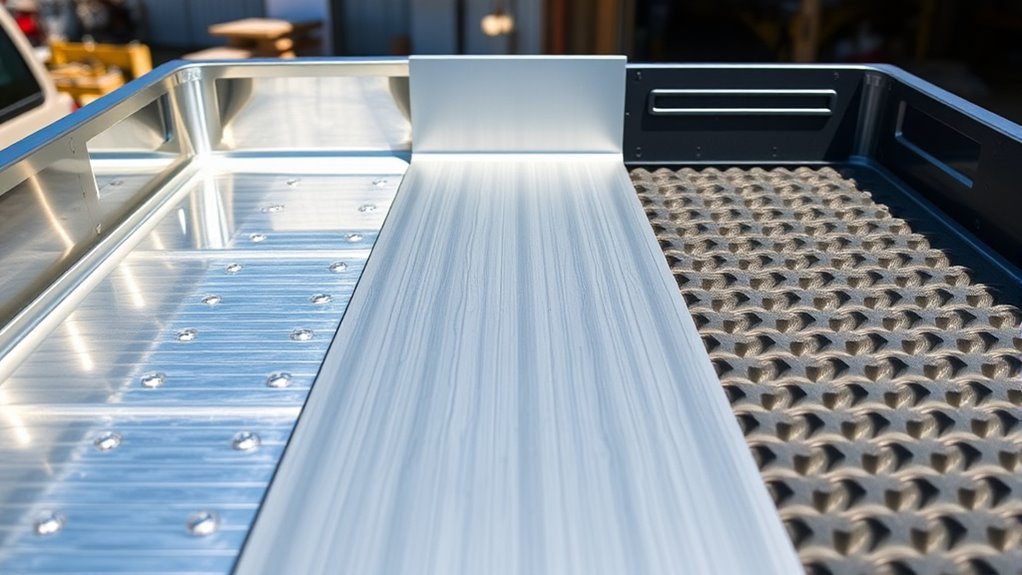

Steel beds offer unmatched strength and impact resistance, but they’re heavy and prone to rust without proper coating, increasing long-term maintenance. Aluminum beds are lighter, resist corrosion well, and boost fuel efficiency, yet they may be less durable under extreme stress. Composite beds combine the best of both, resisting dents, rust, and scratches with less weight. Each material has unique benefits and drawbacks; if you continue exploring, you’ll discover which choice suits your work and budget best.

Get business pricing on garage and car supplies
- Business-only prices and quantity discounts
- Tax-exempt purchasing
- Multiple users, one account, clear invoices
Key Takeaways
- Steel offers unmatched strength and impact resistance but is heavier and prone to rust without proper coating.
- Aluminum is lightweight and corrosion-resistant, boosting fuel efficiency but has lower impact durability.
- Composite beds are highly resistant to dents, scratches, and rust, requiring minimal maintenance but at a higher initial cost.
- Steel beds are easily repairable and customizable, while composites need specialized repairs and are less adaptable.
- The choice depends on balance: steel for durability, aluminum for weight savings, and composites for corrosion resistance.
As an affiliate, we earn on qualifying purchases.
Strength and Impact Resistance of Different Materials
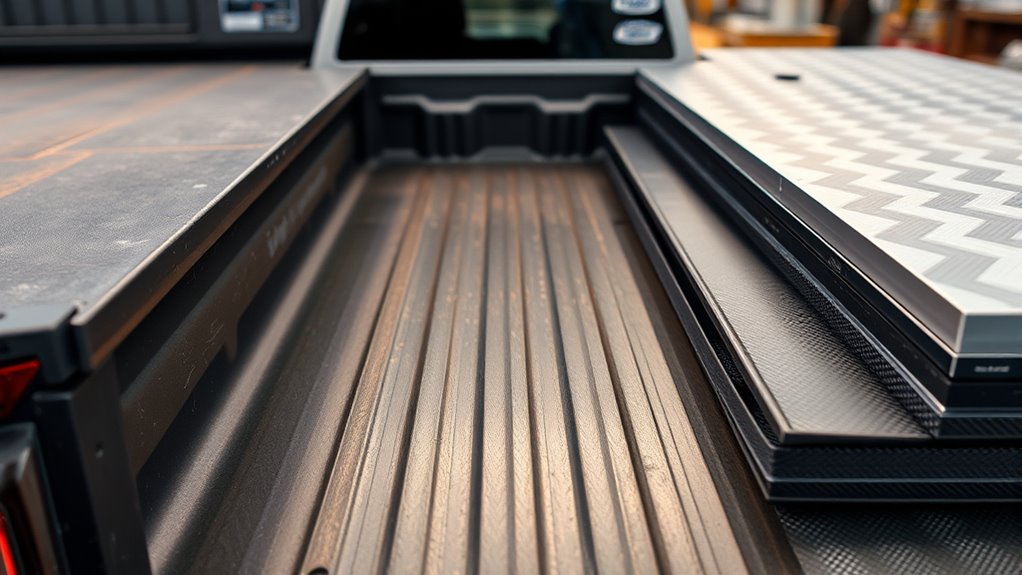
When it comes to strength and impact resistance, steel stands out as the most robust material for truck beds. You’ll find that steel handles up to 965 MPa of pressure, making it perfect for heavy-duty tasks. It absorbs more energy during impacts, so it resists bending and denting better than other materials. Additionally, steel’s material properties include high tensile strength and ductility, enabling it to withstand extreme conditions without cracking. Its versatility also makes it suitable for various applications beyond just truck beds. Steel’s ability to maintain its integrity under extreme conditions is a key factor in its popularity for demanding environments. Aluminum, on the other hand, withstands about 710 MPa, which is still strong but less durable under extreme stress. While aluminum resists denting better initially, it has a finite fatigue life, meaning repeated stress can lead to failure over time. Understanding material properties is crucial for selecting the right truck bed based on usage and longevity. Moreover, material durability influences maintenance costs and longevity, especially in harsh environments. Overall, steel provides superior impact resistance, especially in demanding environments where toughness is essential.
As an affiliate, we earn on qualifying purchases.
Effects of Weight on Fuel Efficiency and Payload Capacity

The weight of a truck bed directly impacts your vehicle’s fuel efficiency and payload capacity. Heavier beds, like steel, can reduce fuel economy since your engine works harder to carry the extra load. Conversely, lighter beds, like aluminum, help you save fuel and carry more cargo without exceeding weight limits. Choosing a lighter material means you can maximize every trip, hauling more with less fuel.
- Feel the thrill of fewer stops at the pump, saving you money.
- Experience the freedom of increased cargo capacity.
- Enjoy effortless handling with less overall weight.
- Reduce wear and tear on your engine, extending your truck’s lifespan.
As an affiliate, we earn on qualifying purchases.
Resistance to Corrosion and Environmental Damage

When it comes to resisting rust and environmental damage, your choice of truck bed material makes a big difference. Steel needs regular maintenance to prevent corrosion, especially in harsh conditions, while aluminum naturally resists rust. Aluminum’s corrosion resistance makes it a popular choice for many truck owners seeking durability without extensive upkeep. Additionally, the weight of aluminum can contribute to better fuel efficiency for your vehicle. Composite beds offer excellent durability and are immune to rust, but their long-term performance under extreme environments is still being studied. Moreover, understanding the essential oils for corrosion prevention can provide insights into protective measures for various materials. Proper air purifier maintenance can also help minimize airborne pollutants that may accelerate material degradation. Incorporating corrosion-resistant coatings can further extend the lifespan of steel and other metals exposed to challenging environments.
Rust Resistance Capabilities
Steel truck beds are vulnerable to rust and corrosion, especially in humid, rainy, or salty environments, requiring regular maintenance to prevent deterioration. Without proper care, rust can weaken the structure and compromise safety. In contrast, aluminum naturally forms a protective oxide layer that prevents rust from forming, making it highly resistant to corrosion. Composite beds are completely immune to rust, offering the best protection in harsh conditions. Proper filtration and pump protection can also help prevent contamination that accelerates corrosion. Additionally, selecting materials with superior corrosion resistance can significantly extend the lifespan of your truck bed. Consider these points: – You won’t have to worry about rust eating away at your bed over time. – Aluminum’s corrosion resistance remains strong unless alloyed with reactive metals. – Steel needs consistent maintenance—paint, coatings, or treatments—to stay rust-free. – Composite beds require almost no upkeep, giving you peace of mind in tough environments.
Environmental Durability Factors
Your choice of truck bed material considerably impacts how well it withstands environmental challenges. Steel beds are prone to rust and corrosion, especially in humid, rainy, or salty conditions, though modern coatings help improve resistance. Aluminum naturally forms a protective oxide layer, making it highly resistant to rust and environmental damage, but alloying elements like copper or magnesium can reduce its corrosion resistance. Composite beds are immune to rust and corrosion, making them ideal for harsh environments. They require minimal upkeep and can handle exposure to moisture, salt, and chemicals better than metal options. Understanding material properties is crucial for making an informed decision about truck bed durability. Additionally, corrosion resistance varies depending on the specific alloy compositions and protective coatings used in each material type. Proper maintenance practices can further extend the lifespan of all types of truck beds exposed to harsh environmental elements. Recognizing the environmental durability factors helps ensure your truck bed remains protected and functional over time. Being aware of material-specific vulnerabilities can guide you in choosing the right bed for your environment and usage.
Maintenance Requirements
Maintenance requirements for resisting corrosion and environmental damage vary considerably among truck bed materials. Steel beds are prone to rust, especially in humid or salty environments, requiring regular painting or coating. Applying protective coatings can significantly extend the lifespan of steel beds by preventing rust formation. Aluminum naturally forms a protective oxide layer, making it highly resistant but can be compromised if alloyed with certain elements. Composite beds are immune to rust and corrosion, needing minimal upkeep. Additionally, understanding corrosion resistance and how different materials respond helps prolong your truck bed’s lifespan. – Keep steel beds protected with paint or coatings to prevent rust and extend lifespan. – Rinse aluminum beds regularly to remove dirt and salt, preserving their corrosion resistance. – Clean composite beds with gentle detergents to maintain their integrity. – Avoid harsh chemicals or abrasive tools that could damage the protective layers or surface.
truck bed rust protection coating
As an affiliate, we earn on qualifying purchases.
As an affiliate, we earn on qualifying purchases.
Cost Considerations and Long-Term Maintenance

While the initial purchase price plays a significant role in choosing a truck bed, long-term costs and upkeep are equally important. Steel beds are the most affordable upfront but can incur higher maintenance costs over time due to rust and corrosion, requiring regular painting or coating. Aluminum beds cost more initially but tend to save you money long-term because they resist rust and need less upkeep, reducing maintenance expenses. Proper maintenance and inspections can help prevent extensive damage and prolong the lifespan of your truck bed. Additionally, choosing the right material type can significantly impact the overall durability and cost-effectiveness of your truck bed. Composite beds are the priciest at purchase, but their resistance to corrosion and minimal maintenance needs can offset costs over many years. Weighing initial costs against ongoing maintenance will help you determine the most economical choice for your needs. Proper piercing aftercare and maintenance can also extend the lifespan of your vehicle components, similar to how choosing the right material can impact the longevity of a truck bed. Considering long-term durability and the potential for regulatory compliance in your decision can lead to better cost savings over the life of the truck bed.
Customization Options and Repairability
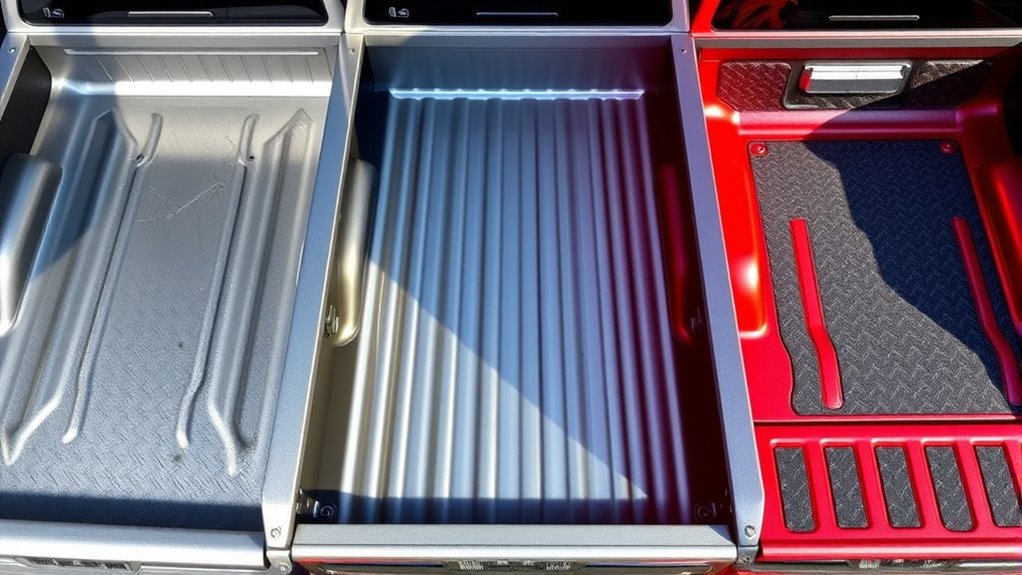
Steel truck beds are known for their extensive customization options, making them a popular choice for those who need tailored solutions. You can easily add gooseneck hitches, toolboxes, or heavy-duty towing setups with minimal effort. Steel’s weldability allows you to modify or repair it in the field quickly, giving you flexibility when unexpected issues arise.
Steel truck beds offer unmatched customization and easy field repairs for demanding work needs.
- Easily weld or modify for specific needs
- Wide range of aftermarket accessories
- Quick field repairs for dents or damage
- Custom paint or coating options for personal style
Compared to other materials, steel offers the most straightforward repair process. When damaged, you can often fix it yourself or seek professional help without specialized tools. This ease of customization and repair makes steel beds ideal for demanding work environments.
Durability in Various Work Environments

Durability in various work environments depends heavily on the material’s ability to withstand specific stresses and conditions. Steel beds excel in industrial settings, absorbing impacts and resisting bending under heavy loads. Aluminum beds perform well in coastal or humid areas due to their corrosion resistance but are less resistant to repeated impacts. Composite beds offer high resistance to dents, scratches, and corrosion, making them ideal for harsh environments. However, their long-term performance under extreme stress is less documented.
| Environment | Best Material Choice | Key Advantage |
|---|---|---|
| Heavy-duty, industrial | Steel | Impact and load resistance |
| Coastal, humid | Aluminum | Corrosion resistance |
| Harsh, corrosive | Composite | Durability against wear and rust |
Lifespan and Long-Term Performance Expectations
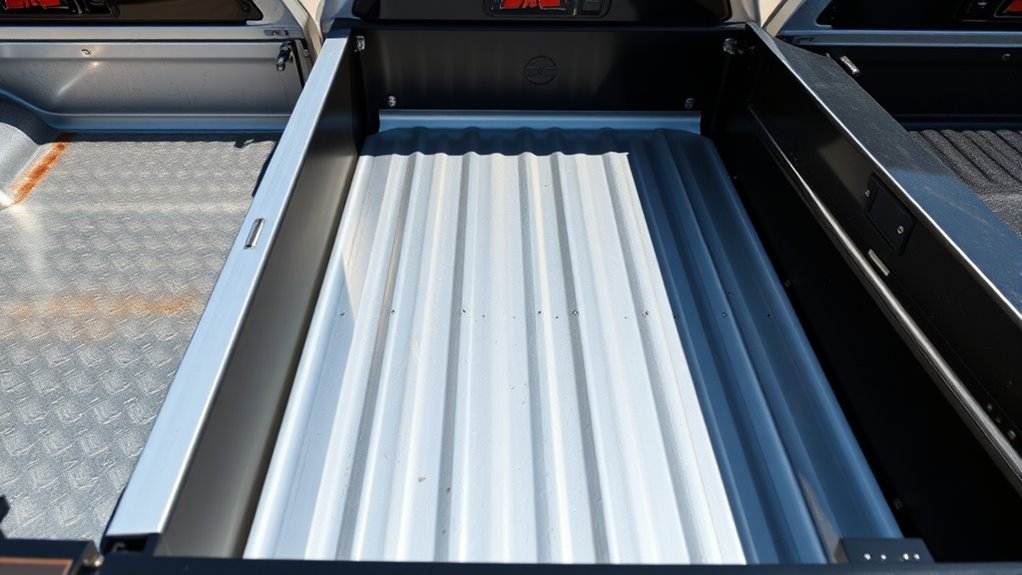
The long-term performance of truck beds depends heavily on the material’s ability to withstand repeated stress, environmental exposure, and everyday wear. Steel beds are known for their durability, often lasting decades with proper maintenance, especially in demanding environments. Aluminum beds, resistant to corrosion, can also last a long time—particularly in coastal or humid areas—though their fatigue life is finite. Composite beds, while relatively new, show promise for extended use, but their true longevity under extreme conditions remains less certain.
Steel beds last decades with proper care; aluminum resists corrosion but has finite fatigue life; composites show promise but remain unproven.
- Feel confident knowing steel can handle relentless work for decades.
- Imagine your aluminum bed resisting rust and decay over many years.
- Envision composite beds, built to last, yet still unproven in extreme environments.
- Trust that proper care extends your truck bed’s lifespan considerably.
Unique Advantages and Disadvantages of Each Material
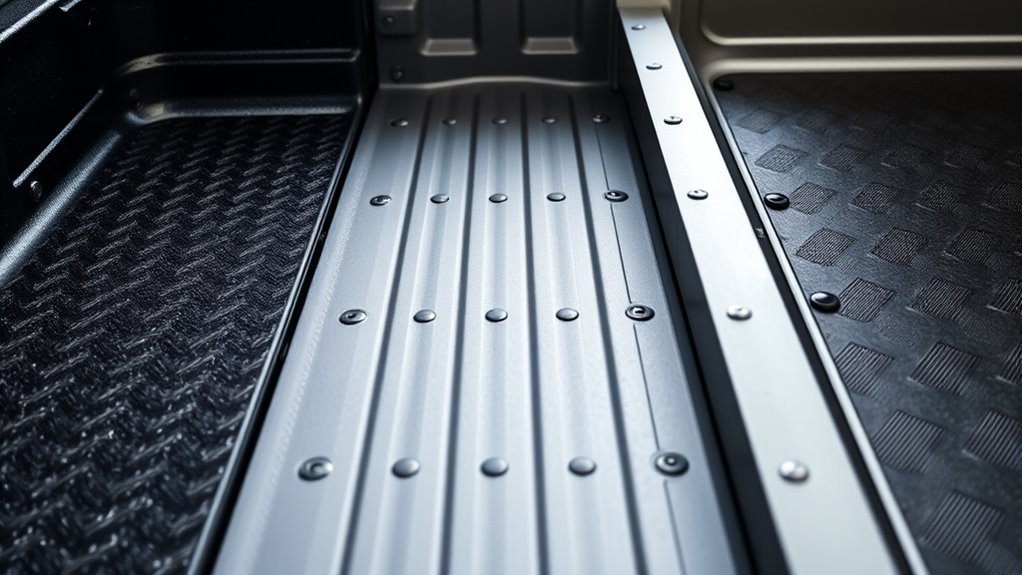
When comparing truck bed materials, you’ll notice that steel offers unmatched strength and damage resistance, but it comes with increased weight and cost. Aluminum balances durability with lighter weight and lower fuel consumption, though it may be less impact-resistant over time. Composite beds provide high durability and corrosion resistance but can be more expensive and harder to repair if damaged.
Strength and Damage Resistance
Steel, aluminum, and composite truck beds each have distinct strengths and weaknesses when it comes to resisting damage under stress. Steel is incredibly tough, absorbing impact energy better, and resisting bending or denting. Aluminum, while strong, is less plastic and dents more easily, but resists fatigue and provides good impact resistance. Composite beds are marketed for their superior durability, claiming to resist dents, scratches, and corrosion better than metals. However, composites can crack or break if severely damaged and are less forgiving to repair. Here are some key points:
- Steel withstands heavy impacts without cracking but is prone to rust.
- Aluminum resists denting and corrosion but can fatigue over time.
- Composites resist scratches and rust but may crack under extreme force.
- Steel offers high strength but is less flexible under repeated stress.
Weight and Cost Balance
Choosing the right truck bed material involves balancing weight savings and overall costs. Steel beds are the heaviest and usually the least expensive upfront, but they can increase fuel costs and limit payload capacity. Aluminum beds weigh about a third of steel, offering significant fuel efficiency gains and higher load limits, but they come with a higher initial price. Composite beds sit between steel and aluminum in weight, providing some savings without the premium cost of aluminum. While steel is cheaper initially, it requires more maintenance to prevent rust, adding to long-term expenses. Aluminum and composites cost more upfront but tend to lower maintenance and fuel costs over time. Your choice depends on weighing upfront investment against ongoing operational savings.
Factors to Consider When Choosing the Right Bed for Your Needs
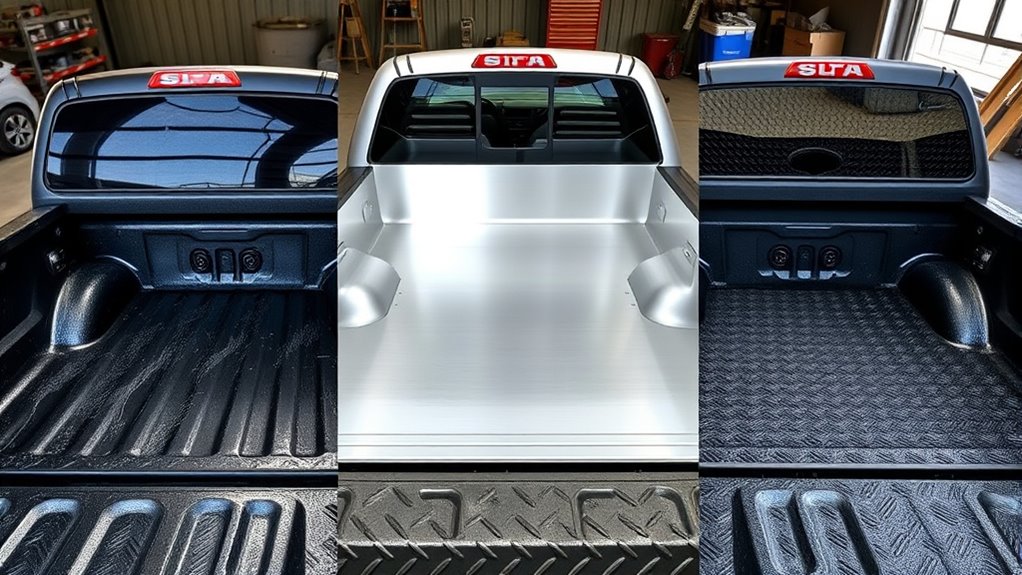
Selecting the right truck bed depends on balancing your specific needs with the characteristics of each material. Consider what matters most: strength, weight, maintenance, or cost. If you need maximum durability for heavy-duty work, steel might be best. For improved fuel efficiency and corrosion resistance, aluminum is a solid choice. If you want low maintenance and long-lasting performance in harsh environments, composites could fit your needs. Think about your environment, budget, and how you plan to use your truck daily.
- Feel confident knowing you’ve chosen a bed that matches your workload and lifestyle
- Experience the peace of mind from selecting a durable, low-maintenance material
- Save money long-term by investing in the right balance of cost and performance
- Enjoy the satisfaction of making a smart, tailored decision for your truck
Frequently Asked Questions
How Does Each Material Perform in Extreme Weather Conditions?
In extreme weather, steel beds handle heat and cold well but are prone to rust without proper coatings. Aluminum naturally resists corrosion and performs reliably in salty, humid environments. Composite beds are immune to rust and damage from moisture, making them ideal for harsh climates. However, they can be less resilient under extreme temperatures, potentially weakening over time. Overall, aluminum and composites excel in extreme weather, with steel needing extra protection.
Are Composite Beds More Environmentally Friendly Than Metal Options?
Yes, composite beds are more environmentally friendly than metal options. You don’t have to worry about rust or corrosion, which means less maintenance and fewer chemicals used for upkeep. They also weigh less, helping reduce fuel consumption and emissions. Plus, their durability means they last longer, decreasing the need for replacements and waste. Overall, choosing composite beds supports a greener choice by lowering environmental impact over time.
Can Aluminum or Composite Beds Be Painted or Customized Easily?
You might be surprised, but aluminum and composite beds can be painted and customized, though differently. Aluminum’s surface allows for welding and repainting with proper prep, making customization straightforward. Composite beds, however, are trickier; they need specialized paints and techniques, and repairs often require professional help. If you like easy customization, aluminum is your best bet, while composites demand more careful planning but offer unique design possibilities.
What Are the Typical Repair Times for Damage to Each Material?
When repairing damage, steel beds usually take the shortest time since they’re easiest to weld and shape, often within a few hours. Aluminum beds can be repaired quickly too, but require specialized skills and tools, which might extend the process to a day or more. Composite beds take longer to repair, sometimes days, because they need careful handling and specialized parts. Your repair time depends on the extent of damage and material expertise.
How Do Resale Values Compare Among Steel, Aluminum, and Composite Beds?
You’ll find that steel beds usually retain higher resale value because of their proven durability and widespread demand in heavy-duty applications. Aluminum beds also hold good value, especially in regions where corrosion resistance matters. Composite beds tend to have lower resale prices due to their higher initial cost and limited long-term market data. Overall, steel generally offers the best resale value, but your specific needs and environment influence the resale potential of each material.
Conclusion
Choosing between steel, aluminum, or composite truck beds isn’t just about strength or weight. While steel offers durability, it’s heavier and prone to rust. Aluminum is lightweight and corrosion-resistant but may cost more upfront. Composites provide flexibility and long-term savings, yet might lack the same toughness. Your decision depends on balancing these factors—like weighing durability against efficiency—so you can select the bed that truly fits your work, lifestyle, and budget.
Halloween Picks
halloween
As an affiliate, we earn on qualifying purchases.