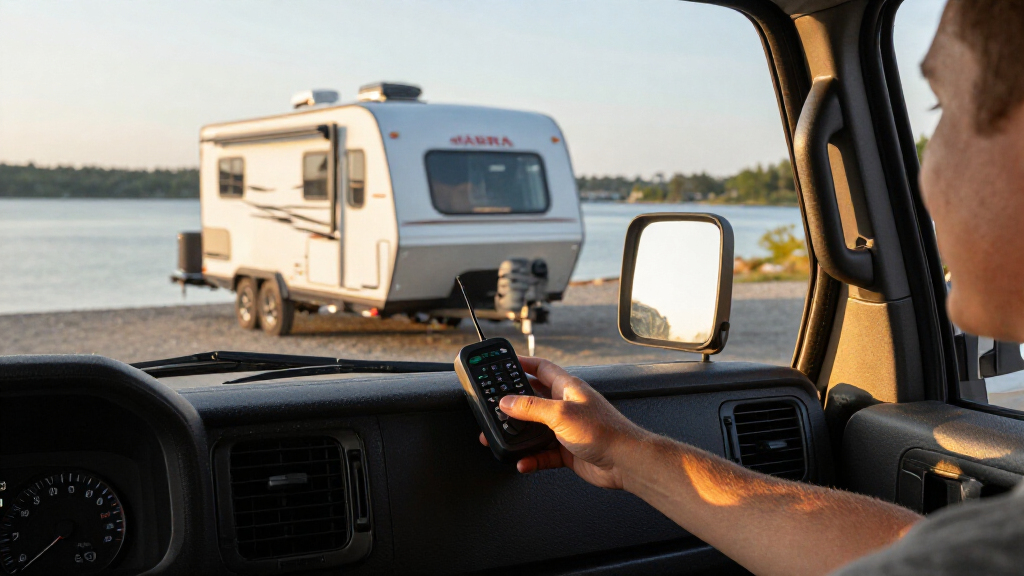
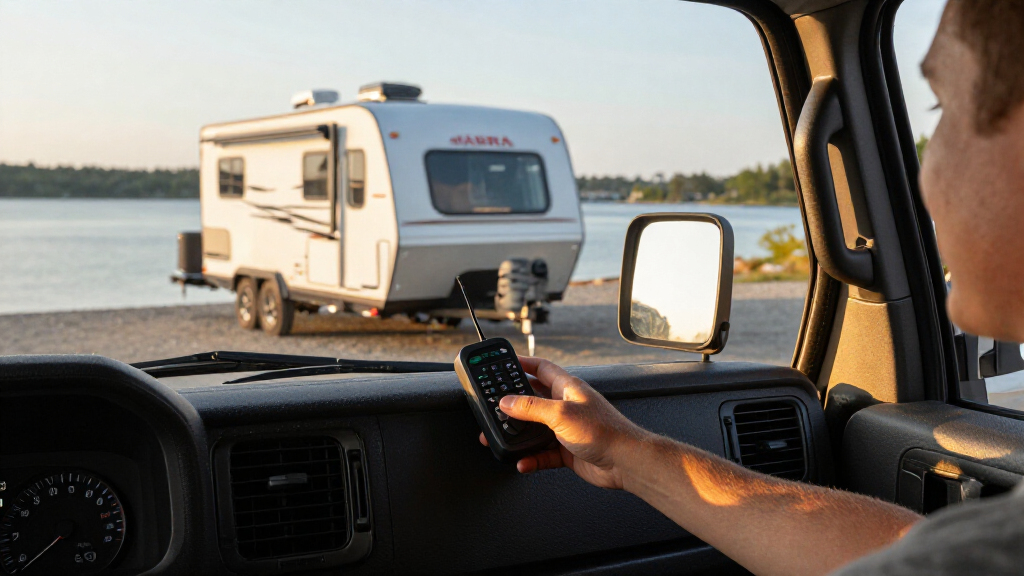
Wireless trailer brake controllers let you control trailer braking without installing a conventional cab-mounted unit, but the choices differ in app controls, manual override options, and axle support. I rank the CURT Echo Mobile Bluetooth Trailer Brake Controller as the best overall pick for its recognizable plug-in format and broad fit for 1–2 axle setups. The REDARC Tow-Pro Link stands out for buyers seeking a more premium system, while the CURT 51200 Echo In-Line Proportional is worth a look if an in-line design better suits your setup. The main tradeoffs are app dependence, compatibility with your vehicle and trailer, and whether a product supports your brake and axle configuration. Read on for the full comparison, selection criteria, and advice on choosing a controller that matches how you tow.

Get business pricing on garage and car supplies
- Business-only prices and quantity discounts
- Tax-exempt purchasing
- Multiple users, one account, clear invoices
Complete the kit


Key Takeaways
- The CURT Echo Mobile is my overall pick for shoppers who want a familiar plug-in wireless format for a 7-way connection and 1–2 axle trailer; its limited axle range makes it a poor fit for larger setups.
- The CURT 51200 Echo In-Line Proportional serves a different installation need from mobile plug-in options, so buyers should compare mounting and wiring requirements rather than treating all wireless controllers as interchangeable.
- Axle support varies sharply across this lineup: several 51180-style options specify 1–2 axles, while the Synhalt lists support for 1–4 axles, making configuration checks a key first step.
- Bluetooth and app control are common, not a guarantee of identical operation. Check how each controller handles manual braking and whether the control method suits your phone habits before buying.
- The REDARC Tow-Pro Link is the premium-oriented choice in this group, while the numerous 51180 variants give buyers more options to compare on fit, controls, and documentation rather than relying on similar naming alone.
| 51180 Wireless Bluetooth Trailer Brake Controller, 7-Way, 1–2 Axles |  | Best for Simple Vehicle-to-Vehicle Swaps | Model: 51180 | Trailer compatibility: 1–2 axles, 2–4 brakes | Connector: 7-way RV blade | VIEW LATEST PRICE | See Our Full Breakdown |
| 51180 Wireless Trailer Brake Controller with Bluetooth App Control |  | Best for Saved Tow Profiles | Model: 51180 | Trailer compatibility: 1–2 axles, 2–4 brakes | Connection: 7-way RV blade socket | VIEW LATEST PRICE | See Our Full Breakdown |
| Vorlexa 51180 Wireless Trailer Brake Controller |  | Best for Added Circuit Protection | Model: 51180 | Vehicle connector: Standard 7-way RV blade socket | Power requirement: Active +12V power and ground | VIEW LATEST PRICE | See Our Full Breakdown |
| CURT 51200 Echo In-Line Proportional Trailer Brake Controller with Bluetooth |  | Best for Larger Brake Setups | Model: 51200 | Axle support: 1–4 axles | Brake capacity: 2–8 trailer brakes | VIEW LATEST PRICE | See Our Full Breakdown |
| Degowget Echo Mobile Wireless Trailer Brake Controller 51180 |  | Best for Phone-Disconnect Continuity | Model: 51180 | Manufacturer part number: 800270 | Compatibility: 7-way RV blade plug | VIEW LATEST PRICE | See Our Full Breakdown |
| CURT Echo Mobile Bluetooth Trailer Brake Controller, 7-Way, 1–2 Axles |  | Best Established Plug-In Pick | Connector: 7-way RV blade | Supported axles: 1–2 | Supported brakes: 2–4 | VIEW LATEST PRICE | See Our Full Breakdown |
| briidea Bluetooth Proportional Trailer Brake Controller with App Control & LED Display |  | Best for On-Unit Diagnostics | Brand: briidea | Model: BR-154 | Connectivity: Bluetooth | VIEW LATEST PRICE | See Our Full Breakdown |
| Wireless 7-Pin Trailer Brake Controller for RVs and Trailers |  | Best Simple Two-Axle Setup | Connection: 7-pin vehicle and trailer port | Control: OneControl app | Braking type: Proportional, 3-axis accelerometer | VIEW LATEST PRICE | See Our Full Breakdown |
| REDARC Tow-Pro Link Electric Trailer Brake Controller |  | Best for Flexible In-Cab Control | Brand and model: REDARC Tow-Pro Link | Vehicle connection: 7-pin | Sensor: 6-axis motion sensor | VIEW LATEST PRICE | See Our Full Breakdown |
| HBDCFGZ Smart Bluetooth Trailer Brake Controller with 7-Way Blade |  | Best for Multi-Axle Portability | Brand and model: HBDCFGZ B17 | OEM part number: 51180 | Compatibility: 7-Way RV blade plug with +12V power pin | VIEW LATEST PRICE | See Our Full Breakdown |
| CURT Echo Mobile Trailer Brake Controller with Bluetooth and Manual Override Button |  | Best for a More Secure Plug-In Fit | Brand: CURT | Model: Echo Kit 51180-51189 | Connector: 7-way RV blade | VIEW LATEST PRICE | See Our Full Breakdown |
| WOOFIXING 51180 7-Way Mobile Electric Trailer Brake Controller for 1–2 Axles |  | Best for Automatic Setup | Brand: WOOFIXING | Model: Brake Control | Part number: 51180 | VIEW LATEST PRICE | See Our Full Breakdown |
| TICANEE BC09 Wireless Trailer Brake Controller, 7-Way Plug-In, 1–2 Axles, 2–4 Brakes |  | Best for Saved App Settings | Brand: TICANEE | Model: BC09 | Manufacturer part number: 51180 | VIEW LATEST PRICE | See Our Full Breakdown |
| Synhalt Bluetooth Electric Trailer Brake Controller (7-Way, 1-4 Axles) |  | Best for Larger Multi-Axle Trailers | Brand: Synhalt | Model: Synhalt 58 | Connector: 7-way RV blade | VIEW LATEST PRICE | See Our Full Breakdown |
| wireless trailer brake controller | Model |
|---|---|
| 51180 Wireless Bluetooth Trail | 51180 |
| 51180 Wireless Trailer Brake C | 51180 |
| Vorlexa 51180 Wireless Trailer | 51180 |
| CURT 51200 Echo In-Line Propor | 51200 |
| Degowget Echo Mobile Wireless | 51180 |
| CURT Echo Mobile Bluetooth Tra | — |
| briidea Bluetooth Proportional | BR-154 |
| Wireless 7-Pin Trailer Brake C | — |
| REDARC Tow-Pro Link Electric T | — |
| HBDCFGZ Smart Bluetooth Traile | — |
| CURT Echo Mobile Trailer Brake | Echo Kit 51180-51189 |
| WOOFIXING 51180 7-Way Mobile E | Brake Control |
| TICANEE BC09 Wireless Trailer | BC09 |
| Synhalt Bluetooth Electric Tra | Synhalt 58 |
More Details on Our Top Picks
51180 Wireless Bluetooth Trailer Brake Controller, 7-Way, 1–2 Axles
The TunpLoal 51180 is a straightforward choice for drivers who want to move one controller between tow vehicles without adding an under-dash unit. It plugs into a powered 7-way RV blade socket, while its triple-axis sensor adjusts braking in proportion to vehicle deceleration. Compared with the CURT 51200 Echo, this model has a narrower stated range: it supports trailers with up to two axles rather than four, but its plug-in setup avoids the Echo’s specified USCAR connection behind the socket. Settings remain stored if Bluetooth drops, so a phone interruption does not erase the setup. The tradeoff is reliance on a smartphone for setup and adjustments, plus the need to confirm the socket has active 12V power and ground before buying.
Pros:- Plug-in design avoids under-dash wiring and can move between compatible tow vehicles.
- Triple-axis proportional braking responds to vehicle deceleration.
- Stored settings remain available if Bluetooth disconnects.
- Listed compatibility includes cruise control, ABS, and low-voltage systems.
Cons:- Limited to trailers with 1–2 axles and 2–4 brakes.
- Requires active 12V power and ground at the vehicle’s 7-way socket.
- A compatible iOS or Android phone is needed for app control.
Best for: Drivers who tow one- or two-axle trailers with multiple compatible vehicles and want a controller they can move between powered 7-way sockets.
Not ideal for: Owners of trailers with more than two axles, vehicles without an actively powered 7-way RV blade socket, or drivers who do not want app-based setup.
- Model:51180
- Trailer compatibility:1–2 axles, 2–4 brakes
- Connector:7-way RV blade
- Power requirement:Active +12V power and ground
- Braking type:Proportional, triple-axis accelerometer
- Control:Bluetooth app for iOS or Android
- Item weight:13 ounces
- Vehicle compatibility:Cruise control, ABS, and low-voltage systems
Our verdict“Choose the TunpLoal 51180 if you need a portable, app-controlled unit for up to two axles and your tow vehicles have powered 7-way sockets.”
51180 Wireless Trailer Brake Controller with Bluetooth App Control
The JewtWoki 51180 is the more configurable of the two app-focused 51180 options in this group: its listed controls include brake output, sensitivity, manual braking, and saved vehicle-trailer profiles. That profile feature is useful when a driver switches between towing setups and wants to keep their settings organized. Like the TunpLoal 51180, it uses a 3-axis sensor for proportional braking and plugs into a powered 7-way socket rather than requiring a cab-mounted controller. Its potted circuit board is also designed to add weather resistance. The main catch is electrical compatibility: older vehicles or aftermarket sockets may lack the active +12V feed at the 1 o’clock pin, which can call for wiring work. It is limited to one- or two-axle trailers and still depends on a smartphone for app features.
Pros:- App provides brake-output and sensitivity adjustments, manual braking, and saved profiles.
- 3-axis motion sensor provides proportional braking.
- Portable plug-in design can be moved between compatible vehicles.
- Potted circuit board is designed to add weather resistance.
Cons:- Requires a powered 7-way RV blade socket with 12V power and ground.
- Some older or aftermarket installations may need a battery-connected 12V line at the 1 o’clock pin.
- App functions require a compatible iOS or Android device.
Best for: Drivers who alternate between several vehicle-and-trailer combinations and want app-based controls with saved profiles.
Not ideal for: Owners of older or modified tow vehicles who cannot confirm an active 12V feed at the 7-way socket, and anyone towing more than two axles.
- Model:51180
- Trailer compatibility:1–2 axles, 2–4 brakes
- Connection:7-way RV blade socket
- Power requirement:+12V power and ground
- Braking type:Proportional
- Sensor:3-axis motion sensor
- Control:Bluetooth app for iOS and Android
- Item weight:13 ounces
Our verdict“Pick the JewtWoki 51180 if saved profiles and app adjustments matter more than avoiding possible 7-way wiring checks.”
Vorlexa 51180 Wireless Trailer Brake Controller
The Vorlexa 51180 stands out among the compact 51180-style plug-ins for its waterproof resin-encapsulated circuit board, a useful layer of protection for a unit mounted at the vehicle connector. Its 3-axis inertia sensor supplies proportional braking, and the controller retains settings if the phone disconnects. Compared with the CURT 51200 Echo, Vorlexa has a smaller stated trailer range—up to two axles rather than four—but it plugs into a standard 7-way RV blade socket instead of specifying a USCAR connection behind the socket. That makes the connector requirement easier to identify, not universal: 4-way, 5-way, and European round plugs are not direct fits without adapters. Buyers also need an active 12V feed and a smartphone for initial setup and adjustments.
Pros:- Resin-encapsulated circuit board is designed to protect against harsh conditions.
- 3-axis inertia sensor provides proportional braking.
- Stored settings let the controller continue operating if the phone disconnects.
- Installs through a standard 7-way socket without dashboard wiring.
Cons:- Requires active +12V power and ground at the 7-way socket.
- Does not directly fit 4-way, 5-way, or European round connectors without adapters.
- Initial setup and adjustments require a smartphone app.
Best for: Owners of one- or two-axle trailers who want a portable 7-way plug-in controller with added circuit encapsulation for exposure to weather and vibration.
Not ideal for: Drivers with 4-way, 5-way, or European round connectors, trailers exceeding two axles, or vehicles lacking an active 12V feed at the 7-way socket.
- Model:51180
- Vehicle connector:Standard 7-way RV blade socket
- Power requirement:Active +12V power and ground
- Trailer capacity:1–2 axles; 2–4 brakes
- Braking system:Proportional braking with 3-axis inertia sensor
- Control:Bluetooth app for iOS and Android
- Weather protection:Circuit board encapsulated in waterproof resin
- Vehicle compatibility:ABS, cruise control, and low-voltage systems
Our verdict“Choose Vorlexa if you want a compact, two-axle 7-way controller with resin-encapsulated circuitry and can meet its power and app requirements.”
CURT 51200 Echo In-Line Proportional Trailer Brake Controller with Bluetooth
The CURT 51200 Echo earns a distinct place here because it supports 1–4 axles and 2–8 trailer brakes, while the 51180 plug-in options in this group stop at two axles. That broader capacity makes it the better fit for a larger braked trailer, provided the tow vehicle has the required USCAR connection behind its 7-way socket. Its triple-axis accelerometer supports proportional braking across hills and uneven terrain, and the waterproof enclosure suits a controller installed outside the cab. The Smart Control app can hold multiple trailer profiles, much like the JewtWoki 51180, but the Echo’s wider axle support is the stronger reason to choose it. The tradeoffs are its specific connector requirement, greater listed weight, and reliance on a phone for full app control and monitoring.
Pros:- Supports 1–4 axles and 2–8 trailer brakes, more than the 51180 options listed here.
- Triple-axis accelerometer provides proportional braking on varied terrain.
- Waterproof enclosure protects the controller’s internal circuits.
- Smart Control app supports multiple trailer profiles.
Cons:- Requires a USCAR connection behind the 7-way socket.
- Full control and monitoring features depend on smartphone app access.
- At 1.48 pounds, it is heavier than the 13-ounce 51180 models listed here.
Best for: Drivers towing trailers with up to four axles who have a compatible USCAR connection behind the vehicle’s 7-way socket.
Not ideal for: Owners of vehicles without the specified USCAR connection, or buyers who want a controller that plugs directly into the 7-way socket without an in-line installation.
- Model:51200
- Axle support:1–4 axles
- Brake capacity:2–8 trailer brakes
- Connection type:USCAR connectors
- Connectivity:Bluetooth
- Braking sensor:Triple-axis accelerometer
- Compatibility:Apple iOS and Android OS
- Item weight:1.48 pounds
Our verdict“Choose the CURT 51200 Echo for a larger, up-to-four-axle trailer if your vehicle has the required USCAR connection.”
Degowget Echo Mobile Wireless Trailer Brake Controller 51180
The Degowget 51180 is a practical pick for drivers who want app-based adjustments but do not want braking operation to hinge on a continuous Bluetooth connection: its internal memory retains settings if the phone disconnects or locks. Like the Vorlexa 51180, it also lists a waterproof resin enclosure and a portable 7-way RV blade design, so the main distinction is its stated one-year warranty and explicit instruction to make parameter changes while parked. Its specification sheet does not state axle capacity or describe the braking sensor, unlike the TunpLoal 51180, which explicitly lists proportional braking and a triple-axis accelerometer. That makes the Degowget’s braking details less clear from the supplied product data. It still requires an active 12V feed, and its connector excludes 4-way and 5-way systems.
Pros:- Internal memory retains settings if Bluetooth disconnects or the phone locks.
- Portable plug-in design can move between compatible tow vehicles without wiring.
- Waterproof resin enclosure is designed to protect against rain, mud, and vibration.
- Product data lists a one-year warranty.
Cons:- Requires a standard 7-way RV blade plug with active +12V power.
- Supplied specifications do not identify axle capacity or braking sensor type.
- Parameter adjustments must be made while the vehicle is parked.
Best for: Drivers with a powered 7-way RV blade socket who want a portable app-controlled unit with stored settings and a stated one-year warranty.
Not ideal for: Buyers who need a clearly specified axle range or sensor type, or owners of vehicles with 4-way or 5-way connectors and no compatible 7-way setup.
- Model:51180
- Manufacturer part number:800270
- Compatibility:7-way RV blade plug
- Connectivity:Bluetooth
- Item weight:14.1 ounces
- Warranty:1 year
- Package dimensions:9.65 × 4.92 × 3.15 inches
Our verdict“Pick the Degowget if stored settings and portability are your priorities, but seek clearer capacity and sensor details if those guide your choice.”
CURT Echo Mobile Bluetooth Trailer Brake Controller, 7-Way, 1–2 Axles
The CURT Echo Mobile earns this spot for buyers who want a portable controller with a clearly defined setup: a compatible 7-way connection, active vehicle power and ground, and app-based proportional braking for up to two axles. Its triple-axis accelerometer adjusts braking with the trailer’s motion, while the potted enclosure helps protect the electronics from moisture, dirt, and vibration. Compared with the HBDCFGZ Smart Bluetooth Controller, Echo supports fewer axles, but its listed vehicle-circuit requirements make compatibility checks especially clear. The tradeoff is reliance on the OneControl app: Bluetooth is needed for app functions, and manual override works best with the app open in the foreground. Skip it if your vehicle lacks the required powered 7-way circuits or you need more than two axles.
Pros:- Portable plug-in design can transfer between compatible vehicles.
- Tool-free installation avoids under-dash wiring when the required vehicle circuits are present.
- Proportional braking and adjustable settings can be tailored to the trailer and load.
- Potted electronics help resist dirt, moisture, and vibration.
Cons:- Requires active power, ground, and turn-signal circuits at the vehicle’s 7-way connection.
- App functions and notifications depend on Bluetooth communication.
- Manual override works best with the app in the foreground, and an existing controller will not function while Echo is installed.
Best for: Owners of compatible trucks or SUVs who want to move a proportional controller between vehicles and tow trailers with one or two axles.
Not ideal for: Drivers whose 7-way connector lacks active power, ground, or turn-signal circuits, and owners of trailers with more than two axles.
- Connector:7-way RV blade
- Supported axles:1–2
- Supported brakes:2–4
- Vehicle power requirement:Active +12V, ground, and turn-signal circuits; 30-amp fused +12V circuit recommended
- Connectivity:Bluetooth
- Bluetooth range:Up to 50 ft unobstructed
- Braking:Proportional, triple-axis accelerometer
- App compatibility:iOS 14+ or Android 9+
- Enclosure:Potted with epoxy resin
Our verdict“Choose the CURT Echo if your vehicle has the required powered 7-way circuits and you want a portable, app-managed controller for a one- or two-axle trailer.”
briidea Bluetooth Proportional Trailer Brake Controller with App Control & LED Display
The briidea BR-154 stands apart from app-only portable options such as the Wireless 7-Pin Trailer Brake Controller by adding an LED display for voltage, brake output, and fault codes. That readout gives drivers a way to check key system information at the controller, while Bluetooth and the GeniLife app handle remote monitoring and adjustment. Its proportional braking, boost function, and support for up to four axles make it the more flexible fit for larger trailers than the two-axle CURT Echo. The tradeoff is a plastic housing, which may be a less reassuring choice for rugged commercial work than a more protective enclosure. Adjustments are specified for when the vehicle is fully stopped, so this is not the pick for drivers seeking changes while underway.
Pros:- LED display shows voltage, brake output, and fault codes.
- Supports one to four axles, covering larger setups than two-axle portable controllers.
- Proportional braking and boost function allow brake response to be adjusted for towing needs.
- Includes a wiring harness adapter for plug-and-play installation.
Cons:- Plastic construction may be less suited to harsh commercial use.
- Adjustments must be made while the vehicle is fully stationary.
- App-based remote monitoring depends on Bluetooth and the GeniLife app.
Best for: Tow-vehicle owners with trailers of up to four axles who want an onboard voltage and fault readout alongside app control.
Not ideal for: Commercial or rugged-use buyers who prioritize a more durable housing, and drivers who want to adjust settings while moving.
- Brand:briidea
- Model:BR-154
- Connectivity:Bluetooth
- App:GeniLife
- Display:LED
- Axle support:1–4 axles (2–8 brakes)
- Material:Plastic
- Safety features:Overcurrent protection, short-circuit detection, system fault alerts
Our verdict“Pick the briidea if you need four-axle support and prefer a visible fault and voltage display over the simpler app-only approach of the Wireless 7-Pin model.”
Wireless 7-Pin Trailer Brake Controller for RVs and Trailers
This Wireless 7-Pin Trailer Brake Controller keeps the proposition straightforward: connect through compatible 7-pin ports, set braking power and sensitivity in the OneControl app, and tow a one- or two-axle trailer with proportional braking. It also retains its last settings after disconnection, which can reduce repeat setup when the unit is unplugged between trips. Compared with the briidea BR-154, it is limited to two axles and does not list an LED fault display; in return, the design is focused on a compact, tool-free portable setup. Its app adjustments are described for use while parked, so drivers should not expect convenient in-motion tuning. The supplied securing strap is useful, but the data does not specify a vehicle power requirement, making connector compatibility worth checking before purchase.
Pros:- Connects through compatible 7-pin ports without tools or wiring.
- Three-axis proportional braking supports one- and two-axle trailers.
- OneControl app provides braking power and sensitivity adjustments.
- Retains the last settings after disconnection and includes a securing strap.
Cons:- Limited to trailers with one or two axles.
- Settings are described as adjustable while parked, not while driving.
- Requires compatible 7-pin vehicle and trailer connections.
Best for: RV and trailer owners with one- or two-axle setups who want a tool-free portable controller and can manage settings through an app while parked.
Not ideal for: Owners of trailers with more than two axles or buyers who want an on-unit display for voltage and fault information.
- Connection:7-pin vehicle and trailer port
- Control:OneControl app
- Braking type:Proportional, 3-axis accelerometer
- Trailer compatibility:1- or 2-axle trailers
- Wireless range:Up to 50 feet
- Installation:Tool-free; no wiring required
- Dimensions:8.86 x 3.35 x 2.76 inches
- Weight:10.4 ounces
- Included:Brake controller main unit and securing strap
Our verdict“Choose this model for a simple, portable app-controlled setup on a one- or two-axle trailer, but choose the briidea if you need four-axle support or a display.”
REDARC Tow-Pro Link Electric Trailer Brake Controller
The REDARC Tow-Pro Link is the most control-flexible option here: drivers can use its included USB-A remote, mobile app, Apple CarPlay, or Android Auto rather than relying on a phone app alone. Its 6-axis sensor supports proportional Everyday Mode, while Manual Off-Road Mode gives drivers a different braking approach for off-road towing. SwayStop Plus adds a way to activate the trailer brakes when instability is detected. Compared with the portable CURT Echo Mobile, this REDARC model offers more control methods and a dedicated off-road mode, but its stated fit is for most—not all—trucks and SUVs with a 7-pin connection. Buyers should verify vehicle fit before choosing it, especially if they want a universal plug-in solution.
Pros:- Offers Everyday proportional and Manual Off-Road braking modes.
- Supports adjustment through an included remote, Bluetooth app, Apple CarPlay, and Android Auto.
- Six-axis sensing and active calibration support braking response across changing motion.
- SwayStop Plus detects trailer instability and allows brake activation to help correct sway.
Cons:- Vehicle fit is listed for most trucks and SUVs, not every vehicle.
- Requires a 7-pin connection.
- The range of control options may be more than needed for drivers seeking a basic plug-in app controller.
Best for: Truck and SUV owners with a compatible 7-pin connection who want multiple in-cab control methods and a manual mode for off-road towing.
Not ideal for: Drivers without a compatible 7-pin connection, owners of vehicles outside the stated fit range, or buyers seeking the simplest app-only portable controller.
- Brand and model:REDARC Tow-Pro Link
- Vehicle connection:7-pin
- Sensor:6-axis motion sensor
- Braking modes:Everyday proportional mode; Manual Off-Road mode
- Controls:USB-A remote, Bluetooth mobile app, Apple CarPlay, Android Auto
- Item weight:1.59 pounds
- Package dimensions:10.31 x 6.22 x 2.72 inches
- Warranty:2-year limited warranty
Our verdict“Choose the REDARC if your vehicle is compatible and you want remote, app, or dashboard controls plus a separate off-road braking mode.”
HBDCFGZ Smart Bluetooth Trailer Brake Controller with 7-Way Blade
The HBDCFGZ Smart Bluetooth Controller is the strongest fit in this group for buyers who need a portable plug-in controller across more than two axles: it supports one to four axles and up to eight electric brakes. Its triple-axis sensor provides proportional braking, while the app can adjust brake gain, save profiles, and show braking status. The resin enclosure, reverse-polarity protection, and short-circuit protection give it a more protective feature set than the plastic-bodied briidea BR-154. However, the HBDCFGZ requires a 7-way RV blade connection with a +12V power pin and does not suit 4-way, 5-way, or European round plugs. App dependence also makes it less appealing to anyone who wants control without a smartphone.
Pros:- Supports one to four axles and up to eight electric brakes.
- Compact plug-in design with a locking tab can transfer between compatible tow vehicles.
- App supports brake-gain adjustment, saved profiles, and braking-status monitoring.
- Resin enclosure and reverse-polarity and short-circuit protection add protection for the electronics.
Cons:- Requires a 7-way RV blade connection with a +12V power pin.
- Incompatible with 4-way, 5-way, and European round plugs.
- Full configuration and control require a smartphone and dedicated app.
Best for: Owners of compatible tow vehicles who want a portable Bluetooth controller for trailers with up to four axles and saved brake profiles.
Not ideal for: Drivers with 4-way, 5-way, or European round connectors, or those who do not want smartphone-based configuration and control.
- Brand and model:HBDCFGZ B17
- OEM part number:51180
- Compatibility:7-Way RV blade plug with +12V power pin
- Axle support:1–4 axles
- Brake support:Up to 8 electric brakes
- Connectivity:Bluetooth; iOS and Android app
- Item weight:12.8 ounces
- Product dimensions:6.6 x 1.6 x 2.9 inches
- Protection features:Short-circuit protection, reverse-polarity protection, waterproof resin enclosure
Our verdict“Choose the HBDCFGZ over the two-axle CURT Echo when you need a portable app-controlled unit for a compatible trailer with up to four axles.”
CURT Echo Mobile Trailer Brake Controller with Bluetooth and Manual Override Button
The CURT Echo Mobile suits drivers who want a portable controller but also value extra protection at the vehicle’s 7-way connection. Its locking tab and retention strap help keep the unit secured, while the epoxy-sealed enclosure is designed to shield electronics from dirt and moisture. A tri-axis accelerometer supports proportional braking on hills, and the included manual override button offers a direct control option alongside the phone app. Compared with the TICANEE BC09, which emphasizes saved profiles that remain usable if the phone locks or disconnects, this CURT’s standout is its connection security and manual override. The tradeoff is a narrower fit: it supports only one- or two-axle trailers, and setup and control rely on a compatible smartphone. Buyers also need an active 7-way connector.
Pros:- Plugs into a standard 7-way connector without tools, extra wiring, or mounting hardware.
- Portable design can move between compatible tow vehicles.
- Tri-axis accelerometer supports proportional braking on hills.
- Epoxy-sealed enclosure helps protect electronics from dirt and moisture.
Cons:- Requires a compatible, active 7-way vehicle connector.
- Smartphone app is required for setup and control.
- Limited to one- or two-axle trailers with two to four brakes.
Best for: Drivers who share a tow vehicle or controller and want a portable unit with a retention strap, locking tab, and manual override button.
Not ideal for: Owners of three- or four-axle trailers, or drivers who want to set up and operate a controller without a smartphone.
- Brand:CURT
- Model:Echo Kit 51180-51189
- Connector:7-way RV blade
- Connectivity:Bluetooth
- Phone compatibility:Apple iOS and Android
- Trailer capacity:1–2 axles; 2–4 brakes
- Braking sensor:Tri-axis accelerometer
- Other features:Manual override button, locking tab, retention strap, epoxy-sealed enclosure
Our verdict“Choose the CURT Echo Mobile if you need a portable one- or two-axle controller and value its extra plug security and manual override.”
WOOFIXING 51180 7-Way Mobile Electric Trailer Brake Controller for 1–2 Axles
The WOOFIXING 51180 is a straightforward choice for drivers who want a plug-in wireless controller with automatic calibration. Its triple-axis accelerometer supports proportional braking, while the phone app lets drivers adjust settings and monitor status. That combination may reduce initial setup work compared with a controller that relies on more manual configuration. Against the CURT Echo Mobile, WOOFIXING puts the emphasis on calibration rather than a manual override button and epoxy-sealed enclosure. The tradeoff is that it still depends on an active 7-way connector and a smartphone app, and the supplied guidance says settings should be changed only while parked. It handles one- or two-axle trailers, so drivers with larger brake setups should look at the Synhalt Bluetooth Electric Trailer Brake Controller, which supports up to four axles.
Pros:- Automatic calibration can simplify initial setup.
- Triple-axis accelerometer supports proportional braking.
- App provides brake-setting adjustments and status monitoring.
- Locking tab and adjustable strap help secure the plug-in unit.
Cons:- Requires an active 7-way RV blade connector.
- Settings should be adjusted only while parked.
- Supports only one- or two-axle trailers.
Best for: Tow-vehicle owners with a powered 7-way connector who want app-based adjustment and automatic calibration for a one- or two-axle trailer.
Not ideal for: Drivers with trailers over two axles, or anyone who needs to adjust brake settings while moving or operate without a phone.
- Brand:WOOFIXING
- Model:Brake Control
- Part number:51180
- Connector:7-way RV blade; active connector required
- Trailer capacity:1–2 axles; 2–4 brakes
- Braking sensor:Triple-axis accelerometer
- Control and phone compatibility:Wireless smartphone app; Apple and Android
- Calibration:Automatic
Our verdict“Pick WOOFIXING if automatic calibration and app monitoring matter more to you than a manual override or broader axle capacity.”
TICANEE BC09 Wireless Trailer Brake Controller, 7-Way Plug-In, 1–2 Axles, 2–4 Brakes
The TICANEE BC09 stands out for drivers who want trailer profiles and saved settings without a permanently wired controller. Its app handles setup and adjustment, while a three-axis sensor provides proportional braking. A useful distinction is that saved settings remain available if the phone locks or disconnects, giving this option more flexibility after initial setup than a controller whose operation depends more heavily on an active phone connection. The WOOFIXING 51180 also offers app control, but its listed strength is automatic calibration rather than profile management. TICANEE still has a firm prerequisite: the vehicle’s 7-way socket needs working power, ground, and signal circuits, and some vehicles may need tow/haul mode or trailer detection to activate it. It is limited to one- or two-axle electric-brake trailers, and adjustments must be made while parked.
Pros:- Saved settings remain usable if the phone locks or disconnects.
- App supports brake adjustments and trailer profile management.
- Three-axis motion sensor provides proportional braking.
- Plug-in installation avoids permanent wiring and extra tools.
Cons:- Requires an active 7-way connector with working power, ground, and signal circuits.
- Some vehicles may need tow/haul mode or trailer detection to activate the connector.
- Brake adjustments can be made only while parked.
Best for: Drivers who tow different one- or two-axle trailers and want to manage profiles while retaining saved settings if their phone locks or disconnects.
Not ideal for: Owners of larger multi-axle trailers, or drivers whose 7-way socket lacks reliable power and signal circuits.
- Brand:TICANEE
- Model:BC09
- Manufacturer part number:51180
- Connector:7-way RV blade
- Trailer compatibility:Electric-brake trailers with 1–2 axles and 2–4 brakes
- Braking response:Proportional, with 3-axis motion sensor
- Control:Smartphone app with trailer profiles
- Installation:Plug-in; no permanent wiring or extra tools required
Our verdict“Choose the TICANEE BC09 if you rotate among compatible trailers and want saved app profiles that remain available after phone disconnection.”
Synhalt Bluetooth Electric Trailer Brake Controller (7-Way, 1-4 Axles)
Among these four options, Synhalt makes the strongest case for drivers who need more than two axles: it supports trailers with one to four axles and up to eight electric brakes. That broader capacity separates it from the CURT Echo Mobile, WOOFIXING, and TICANEE models, each listed for up to two axles. Bluetooth app control and a triple-axis motion sensor bring wireless adjustment and proportional braking without permanent wiring or dashboard modifications. Synhalt also lists auto-calibration, which can simplify setup. The tradeoffs are practical rather than unusual for this category: the tow vehicle still needs an active 7-way socket, and initial setup depends on smartphone battery life and Bluetooth connectivity. The product data also notes a potted circuit board, which may limit repair options if internal components fail.
Pros:- Supports up to four axles and eight electric brakes, more than the other three products in this batch.
- Plug-and-play installation avoids hardwiring and dashboard drilling.
- Triple-axis sensing provides proportional braking, with auto-calibration listed.
- Portable design can transfer between compatible vehicles and trailers.
Cons:- Requires a 7-way socket with working 12V power and ground.
- Initial setup depends on smartphone battery life and Bluetooth connectivity.
- Potted circuit board may limit repairability if internal components fail.
Best for: Owners of electric-brake trailers with three or four axles who want a portable, app-controlled controller without hardwiring.
Not ideal for: Drivers without a working powered 7-way socket, or buyers who prefer controls that do not depend on a smartphone for setup.
- Brand:Synhalt
- Model:Synhalt 58
- Connector:7-way RV blade
- Trailer capacity:1–4 axles; up to 8 electric brakes
- Control method:Bluetooth app
- Phone compatibility:iOS and Android
- Braking response:Proportional, with triple-axis motion sensing
- Setup feature:Auto-calibration
Our verdict“Choose Synhalt when your trailer has three or four axles and the other portable controllers’ two-axle limit will not fit your setup.”
How We Picked
I compared these 14 controllers around the decisions that matter before towing: vehicle and 7-way fit, supported axle and brake counts, control method, and installation format. A wireless label alone does not tell a buyer whether a controller will suit a specific trailer, so I gave more weight to listings that state configuration limits and distinguish plug-in, in-line, or other control arrangements. I also looked at whether the product information identifies proportional braking, Bluetooth or app operation, and a manual override option.
The ranking favors products with a clearly defined use case and useful fit information, not products that merely share a 51180-style name. The CURT Echo Mobile leads as a broadly recognizable option for common 1–2 axle use; the in-line CURT and REDARC picks rank for distinct installation or premium needs. The remaining models are useful alternatives, but buyers should verify their exact connector, axle limits, brake count, app requirements, and override behavior before choosing. I have not treated similar names as proof of identical specifications.
Factors to Consider When Choosing Wireless Trailer Brake Controllers
Before choosing from this lineup, match the controller to the whole towing setup—not just the vehicle’s 7-way socket. A wireless unit can simplify the cab, but it still has to suit the trailer’s brakes, the vehicle’s electrical system, and the way you want to apply manual braking. These checks help avoid buying a controller that plugs in but does not fit your actual towing needs.
Match Axle and Brake Limits to the Trailer
Start with the trailer’s number of braked axles and brakes, then compare those figures with the controller’s stated limits. A controller listed for 1–2 axles is not a safe assumption for a larger multi-axle trailer, even if the connector fits. Product names can be similar while their stated capacity differs, so use the specification sheet rather than a model-family resemblance. Check whether a listing describes axle count, brake count, or both; those are related but not interchangeable details. If your trailer’s configuration is near a stated limit or the listing is unclear, confirm compatibility with the manufacturer before ordering. This step matters more than app features because a control interface cannot make an unsupported brake setup compatible.
Check the Vehicle Connector and Electrical Setup
A 7-way blade connection is common across these products, but confirm the vehicle has the correct powered connector and that its wiring is functional. A socket that looks right does not prove every required circuit is connected or that the vehicle is configured to support trailer braking. Inspect the vehicle and trailer manuals for relevant electrical requirements, especially if the tow vehicle has factory towing electronics or a modified harness. Buyers using adapters should verify that the adapter preserves the circuits required by the controller. Do not assume wireless operation removes the need for a compatible wired connection at the trailer plug. Resolve connector and wiring questions before comparing convenience features.
Decide How You Want to Control Braking
Many options here use Bluetooth and a phone app, but app-based control is not automatically the right fit for every driver. Consider whether you are comfortable setting up a phone connection before towing and whether you want the phone to remain the primary interface on the road. A dedicated manual override button can offer a more direct way to apply trailer brakes without relying on a phone screen. Read the product details to learn how the override works and whether it is included, separate, or app-based. Also check whether the app supports the adjustments you need, rather than assuming every Bluetooth controller offers the same controls. Drivers who prefer fewer phone-dependent steps may want to prioritize a clear manual control path.
Choose a Plug-In or In-Line Arrangement
Wireless does not describe one installation style. A mobile plug-in controller and an in-line unit can differ in where the hardware sits and how it connects to the vehicle and trailer. Think about access to the 7-way socket, clearance around the connector, and whether the controller could be exposed to road spray or accidental knocks. A plug-in arrangement may appeal to someone who wants a removable unit, while an in-line design may suit a different wiring or mounting preference. Check the manufacturer’s installation instructions before purchase; product photos alone may not show the space or cable routing needed. Choose based on the real layout of your vehicle, not only on the word wireless.
Treat Proportional Braking as a Feature to Verify
Proportional braking is identified in several product names, including the CURT Echo In-Line Pro and briidea model, but not every listing makes the same performance details clear. Proportional control generally aims to match trailer braking to the tow vehicle’s deceleration, which can matter when loads and road conditions vary. Verify the controller’s stated braking mode and adjustment process rather than inferring it from Bluetooth capability. Buyers who frequently tow different trailers should also check how easily settings can be adjusted between setups. If the product information leaves the operating behavior vague, seek clarification before relying on it for a particular trailer. A named feature is useful only when its supported configuration and controls match your use.
Know When Paying More for Support and Clarity Makes Sense
A higher-end choice may make sense when documentation, installation guidance, and a defined control approach matter more than a bare wireless connection. On the other hand, a less elaborate controller may be enough for a driver with a common 1–2 axle trailer and a straightforward 7-way setup. Do not pay extra solely for a premium label or a longer feature list if the product does not match your trailer’s limits. Compare warranty terms, app availability, setup instructions, and access to manufacturer support as part of the purchase decision. For less familiar brands or near-identical model names, confirm the exact model number and included components in writing. That extra check can matter more than choosing between two controllers with similar headline features.
Frequently Asked Questions
Can I use a wireless trailer brake controller with any vehicle that has a 7-way socket?
No. A matching 7-way socket is only the starting point; the vehicle’s wiring and the controller’s compatibility requirements also matter. Check the vehicle manual and controller instructions for required circuits and any restrictions on tow-vehicle systems. If the socket was added with an aftermarket harness, verify that the brake-related wiring is present and correctly connected. An adapter may change the physical fit without providing every required electrical function. Confirm the complete setup before towing, rather than relying on connector shape alone.
Are the different 51180 wireless controllers interchangeable?
Do not assume so. Several products in this roundup use 51180 in the product name, but their sellers and descriptions differ, and a shared number does not by itself confirm matching hardware, app behavior, support, or included parts. Compare the exact model identifier, axle and brake limits, connector type, manual override method, and operating instructions. If two listings appear identical, check who supplies the product and whether the manufacturer documentation covers that exact version. A small naming difference can matter when you need support or replacement parts.
Is phone-based control a good choice if I tow where mobile service is unreliable?
Mobile service and Bluetooth are different: a Bluetooth connection may work locally without cellular coverage, but the exact app functions and setup requirements depend on the product. Check whether initial setup, adjustments, or continued operation require internet access, and confirm what happens if the phone disconnects. A controller with a manual override button may offer a more direct fallback than an app-only interface. Test the connection and controls in a safe setting before a trip. If you do not want a phone to be part of the braking workflow, choose a model whose non-phone controls are clearly documented.
How do I choose between a 1–2 axle controller and one listed for up to 4 axles?
Use the trailer’s actual number of braked axles and compare it with the controller’s stated supported range. A controller listing a wider range, such as 1–4 axles, may suit more configurations, but you still need to verify brake count and any load or wiring limits. Do not select a broader-range model solely for future flexibility if the documentation does not confirm your current setup. If you tow more than one trailer, check each trailer separately; their brake counts and wiring can differ. Ask the manufacturer to confirm compatibility when the listing does not spell out your exact arrangement.
Should I choose an in-line controller or a plug-in mobile controller?
Choose based on installation layout and how you want to handle the controller, not on the word wireless alone. A plug-in mobile model connects at the vehicle’s 7-way socket, while an in-line model has a different connection and placement arrangement described by its manufacturer. Check clearance, exposure to weather or impact, cable routing, and whether you want to remove the unit between trips. Installation instructions are more useful than promotional images for judging fit around the hitch and socket. If either setup requires wiring or mounting you are not comfortable with, confirm whether professional installation is recommended.
Conclusion
For most buyers with a compatible 7-way vehicle and a 1–2 axle trailer, I recommend the CURT Echo Mobile as the best overall starting point in this roundup. The 51180-style options are the value-oriented alternatives for shoppers who prioritize a straightforward wireless plug-in format, but I would verify exact model details and support before choosing among similarly named listings. For a premium-leaning choice, consider the REDARC Tow-Pro Link; for a setup where an in-line arrangement is preferred, compare the CURT 51200 Echo In-Line Pro. Beginners should favor the product with the clearest setup instructions, stated compatibility, and understandable manual-control path—not simply the shortest feature list. For a larger trailer, the Synhalt’s listed 1–4 axle range makes it a specific option to investigate, with brake-count and wiring compatibility confirmed before purchase. Match the controller to your trailer and vehicle first, then choose the control style that suits how you tow.