
When choosing a trailer hitch for your pickup, make certain it’s rated for your truck’s towing capacity and the weight of your load. Proper installation is key—follow the manufacturer’s instructions and double-check all connections and safety features like chains and electrical wiring. Regular inspections for wear, rust, or cracks can prevent accidents. For larger trailers, consider additional components like sway control bars. Keep these tips in mind, and you’ll be safer on the road with your trailer system.

Get business pricing on garage and car supplies
- Business-only prices and quantity discounts
- Tax-exempt purchasing
- Multiple users, one account, clear invoices
Key Takeaways
- Choose the correct hitch class and rating based on your truck’s capacity and trailer weight.
- Regularly inspect hitch components for wear, rust, cracks, and proper security before each use.
- Follow manufacturer instructions for proper installation, including alignment and secure mounting.
- Comply with regional towing regulations and ensure all electrical connections are functioning correctly.
- Consider additional safety features like weight distribution hitches or sway control bars for larger trailers.
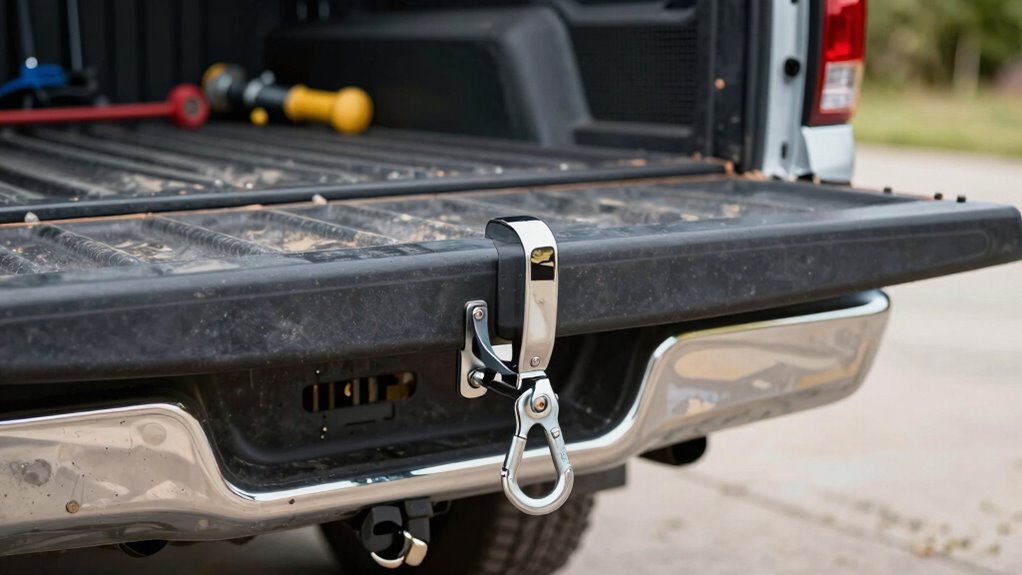
Have you ever wondered how pickup trucks effortlessly tow heavy loads or recreational gear? The secret lies in their trailer hitch systems—crucial components that enable safe and effective hauling. When considering a hitch, it’s essential to understand hitch safety. This means selecting the right hitch class for your truck and load, ensuring it’s rated for the weight you plan to tow. Overloading a hitch can lead to dangerous situations, including swaying, detachment, or damage to your vehicle. Regularly inspecting your hitch for wear, rust, or cracks is also necessary; a compromised hitch jeopardizes your safety and the safety of others on the road. Properly secured trailers and loads are equally important, so always double-check that all connections are tight and locks are engaged before hitting the road.
Getting your hitch installed correctly is just as critical as choosing the right one. Installation tips include guaranteeing that you follow the manufacturer’s instructions precisely, as improper installation can cause failure during towing. If you’re not comfortable doing it yourself, it’s worth consulting a professional or visiting a service shop specializing in trailer hitch installation. When installing, make sure you use the correct mounting hardware and that the hitch sits flush against the truck frame. Using a level during installation can help guarantee proper alignment, which contributes to safe towing. Also, pay attention to the weight distribution; some hitches require additional components like weight distribution hitches or sway control bars to optimize stability, especially when towing larger trailers. Additionally, understanding the regulatory requirements for trailer towing can help ensure compliance and safety on the road. Being aware of regional safety regulations can also help prevent violations and fines while towing. Knowing the proper installation procedures can prevent costly mistakes and enhance overall safety.
Proper installation with correct hardware and alignment ensures safe, reliable towing performance.
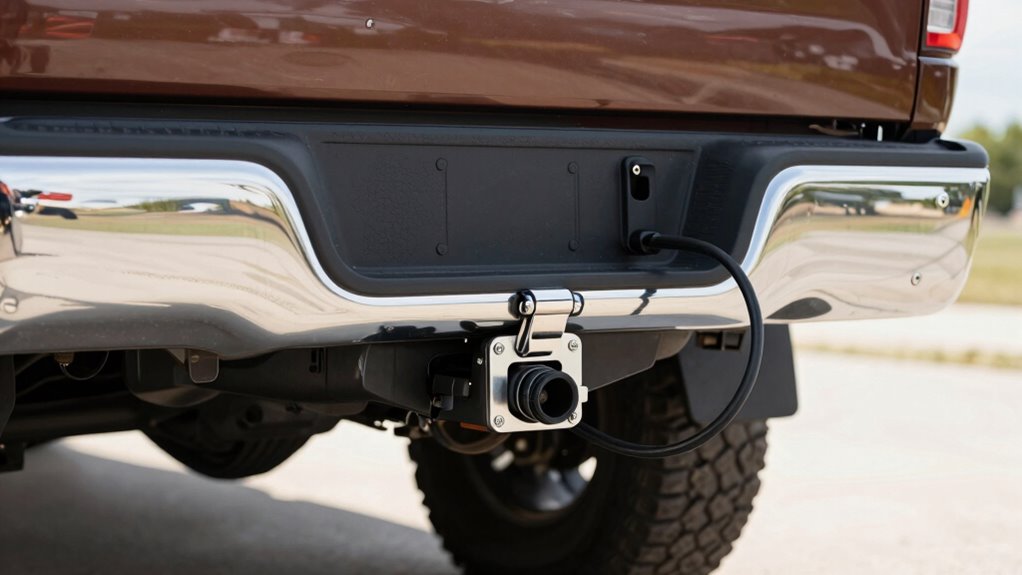
A key aspect of hitch safety is understanding the importance of hitch ratings to match the trailer’s weight and your truck’s capabilities. Once installed, the hitch system should seamlessly integrate with your pickup truck’s capabilities, providing a reliable connection between your vehicle and the trailer. Remember that your truck’s towing capacity isn’t unlimited, so always verify this before hooking up a trailer. Proper hitch safety practices extend beyond installation; always double-check the connection every time you tow, and ensure safety chains are securely attached. When attaching the trailer, verify that electrical connections for lighting and brakes are functioning properly. This not only keeps you compliant with road regulations but also enhances safety for everyone sharing the road.
In short, understanding hitch safety and following installation tips are fundamental to making your towing experience safe and smooth. A well-chosen, correctly installed hitch system transforms your pickup truck into a capable towing machine, giving you confidence whether you’re hauling a camper, boat, or utility trailer. With attention to detail, regular maintenance, and adherence to safety guidelines, you can enjoy the benefits of trailer hitch systems without worry.
Products Worth Considering

Milwaukee M18 FUEL 18V Lithium-Ion Brushless Cordless 1 in. Impact Wrench Extended Reach D-Handle Kit with Two 12.0 Ah Batteries

Chemical Guys 14-Piece Arsenal Builder Car Wash Kit with Foam Blaster

Milwaukee 2697-22 M18 18-Volt Lithium-Ion Cordless Hammer Drill/Impact Driver XC Combo Kit (2-Tool)
As an affiliate, we earn on qualifying purchases.
Frequently Asked Questions
How Do I Choose the Right Hitch Weight Capacity?
To choose the right hitch weight capacity, first consider your trailer’s gross weight and aim for a hitch capacity that exceeds it by at least 10-15%. During hitch installation, verify the system supports proper weight distribution for safety and stability. Always match your truck’s towing capacity with the hitch’s limits, and consult your vehicle manual if you’re unsure, to prevent overloading and ensure smooth towing.
Are There Any Compatibility Issues With Specific Truck Models?
Imagine you own a 2022 Ford F-150; compatibility issues can arise if its electric components interfere with certain hitch systems. Some models require specific weight distribution setups or have limitations on hitch types. Always check your truck’s manual for compatible hitch classes and verify your trailer’s weight aligns. You might need an adapter or specialized hitch to prevent electrical interference and guarantee safe towing, especially with advanced electronic systems.
What Maintenance Is Required for Trailer Hitch Systems?
You need to regularly inspect and maintain your trailer hitch system by applying hitch lubrication to moving parts, preventing rust and easing disconnection. Check wiring connections for corrosion or damage, guaranteeing safe electrical signals. Keep the hitch clean and free from debris, and tighten bolts as needed. Proper maintenance not only extends the life of your hitch but also ensures safe and reliable towing every time you hit the road.
Can I Install a Hitch System Myself or Need Professional Help?
Sure, you can DIY install a hitch system, but don’t be surprised if it’s more complicated than assembling furniture. While hitch upgrade options make it tempting to tackle yourself, proper installation is essential for safety and performance. If you’re confident with tools and instructions, go for it—just double-check the weight ratings. Otherwise, a professional installation guarantees everything’s secure, saving you headaches and potential accidents down the road.
What Safety Features Are Integrated Into Modern Hitch Systems?
Modern hitch systems prioritize safety with features like reinforced structures and secure locking mechanisms, ensuring your trailer weight stays safely attached. They meet strict safety standards to prevent accidents, even under heavy loads. You benefit from integrated safety features like sway control and backup sensors, which help manage trailer stability and visibility. Always check that your hitch system complies with current safety standards to keep you and your cargo secure during every trip.
Conclusion
Understanding trailer hitch systems helps you choose the right setup for your pickup truck, ensuring safe and efficient towing. While many believe that heavier-duty hitches always mean better performance, it’s crucial to evaluate your specific towing needs and vehicle capacity. The truth is, the right hitch isn’t just about strength — it’s about compatibility and proper installation. By investing in the correct system, you’ll enjoy peace of mind and reliable towing for years to come.