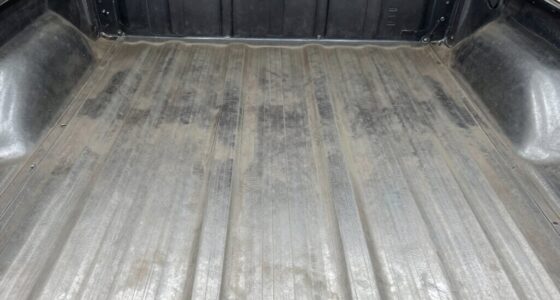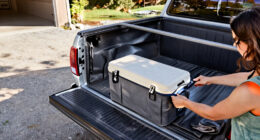

Truck beds are built with strong materials like steel or aluminum, designed to handle repeated stress from heavy loads. Reinforced features, such as ribs and thicker panels, help distribute weight evenly and prevent damage. Over time, exposure to stress can cause microscopic cracks, but regular inspection and maintenance can catch issues early. Properly designed and maintained, your truck bed can stay durable for years, and you’ll discover more about how to maximize its lifespan below.

Get business pricing on garage and car supplies
- Business-only prices and quantity discounts
- Tax-exempt purchasing
- Multiple users, one account, clear invoices
Key Takeaways
- Reinforced design features distribute loads evenly to prevent localized stress and material fatigue.
- High-strength materials like steel or aluminum resist bending and impact over repeated use.
- Regular inspections help detect early signs of fatigue, such as cracks or warping.
- Proper maintenance and avoiding overloading extend the truck bed’s service life.
- Engineering choices like reinforcement ribs enhance structural resilience against long-term stress.
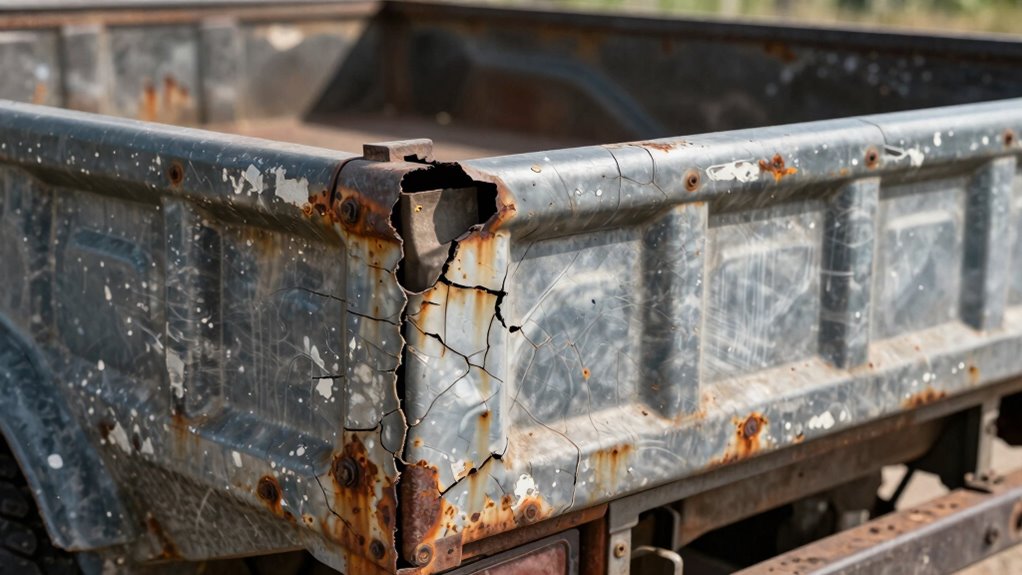
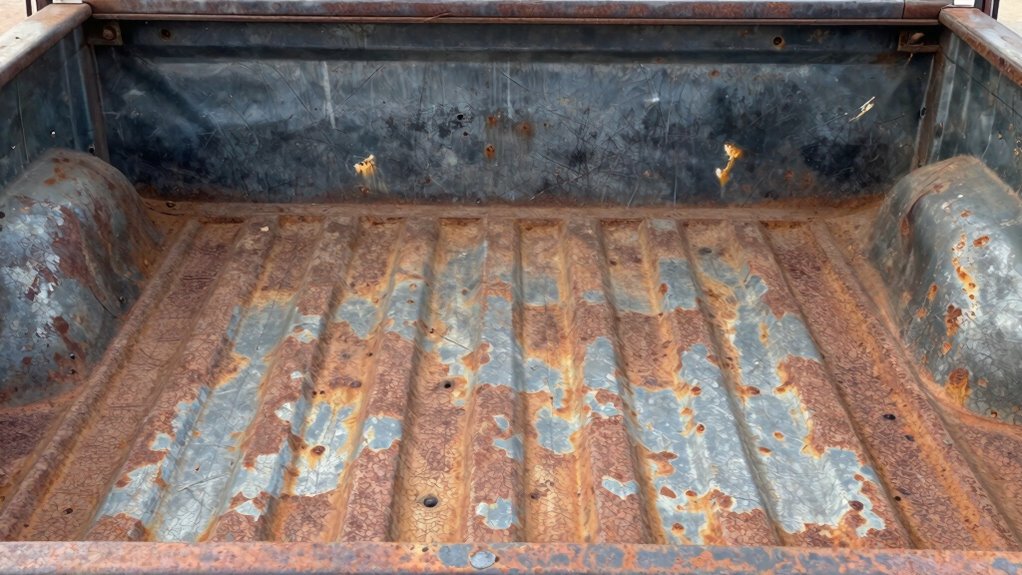
When you load and haul heavy items in your truck bed regularly, it’s easy to wonder how well it can withstand the constant stress over time. The answer lies in the design and materials used to build your truck bed, which are engineered to maintain durability despite repeated use. Over time, however, the metal experiences material fatigue—a phenomenon where repeated stress causes tiny cracks and weaknesses to develop, gradually compromising the integrity of the structure. This process is inevitable but can be slowed down considerably with proper maintenance and the right material choices.
Regular heavy loads can cause metal fatigue, but proper maintenance and quality materials help prolong your truck bed’s durability.
The key to a truck bed’s longevity is its structural resilience, which refers to its ability to absorb and distribute loads without deforming or failing. Most truck beds are constructed from steel or aluminum, both chosen for their strength-to-weight ratios. Steel, especially high-strength variants, offers excellent resistance to bending and impact, making it suitable for heavy-duty applications. Aluminum, on the other hand, provides corrosion resistance and lighter weight, but it requires careful engineering to ensure it can handle repeated stress without deforming. Regardless of the material, the design of the bed—including reinforcement ribs and crossmembers—plays a crucial role in enhancing its capacity to endure stress.
As you regularly load your truck bed, the repeated stresses can cause microscopic damage that accumulates over time. This damage, known as material fatigue, gradually weakens the metal’s internal structure, increasing the risk of cracks or even failure if not properly managed. Manufacturers understand this and often incorporate features like reinforced corners and thicker panels to bolster structural resilience. Regular inspections can help identify early signs of fatigue, such as small cracks or warping, allowing you to address issues before they escalate.
Ultimately, your truck bed’s ability to withstand ongoing stress depends on both the quality of the material and the engineering behind its construction. Proper maintenance, like avoiding overloading and promptly repairing any damage, helps preserve its structural resilience. While material fatigue is an unavoidable aspect of metal use, a well-designed, sturdy truck bed can serve you reliably for years, handling the demands of heavy hauling with strength and durability. By understanding how your truck bed responds to stress and taking proactive steps, you ensure it remains resilient and ready for whatever you throw into it.
As an affiliate, we earn on qualifying purchases.
Frequently Asked Questions
What Materials Are Best for Long-Term Durability?
For long-term durability, you should choose truck bed materials with excellent corrosion resistance and resistance to material fatigue. Steel, especially galvanized or stainless steel, offers strong resistance to rust and withstands stress without cracking. Aluminum is lightweight, corrosion-resistant, and less prone to fatigue. Both options guarantee your truck bed remains durable over years of heavy use, reducing maintenance and preventing damage from environmental factors and repeated stress.
How Does Weather Affect Truck Bed Stress?
Weather impacts your truck bed’s stress through rust formation and thermal expansion. Humid conditions promote rust, weakening the metal over time, while temperature changes cause thermal expansion, leading to material fatigue. You might notice warping or cracking in extreme weather. To protect your truck bed, regularly clean and apply protective coatings, and avoid exposing it to extreme temperatures for prolonged periods. This keeps it resilient against weather-induced stress.
Can Load Distribution Prevent Stress Damage?
Proper load distribution can prevent stress damage by ensuring load balance across your truck bed. For example, if you carry heavy tools on one side, it causes uneven stress, leading to structural fatigue. By evenly spreading weight, you reduce concentrated stress points, extending your truck bed’s lifespan. This proactive approach minimizes the risk of cracks or warping, keeping your truck in good condition longer and avoiding costly repairs.
How Often Should I Inspect My Truck Bed?
You should inspect your truck bed at least once every three to six months. During inspections, focus on rust prevention and look for any signs of damage or corrosion. Regular maintenance tips include cleaning debris, applying protective coatings, and checking for loose bolts. Consistent inspections help catch issues early, ensuring your truck bed remains durable and safe for heavy loads over time.
Are There Aftermarket Solutions to Reinforce Truck Beds?
Yes, you can find aftermarket solutions to reinforce your truck bed that are as sturdy as a fortress. Bed liner options like spray-on liners or drop-in liners offer added protection, while reinforcement techniques such as bed mats or custom steel reinforcements strengthen the structure. These upgrades help distribute stress evenly, preventing damage, and extending your truck bed’s lifespan, so you can haul heavy loads without worry.
As an affiliate, we earn on qualifying purchases.
Conclusion
Understanding how truck beds handle stress over time helps you appreciate their durability. Did you know that most truck beds are designed to withstand loads of up to 1,500 pounds without significant damage? This resilience is due to advanced materials and engineering, ensuring your truck can handle tough jobs day after day. By choosing the right bed and caring for it properly, you extend its lifespan and keep your work reliable. Trust in quality, and your truck will keep performing when it matters most.
As an affiliate, we earn on qualifying purchases.
As an affiliate, we earn on qualifying purchases.
Halloween Picks
halloween
As an affiliate, we earn on qualifying purchases.