Choosing the right truck bed material affects how well it resists dents, scratches, and rust over time, impacting your long-term costs. Steel offers durability but needs rust-proofing, while aluminum balances strength and lightness. Eco-friendly composites from recycled plastics are sustainable and often cheaper to maintain. Your choice influences cleanup, repairs, and how your truck handles harsh weather. Keep going to discover more about making the best long-term investment for your truck.

Get business pricing on garage and car supplies
- Business-only prices and quantity discounts
- Tax-exempt purchasing
- Multiple users, one account, clear invoices
Key Takeaways
- Material durability influences resistance to dents, scratches, warping, and impacts over time.
- Eco-friendly materials reduce environmental impact while maintaining long-term performance.
- Initial costs and ongoing maintenance vary, affecting total long-term expenses.
- Weather and corrosion resistance determine a truck bed’s lifespan in harsh environments.
- Proper material choice minimizes repairs, replacements, and preserves resale value.

Choosing the right material for your truck bed isn’t just about immediate appearance or cost—it’s about durability and long-term performance. When you’re selecting a material, it’s crucial to consider how it will hold up under daily use, exposure to the elements, and over time. Eco-friendly options are gaining popularity because they reduce environmental impact and often offer comparable durability to traditional materials. For example, composite materials made from recycled plastics or sustainably harvested wood alternatives provide a greener choice without sacrificing strength. These eco options can help you minimize your carbon footprint while still enjoying a resilient truck bed.
Eco-friendly truck bed options offer durable, sustainable choices that reduce environmental impact without sacrificing performance.
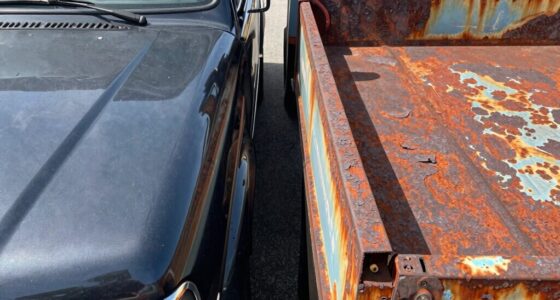
Cost comparison plays a significant role in your decision-making process. While some materials might seem more affordable upfront, they could lead to higher expenses down the road due to maintenance, repairs, or replacement. Steel beds, for instance, are highly durable and resistant to impacts, but they may require regular rust-proofing treatments, adding to long-term costs. On the other hand, aluminum beds are lighter and resistant to corrosion, which might save you money on maintenance, but they can be more expensive initially. Composite or plastic beds often come at a different price point—they might be more affordable initially and require less upkeep, but you’ll want to weigh their longevity against other options. Additionally, the performance of each material in resisting daily wear can vary based on manufacturing quality and environmental exposure.
Beyond the initial purchase price, think about how each material handles common wear and tear. If you’re hauling heavy loads regularly, you need a material that resists dents, scratches, and warping. Steel tends to excel here, but it’s heavier, which can affect fuel economy. Aluminum offers a good balance of strength and lightness, making it a solid choice for demanding use. Eco-friendly composites, if made from recycled materials, often hold up well under stress, but their performance depends on the quality of the manufacturing process. Additionally, understanding material performance in various conditions can help you choose a solution that lasts longer and performs better over time. Considering long-term durability as a key factor can guide you toward a material that maintains its integrity and appearance with less frequent repairs. Also, understanding how different materials respond to environmental factors like moisture or extreme temperatures can help prevent unexpected damage and extend your truck bed’s lifespan.
Incorporating materials with weather resistance properties can further enhance the longevity of your truck bed, especially in areas with harsh climates. Furthermore, selecting a material with proven corrosion resistance can significantly reduce maintenance needs and prolong your truck’s lifespan. Ultimately, your choice should balance environmental considerations, long-term durability, and the initial investment. Eco-friendly options can be a smart way to reduce your environmental impact without compromising performance. Comparing costs over the lifespan of your truck bed helps you avoid surprises and ensures you’re making a financially sound decision. Remember, investing in a quality, durable material upfront can save you money and headaches in the future, keeping your truck functional and looking good for years to come.
Frequently Asked Questions
How Does Climate Affect Truck Bed Material Durability?
Climate impact considerably influences your truck bed’s durability, as extreme weather causes faster material aging. In hot, sunny climates, UV rays weaken paint and composite materials, leading to cracking or fading. Cold climates increase the risk of rust and corrosion, especially if moisture gets trapped. You should consider these factors when choosing your truck bed material, ensuring it withstands your specific climate to stay durable and functional for years.
Can Bed Material Choice Impact Resale Value?
Your choice of truck bed material can markedly impact resale value. Durable materials like aluminum or composite tend to maintain their appearance longer, boosting the truck’s overall value. When you select high-quality, long-lasting materials, you’re investing in material longevity, which appeals to future buyers. This means your truck stays in better condition over time, making it easier to sell at a higher price later on.
Are There Eco-Friendly Truck Bed Materials Available?
Think of eco-friendly truck bed materials as planting a tree—you’re investing in the future. Yes, there are sustainable materials like recycled aluminum, bamboo, and composite plastics that reduce environmental impact. These eco-friendly alternatives not only help lower your carbon footprint but also stand up to wear. Choosing sustainable materials shows your commitment to protecting the planet, making your truck environmentally responsible and potentially boosting resale value.
How Does Material Choice Influence Weight Capacity?
Your truck’s material choice directly impacts its weight capacity through weight distribution and material strength. Lighter materials like aluminum reduce overall weight, allowing for more payload, but may compromise strength if not properly engineered. Heavy-duty steel offers superior strength, supporting heavier loads, but adds weight, reducing capacity. Balancing material strength with weight distribution helps optimize your truck’s ability to carry loads safely and efficiently.
What Maintenance Is Required for Different Bed Materials?
You’ll want to stay ahead with maintenance for your truck bed, especially considering bed material costs and installation considerations. For aluminum beds, wash regularly to prevent corrosion and inspect for dents. Wood beds need sealing and refinishing to prevent rot. Steel beds require rustproofing, while composite beds are low-maintenance but should be cleaned routinely. Regular upkeep guarantees longevity and preserves your investment, no matter which material you choose.
Conclusion
Choosing the right truck bed material isn’t just about looks; it impacts durability and resale value over time. Did you know that trucks with aluminum beds tend to last 30% longer than those with steel? That’s a significant difference that can save you money and hassle in the long run. So, when you’re selecting your truck, prioritize the material—your future self will thank you for making a smart, lasting choice.
Fall Picks
fall essentials
As an affiliate, we earn on qualifying purchases.