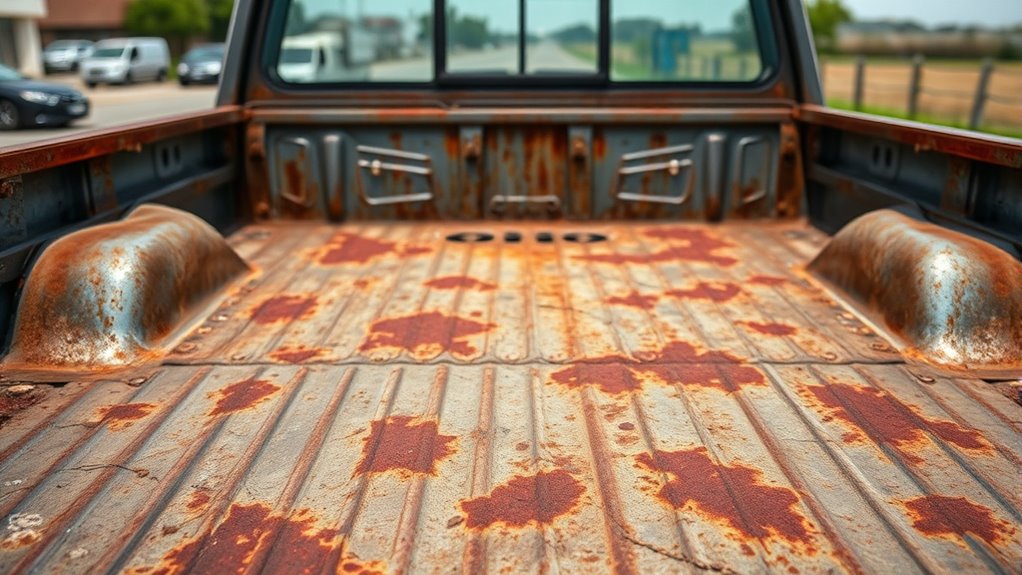

Your truck bed’s rusting speed depends on its materials, design, and where you use it. Aluminum, resin liners, and protective coatings resist rust better than steel, especially if seams and welds aren’t sealed well. Environmental factors like humidity, salt, and pollution can speed up corrosion. Proper installation and maintenance help prevent moisture buildup. If you want to know more about how design and location affect rust, keep exploring these key factors.
Key Takeaways
- Steel beds with exposed seams, welds, or damaged coatings are more vulnerable to moisture infiltration and rust.
- Aluminum and coated beds resist corrosion better, reducing rust formation regardless of environmental exposure.
- Humid, coastal, or polluted environments accelerate rust due to increased moisture, salt, and chemical exposure.
- Poor sealing, improper installation, or lack of drainage in liners trap water, promoting faster rusting.
- Exposure to road salts, industrial chemicals, and environmental pollutants intensifies corrosion in vulnerable areas.
Top picks for "some truck beds"
Open Amazon search results for this keyword.
As an affiliate, we earn on qualifying purchases.
Material Composition and Corrosion Resistance
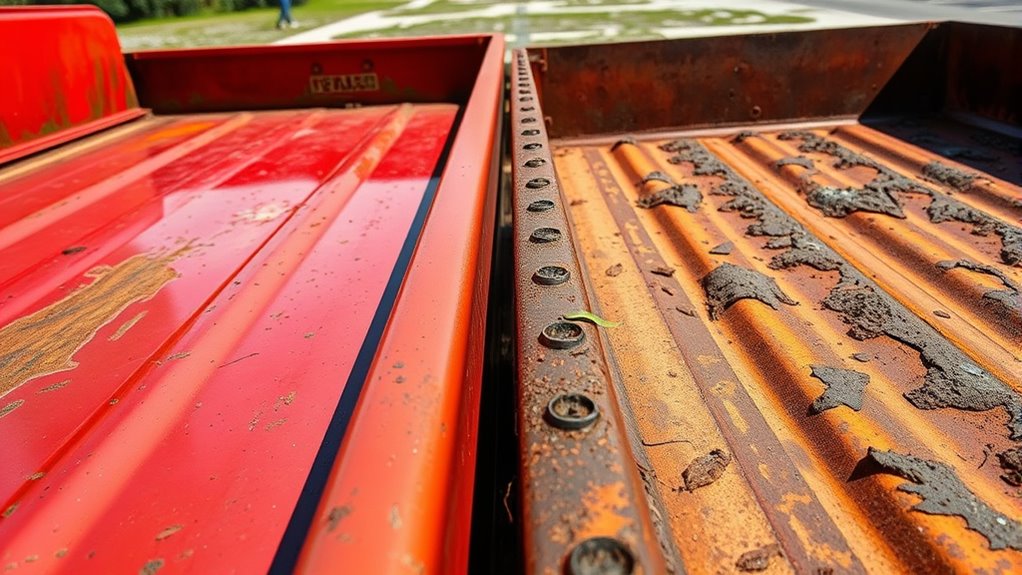
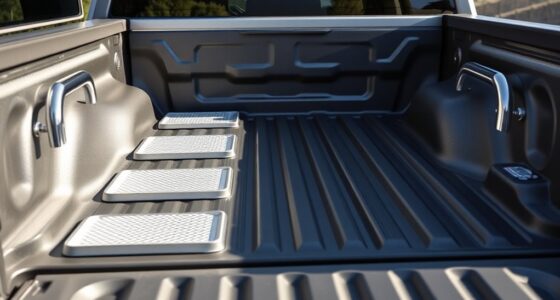
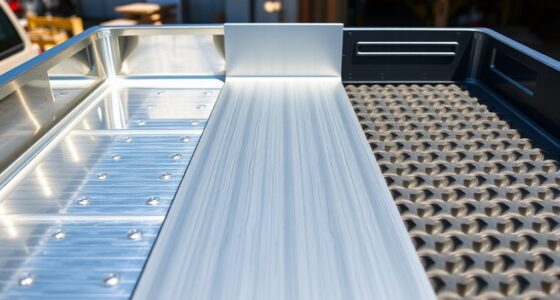
Material composition plays a crucial role in a truck bed’s resistance to rust. If your truck features an aluminum bed, you benefit from aluminum’s natural corrosion resistance, making rust unlikely. Resin-based liners also offer excellent protection since plastics resist oxidation better than metals. Ultra-high molecular weight polyethylene (UHMW-PE) provides a durable, rust-resistant barrier for bed liners. Polymer beds and spray-on liners have gained popularity because they prevent moisture infiltration and reduce corrosion risks. Conversely, steel beds are more prone to rust, especially if protective coatings wear off or if moisture gets trapped underneath liners. Choosing materials that inherently resist oxidation or applying protective coatings can considerably extend your truck’s lifespan. Proper material selection is key to minimizing rust and maintaining the truck’s structural integrity over time.
Impact of Bed Design and Construction Features
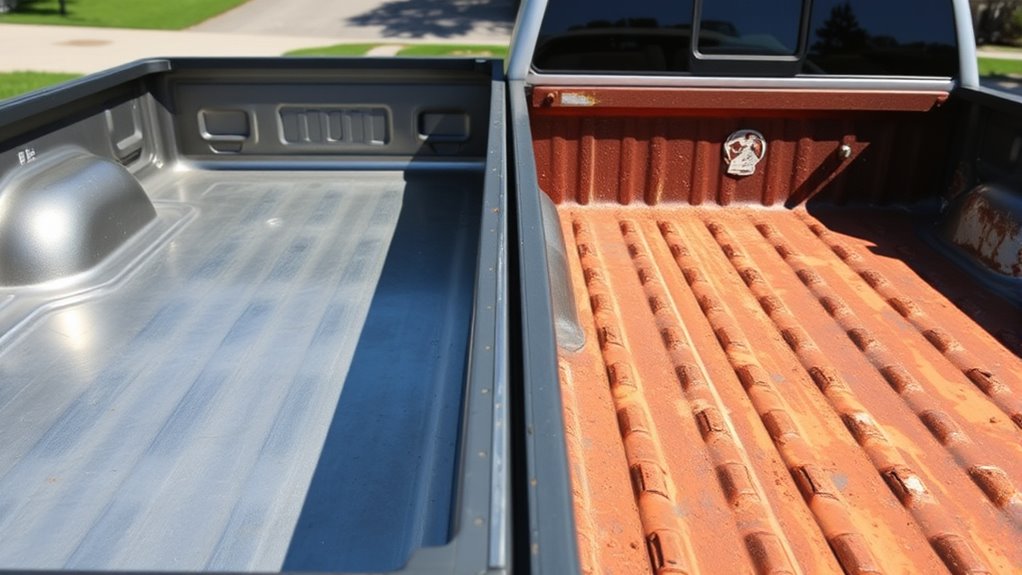
Your truck bed’s design plays a vital role in preventing rust, especially at seams and joints where water can collect. Choosing the right materials and coatings can substantially reduce corrosion risks by creating a barrier against moisture and chemicals. Proper construction techniques, like sealed seams and high-quality welds, are essential for minimizing vulnerable areas that lead to rust formation. Additionally, understanding material properties helps in selecting components that resist environmental damage over time.
Seam and Joint Vulnerability
Because seams and joints are vital to a truck bed’s structural integrity, they often become vulnerable points where water and debris can collect, leading to rust. Gaps or poorly sealed connections allow moisture to seep in, especially during rain or washing. These areas trap water, creating ideal conditions for oxidation. Welded joints can develop cracks or gaps over time if not properly maintained, further exposing metal to moisture. Improper sealing during manufacturing or repairs leaves pathways for water to infiltrate. Additionally, complex seam designs or inadequate sealing techniques can hinder drainage, causing water to pool. Regular inspections and professional sealing are essential to prevent rust from forming at these vulnerable points, preserving your truck bed’s lifespan and structural integrity.
Material and Coating Choices
The design and construction features of a truck bed play a crucial role in its susceptibility to rust. Your choice of materials and coatings directly impacts how well the bed resists corrosion. Steel beds are common but prone to rust unless treated with protective coatings like galvanization or paint. Aluminum beds naturally resist rust due to their corrosion-resistant properties, making them a durable alternative. Resin-based liners and UHMW-PE coatings offer excellent rust resistance, especially when used with proper installation. Polymer beds and spray liners provide added protection by creating a barrier against moisture and chemicals. Proper material selection and high-quality coatings help prevent moisture from reaching vulnerable metal surfaces, substantially reducing rust formation and extending your truck’s lifespan.
Effectiveness of Installation and Maintenance Practices
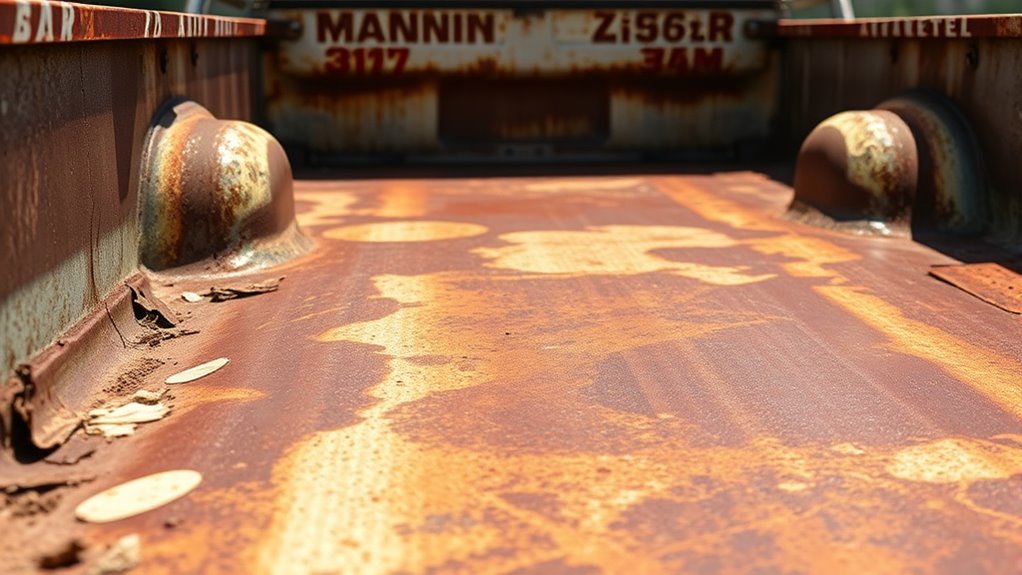
You need to guarantee proper sealing techniques during installation to prevent moisture from entering between the liner and bed. Regular cleaning routines help remove debris and moisture buildup that can lead to rust. Maintaining protective coatings on your truck bed is vital to extend its lifespan and resist corrosion effectively. Additionally, using appropriate protective coatings can provide an extra barrier against environmental factors that accelerate rust formation.
Proper Sealing Techniques
Proper sealing techniques are essential for preventing moisture from infiltrating truck beds and causing rust. When seals are correctly installed, they block water and debris from reaching vulnerable areas, extending your truck’s lifespan. To guarantee effective sealing, pay attention to these key practices:
- Use high-quality sealants designed for truck bed materials to ensure durability.
- Apply sealant evenly along seams, joints, and edges for complete coverage.
- Regularly inspect seals for cracks, gaps, or deterioration and replace as needed.
- Choose professional installation to guarantee precision and airtight sealing.
Regular Cleaning Routines
Regular cleaning routines play a vital role in maintaining the integrity of your truck bed and preventing rust. You should wash your truck regularly, especially after exposure to dirt, salt, or chemicals, to remove moisture and debris that trap water against the metal. Focus on cleaning seams, joints, and underneath bed covers where moisture can accumulate unnoticed. Use a high-pressure hose or brush to dislodge stubborn dirt and make sure no residue remains. After cleaning, dry the bed thoroughly to eliminate lingering moisture. Applying a protective coating or rust inhibitor after cleaning adds an extra layer of defense. Consistent maintenance prevents the buildup of corrosive materials and keeps your truck bed dry and protected, considerably reducing rust formation over time. Additionally, understanding metal composition can help you choose more durable materials that resist rust better in different environments.
Maintenance of Protective Coatings
The effectiveness of protective coatings on truck beds largely depends on both how well they’re applied and how consistently they’re maintained. Proper installation ensures a tight seal that prevents moisture from seeping in, while regular upkeep keeps existing coatings intact. Neglecting maintenance can lead to coating deterioration, exposing metal surfaces to rust. To maximize protection, you should:
- Inspect coatings regularly for chips or cracks
- Clean the surface thoroughly before reapplying protective layers
- Keep drainage points clear to avoid water pooling
- Touch up damaged areas immediately to prevent corrosion
- Consider using Free Floating techniques to reduce water retention and enhance coating longevity.
Influence of Climate and Environmental Exposure

Climate and environmental exposure play a significant role in how quickly rust develops on truck beds. In humid regions with frequent rain, moisture can settle on surfaces and seep into seams or under liners, accelerating corrosion. If you operate in coastal areas, salt air intensifies rust formation by promoting oxidation. Cold climates with freeze-thaw cycles cause moisture to expand and contract, stressing protective coatings and exposing metal. Additionally, exposure to dew and fog increases moisture contact, especially overnight. Without proper drainage or protective coatings, these conditions create ideal environments for rust to thrive. Environmental factors like pollution and airborne chemicals also settle on surfaces, further speeding up corrosion. Your truck’s exposure level directly impacts how fast rust appears, regardless of the bed’s material or protective measures. Proper maintenance and protective coatings can significantly slow down the rusting process in these harsh conditions.
Role of Road Salt and Chemical Exposure
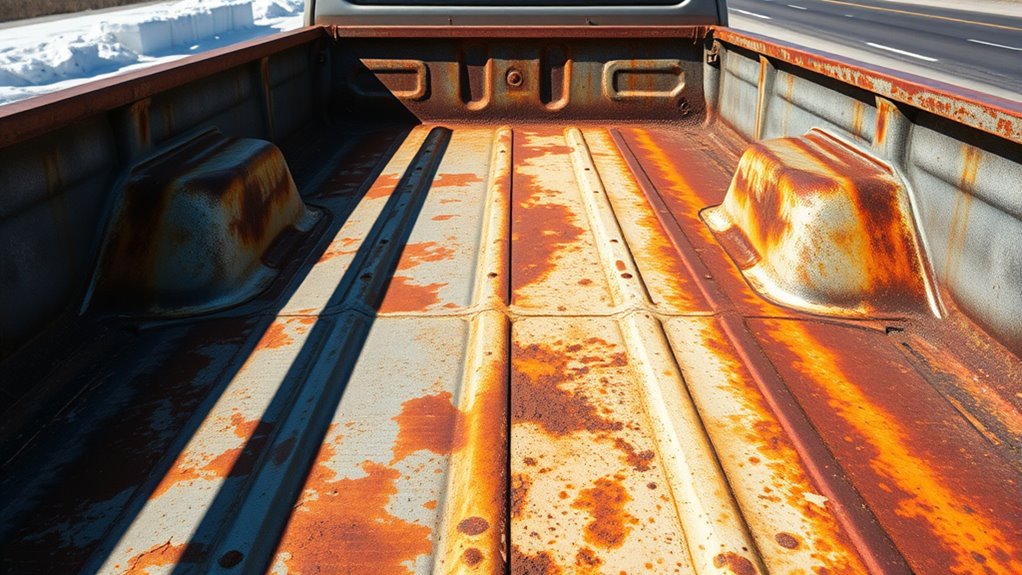
Road salt and chemical exposure considerably accelerate rust formation on truck beds by introducing corrosive substances that attack metal surfaces. When you drive through winter conditions or near industrial areas, these chemicals settle on your truck, promoting oxidation. The salt and chemicals seep into seams, joints, and welds, causing rapid deterioration. They also cling to panels, especially in hard-to-clean spots, creating concentrated corrosion zones. Over time, this exposure weakens the metal, leading to holes and structural failure. Regularly washing your truck, especially after winter driving, helps remove these corrosive agents. Applying protective coatings and inspecting vulnerable areas can further slow rust development. Being aware of chemical exposure’s impact helps you take proactive steps to preserve your truck’s lifespan and structural integrity. Proper maintenance and understanding of metal corrosion factors can significantly extend the life of your vehicle.
Vulnerability of Seams, Joints, and Welds
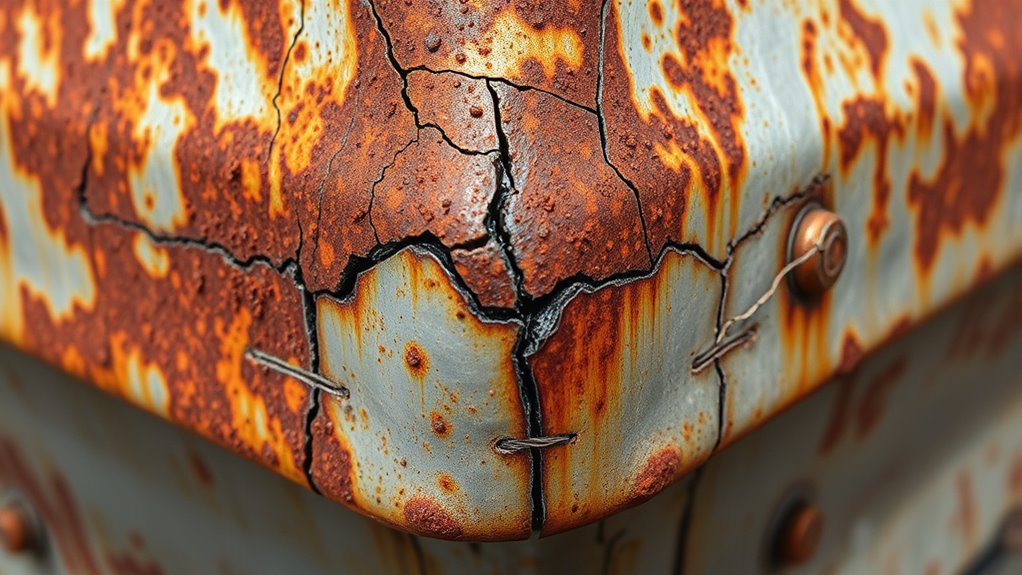
Seams, joints, and welds in truck beds are common entry points for moisture and contaminants, increasing the risk of rust formation. Water can seep into these areas through gaps or improper seals, trapping moisture inside. Over time, this trapped water promotes oxidation, especially where protective coatings are thin or absent. Welded connections, if not properly sealed or maintained, become hotspots for corrosion as salt and dirt accumulate. Poorly executed welds or compromised joints allow rust to spread from these vulnerable spots into the metal structure. Regular inspection and maintenance are vital to catch early signs of corrosion. Using professional sealing techniques during installation and repairing damaged welds promptly can considerably reduce rust risks around seams and joints.
Limitations of Drop-In Bed Liners
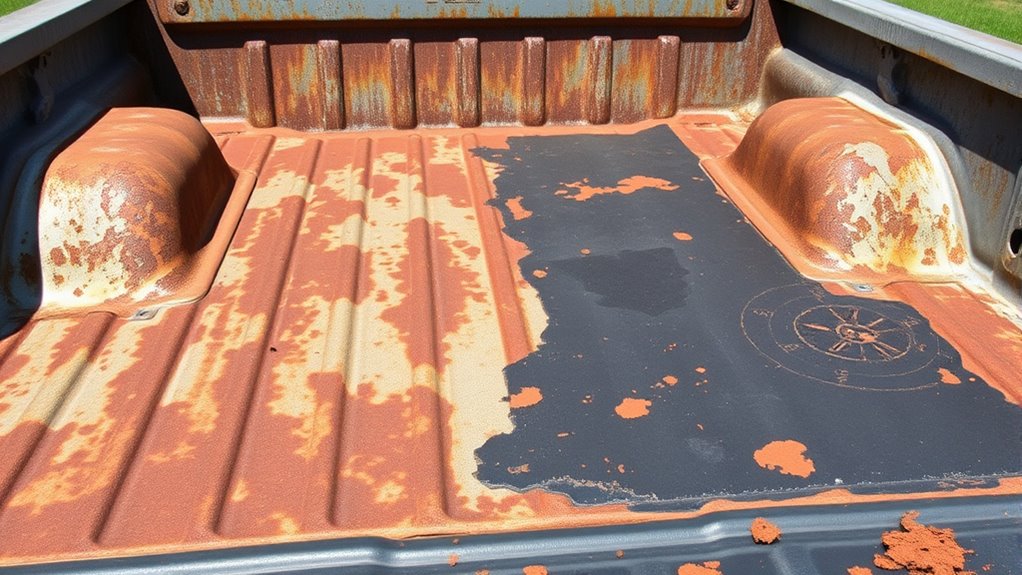
Drop-in bed liners often seem like a convenient solution, but their design inherently limits their ability to prevent rust. They don’t form a perfect seal, allowing moisture to become trapped between the liner and the truck bed surface. This moisture creates a breeding ground for rust, especially if debris accumulates underneath. Improper installation can leave gaps that circulate air and moisture, accelerating corrosion. Additionally, many drop-in liners lack drainage channels, so water can puddle and sit for extended periods. Over time, this trapped moisture interacts with the metal, leading to oxidation. Manufacturers are shifting toward polymer and spray-on liners because they offer better protection against moisture and rust. However, if you stick with drop-ins, regular maintenance and proper installation are essential to minimize rust risks. Incorporating connected fitness technology in your routine can help you stay proactive about maintenance and long-term care.
Advantages of Modern Protective Materials
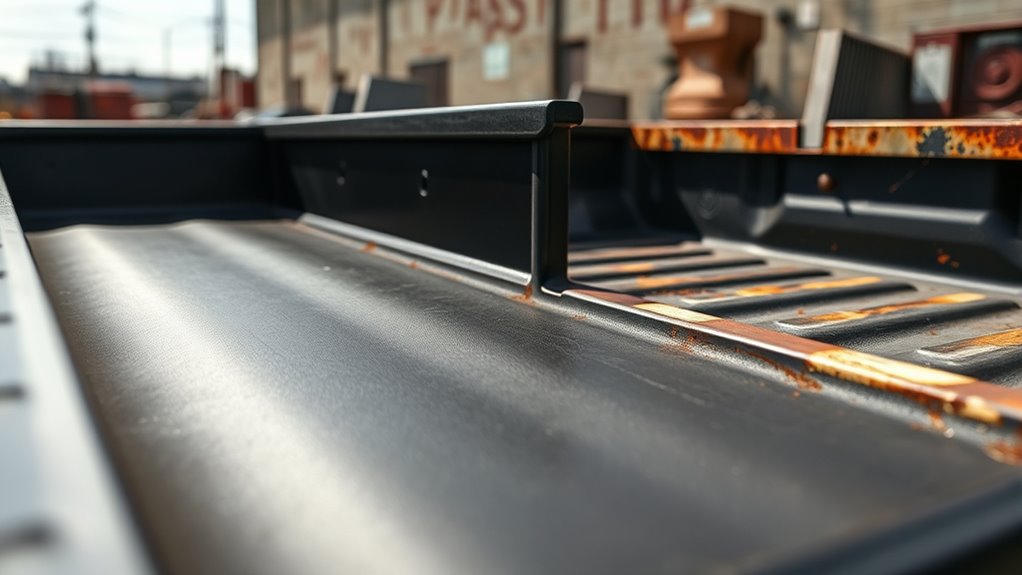
Modern protective materials offer significant advantages over traditional steel beds and basic liners by providing superior corrosion resistance. Aluminum beds naturally resist rust, eliminating the risk altogether, while resin-based liners and UHMW-PE materials are less susceptible to oxidation. Polymer beds and spray-on liners create seamless, durable barriers that prevent moisture and debris from contacting metal surfaces. These modern materials also withstand chemical exposure from road salts and other corrosive agents more effectively than steel. Unlike traditional steel beds, which require frequent maintenance, these advanced options reduce rust formation and extend the lifespan of your truck. Installation with high-quality sealing techniques ensures that moisture cannot penetrate, making these materials a reliable solution for long-term rust prevention. Additionally, understanding curiosity about material properties can help in selecting the most effective protection for your truck bed.
Location-Specific Factors Affecting Rust Formation

Your truck’s location plays a crucial role in how quickly rust develops on the bed. If you park near coastal areas, salt air accelerates corrosion by increasing moisture and chemical exposure. Urban environments with high pollution levels introduce chemicals that settle on your truck, promoting rust. Areas prone to heavy snowfall expose your vehicle to road salt and moisture, which trap in seams and joints. Additionally, regions with high humidity create a persistent damp environment that speeds up oxidation. Proper piercing care and maintenance can also help prevent rust from forming on exposed metal parts of the truck.
- Coastal locations with salty air heighten corrosion risks
- Urban zones with pollution deposit harmful chemicals
- Cold climates with frequent snow increase salt exposure
- High humidity levels keep moisture present longer, accelerating rust development
Frequently Asked Questions
How Does the Quality of Installation Affect Rust Prevention?
The quality of installation directly impacts rust prevention by ensuring proper sealing and drainage. When done professionally, it prevents moisture from seeping between liners and the metal bed, reducing rust risks. Poor installation, however, leaves gaps or air pockets that trap water and debris, accelerating corrosion. Regular inspections and maintenance of the seals further help prevent rust, extending your truck’s lifespan and keeping it in better condition longer.
Can Regular Maintenance Fully Prevent Rust in Truck Beds?
Regular maintenance substantially reduces rust risk, but it can’t fully prevent it. Did you know that neglecting routine cleaning can cut a truck’s lifespan in half? You need to wash away salt, debris, and moisture regularly, especially after winter. Applying protective coatings and inspecting seams also help. However, environmental factors like road salt and humidity still pose ongoing threats, so consistent upkeep is essential but not foolproof.
What Environmental Conditions Accelerate Rust Formation Most?
Environmental conditions like exposure to road salt, moisture, and chemicals accelerate rust formation most. When you drive in winter or near salted roads, salt and moisture settle on your truck, especially around seams and joints, trapping water and chemicals. Humid climates and frequent rain also promote oxidation. If you don’t regularly wash and protect your truck, these elements will speed up corrosion, shortening your bed’s lifespan considerably.
Do Different Truck Bed Materials Require Unique Protective Coatings?
Back in the day, folks knew steel needed extra care. Today, you should match your truck bed material with the right protective coating. Steel beds benefit from rust-resistant paints and sealants, while aluminum needs corrosion-inhibiting sprays. Plastic or resin beds often require minimal coatings, but applying a protective layer still helps. For best results, always choose coatings designed specifically for your bed’s material to prevent rust and prolong lifespan.
How Do Design Flaws in Bed Construction Increase Rust Risk?
Design flaws in bed construction increase rust risk by creating areas where moisture can easily accumulate, like seams, joints, and poorly sealed connections. When these spots trap water and debris, they promote oxidation. Gaps or improper sealing during installation allow water to seep in, accelerating corrosion. Regular inspection and proper sealing are essential to prevent moisture buildup and reduce rust formation caused by these design vulnerabilities.
Conclusion
Just like a sponge soaking up water, your truck bed’s lifespan depends on how well it’s protected. By understanding material choices, design features, and environmental factors, you can keep rust at bay. Regular maintenance and smart upgrades act like a shield, prolonging your truck’s life. Don’t wait for corrosion to take hold—think of your truck as a valuable tool that needs constant care to stay strong and rust-free for years to come.