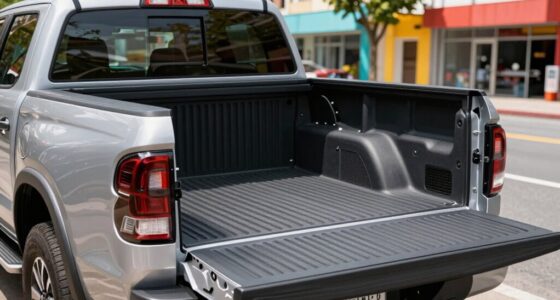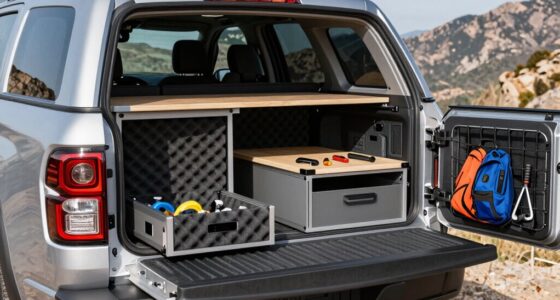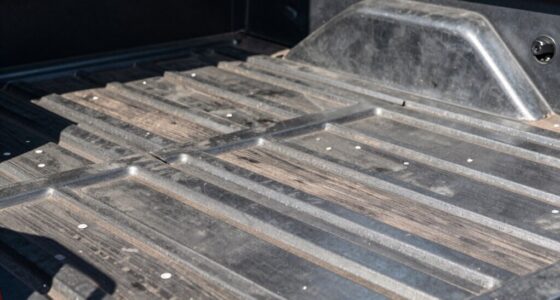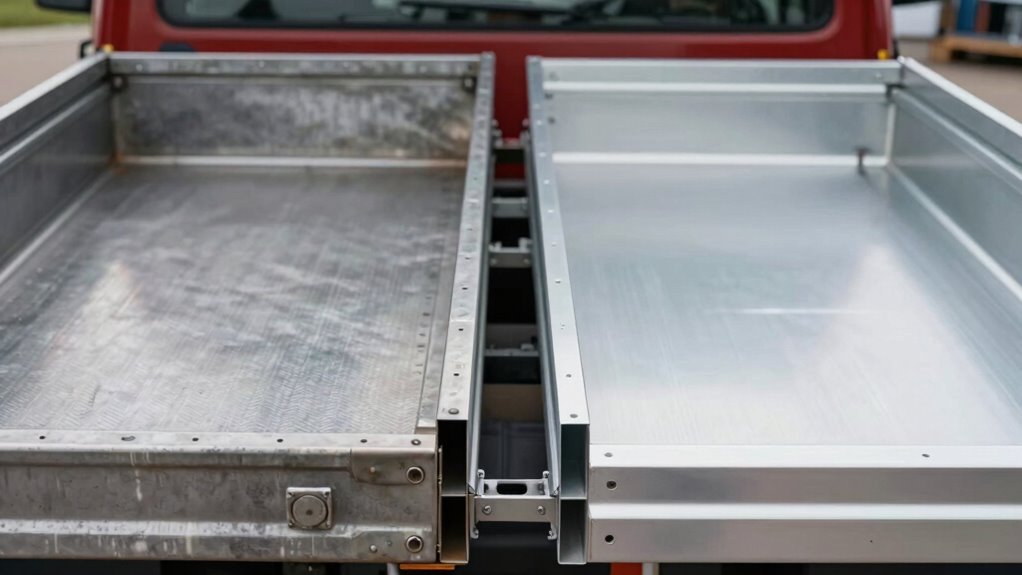

When choosing between steel and aluminum truck beds, consider your priorities. Steel offers unmatched strength, durability, and customization options, making it ideal for heavy-duty work and rough conditions. Aluminum is lighter, resistant to corrosion, and more eco-friendly, which benefits performance and maintenance. However, it’s softer and more prone to dents. Knowing your needs for strength, environment, and convenience helps you decide. Keep exploring to discover which material suits you best.

Get business pricing on garage and car supplies
- Business-only prices and quantity discounts
- Tax-exempt purchasing
- Multiple users, one account, clear invoices
Key Takeaways
- Steel beds are stronger and more durable for heavy loads, but they are heavier and prone to rust without proper coating.
- Aluminum beds are lighter, improving fuel efficiency and handling, but are more susceptible to dents and scratches.
- Steel offers greater customization options through welding and modifications, while aluminum is less flexible due to its softness.
- Aluminum is more environmentally friendly with lower energy use during production and natural corrosion resistance.
- Steel beds tend to last longer under extreme conditions when properly maintained, whereas aluminum requires less maintenance overall.
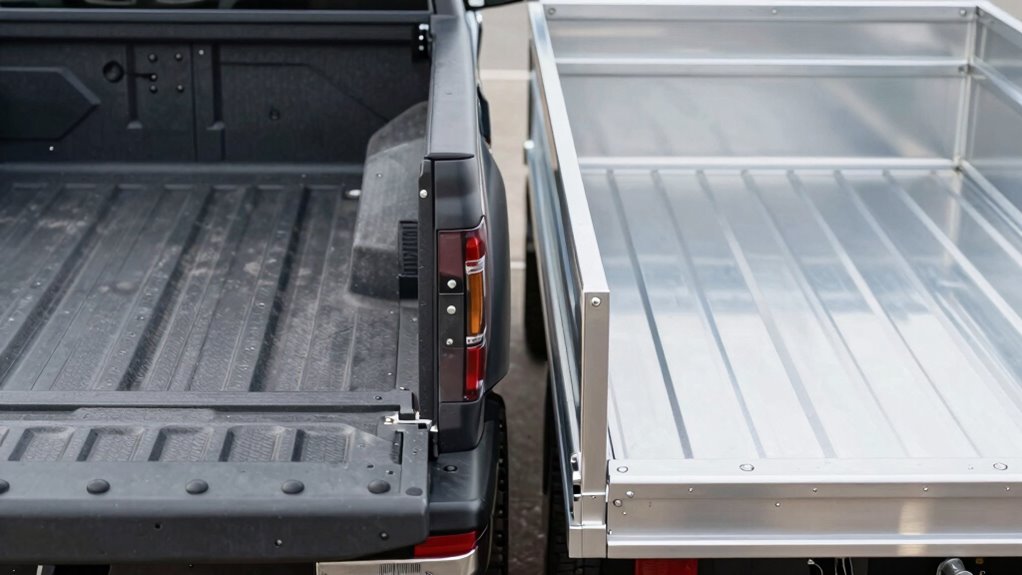
When choosing a truck bed, understanding the differences between steel and aluminum options is essential. Each material offers unique benefits and drawbacks, so your decision depends on your specific needs and priorities. Steel truck beds are known for their strength and durability. They can handle heavy loads and rough conditions without much trouble, making them ideal if you frequently carry heavy or abrasive materials. On the other hand, aluminum truck beds are lighter, which can improve your vehicle’s fuel efficiency and handling. Their lighter weight also means easier installation and less strain on your truck’s suspension. Additionally, the strength of steel makes it more suitable for demanding work environments where maximum load capacity is required.
Customization options are another important factor to consider. Steel beds often provide more flexibility for modifications and accessories. You can weld additional brackets, mounts, or reinforcements directly onto the steel surface, giving you more control over how your truck is customized. Aluminum beds, while increasingly popular, usually have fewer customization options due to their softer and more delicate nature. However, aluminum is resistant to rust and corrosion, making it easier to maintain and less likely to require frequent repairs. This advantage can be especially valuable if you work in environments with high moisture or salt exposure. Additionally, recyclability is a significant benefit, as both materials can be repurposed, but aluminum’s lower energy consumption during production often makes it the more environmentally friendly choice.
Environmental impact plays a significant role in choosing between these materials. Steel production consumes more energy and results in higher carbon emissions compared to aluminum. However, steel is highly recyclable, and scrap steel can be re-melted and repurposed repeatedly without losing strength or quality. Aluminum is also highly recyclable and requires less energy to produce initially, which makes it more environmentally friendly over its lifecycle. If reducing your carbon footprint is a priority, aluminum’s lower energy requirements during manufacturing and its recyclability make it an appealing option. Additionally, both materials are recyclable, but aluminum’s lower energy consumption during production often gives it an edge environmentally. Moreover, the durability of steel can sometimes offset its higher energy footprint if longevity and load capacity are your primary concerns.
In terms of longevity, steel beds tend to last longer under extreme conditions, but they are prone to rust if not properly coated or maintained. New coating technologies have significantly improved steel’s resistance to corrosion, extending its lifespan in harsh environments. Aluminum, being naturally resistant to corrosion, doesn’t require as much upkeep and can withstand harsh weather without deteriorating. When it comes to overall weight, aluminum is significantly lighter, which benefits your vehicle’s performance and fuel economy. However, this lightweight nature can also mean that aluminum beds are more prone to dents and scratches.
Ultimately, your choice depends on what matters most to you—whether it’s strength, customization, environmental concerns, or maintenance. Steel beds excel in durability and customization flexibility, but aluminum offers lighter weight and better corrosion resistance. By weighing these factors carefully, you can select the truck bed that best fits your work demands and lifestyle.
As an affiliate, we earn on qualifying purchases.
Frequently Asked Questions
How Do Steel and Aluminum Truck Beds Impact Fuel Efficiency?
Steel truck beds tend to decrease fuel efficiency more than aluminum ones because they’re heavier, impacting weight savings. Aluminum, being lighter, improves fuel economy since it reduces the overall weight you carry. While steel offers greater material strength, aluminum’s lighter weight enhances fuel efficiency, especially if you prioritize saving on fuel. So, consider your needs: if weight savings matter most, aluminum might be the better choice for better fuel economy.
Are Steel or Aluminum Beds More Resistant to Corrosion?
Think of aluminum as a knight in shining armor—more resistant to corrosion, it withstands the elements better than steel. Steel, however, offers unmatched material durability but is more prone to rust and corrosion if not properly protected. If corrosion resistance is your priority, aluminum beds are your best bet. They keep their shine longer and require less maintenance, making them ideal for harsh environments.
What Is the Typical Lifespan of Steel Versus Aluminum Truck Beds?
You’ll find steel truck beds generally last longer due to higher durability, often exceeding 20 years with proper maintenance. Aluminum beds, while lighter and easier to handle, typically have a shorter lifespan of around 10-15 years because they’re less resistant to dents and corrosion. Your choice impacts weight impacts too; steel adds more weight, which can reduce fuel efficiency, whereas aluminum’s lightweight design helps improve mileage.
Can You Modify or Customize Steel or Aluminum Truck Beds Easily?
Oh, absolutely, customizing your truck bed is a breeze—if you enjoy a good challenge! Steel beds are like a blank canvas for welders, while aluminum ones are more suited for lightweight mods. Modification ease varies, but if you’re handy, you’ll find plenty of customization options. Just expect some sweat, sparks, and maybe a few swear words along the way. It’s not as simple as snapping together Legos, but hey, that’s part of the fun!
How Do Maintenance Costs Compare Between Steel and Aluminum Truck Beds?
You’ll find that maintenance costs differ between steel and aluminum truck beds. Steel beds usually have higher repair considerations because they’re prone to rust, which can lead to costly corrosion treatments over time. Aluminum beds, on the other hand, tend to have lower long-term maintenance costs because they’re resistant to rust and corrosion. However, initial cost implications might be higher for aluminum, but it often pays off with lower upkeep.
As an affiliate, we earn on qualifying purchases.
Conclusion
Choosing between steel and aluminum truck beds is like weighing strength against lightness. Steel offers unmatched durability, ready to handle heavy-duty tasks, but it comes with added weight and susceptibility to rust. Aluminum, on the other hand, is lightweight and resistant to corrosion, making it easier to handle and maintain. Your choice hinges on whether you prioritize rugged toughness or ease of use—each material has its strengths, just like the work you do.
As an affiliate, we earn on qualifying purchases.
As an affiliate, we earn on qualifying purchases.
Halloween Picks
halloween
As an affiliate, we earn on qualifying purchases.