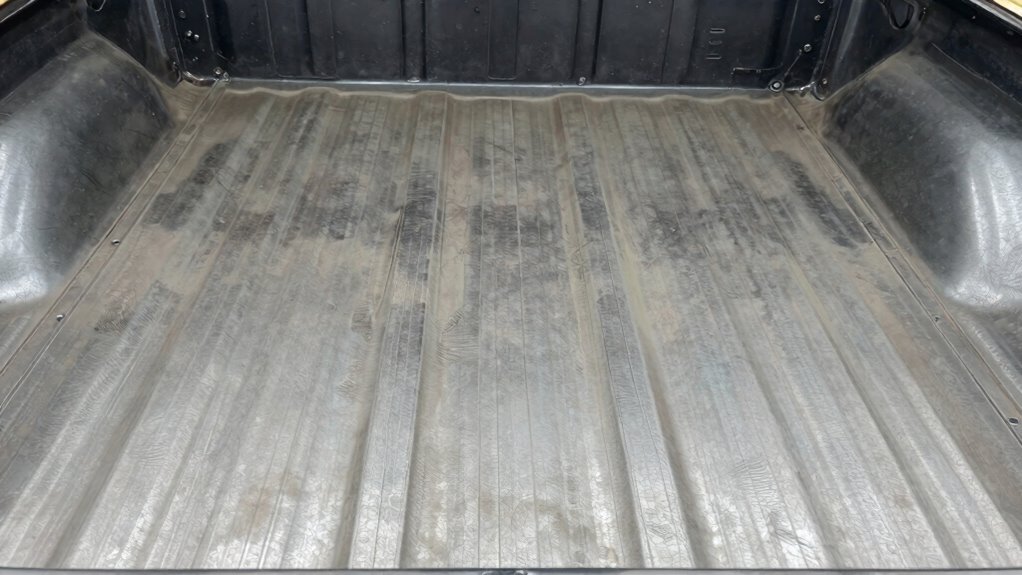

To tell if a truck bed was damaged or repaired, look for mismatched paint shades or finishes, which may indicate repainting. Check for uneven panel gaps or misaligned areas, suggesting previous repairs. Inspect welds for irregular lines, rough patches, or signs of grinding and sanding. Feel along seams for bumps or inconsistencies, and look underneath for hidden damage or recent welding. If you want to uncover all the clues, there’s more to take into account.

Get garage and car supplies delivered free — and shop member deals
- Fast, free delivery on millions of items
- Access to Prime Big Deal Days deals on October 6–7
- Prime Video, Amazon Music and more included
Key Takeaways
- Look for mismatched paint shades, overspray, or inconsistent coloration indicating repainting or touch-ups.
- Inspect welds and seams for irregular lines, rough patches, or signs of grinding and sanding.
- Check panel gaps for misalignment or uneven seams suggesting past repairs or panel replacement.
- Identify overly smooth or pristine welds and patches that may conceal previous damage.
- Examine underneath the truck bed for fresh welds, patches, or signs of recent bodywork.
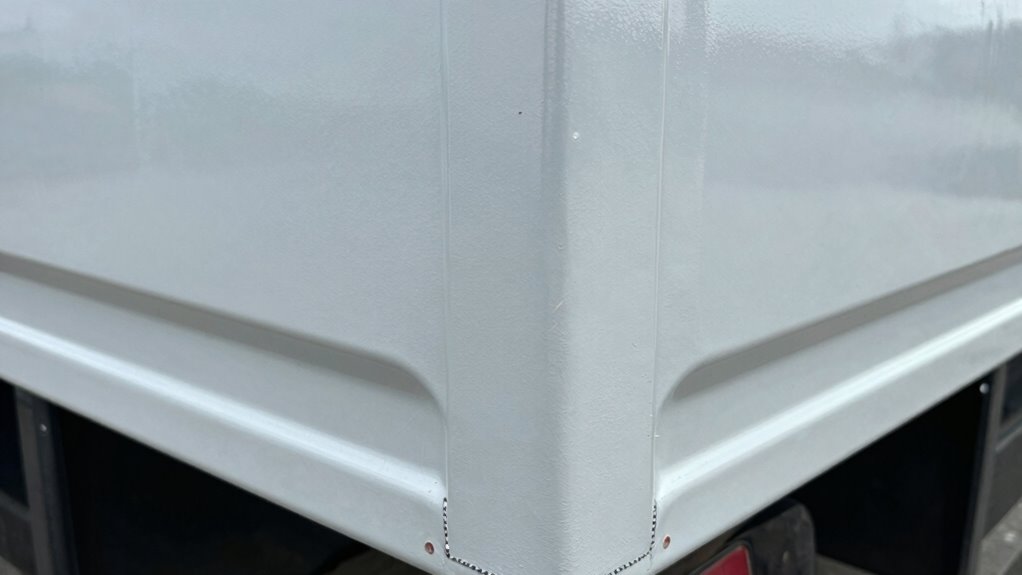
If you’re considering buying a used truck, it’s important to be able to spot signs of previous damage or repairs in the truck bed. One of the first things to check is the paint. Look closely for areas where the paint doesn’t quite match the rest of the truck. Sometimes, a repaired section might have a different shade or finish, especially if the paint wasn’t perfectly blended. Keep an eye out for overspray or paint that looks newer or glossier than surrounding areas. These inconsistencies can indicate touch-ups or repainting after repairs. If you notice the color doesn’t match seamlessly, it’s a sign that the truck bed might have been repainted, possibly after damage.
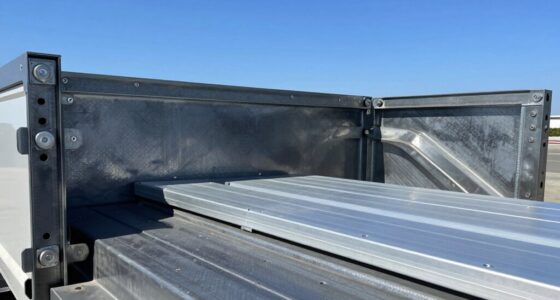
Next, examine the weld marks along the seams of the truck bed. Weld marks are often visible if the bed has been welded back together after damage. Look for uneven or irregular weld lines, which might suggest a repair. Fresh welds can sometimes appear shinier or have a different texture compared to original factory welds. Run your fingers gently along the seams—if you feel rough patches or bumps where the welds are, that’s another sign that the bed has been altered. Be cautious of welds that look too pristine or overly uniform, as they could have been artificially smoothed or filled. Additionally, understanding bodywork techniques can help you better recognize signs of repair work.
Check for uneven, shiny, or rough weld lines to spot past repairs or modifications on the truck bed.
It’s also smart to check the overall alignment of the truck bed. If panels don’t line up correctly or there are gaps and uneven seams, these might be signs of past repairs. Sometimes damaged areas are pushed back into shape and then repainted, but misalignment can reveal the bed’s true condition. When inspecting weld marks, look for signs of grinding or sanding around weld lines, which could indicate attempts to smooth out repairs. This process can sometimes remove original paint, making mismatched patches more noticeable. Additionally, paint matching can be an indicator of whether the bed has been repainted after repairs.
Finally, take your time inspecting the entire truck bed, including underneath if possible. Hidden damage or repairs might not be immediately visible from the top. Lift or crawl underneath if you can, and check for fresh welds or patches on the underside of the bed. Combining your observations of paint matching and weld marks will give you a clearer picture of whether the truck bed has a history of damage or repairs. Being thorough in your inspection helps ensure you’re making a smart, informed purchase.
As an affiliate, we earn on qualifying purchases.
Frequently Asked Questions
Can a Truck Bed Be Repaired Multiple Times Without Detection?
Yes, a truck bed can be repaired multiple times without detection if done carefully. Skilled technicians can conceal paint inconsistencies and weld marks, making repairs less noticeable. However, repeated fixes may lead to subtle signs like uneven surfaces or mismatched paint, which a keen eye can detect. Ultimately, quality repairs reduce chances of detection, but frequent repairs might raise suspicions upon close inspection.
Do Aftermarket Truck Beds Have Different Signs of Damage?
You might think aftermarket truck beds hide damage, but they can show signs of repairs or wear. Look for uneven welding, mismatched paint, or inconsistent panel gaps—these can indicate previous damage or aftermarket modifications. Be cautious of concealed corrosion, which might not be visible initially but can cause issues over time. Always inspect thoroughly and ask for maintenance records to verify you’re aware of any prior repairs or modifications.
How Do Weather Conditions Affect the Visibility of Repairs?
Weather conditions can considerably impact your ability to spot repairs. Rain, snow, or humidity cause visibility alteration by obscuring surface details or creating reflections that hide imperfections. Extreme weather might also cause new damage or reveal underlying issues, making repairs more noticeable over time. To get an accurate assessment, examine the truck bed in good lighting and on a clear day, ensuring weather impact doesn’t obscure signs of previous damage or repairs.
Are There Specific Tools to Detect Hidden Repairs?
Think of hidden repairs as a secret beneath the surface, waiting to be uncovered. You can use tools like paint matching kits to reveal inconsistencies in color that suggest repairs. Weld inspection tools, such as magnifying glasses or ultrasonic testers, help detect weak spots or irregularities in the welds. These tools act like a detective’s magnifying glass, illuminating concealed damage and guiding you to the truth beneath the paint and metal.
Can Minor Dents Indicate Previous Structural Damage?
Yes, minor dents can indicate previous structural damage. Look for surface irregularities like uneven dents or paint inconsistencies, which might suggest repair work. If the dent’s shape seems unusual or the paint doesn’t match perfectly, it could be a sign of past damage. Pay close attention to these details, as they often reveal underlying issues that aren’t immediately visible, helping you assess the truck’s true condition.
As an affiliate, we earn on qualifying purchases.
Conclusion
By paying close attention to the subtle whispers of the truck bed—uneven paint, irregular welds, or mismatched textures—you become a detective uncovering stories of past battles. These signs act as breadcrumbs, guiding you through the history etched into the metal’s surface. Trust your keen eye and instinct, for in the domain of trucks, the truth often lies beneath the surface, waiting to reveal itself like a hidden treasure buried beneath layers of time.
As an affiliate, we earn on qualifying purchases.
As an affiliate, we earn on qualifying purchases.
Fall Picks
fall essentials
As an affiliate, we earn on qualifying purchases.