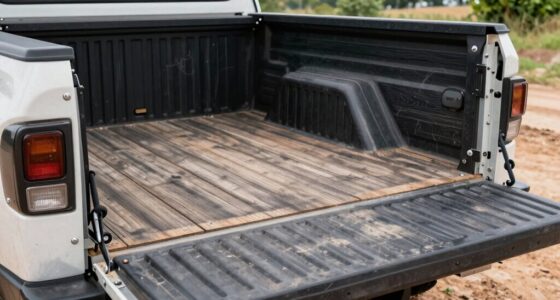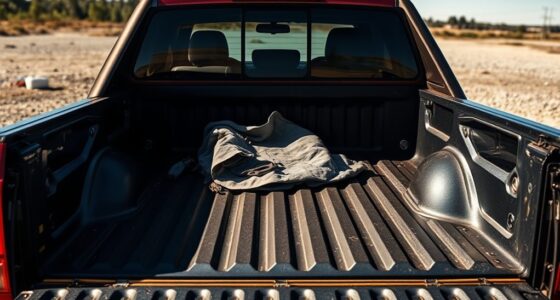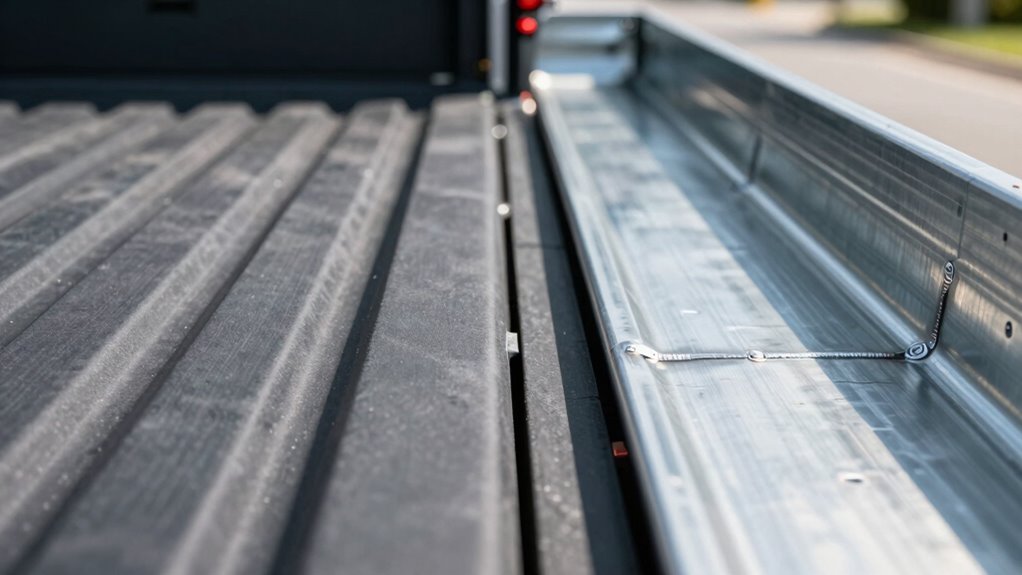

Steel truck beds offer unmatched strength and are ideal for heavy-duty use, but they are prone to rust and require regular maintenance. Composite beds resist rust, dents, and corrosion, making them a long-term, low-maintenance choice, though they tend to cost more upfront. Your decision should balance durability, environmental conditions, and budget. Want to learn how each option performs in real-world scenarios? Keep exploring to find out the best fit for your needs.

Get business pricing on garage and car supplies
- Business-only prices and quantity discounts
- Tax-exempt purchasing
- Multiple users, one account, clear invoices
Key Takeaways
- Steel beds offer unmatched strength and impact resistance but require regular maintenance to prevent rust and corrosion.
- Composites resist rust, dents, and scratches better, offering longer-lasting appearance with less upkeep.
- Steel is more cost-effective initially and suited for heavy-duty, rough environments; composites excel in durability and long-term savings.
- Composites are less prone to environmental damage, making them ideal for humid or salty conditions.
- The best choice depends on workload severity, environmental factors, and long-term maintenance considerations.
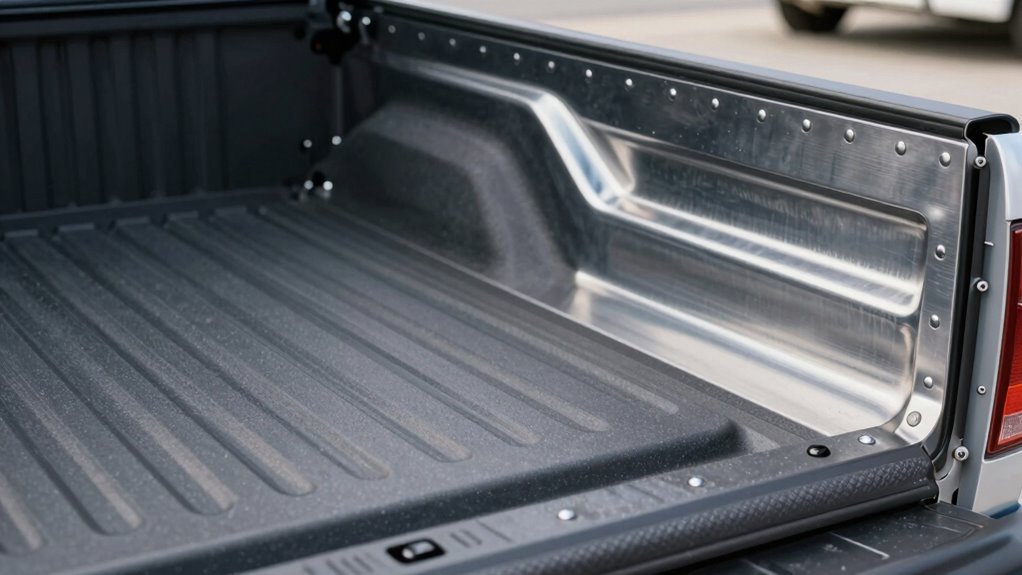
Are you trying to decide between a composite or steel truck bed for your vehicle? When weighing your options, it’s essential to understand the durability factors and perform a thorough cost analysis. Durability factors play a crucial role because your truck bed needs to withstand daily wear and tear, heavy loads, and exposure to the elements. Steel beds are known for their exceptional strength and resilience, making them less likely to crack or break under pressure. They can handle rougher treatment and are generally more resistant to impacts, dents, and punctures. However, steel is prone to rust and corrosion if not properly maintained, especially in humid or salty environments, which can compromise the integrity of the bed over time. On the other hand, composite truck beds are made from modern materials like fiberglass-reinforced plastics, which are inherently resistant to rust and corrosion. They don’t dent or crack as easily as steel, maintaining a smooth appearance for longer. While composites excel in resisting environmental damage, they may not match steel’s raw strength when it comes to bearing extremely heavy loads or enduring severe impacts. So, if your work requires heavy-duty hauling and frequent rough handling, steel might be the more durable choice. But if you prioritize resistance to rust and corrosion, composites could serve you better in the long run.
When it comes to cost analysis, you should consider both the initial expense and long-term maintenance. Steel truck beds typically cost less upfront, making them attractive if you’re on a tighter budget. However, the costs don’t stop at purchase; steel beds often require regular maintenance such as rustproofing, repainting, or repairs to dents and corrosion. Over time, these expenses can add up. Conversely, composite truck beds tend to have a higher initial cost due to the materials and manufacturing process. Still, they usually require less maintenance, as they don’t rust or corrode and are more resistant to scratches and dents. This reduces ongoing upkeep costs and can extend the lifespan of your truck bed, potentially saving you money in the long run. When performing a cost analysis, consider not just the purchase price but also the durability and maintenance costs over the years. If you plan to keep your truck for a long time and want to minimize upkeep, a composite bed may be more economical. Conversely, if budget constraints are tight and your work environment is rough, a steel bed might be a better short-term investment. Ultimately, your choice depends on balancing these factors according to your specific needs and conditions.
As an affiliate, we earn on qualifying purchases.
Frequently Asked Questions
Are Composite Truck Beds More Environmentally Friendly Than Steel?
Yes, composite truck beds are generally more environmentally friendly than steel. They often have better recycling options, allowing you to reuse or repurpose materials more easily. Additionally, composites typically have a lower manufacturing impact because they use fewer resource-intensive processes and can incorporate recycled materials. By choosing a composite bed, you’re reducing your environmental footprint through sustainable manufacturing and easier end-of-life recycling options.
How Do Composite Beds Perform in Extreme Weather Conditions?
Composite beds perform well in extreme weather conditions because of their material durability and thermal insulation properties. You’ll find they resist warping, cracking, and corrosion better than steel, even in harsh climates. The thermal insulation helps regulate temperature, preventing heat buildup or freezing. This means your truck bed stays more stable and protected, ensuring longevity and reliable performance regardless of whether you face scorching heat or freezing cold.
Can Composite Beds Be Repaired After Damage?
Yes, you can repair composite beds after damage, but durability concerns might arise depending on the severity. Minor scratches or cracks often respond well to simple repair techniques like patching or filling. For more extensive damage, professional repairs may be necessary to guarantee structural integrity. Always assess the damage carefully and consult experts if you’re unsure, as proper repair techniques help maintain the bed’s durability and prevent further issues.
Do Composite Beds Affect Vehicle Resale Value?
You might find that composite beds can slightly impact resale value, but it depends on market demand. Unlike steel beds, which are traditional and widely accepted, composites may cause some resale depreciation if buyers prefer proven durability. However, if your market values lighter weight and corrosion resistance, composite beds could actually boost your truck’s appeal. Ultimately, your vehicle’s resale value hinges on buyer preferences and how well you maintain the bed.
Are There Any Safety Concerns With Composite Truck Beds?
You might have safety concerns with composite truck beds, but generally, they’re safe if properly installed. Durability concerns can arise if the material isn’t high quality or if it’s damaged, which could compromise safety. Installation challenges can also play a role; improper fitting might lead to issues during driving or hauling. Always guarantee professional installation and choose top-grade composites to maintain safety and performance.
As an affiliate, we earn on qualifying purchases.
Conclusion
In the end, choosing between composite and steel truck beds depends on your needs and preferences. Think of it like selecting a trusty steed—steel is your rugged knight, built tough and reliable, while composite is the modern chariot, lightweight and resistant to rust. Both have their merits, but only you can decide which suits your journey. Remember, whether you opt for the old-school forge or the futuristic lab, it’s about riding confidently into the sunset, just like a true cowboy of the 21st century.
As an affiliate, we earn on qualifying purchases.
As an affiliate, we earn on qualifying purchases.
Halloween Picks
halloween
As an affiliate, we earn on qualifying purchases.