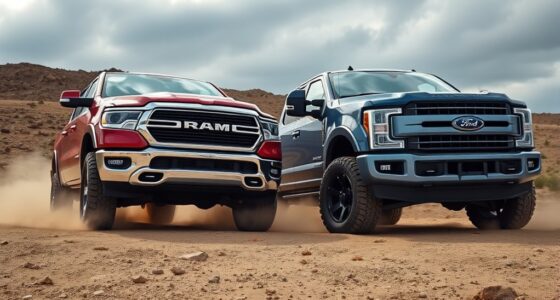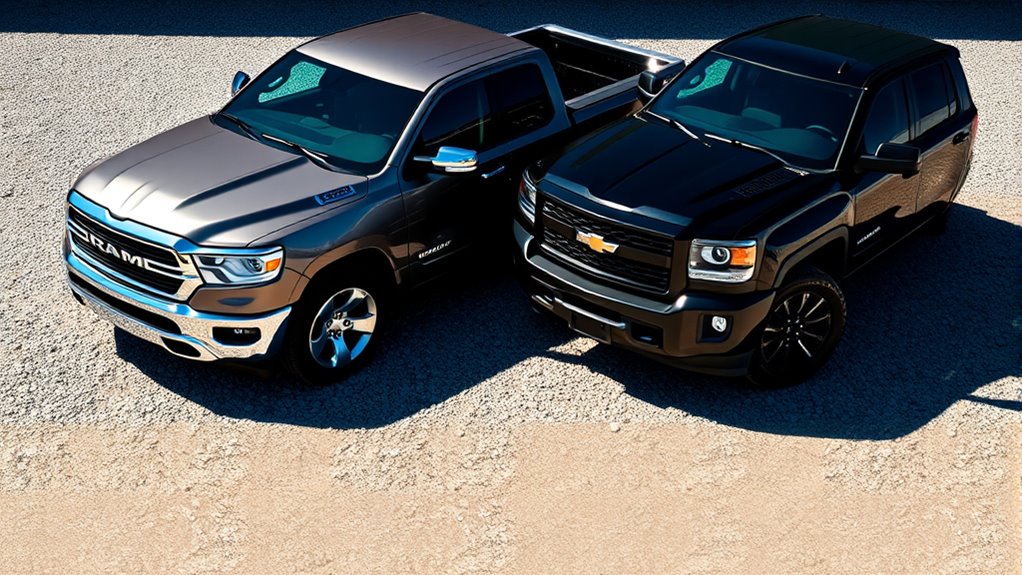

If you’re choosing between the Ram 1500 and Chevy Silverado, consider what matters most to you. The Silverado offers higher towing and payload capacities, rugged durability, and a straightforward setup ideal for heavy-duty tasks. The Ram 1500 excels in fuel efficiency, luxury interiors, and off-road comfort with its coil spring suspension. Your decision depends on whether you prioritize utility or comfort—exploring these details further will help make certain you pick the best fit.
Key Takeaways
- Silverado offers higher towing and payload capacities, ideal for heavy-duty work and utility needs.
- Ram 1500 provides superior interior luxury, comfort, and off-road ride quality with adjustable suspension options.
- Silverado’s engine lineup balances power and efficiency, with better fuel economy in some configurations.
- Ram excels in off-road capability and ride comfort due to its coil spring and air suspension systems.
- Price differences favor Silverado for budget-conscious buyers, while Ram justifies higher costs with premium features.

Voodonala Aluminum Center Console AC Radio Headlight Dashboard CD Switch Climate Control HVAC Knob Cover for 2018-2026+ Dodge RAM Interior Accessories, 5pcs Red(Didnt fit Sports & Special Editions)
APPLICABLE MODELS: Center Console AC Radio Switch Knob Cover for Dodge RAM 2018 2019 2020 2021 2022 2023…
As an affiliate, we earn on qualifying purchases.
As an affiliate, we earn on qualifying purchases.
Engine Options and Performance Capabilities
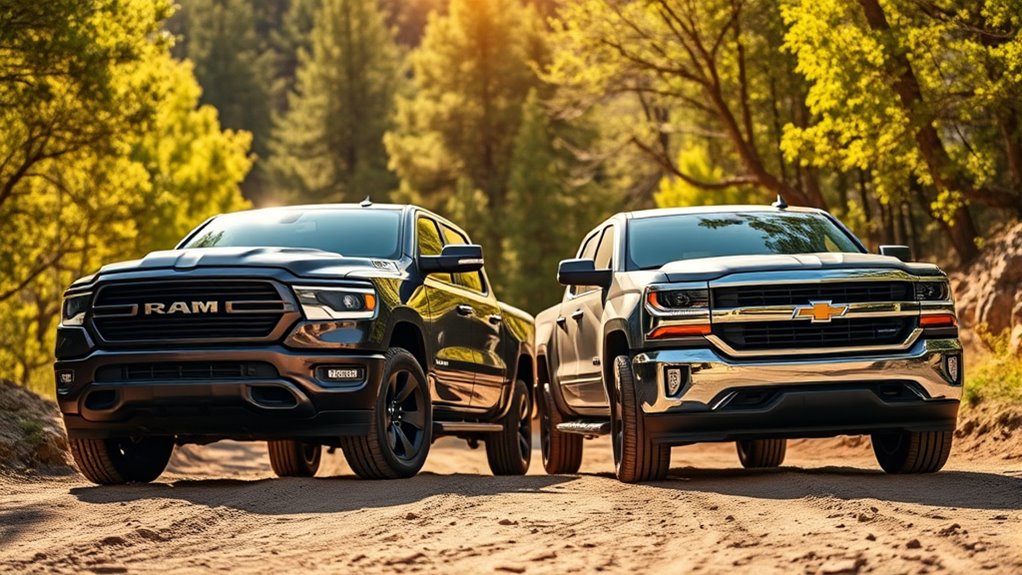
When comparing engine options and performance capabilities, the 2025 Chevrolet Silverado 1500 offers a versatile lineup with three engines, including a 2.7L TurboMax turbocharged four-cylinder producing 310 horsepower and 430 lb-ft of torque, and a 6.2L V8 that delivers 420 horsepower. The Silverado’s engines focus on a balance of power and efficiency, with the turbocharged four-cylinder providing strong torque for towing and daily driving. The 6.2L V8 offers impressive outright performance for heavy-duty tasks. Paired with a 10-speed automatic transmission, these engines deliver smooth acceleration and responsive handling. The Silverado’s engine choices emphasize durability and capability, making it suitable for various workloads. Overall, the lineup offers options to match your needs, whether prioritizing fuel economy or maximum power. Additionally, energy-efficient engine technology in newer models aims to reduce environmental impact while maintaining high performance.

KUAFU Class 3 Trailer Hitch Compatible with 1999-2013 Chevrolet Silverado GMC Sierra 1500 2" Towing Receiver Hitch Replacement for 44563 Steel Black
Fitment: This trailer hitch is compatible with 1999-2013 Chevrolet Silverado, 1999-2013 GMC Sierra 1500. Replacement for 44563. Please…
As an affiliate, we earn on qualifying purchases.
As an affiliate, we earn on qualifying purchases.
Towing and Payload Strengths
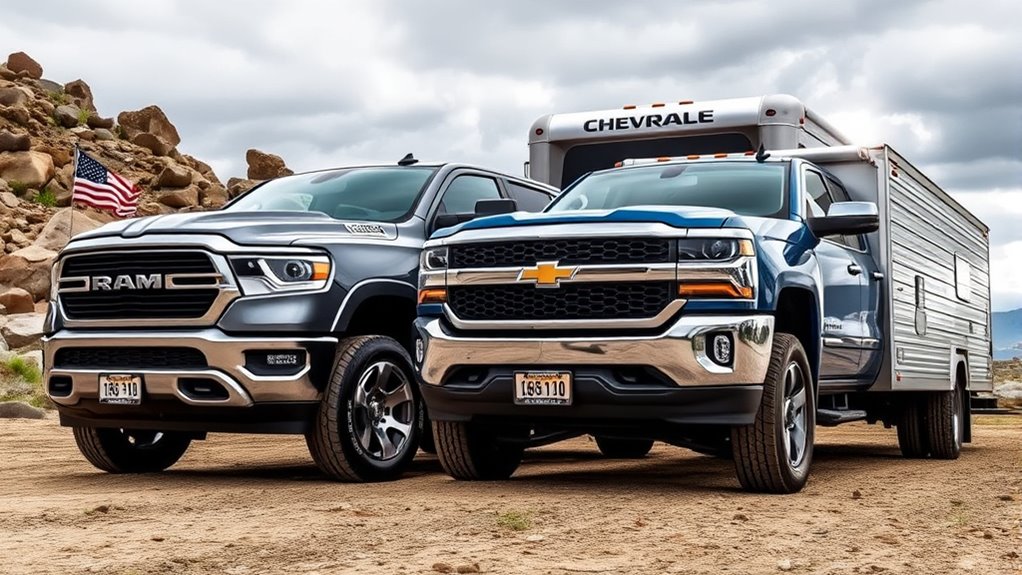
The Chevrolet Silverado 1500 outshines the Ram 1500 in towing and payload capacity, making it the better choice if heavy hauling is a priority. It can tow up to 13,300 pounds in certain trims, surpassing the Ram’s maximum of around 11,580 pounds. Additionally, Silverado supports a payload capacity of approximately 2,000 pounds, compared to Ram’s roughly 1,340 pounds. Silverado offers more configurations, including both RWD and 4WD options, and includes advanced towing features like the Trailering System and trailer blind-spot alerts on more trims. These enhancements make it more capable for demanding hauling jobs. If your main focus is towing heavy loads or carrying substantial payloads regularly, Silverado’s strengths in this area give it a clear advantage. Understanding towing technology can further enhance your experience and safety when hauling heavy loads.

Adjustable Drawbar Trailer Hitch – 20,000 LBS, Fits 2 and 2-5/16 Inch Balls, US Gov Tested & Certified, for RV Towing, Motorcycles & Powersports
DURABLE & VERSATILE – Get ready for the ultimate towing experience with our Adjustable Trailer Hitch! With a…
As an affiliate, we earn on qualifying purchases.
As an affiliate, we earn on qualifying purchases.
Fuel Efficiency and Operating Costs
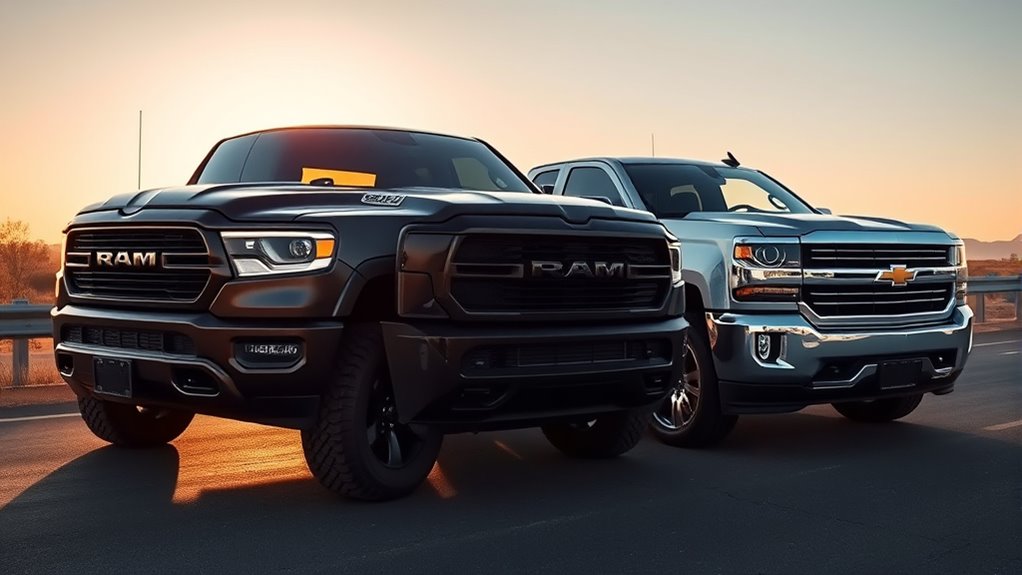
When comparing fuel efficiency and operating costs, you’ll notice that the Ram 1500’s turbo-six engine uses less fuel than the Silverado’s V8. This can save you money on daily driving, but actual costs may vary with loads and towing. Understanding these differences helps you choose a truck that fits your budget and usage needs.
Fuel Economy Differences
Fuel economy plays a significant role in choosing between the Ram 1500 and the Silverado 1500, especially if you prioritize lower operating costs and better efficiency for daily driving. The Ram’s turbo-six engine offers better fuel efficiency, averaging around 16 MPG city and 23 MPG highway, making it more economical on fuel compared to Silverado’s V8 engines, which deliver about 15 MPG city and 20-21 MPG highway. Real-world testing shows Ram consumes roughly 13.5 L/100 km, while Silverado uses about 14.5-15 L/100 km. When towing, the fuel gap narrows, and efficiency differences become less noticeable. If saving on fuel is important, the Ram’s slightly better economy makes it an attractive choice for regular commuting and mixed driving conditions.
Operating Cost Factors
Considering the differences in fuel economy, operating costs for the Ram 1500 and Silverado 1500 extend beyond just miles per gallon. You’ll find that maintenance and repair expenses vary based on engine type and complexity. Ram’s turbo-six engine generally costs less to operate due to better fuel efficiency, saving you money on fuel over time. Silverado’s V8 engines, while powerful, tend to consume more fuel, increasing ongoing costs. Additionally, Silverado’s simpler leaf-spring suspension can lead to lower maintenance expenses, especially under heavy loads. The availability of advanced features like cylinder deactivation in Silverado can help improve fuel economy during light loads, but overall, Ram’s efficiency makes it more economical for daily driving. When considering projector technology, such as contrast ratio and color accuracy, these factors can also influence overall image quality and viewing experience. Balancing initial purchase price with long-term operating costs is key to making the right choice.
Detroit Axle – Rear 4pc Control Arms Kit for 14-19 Jeep Cherokee with Off-Road Suspension, 2 Sway Bars 2 Upper Control Arms 2014 2015 2016 2017 2018 2019 Replacement
Replacement for 2014-2017 Jeep Cherokee (with Off-Road Suspension) – [2018-2019 Jeep Cherokee (AWD; with Off-Road Suspension)]
As an affiliate, we earn on qualifying purchases.
As an affiliate, we earn on qualifying purchases.
Interior Features and Comfort Levels
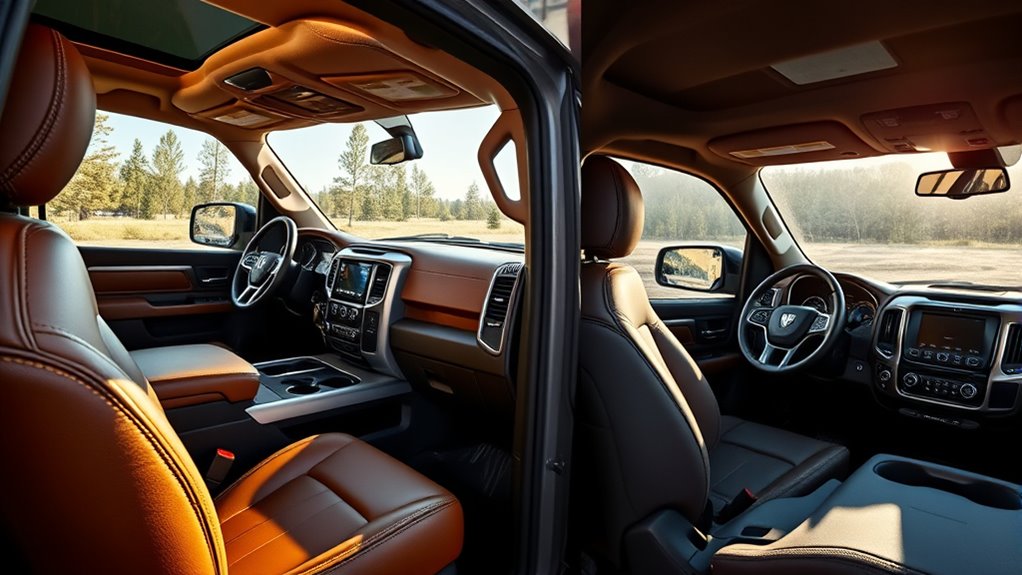
The Ram 1500 stands out for its luxurious interior, offering top-tier materials and craftsmanship that set a new benchmark in the segment. You’ll enjoy premium leather seats, real wood accents, and refined stitching, especially in Tungsten and Limited trims. The cabin feels spacious and thoughtfully designed, with features like power-adjustable pedals, auto-dimming mirrors, and a high-quality sound system that enhance comfort and convenience. Additionally, the Ram’s interior emphasizes smart design, ensuring that every element contributes to a comfortable and welcoming environment. Silverado’s interior, while functional and upscale, leans more toward practicality with heated and cooled front seats, a rear sliding window, and a user-friendly layout. Both trucks feature large, intuitive infotainment displays and advanced driver assistance options. Overall, Ram prioritizes luxury and refinement, while Silverado balances comfort with a more utilitarian approach.
Ride Quality, Handling, and Off-Road Performance
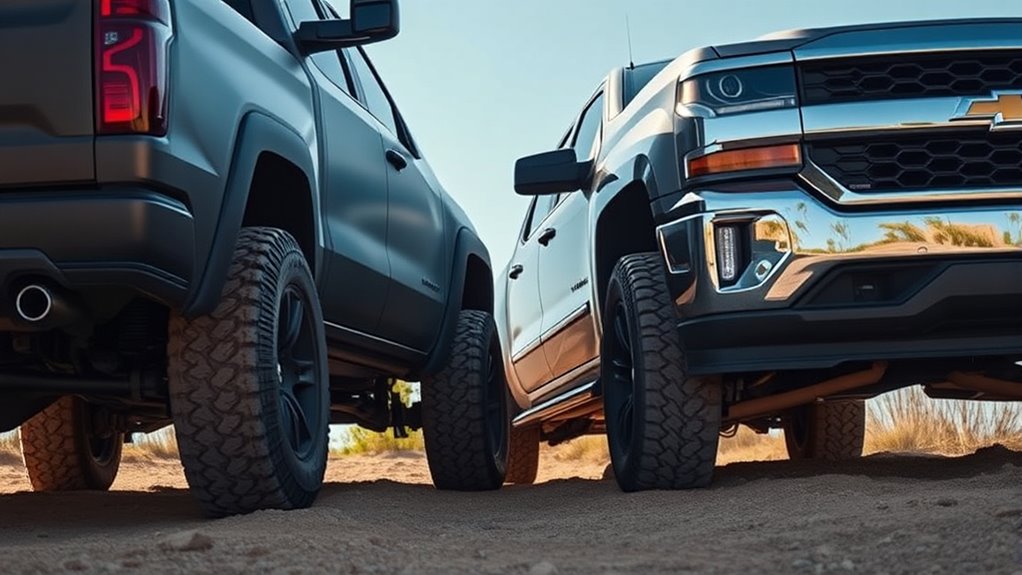
When it comes to ride quality and handling, you’ll notice that the Ram 1500 offers a softer, more comfortable ride thanks to its coil springs and optional air suspension. In contrast, the Silverado provides more stable and confident handling, especially under heavy loads, with its leaf spring setup. For off-road adventures, the Silverado’s rugged features and off-road packages give it an edge in tackling tough terrain.
Ride Comfort and Softness
Both the Ram 1500 and Chevrolet Silverado 1500 deliver strong ride comfort, but they approach it differently due to their suspension design. The Ram’s coil springs and optional air suspension create a softer, smoother ride, especially over uneven terrain. You’ll notice less jarring on rough roads and a more relaxed feel during daily driving. In contrast, the Silverado’s leaf spring setup offers stability and confidence, particularly when hauling heavy loads. It handles body roll well and feels solid at highway speeds. While Silverado’s setup emphasizes stability, Ram’s suspension prioritizes comfort and softness. If a plush, gentle ride is your focus, Ram’s air suspension is a clear advantage. For a more composed, workhorse feel, Silverado’s handling remains confident and steady. Incorporating connected equipment and smart tech, such as adaptive suspension systems, can further enhance ride quality and customization.
Handling and Maneuverability
Handling and maneuverability play a significant role in how each truck performs on different terrains and in various driving situations. The Silverado offers stable, confident handling thanks to its leaf spring suspension, which minimizes body roll and improves load stability. It feels more responsive and precise on highways, making sharp turns easier. The Ram 1500, with its coil springs and optional air suspension, delivers a smoother ride and better comfort, especially on uneven roads. However, this softer setup can reduce rear-end stability when heavily loaded. While Ram excels in comfort, Silverado provides more predictable handling under heavy loads and when towing. Both trucks handle well in city driving, but Silverado’s design favors confident maneuvering with larger payloads, whereas Ram prioritizes ride softness and off-road comfort. Additionally, handling and maneuverability are influenced by the suspension type and overall design, which are tailored to different driving preferences and needs.
Off-Road Capabilities
The Ram 1500’s coil spring suspension and optional air suspension make it a strong contender for off-road adventures, providing a smoother ride over uneven terrain. Its softer suspension absorbs bumps better, enhancing comfort on rough trails. The air suspension allows you to adjust ride height, improving ground clearance and approach angles for tougher obstacles. Handling is more refined, with less body roll, giving you confidence when maneuvering rocky or uneven surfaces. However, the coil springs may sag under heavy loads, affecting stability during demanding off-road tasks. The Silverado’s leaf springs offer durability for heavy-duty off-road work but result in a firmer ride. Overall, Ram’s suspension setup prioritizes comfort and versatility, making it ideal if you want a smoother, more controlled off-road experience. Additionally, shock absorber technology enhances ride quality by better managing impact and reducing vibrations during off-road driving.
Pricing, Value, and Overall Suitability
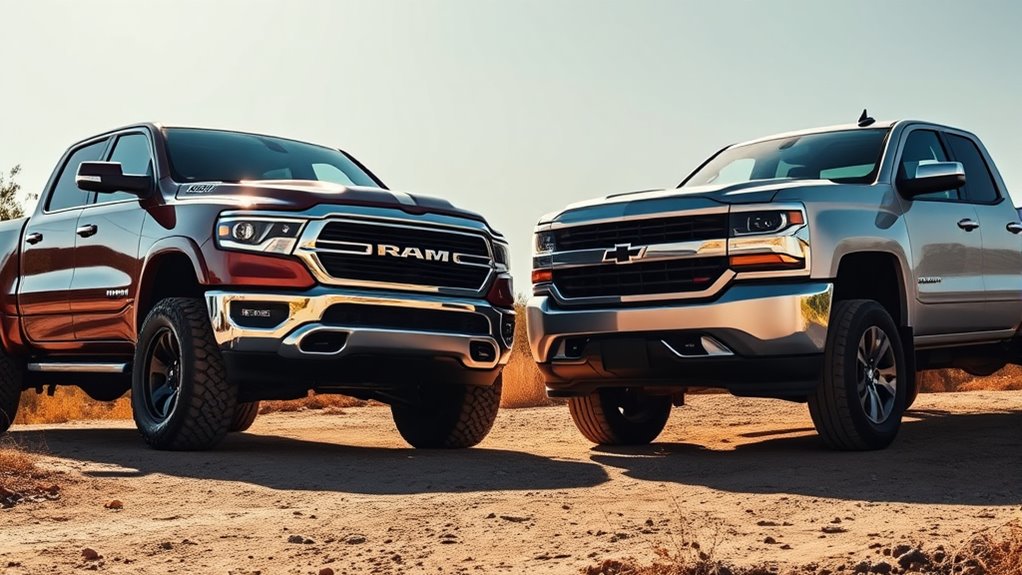
When choosing between the Ram 1500 and Chevrolet Silverado 1500, pricing and value play a crucial role in your decision. The Silverado starts at about $37,645, offering strong workhorse features and rugged options, making it a great value for budget-conscious buyers. The Ram begins around $42,270, with luxurious interior finishes and advanced tech, appealing if comfort and premium features matter most. Consider these points:
- Silverado’s lower starting price appeals to practical buyers seeking durability.
- Ram’s higher cost reflects its upscale interior and innovative engines.
- Silverado includes versatile options like Z71 and multi-flex tailgate for off-road and utility needs.
- Ram excels in interior luxury and fuel efficiency, justifying a higher investment.
Your choice hinges on whether you prioritize affordability or premium features and comfort.
Frequently Asked Questions
Which Truck Offers Better Long-Term Reliability and Lower Maintenance Costs?
You’ll likely find that the Silverado offers better long-term reliability and lower maintenance costs. Chevy’s reputation for durability means fewer unexpected repairs over time, especially with its proven V8 engines and sturdy leaf-spring suspension. Ram’s advanced features and luxury options might lead to higher maintenance expenses. Staying with a Silverado can give you peace of mind, saving money and reducing hassle, especially if you prioritize dependability for the long haul.
How Do Aftermarket Customization Options Compare Between Ram 1500 and Silverado?
You’ll find the Ram 1500 has aftermarket customization options that are practically endless, making it feel like a blank canvas for your perfect build. You can easily upgrade wheels, lift kits, exhaust systems, and interior accessories to match your style. Silverado also offers a solid range of mods, especially for off-road and performance upgrades. But if you want total freedom and variety, Ram’s extensive community and parts availability make it the better choice.
Which Vehicle Has Superior Safety Ratings and Advanced Driver-Assistance Features?
You’ll find that both trucks offer excellent safety ratings and advanced driver-assistance features, but the Silverado often leads slightly with higher crash test scores and more available safety tech, including adaptive cruise control, lane departure warning, and blind-spot alerts across more trims. Ram also provides strong safety options, especially in top trims, but Silverado’s broader availability of advanced safety features makes it the safer choice for peace of mind on the road.
What Are the Differences in Warranty Coverage and Service Plans?
You’ll find Silverado offers a standard 3-year/36,000-mile basic warranty and a 5-year/60,000-mile powertrain warranty, with optional extended plans. Ram provides similar coverage, with a 3-year/36,000-mile basic warranty and a 5-year/60,000-mile powertrain warranty, plus available extended coverage. Both brands include roadside assistance for the first year. Your choice depends on specific coverage options and service plans, but overall, they’re quite comparable in warranty offerings.
How Do the Trucks Perform in Real-World Off-Road Conditions?
Imagine tackling a rocky trail; your truck’s ability to handle rough terrain matters. The Ram 1500, with coil springs and optional air suspension, feels like gliding over uneven ground, offering a smooth ride and better off-road comfort. Silverado’s leaf springs provide more stability under heavy loads, making it reliable in tough conditions. Both excel, but Ram’s suspension system gives you a slight edge for smoother, more confident off-road adventures.
Conclusion
When choosing between the Ram 1500 and Chevy Silverado, consider that the Silverado offers up to 13,300 pounds of towing capacity, making it ideal for heavy-duty tasks. If you prioritize comfort and fuel efficiency, the Ram 1500’s refined interior and eTorque system stand out. Ultimately, your choice depends on your specific needs—whether it’s hauling, daily driving, or off-road adventures—so weigh these stats to find the best fit for you.