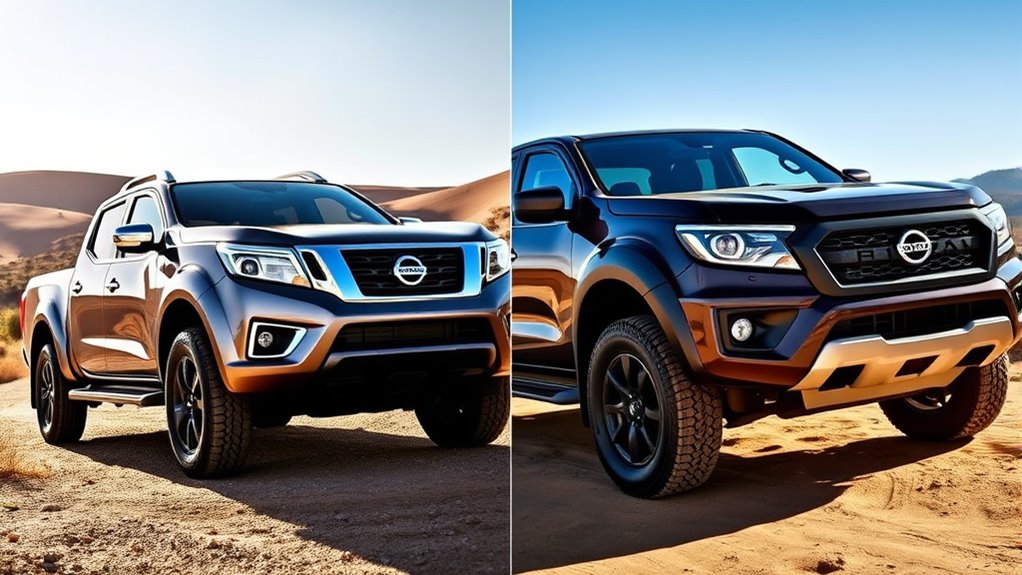

The Nissan Navara and Frontier share similar origins but get different names due to regional branding strategies. Nissan uses the Navara name globally to appeal to markets in Europe and Asia, while it calls it Frontier in the US to suit American preferences. Their designs, platforms, and features are tailored to each market’s needs, with North American models emphasizing size and power. If you want to explore how these differences shape each truck, there’s more to discover below.

Get business pricing on garage and car supplies
- Business-only prices and quantity discounts
- Tax-exempt purchasing
- Multiple users, one account, clear invoices
Key Takeaways
- Nissan uses regional branding strategies, naming trucks Navara globally and Frontier primarily for North America to match market preferences.
- The North American Frontier is built on the F-Alpha platform with larger size and advanced features, unlike the global Navara on the NP300 platform.
- Naming conventions reflect regional marketing, safety standards, and consumer expectations, with Navara emphasizing versatility and style.
- The US-market Frontier features a 3.8L V6 engine and nine-speed automatic transmission, differing from global diesel-powered Navara models.
- Regional design and technology variations ensure each model caters to local demands, leading to different names in each market.
Nissan Frontier off-road accessories
As an affiliate, we earn on qualifying purchases.
As an affiliate, we earn on qualifying purchases.
The Origins of the Navara and Frontier Names
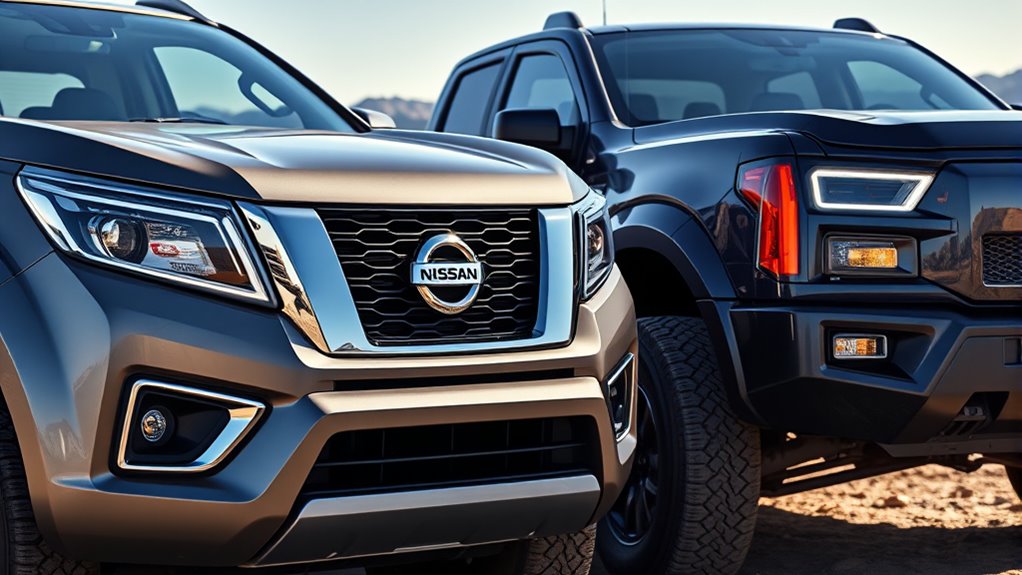
The names Navara and Frontier both have their roots in Nissan’s regional marketing strategies, but their origins trace back to different historical influences. You’ll find that Navara was named after the Spanish province of Navarra, emphasizing a global branding effort that aligns with Nissan’s expansion in international markets. In contrast, Frontier was introduced primarily for North America, reflecting a strategy tailored to American tastes and expectations. The original Datsun pickups evolved into these distinct names to better appeal to local consumers. While Navara became a universal name across many regions, including Europe and Asia, the Frontier name was reserved for North America, highlighting a regional branding approach. These naming choices reveal Nissan’s intention to customize their branding based on regional preferences and market demands. Additionally, the brand differentiation strategy demonstrates how companies adapt their product names to resonate with diverse customer bases worldwide.
As an affiliate, we earn on qualifying purchases.
Regional Marketing Strategies and Branding Approaches
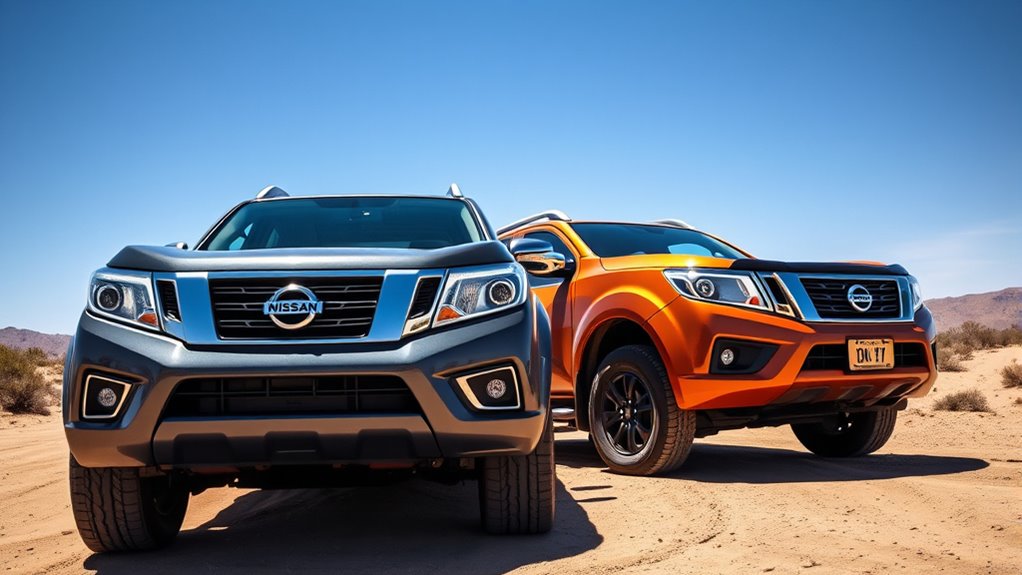
You’ll notice Nissan uses different names and branding strategies depending on the region to appeal to local consumers. In North America, they market a larger, more feature-rich Frontier tailored specifically for that market, while elsewhere, Navara or NP300 versions emphasize regional preferences. These branding choices reflect how Nissan adapts its marketing approach to meet diverse market needs effectively.
Regional Branding Differences
Regional branding strategies shape how Nissan markets its pickup trucks worldwide, reflecting diverse consumer preferences and regional regulations. In North America, Nissan emphasizes the Frontier as a larger, more powerful truck tailored for off-road and towing needs, often with distinct styling and features. Elsewhere, the Navara is positioned as a versatile, efficient, and stylish option, suitable for urban and rural drivers alike. These differences stem from local market expectations, safety standards, and competitive landscapes. Nissan adapts its branding approach by adjusting model names, packaging, and features to resonate with regional audiences. This tailored marketing guarantees that each market perceives the trucks as relevant and appealing, allowing Nissan to maximize its global reach while maintaining regional relevance. Additionally, Free Floating design elements are incorporated in some markets to create a more modern and appealing aesthetic that aligns with regional tastes.
Market-Specific Naming Strategies
Nissan employs distinct naming strategies across global markets to align with regional preferences and marketing goals. These strategies help Nissan connect with local consumers and adapt to cultural nuances.
- In Latin America, Nissan uses the Frontier name, emphasizing ruggedness and off-road capability, appealing to adventure-oriented buyers.
- In Europe and Asia, Navara remains the preferred name, highlighting refinement and global recognition.
- North America features the US-specific Frontier, focusing on larger size and advanced features tailored for American consumers.
This approach allows Nissan to maintain brand consistency while customizing its messaging for each market. By choosing different names, Nissan reflects regional tastes and expectations, strengthening its presence and competitiveness worldwide.
North American pickup truck accessories
As an affiliate, we earn on qualifying purchases.
As an affiliate, we earn on qualifying purchases.
Divergent Platform and Technical Specifications
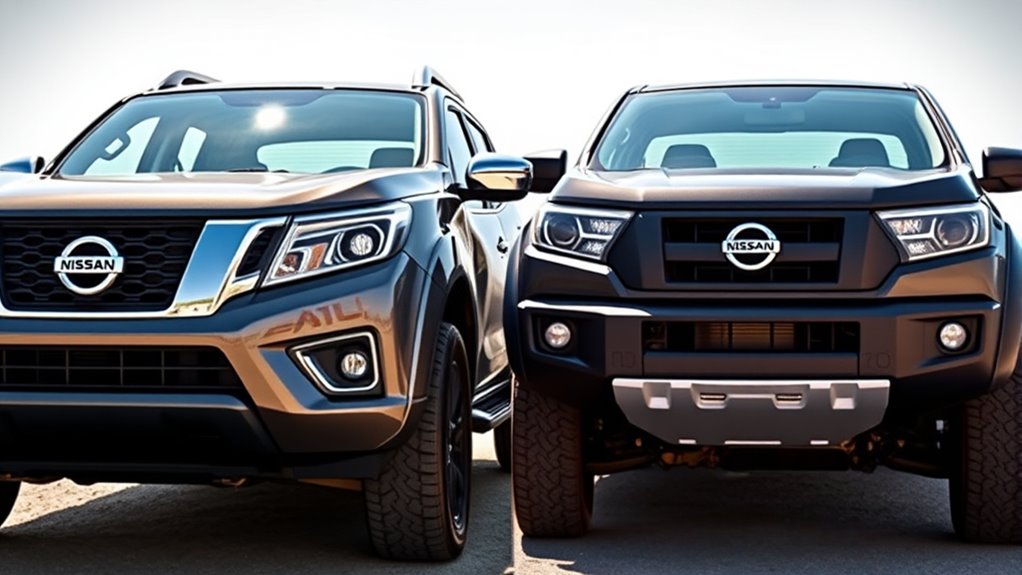
You’ll notice that the US-market Frontier is built on the F-Alpha platform, which differs considerably from the global NP300 platform used elsewhere. This change impacts engine options, suspension setups, and overall handling characteristics, tailoring the truck to North American preferences. Understanding these platform and technical variations helps clarify the distinct performance and capability differences between the models. Additionally, the choice of platform influences vehicle durability and maintenance requirements, further distinguishing the two versions.
Platform Architecture Variations
The platform architecture of the Nissan Frontier varies considerably between the North American and global markets, reflecting Nissan’s tailored approach to regional demands. You’ll notice that the US-spec Frontier uses the F-Alpha platform, which emphasizes larger size and increased durability. In contrast, the global Frontier and Navara models ride on the NP300 platform, designed for versatility across diverse markets. Key differences include:
- Structural design optimized for regional safety and durability standards
- Enhanced steering mechanisms in the US model for quicker response
- Variations in chassis and suspension to support differing payload and off-road capabilities
These platform distinctions enable Nissan to meet specific performance expectations, regulatory requirements, and consumer preferences in each market.
Engine and Suspension Differences
Because the North American Frontier and the global Navara/Frontier models are built on different platforms, their engines and suspension systems vary considerably to meet regional demands. The US Frontier features a 3.8-liter V6 engine paired with a nine-speed automatic, offering more power and towing capacity. In contrast, global models rely on a 2.3-liter four-cylinder diesel engine, tuned for efficiency and emissions standards. Suspension setups also differ: the US version uses a more robust independent front suspension with upgraded shocks, while global models typically have a standard setup suitable for diverse terrains. These platform differences influence both vehicle performance and regional market requirements.
As an affiliate, we earn on qualifying purchases.
Market-Specific Features and Model Variations
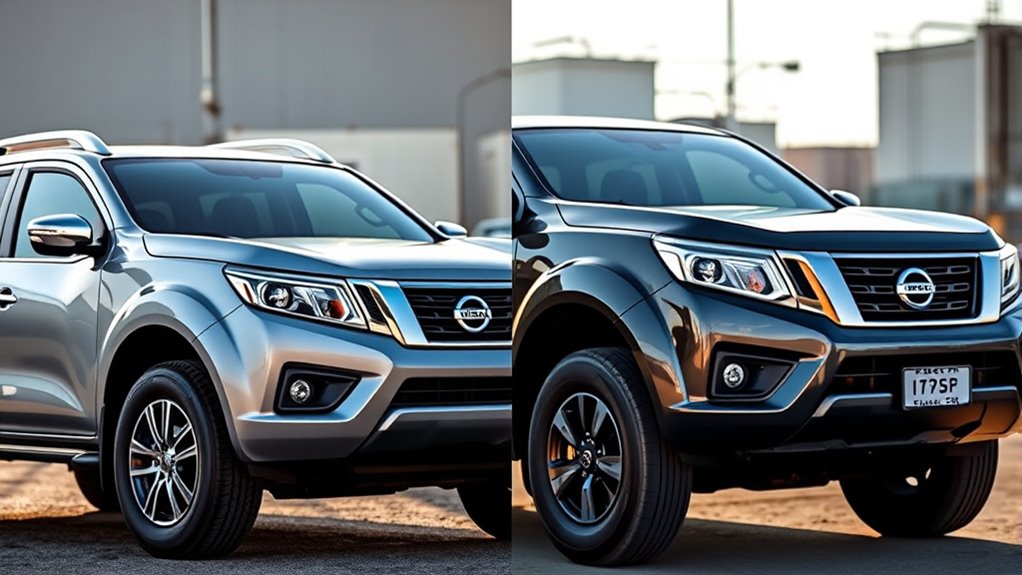
Have you noticed how Nissan tailors its pickup models to suit regional preferences? This approach results in distinct features and variations across markets. For example:
- North America’s Frontier is larger, equipped with a 3.8-liter V6 engine and a nine-speed automatic, focusing on power and size.
- In global markets, the Navara and Frontier share the NP300 platform, with diesel engines and updated styling for different regions.
- Safety features vary, with global models offering options like forward-collision warning and 360-degree cameras, while North American versions prioritize larger size and more developed tech.
- Many regional models utilize market-specific features to better cater to local customer needs and preferences.
The Impact of Market Preferences on Naming and Design
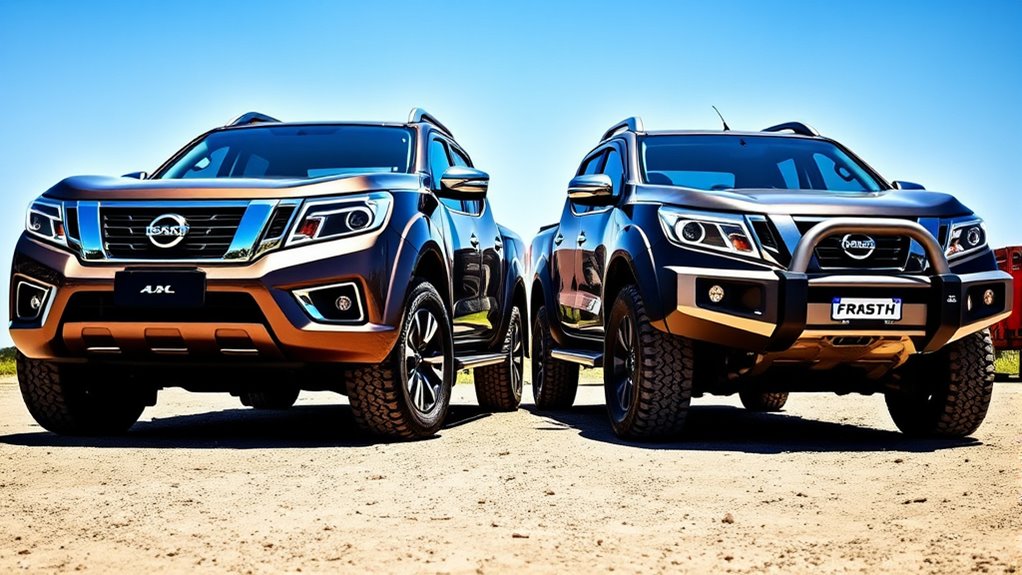
Market preferences heavily influence Nissan’s approach to naming and designing its pickups, tailoring each model to regional tastes and demands. In North America, you’ll notice the larger, more feature-rich Frontier, designed to appeal to consumers wanting a robust, full-sized truck. Meanwhile, in global markets, the Navara maintains a more versatile, fuel-efficient profile suited for diverse conditions. Nissan adjusts styling, technology, and safety features based on regional expectations—offering advanced safety tech in developed markets and practical features elsewhere. Names also shift; the same vehicle might be called Navara, Frontier, or NP300 depending on where you are. These decisions aim to maximize appeal, align with local market trends, and meet regulatory requirements, ensuring each model resonates with regional drivers’ preferences. Additionally, market-specific branding plays a crucial role in how Nissan positions its pickups to meet regional consumer expectations.
How Nissan’s Global and North American Strategies Differ
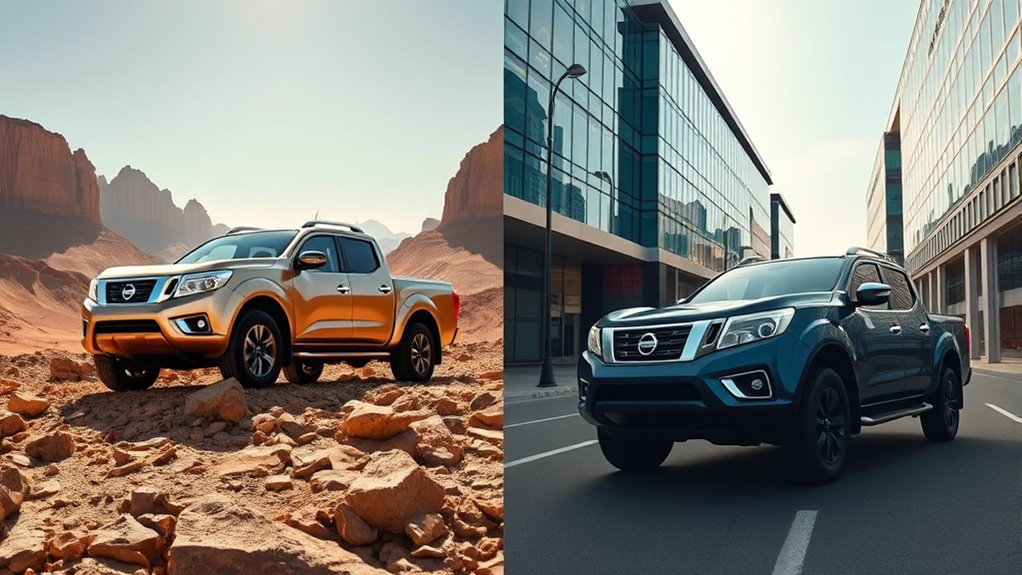
Nissan employs distinct strategies for its global and North American pickup markets to better meet regional demands. In North America, Nissan focuses on larger trucks with advanced features tailored to consumer preferences, like the 3.8-liter V6 engine and unique platform (F-Alpha). Globally, Nissan offers smaller, more efficient models built on the NP300 platform, with regional variations in design and technology. To differentiate their approaches, Nissan: 1. Develops a dedicated US-market Frontier with size and features suited to American drivers. 2. Maintains a global Navara/Frontier lineup emphasizing efficiency and adaptability. 3. Customizes safety and technology packages based on regional regulations and market expectations. Additionally, Nissan’s all-water parks presence worldwide enhances its brand recognition and customer appeal. This separation allows Nissan to optimize product appeal and competitiveness in each market.
Frequently Asked Questions
How Do the Interiors of the Navara and Frontier Differ Globally?
You’ll notice that the global Navara and Frontier interiors differ mainly in design and features. The Navara offers a modern, utilitarian look with durable materials and tech options suited for international markets. The global Frontier, however, emphasizes a more refined cabin with upgraded infotainment, improved comfort, and advanced safety tech. Both prioritize practicality, but the Frontier’s interior typically feels more premium and tech-savvy to meet diverse consumer preferences worldwide.
Are There Significant Price Differences Between Navara and Frontier Models?
You’ll find that the US-spec Frontier typically costs about 10-15% more than the global Navara, reflecting its larger size and more advanced features. Because the Frontier is tailored for North American customers, it includes upgraded tech, safety, and performance options, which drive up the price. If you’re comparing models, expect the Frontier to have a higher starting price, especially with added packages and trims for the US market.
Do Both Trucks Offer Similar Towing Capacities Worldwide?
You’ll find that worldwide, both trucks offer similar towing capacities, typically around 3,500 to 7,700 pounds, depending on the specific model and engine options. However, the US version of the Frontier generally has a higher towing capacity, often up to 6,720 pounds, thanks to its more robust engine and towing-focused design. These differences reflect regional market needs, but overall, both trucks are quite capable for towing tasks.
What Safety Features Are Exclusive to the North American Frontier?
You’ll find that the North American Frontier offers exclusive safety features like advanced driver-assist technologies, including forward-collision warning, automatic emergency braking, and a 360-degree camera system. These features are prioritized to meet US safety standards and enhance driver confidence. While global models may have some safety tech, the US-specific Frontier focuses on these advanced systems, making it a safer and more tech-equipped pickup tailored specifically for North American consumers.
How Do Off-Road Capabilities Compare Between the Global Navara and US Frontier?
You’ll find that the US Frontier offers enhanced off-road capabilities, thanks to features like all-terrain tires, chunky tow hooks, and a sportier Pro-4X package, making it more suitable for tough terrains. In contrast, the global Navara focuses more on practicality and versatility, with off-road features available but less aggressive than the US version. Overall, the US Frontier’s off-road setup is more performance-oriented for off-road enthusiasts.
Conclusion
Ultimately, the Navara and Frontier embody contrasting worlds—one global, one local. While the Navara’s name echoes international versatility, the Frontier’s title emphasizes North American ruggedness. You see how branding shapes perception just as technical specs define capability. By understanding these distinctions, you recognize how Nissan tailors its identity to meet diverse market tastes—where global unity and regional individuality collide, creating a nuanced story behind each name.
Halloween Picks
halloween
As an affiliate, we earn on qualifying purchases.