
Temperature swings cause your truck bed materials to repeatedly expand and contract, which puts stress on the structure. This movement can lead to paint chips, cracks, and bubbling, as well as loosening fasteners and warping metal panels. Over time, these changes weaken the bed’s integrity and can make it more vulnerable to rust. Choosing materials designed to handle temperature changes and maintaining proper upkeep can help protect your truck bed’s durability—discover how to keep it in top shape.
Key Takeaways
- Temperature fluctuations cause paint to expand, contract, and weaken, reducing durability and increasing susceptibility to damage.
- Metal components expand or contract, leading to warping, cracking, or gaps that may trap moisture and cause rust.
- Bolts and fasteners can loosen or shift due to thermal movement, compromising overall structural integrity.
- Selecting materials with appropriate thermal expansion properties enhances resistance to temperature-induced stress.
- Regular maintenance and protective coatings help mitigate damage from repeated thermal cycling.
Have you ever wondered how changing temperatures impact the materials in your truck bed? When temperatures fluctuate, they set off a series of reactions within the different components of your truck bed, especially in the paint and metal parts. These changes can lead to issues that might not be immediately obvious but can cause long-term damage if neglected.
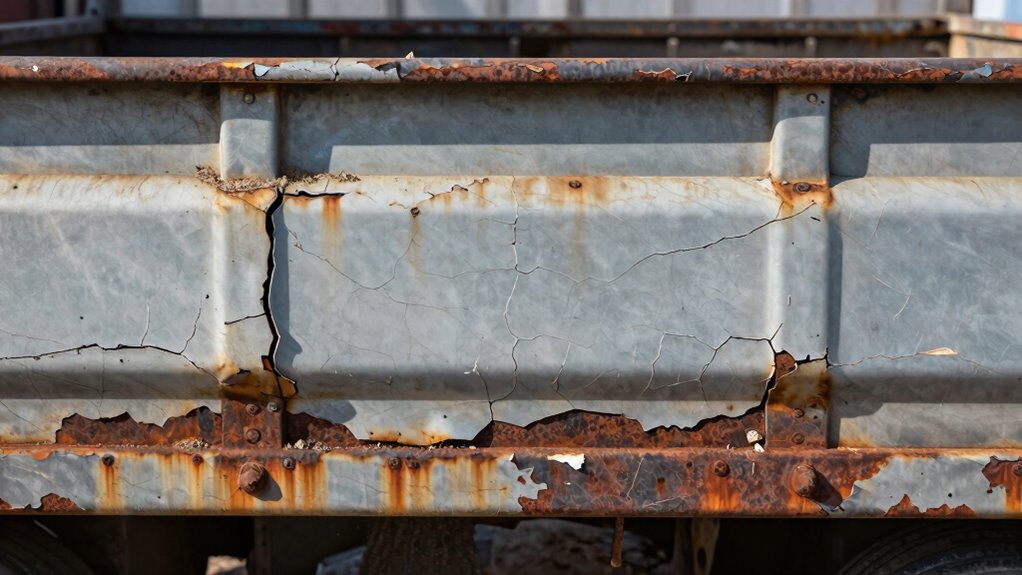
One of the first things you’ll notice with temperature swings is their effect on paint durability. When it gets hot, the paint on your truck bed expands and softens, making it more vulnerable to scratches, chips, and peeling. Conversely, in cold weather, the paint contracts, which can lead to cracking or bubbling. Over time, these cycles of expansion and contraction weaken the paint’s structure, reducing its ability to protect the underlying metal from rust and corrosion. If your truck bed’s paint isn’t formulated to withstand extreme temperature changes, you might see peeling or fading sooner than expected, especially in regions with harsh weather patterns. Material properties also influence how well the paint withstands these temperature fluctuations.
Temperature swings cause paint to expand, contract, crack, and peel, weakening protection over time.
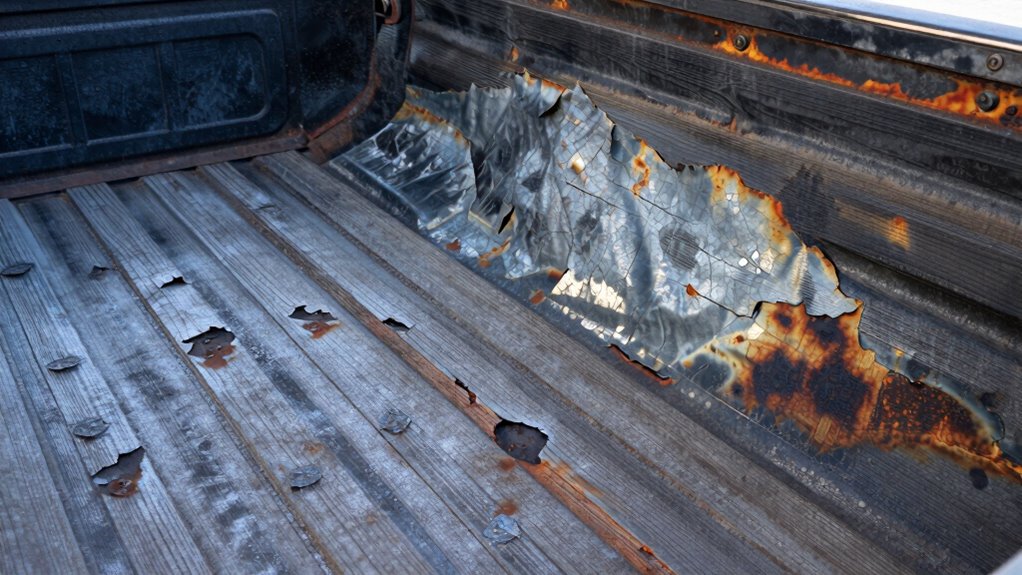
At the same time, metal expansion plays a critical role in how your truck bed holds up under temperature swings. Metals naturally expand when heated and contract when cooled. This cycle of metal expansion and contraction can cause stress within the metal structure of your truck bed. Over time, repeated expansion and contraction lead to warping or even cracking in the metal panels. If the metal isn’t designed with the right allowances for these movements, you could develop gaps or weak spots that allow moisture to seep in, accelerating rust formation. Proper material selection that considers these expansion properties is essential for durability. Additionally, material science advances have introduced alloys specifically engineered to better accommodate these thermal movements. Recognizing the importance of thermal expansion can help in choosing the right materials for long-term durability.
You might also notice that bolts and fasteners loosen or shift as the metal moves with temperature changes. This can affect the structural integrity of your truck bed, especially if you carry heavy loads or use the bed for work-related purposes. The key here is understanding that these effects are natural but can be minimized with proper maintenance and material choices. Using paints with flexible, weather-resistant coatings can help preserve paint durability, while selecting metals with better expansion properties or applying treatments that accommodate expansion can reduce stress-related damage.
In addition, selecting temperature-resistant materials for your truck bed can significantly mitigate the adverse effects of temperature swings. In essence, the impact of temperature swings on your truck bed is a combination of material science and proper upkeep. Recognizing how paint and metal react to temperature changes allows you to take proactive steps—like applying protective coatings or choosing materials designed to handle expansion—to prolong the life of your truck bed. Staying aware of these factors ensures your truck remains sturdy, protected, and ready for whatever weather you face.
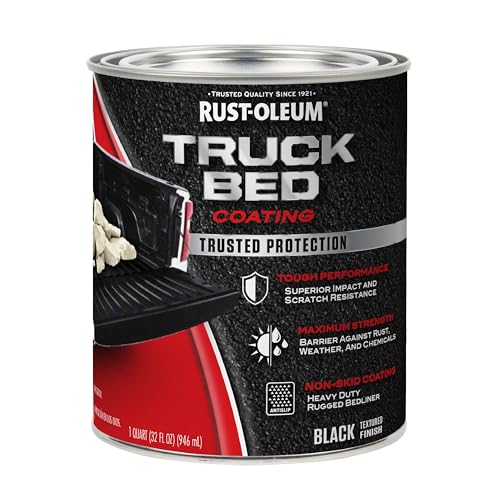
Rust-Oleum 342668 Stops Rust Truck Bed Coating, 1 Quart, Black
- Durable protective coating: Prevents scratches, rust, weather damage
- Fast-drying water-based formula: Forms to truck bed contours, resists rust and abrasion
- Quick drying and coverage: Dries in 1-2 hours, covers 40 sq ft
As an affiliate, we earn on qualifying purchases.
As an affiliate, we earn on qualifying purchases.
Frequently Asked Questions
How Do Temperature Fluctuations Impact Truck Bed Paint Longevity?
Temperature fluctuations can markedly reduce your truck bed paint’s longevity. As temperatures swing, the paint expands and contracts, leading to cracks and surface peeling over time. These stresses weaken the coating’s protective layer, making it more vulnerable to rust and damage. To prevent this, regularly wash and wax your truck, and consider applying a high-quality, flexible paint coating designed to withstand temperature changes.
Are Certain Truck Bed Materials More Resistant to Thermal Stress?
Certain truck bed materials, like aluminum and composite beds, are more resistant to thermal stress due to their superior material durability. These materials handle thermal expansion better, reducing warping or cracking during temperature swings. You’ll find that steel, while strong, may expand and contract more with heat changes, making it less resistant over time. Choosing materials with high durability and low thermal expansion helps your truck bed withstand temperature fluctuations effectively.
Can Temperature Swings Cause Warping or Bending in Truck Beds?
Yes, temperature swings can cause warping or bending in truck beds. When the material experiences rapid heating or cooling, it undergoes material expansion or contraction, which can lead to structural deformation over time. If your truck bed isn’t made from resistant materials, these temperature fluctuations might weaken its structure, resulting in warping or bending. Regularly inspecting your truck bed helps catch and address these issues early.
How Often Should I Inspect My Truck Bed for Temperature-Related Damage?
You should inspect your truck bed at least every three to six months, especially if you frequently experience extreme temperature swings. Use temperature sensors to monitor fluctuations and check for signs of warping or cracking. Incorporate insulation techniques to minimize damage, and regularly examine the bed’s surface and joints for any signs of stress. Prompt inspections help catch damage early, preventing costly repairs and prolonging your truck bed’s lifespan.
Do Temperature Changes Affect the Resale Value of Trucks?
Did you know that climate adaptation can influence a truck’s resale value? Temperature changes can impact material durability, leading to signs of wear that potential buyers notice. If your truck’s bed shows rust or cracks due to temperature swings, it might lower the resale value. Proper maintenance and choosing resilient materials help preserve your truck’s worth, ensuring it stays in top shape despite fluctuating temperatures.

Rust-Oleum Automotive Truck Bed Coating Spray Paint, Black
- Suitable for Metal Surfaces: Truck beds, trailers, fenders, and more
- Stops Rust Formula: Provides long-lasting protection
- Easy-to-Use Spray Tip: Reduces finger fatigue and reaches hard spots
As an affiliate, we earn on qualifying purchases.
As an affiliate, we earn on qualifying purchases.
Conclusion
Understanding how temperature swings impact your truck bed materials is like knowing the tides—change is inevitable, and preparation is key. By choosing the right materials and applying proper maintenance, you can prevent costly damage and keep your truck bed sailing smoothly through any weather. Don’t let the shifting temperatures be a storm on your horizon; instead, weather them with knowledge and care, and your truck bed will stand strong like a steadfast lighthouse in a storm.

Heavy Duty Metal Rubber Shovel Mount Kit, Truck Roof Rack Axe Holder Quick Release Tool Clamps, Secure Locking Zinc Alloy Shovel Bracket for Off-Road SUV Bed Wall Mount Garage Organizer(Orange,6PCS)
- Heavy Duty Metal Rubber Shovel Mount: Securely holds tools on trucks and roof racks
- Universal Fit for Tool Handles: Fits handles 0.67 to 1.57 inches in diameter
- Quick Release Tool Clamp: Easy to attach and detach tools securely
As an affiliate, we earn on qualifying purchases.
As an affiliate, we earn on qualifying purchases.

Truck Bed to Frame Fastener Kit for 73-87 GM C/K Pickups
- Compatible Models: 1973-1987 Chevrolet GMC C/K Series
- Material: Zinc-Plated for corrosion resistance
- Kit Contents: 32-piece truck bed to frame bolt kit
As an affiliate, we earn on qualifying purchases.
As an affiliate, we earn on qualifying purchases.