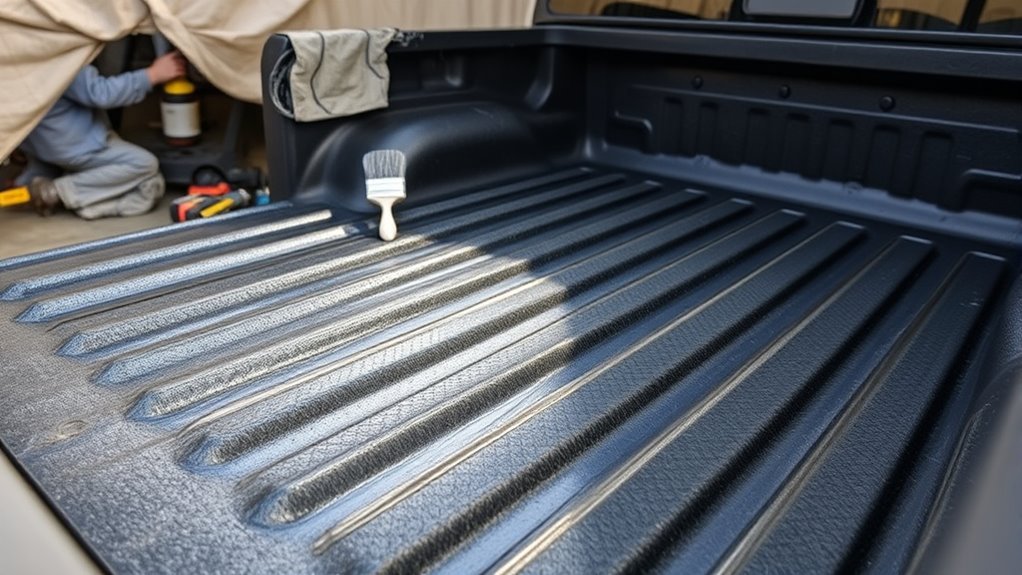
Yes, you can definitely line your truck bed yourself using DIY coatings like spray-on polyurethane or roll-on kits. With the right tools, proper surface prep, and patience, you can achieve a durable, professional-looking finish that protects against rust, chips, and weather. Expect to spend time masking, sanding, and applying multiple coats for best results. To learn the step-by-step process and tips for a successful job, keep exploring what it takes to do it right.
Key Takeaways
- DIY truck bed lining is feasible with proper surface prep, masking, and application, saving money compared to professional services.
- Choose suitable products like spray-on polyurethane, roll-on kits, or budget options based on durability needs and budget.
- Surface preparation—including cleaning, sanding rusted areas, and applying primer—is crucial for a successful, long-lasting coating.
- Proper tools such as spray guns, rollers, and masking materials are essential for even application and neat results.
- DIY coatings can provide good protection and durability, but may require maintenance or reapplication over time, especially with budget options.

HERCULINER HCL1B8 Roll-on Bed Liner Kit,Black, 1 Gal.
J-B Weld Herculiner Truck Bed Liner: Is The Original Do-It-Yourself Truck Bed Liner. Just 3 Easy Steps: Prep,…
As an affiliate, we earn on qualifying purchases.
As an affiliate, we earn on qualifying purchases.
Exploring Different Types of DIY Bed Liner Products

When choosing a DIY bed liner, you have several options depending on your budget, skill level, and desired finish. Spray-on polyurethane coatings like U-Pol Raptor Liner give you a professional look with customizable colors and a seamless appearance. If you prefer an easier application, roll-on kits such as Herculiner come with polyurethane and rubber granules that you spread with rollers and brushes, making it straightforward. Budget-conscious options, like Harbor Freight’s Iron Armor, offer basic protection without breaking the bank. Epoxy primers serve as a strong base for bare metal, ensuring rust prevention and good adhesion. With many brands and price points available, you can select a product that matches your vehicle size, budget, and desired durability, making it easier to find the right fit for your project. Additionally, understanding the various DIY coating types can help you choose the best product for your specific needs and skill level.

AL's Liner Premium DIY Polyurethane Spray-On Truck Bed Liner Kit with Adhesion Promoter and Small Mix Paddle – Black, 1 Gallon – Great for Rocker Panels, Bed Rails and Full Vehicle Sprays (ALS-BL)
Three-part blended polyurethane high solids coating
As an affiliate, we earn on qualifying purchases.
As an affiliate, we earn on qualifying purchases.
Essential Materials and Tools for a Do-It-Yourself Job
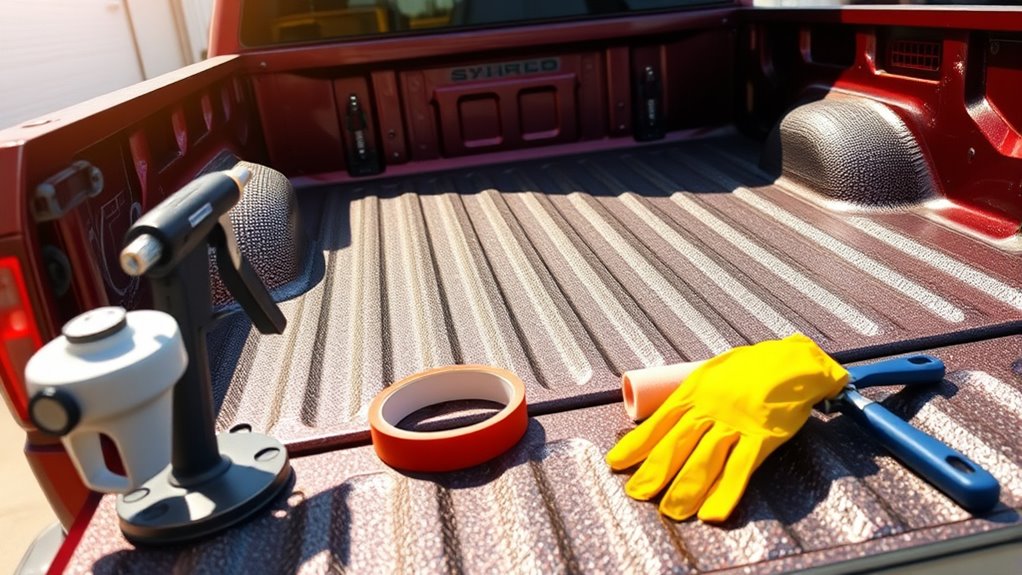
To guarantee a successful DIY truck bed coating project, you need the right materials and tools. First, an approved respirator is essential to protect your lungs from fumes and particles. Second, DA sanders and sandpaper prepare the surface by creating a rough texture for better adhesion. Third, an air compressor with a 60-gallon capacity powers spray guns for even application across large areas. Fourth, masking materials like 3M tape and masking paper prevent overspray on unwanted surfaces. Depending on your chosen product, you’ll also need application tools such as rollers, brushes, or spray guns. Having these materials ready ensures a smooth process, minimizes mistakes, and results in a durable, professional-looking coating. Proper preparation with the right tools makes all the difference in your DIY truck bed project. Additionally, understanding the unique requirements of a Free Floating surface can help you select the most suitable coating method.
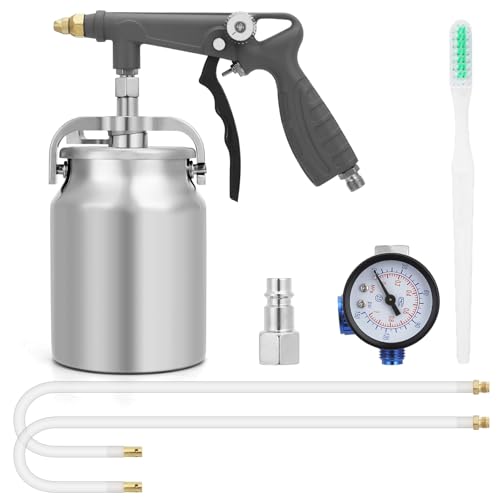
GS Undercoating Spray Gun Kit,Undercoating Gun for Vehicles, Truck Bed Liner Coating,Rubberized Undercoat,Car Rust Proofing Bedliner Under Coating Gun with Suction Feed Cup,360° Spray Hoses
【 Undercoating Spray Gun】Undercoating spray gun have precisely adjustable flow rates for spraying paints of different viscosities and…
As an affiliate, we earn on qualifying purchases.
As an affiliate, we earn on qualifying purchases.
Preparing Your Truck Bed for a Successful Coating
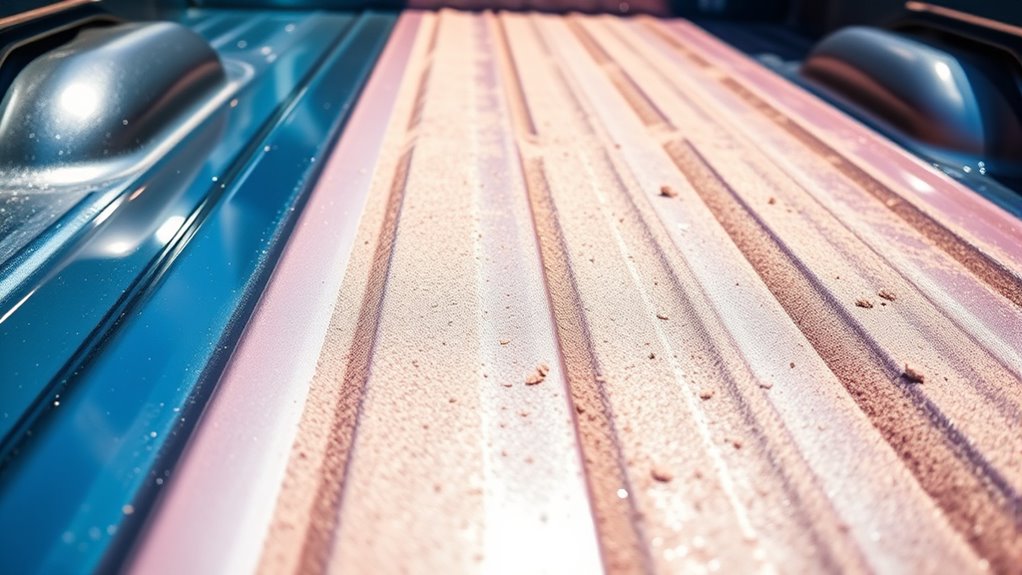
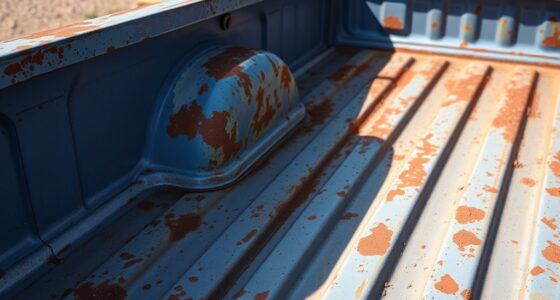
Proper surface preparation is essential to guarantee your truck bed coating adheres properly and lasts over time. First, remove loose dirt and debris by rinsing thoroughly, then dry completely. Next, sand damaged or rusted areas down to bare metal to ensure good bonding. Mask edges, seams, and drainage holes to prevent overspray. If you notice rust spots, apply an epoxy primer before coating to stop corrosion. Here’s a quick overview:
| Step | Method | Purpose |
|---|---|---|
| Cleaning | Rinse and dry | Remove dirt and moisture |
| Sanding | Use DA sander or sandpaper | Create bonding surface |
| Masking | Tape and paper | Protect surrounding areas |
| Rust Treatment | Epoxy primer on rusty spots | Prevent future corrosion |
| Final Inspection | Check for missed spots or debris | Ensure readiness for coating |
Additionally, inspecting the surface for proper adhesion before applying the coating helps ensure a durable finish.

Dura-Gold 6" Abrasive Filament Nylon Bristle Cup Brush – 5/8" 11 Thread, 1/4" Hex Drill Shank Arbor, Coarse Grit Angle Grinder Brush for Truck Bed Liner Surface Prep, Sanding, Rust & Paint Removal
Dura-Gold 6" Coarse Abrasive Nylon Bristle Cup Brush with 5/8" 11 Thread, 1/4" Hex Shank: Premium, long-lasting brush…
As an affiliate, we earn on qualifying purchases.
As an affiliate, we earn on qualifying purchases.
Step-by-Step Process for Applying DIY Bed Liners

Begin by gathering all your materials and tools, ensuring everything is within reach before starting. Once prepared, follow these steps:
- Mask off areas you don’t want coated, like the tailgate edges and cab connections.
- If needed, apply an epoxy primer on bare metal spots and let it dry completely.
- For spray products, mix the coating with hardener as per instructions, then use a spray gun to apply thin, even coats.
- For roll-on kits, use the roller for broad coverage and a brush for corners, applying multiple thin coats instead of one thick layer.
Allow each coat to cure for the recommended time before applying the next. Finish by removing masking tape and cleaning your tools.
Evaluating Costs, Durability, and Long-Term Benefits
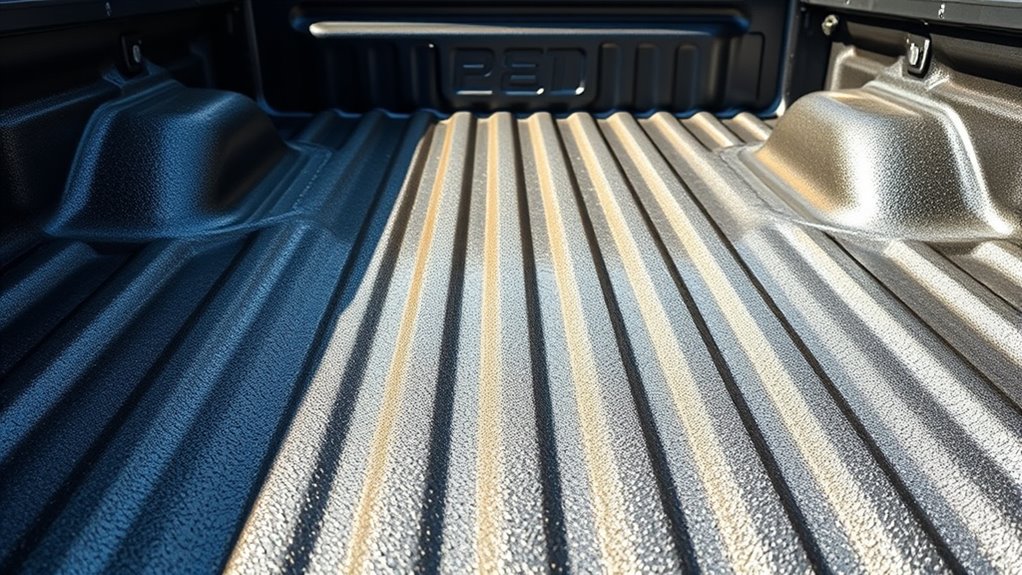
Evaluating the costs, durability, and long-term benefits of DIY truck bed coatings helps you make informed decisions about your project. While options like spray-on polyurethane or roll-on kits vary in price, they also differ in longevity. Polyurethane coatings typically last longer, resisting chipping and peeling, and provide excellent rust protection. Budget-friendly options may save money upfront but might require more frequent touch-ups. Long-term benefits include a skid-resistant surface and weather resistance, protecting your truck bed from corrosion and wear. Consider this comparison:
| Coating Type | Cost Range | Durability |
|---|---|---|
| Spray-on polyurethane | $120–$200 | High; resistant to chipping and UV |
| Roll-on kits | $109–$150 | Moderate; suitable for many surfaces |
| Budget options | <$100 | Lower; may need reapplication over time |
Additionally, choosing a coating with UV resistance can significantly extend its lifespan and appearance.
Frequently Asked Questions
How Long Does a DIY Bed Liner Last Before Needing Reapplication?
A DIY bed liner typically lasts 3 to 5 years before needing reapplication, depending on usage and environmental conditions. If you regularly haul cargo, expose your truck to harsh weather, or notice chips, cracks, or wear, it’s time for a touch-up or recoat. Proper surface prep and applying multiple coats can extend its lifespan. Keep an eye on its appearance and integrity to maintain ideal protection.
Can I Customize the Color or Texture of My DIY Bed Liner?
Yes, you can customize the color and texture of your DIY bed liner. Many spray-on products like U-Pol Raptor let you tint the coating before application, giving you personalized hues. You can also add textured finishes by applying multiple coats or mixing in rubber granules, creating a skid-resistant surface. With the right tools and techniques, you have plenty of options to achieve your desired look and feel.
Are There Any Safety Concerns During the Application Process?
Think of safety like a knight’s armor—crucial and protective. During application, you should wear an approved respirator to avoid inhaling harmful fumes and particles. Use gloves and eye protection, and work in a well-ventilated area to prevent buildup of fumes. Keep masking off areas to avoid overspray, and follow manufacturer instructions carefully. These precautions guarantee your safety while you achieve professional results with your DIY truck bed liner.
Will a DIY Coating Be as Durable as Professional Installation?
A DIY coating can be just as durable as a professional installation if you follow the proper surface prep, use quality products, and apply multiple thin coats. You need to guarantee thorough cleaning, sanding, and masking to achieve a strong bond. Patience during curing times also matters. While professionals might offer more uniform coverage, your DIY liner can withstand rust, chipping, and weathering if you take your time and work carefully.
What Maintenance Is Required to Keep the Liner in Good Condition?
To keep your DIY truck bed liner in good condition, regularly inspect it for chips, cracks, or signs of wear. Clean the surface with soap and water to remove dirt and debris, avoiding harsh chemicals that could damage the coating. Touch up any damaged areas promptly with compatible repair kits or coatings. Also, avoid dragging heavy or sharp objects across the liner to prevent scratches and prolong durability.
Conclusion
By tackling your truck bed yourself, you could save up to 50% compared to professional coatings. With the right materials and preparation, you’ll create a durable, custom finish that protects your bed for years. Imagine transforming your truck bed in a weekend—an average DIY project covers about 50 square feet, enough for most trucks. With patience and care, you’ll enjoy a rugged, long-lasting liner that’s totally your own.