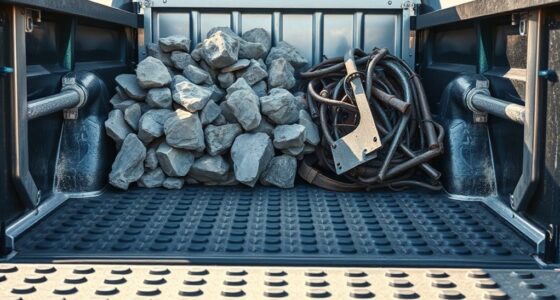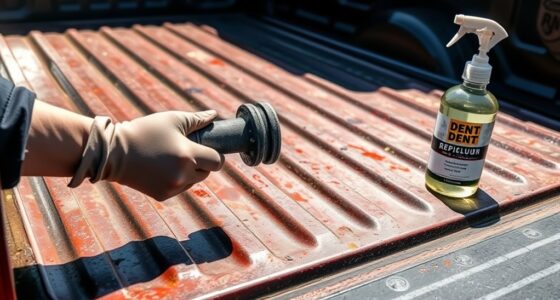

When dealing with oil, paint, or chemical spills in your truck bed, stop the leak and quickly contain the spill using barriers like booms or sorbent socks. Wear proper PPE and transfer the spilled material into approved containers. Clean surfaces thoroughly and inspect your storage and containment equipment regularly. Following safety regulations and proper disposal methods prevents environmental harm. For detailed steps on containment, cleanup, and prevention, continue with the essential procedures to stay safe and compliant.
Key Takeaways
- Stop the spill source immediately, close leaks, and alert personnel for safety.
- Use appropriate spill containment materials like booms, sorbent socks, or dikes to contain the spill.
- Wear proper PPE such as gloves, respirators, and protective suits during cleanup.
- Collect and transfer spilled liquids into approved, labeled containers for proper disposal.
- Regularly inspect and maintain truck beds and containment equipment to prevent future spills.

Oil Spill Containment Booms Extra Large, Industrial Oil-only Absorbent Socks, Repels Water Floating Oil Boom to Soak Up Any Oil, Diesel, Fuel(7.6x200cm/3×78.7in)
Material: oil absorbent socks, polypropylene material. The bright color makes the oil sock easier to see in an…
As an affiliate, we earn on qualifying purchases.
As an affiliate, we earn on qualifying purchases.
Immediate Actions to Contain Spills in Truck Beds

When a spill occurs in a truck bed, your first priority is to stop the source immediately. Quickly identify the leak or opening, then plug or close it to prevent more liquid from escaping. Alert nearby personnel to keep everyone safe and avoid exposure. Next, isolate the spill area by moving the truck away from traffic or sensitive zones. Always wear appropriate personal protective equipment, such as gloves, respirators, and protective suits, to shield yourself from hazards. Use barriers like booms, dikes, or sorbent socks around the spill to contain it and prevent spreading. Assess the spill’s size and severity to determine if it’s manageable or if professional responders are needed. Acting promptly minimizes environmental impact and keeps everyone safe during cleanup. Proper containment techniques are essential for effective spill response and environmental protection.

Universal Sorbent Flake Socks for Spill Containment – 3 Inch Absorbent Socks, Industrial Spill Control Tubes for Oil Water Coolant, Flexible Polyester Sleeve, 1.7 Gallon Capacity – Pack of 10
UNIVERSAL SORBENT FLAKE SOCKS: Universal sorbent flake socks designed for industrial spill containment, leak control, and fluid management….
As an affiliate, we earn on qualifying purchases.
As an affiliate, we earn on qualifying purchases.
Effective Containment Techniques for Chemical and Paint Spills
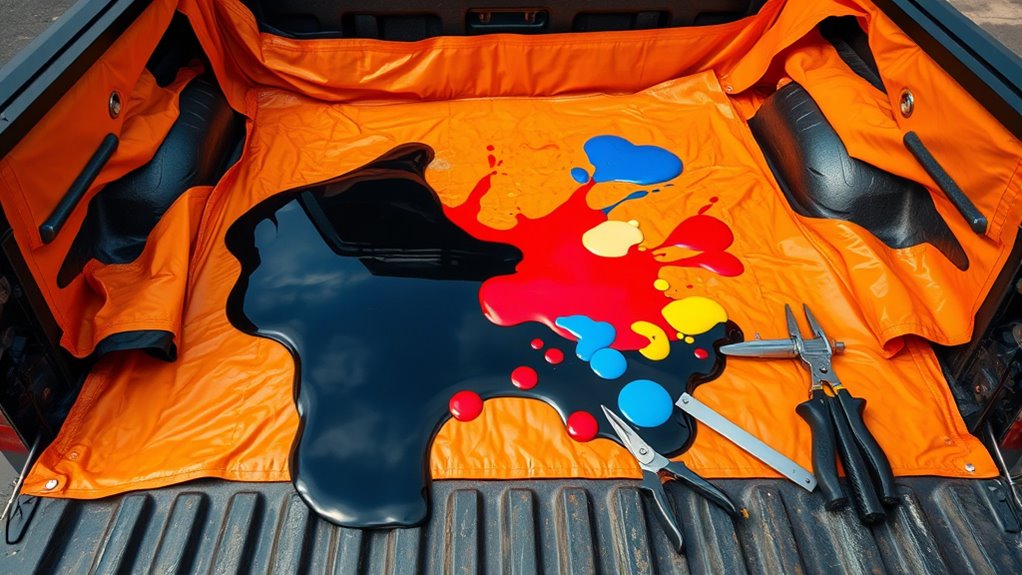
To effectively contain chemical and paint spills in a truck bed, selecting the right containment materials is essential for preventing spread and minimizing hazards. Deploying spill barriers like booms, dikes, or sorbent socks can create a physical perimeter that limits contamination. Properly choosing and deploying these materials guarantees a swift, safe response that keeps the spill localized and manageable. Incorporating Free Floating systems can further enhance containment by allowing spill materials to move with the flow, reducing the risk of spread beyond the designated area.
Containment Materials Selection
Selecting the right containment materials is essential for effectively managing chemical and paint spills in truck beds. You need materials that match the spill type and can contain and absorb the liquids quickly. Sorbent pads, socks, and granulated absorbents are versatile options for soaking up spills, especially when selecting products designed for specific chemicals like oil, solvents, or acids. Spill pallets and temporary dikes help contain leaks during transport or cleanup. For volatile or flammable materials, choose materials that won’t react or ignite. Neutralization agents can also be useful for certain acids or bases. Always verify that your containment materials are compatible with the chemical properties involved. Proper selection minimizes spread, simplifies cleanup, and ensures safer handling during spill response. Effective containment techniques are vital for preventing environmental contamination and safeguarding personnel.
Spill Barriers Deployment
Deploying spill barriers is a critical step in containing chemical and paint spills in truck beds effectively. You need to quickly set up barriers like booms, dikes, or sorbent socks around the spill area to prevent lateral spread. Proper placement guarantees the spill stays confined, making cleanup easier and safer. Use barriers suited for the specific chemical, whether oil, paint, or hazardous materials. Consider environmental factors like wind or uneven terrain when deploying. The table below highlights key barrier types and their purposes:
| Barrier Type | Primary Function |
|---|---|
| Sorbent Socks | Absorb liquids and create a physical barrier |
| Dikes or Berms | Contain larger spills and prevent overflow |
| Boom Barriers | Limit spread across water or uneven surfaces |
Additionally, selecting the appropriate spill containment methods can significantly reduce environmental impact and cleanup costs.
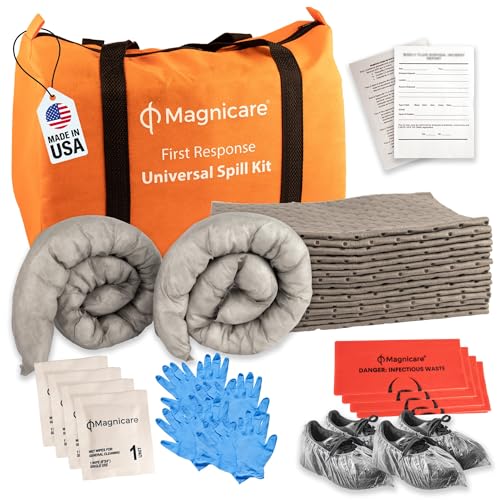
Universal Spill Kit OSHA Approved – Biohazard Clean up Kit for Oil, Water & Chemicals | 15 Absorbent Pads, 2 Socks, PPE, Biohazard Bags in Bright Orange Duffel Bag
Universal Spill Coverage – Industrial-grade universal absorbent system absorbs oil, water, coolants, solvents, and most non-aggressive fluids; ideal…
As an affiliate, we earn on qualifying purchases.
As an affiliate, we earn on qualifying purchases.
Methods for Recovering and Removing Spilled Materials

Recovering and removing spilled materials from truck beds requires immediate action using specialized tools and techniques. First, carefully collect pooled liquids with skimmers or absorbent pads designed for the specific spill type. Use manual tools like shovels or scoops to remove solid or semi-solid residues. For liquids, transfer them into appropriate, labeled containers for safe disposal. Absorbents saturated with chemicals should be carefully collected to prevent re-spreading. In some cases, solidification agents can turn liquids into manageable solids for easier removal. After removing the spill, thoroughly clean affected surfaces with compatible detergents or degreasers to eliminate residues. Always wear PPE during cleanup to protect yourself from exposure, and ensure proper disposal of all recovered materials according to regulations. Incorporating energy-efficient cleanup tools can also enhance safety and efficiency during spill response.

AABACO Universal Spill Kit for Oil & Chemical Spills, Portable High-Visibility Yellow Tote, Absorbent Pads & Socks for Trucks, Garages, Workshops & Emergency Spill Response
HIGH-VISIBILITY, TOUGH & WATER-RESISTANT TOTE Bright yellow, water-resistant spill kit bag with reflective stripe for fast visibility and…
As an affiliate, we earn on qualifying purchases.
As an affiliate, we earn on qualifying purchases.
Ensuring Safety and Regulatory Compliance During Cleanup
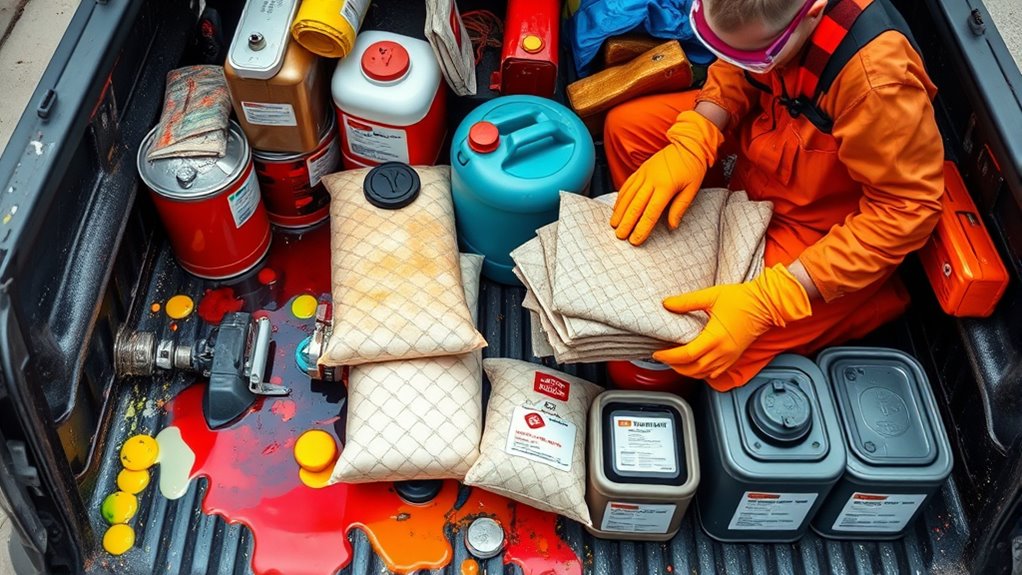
After removing spilled materials and cleaning affected surfaces, guaranteeing safety and regulatory compliance becomes the next essential step. You must follow all local, state, and federal regulations for hazardous waste handling and disposal. Properly label and handle contaminated absorbents, rags, and residues using approved containers. Seal and store waste securely for transport to authorized disposal sites. Workers need training on spill response procedures and recognizing chemical hazards to stay safe during cleanup. Document every step of the incident, including the materials involved, cleanup actions taken, and waste disposal details, for regulatory records. Adhering to these protocols prevents legal issues and environmental damage while safeguarding personnel health. Always stay updated on current regulations and best practices to ensure compliance throughout the cleanup process. Incorporating hazardous waste management best practices can further minimize risks and environmental impact.
Specialized Strategies for Different Types of Spills
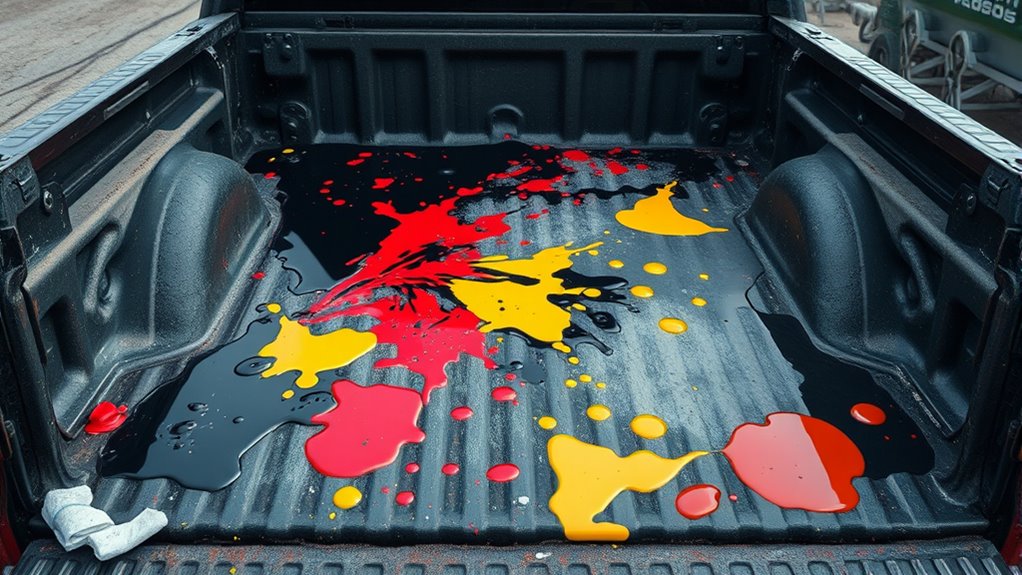
Different types of spills require tailored response strategies to guarantee safe and effective cleanup. You need to adapt your approach based on the spill’s nature to prevent further hazards.
For oil spills:
- Use oil-specific absorbents like pads or socks to soak up the liquid.
- Deploy booms to contain spread and prevent contamination.
- Skim pooled oil with specialized tools for removal.
For paint spills:
- Identify if the paint is water-based or solvent-based.
- Rinse water-based paints with water and absorb.
- Use chemical-specific solvents and absorbents for solvent-based paints.
For chemical spills:
- Neutralize acids or bases with appropriate agents before cleanup.
- Use spill kits designed for the specific chemical involved.
- Follow safety data sheets for proper handling and disposal.
Addressing Environmental and Health Risks

Addressing environmental and health risks is fundamental to effective spill management, especially when dealing with truck bed spills involving oil, paint, or chemicals. You must act quickly to contain the spill and prevent it from reaching soil, water, or air, minimizing ecological damage. Always wear appropriate PPE, including gloves, respirators, and protective suits, to shield yourself from toxic fumes and skin contact. Proper containment using booms, sorbents, and secondary barriers helps limit spread. Prompt cleanup reduces exposure risks and prevents long-term contamination. Guarantee waste is handled, labeled, and disposed of according to regulations. Monitoring yourself for symptoms and seeking medical attention if needed protects your health. Effective risk management safeguards both the environment and your well-being during spill response efforts. Understanding Feature Buddies can also assist in assessing the safety features of spill containment equipment and protocols.
Best Practices for Preventing Future Spills

To prevent future spills, you should focus on securing proper storage solutions that keep chemicals stable during transport. Regular equipment maintenance checks help identify potential issues before they cause leaks or accidents. Implementing spill prevention protocols guarantees everyone knows the best practices to minimize risks and handle hazards safely. Additionally, understanding water filtration systems can help ensure that contaminants are effectively removed from the environment in case of spills.
Secure Proper Storage Solutions
Implementing proper storage solutions is essential to prevent spills before they happen. You should always ensure containers are secure and well-sealed to avoid leaks. Use sturdy, leak-proof containers designed for chemicals, paint, or oil, and double-check lids and closures before transport. Consider these best practices:
- Store liquids in approved, labeled containers to prevent accidental mixing or spills.
- Use secure straps or fasteners to hold containers firmly in place during transit.
- Incorporate secondary containment like spill pallets or trays to catch leaks or drips.
Regularly inspect storage setups for signs of wear or damage, replacing compromised containers promptly. Keeping everything properly stored minimizes the risk of spills, protects the environment, and guarantees safety during transport.
Regular Equipment Maintenance Checks
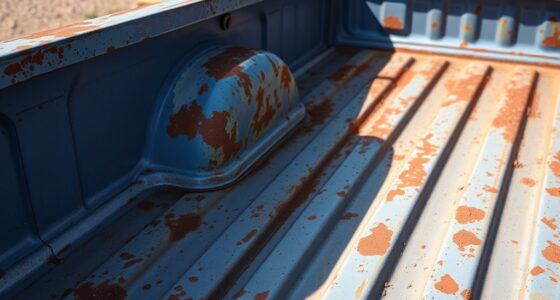
Regular equipment maintenance checks are essential for preventing spills before they happen. By routinely inspecting your truck bed, you can identify potential issues like worn seals, loose fittings, or damaged containment devices. Verify that valves, hoses, and connections are secure and in good condition. Clean out your truck bed regularly to prevent buildup of residues that could cause leaks or contamination. Check for corrosion or rust that might compromise structural integrity. Maintain spill containment equipment such as booms, sorbents, and absorbent pads, replacing or repairing them as needed. Addressing minor issues early reduces the risk of major spills during operation. Consistent maintenance keeps your equipment functioning properly, minimizes hazards, and promotes safer, more reliable handling of oil, paint, and chemicals. Incorporating proper storage techniques ensures that materials are securely contained, further reducing the likelihood of spills.
Implement Spill Prevention Protocols
Establishing effective spill prevention protocols is essential for minimizing the risk of oil, paint, and chemical spills in truck beds. You should start by implementing proper storage procedures, such as using secure, labeled containers designed for specific chemicals. Next, develop routine inspection schedules to identify leaks, damaged seals, or compromised containers before they cause spills. Finally, train yourself and your team on spill response and handling techniques, emphasizing safe practices. To help you stay on track, follow these steps:
- Use high-quality, compatible containment systems like spill pallets or secondary barriers.
- Regularly check and maintain containers, seals, and fittings.
- Keep spill kits easily accessible and ensure everyone knows how to use them.
- Incorporate risk assessment procedures to identify potential spill hazards proactively.
These measures reduce spill risks and promote safer operations.
Frequently Asked Questions
How Do I Identify the Specific Chemical Hazards in a Spill?
You identify chemical hazards by checking the spill’s labels, safety data sheets (SDS), and container markings. Look for hazard symbols, chemical names, and concentrations. If labels aren’t available, use your training and tools like test kits to analyze the substance. Always wear appropriate PPE, and consult the SDS or a supervisor to understand specific risks, precautions, and necessary cleanup procedures before proceeding.
What Are the Long-Term Environmental Impacts of Spilled Chemicals?
You should be aware that spilled chemicals can contaminate soil, water, and ecosystems for years, harming wildlife and plant life. They may leach into groundwater, affecting drinking water sources, and persist in the environment, causing long-term health risks to humans and animals. Proper cleanup and disposal are critical to minimize these impacts, but some chemicals remain hazardous and require ongoing monitoring to protect the environment effectively.
Can DIY Cleanup Methods Fully Neutralize Hazardous Chemicals?
Like trying to tame a wild beast, DIY cleanup methods can’t fully neutralize hazardous chemicals. You might temporarily reduce risks, but without specialized knowledge and equipment, harmful residues can remain. Neutralization often requires precise chemical reactions, which DIY methods can’t reliably accomplish. To guarantee safety and compliance, it’s best to call professionals for thorough hazard neutralization and proper disposal, avoiding long-term health and environmental hazards.
What Are the Legal Liabilities After a Spill Occurs?
You’re legally liable for any environmental damage, health risks, or property harm caused by the spill. You must comply with all relevant regulations, including proper containment, cleanup, and disposal of hazardous materials. Failing to report the spill promptly or improperly handling waste can lead to fines, legal action, or criminal charges. Taking responsible, timely actions helps limit your liabilities and demonstrates your commitment to safety and environmental protection.
How Effective Are Bioremediation Techniques for Truck Bed Spills?
Bioremediation techniques can be quite effective for truck bed spills, especially with oil and certain chemicals. You activate naturally occurring or added microorganisms that break down the contaminants into less harmful substances. This method is environmentally friendly, reduces the need for chemical cleanup, and works best in outdoor settings. However, it requires time to be fully effective and might need supplemental methods for quick or large spills.
Conclusion
Now that you’re armed with spill secrets, imagine your truck bed transforming into a pristine, chemical-free sanctuary—no more oil slicks or paint puddles turning your vehicle into a mobile art disaster. With quick action and proper cleanup, you’ll turn chaos into order faster than a paint can dries. Just remember, a spill today keeps a costly cleanup tomorrow—so stay vigilant, and your truck bed will remain the envy of every environmentally conscious artist on the road.