Wind resistance can considerably impact your truck bed cargo stability by pushing against the cargo and creating lateral forces that may cause shifting or even toppling if not properly secured. Gusts and crosswinds are especially problematic, exerting pressure that can move loose or poorly secured items. Properly securing your cargo and understanding aerodynamic effects helps prevent these issues. Keep going to discover more ways to protect your load from wind’s unexpected influence.

Get business pricing on garage and car supplies
- Business-only prices and quantity discounts
- Tax-exempt purchasing
- Multiple users, one account, clear invoices
Key Takeaways
- Wind pressure exerts lateral forces that can cause cargo to shift or topple in truck beds.
- Proper securing methods are vital to prevent cargo movement caused by wind gusts.
- Aerodynamic design reduces wind resistance, decreasing lateral forces on cargo during transit.
- Wind-induced turbulence can destabilize unsecured or poorly secured cargo.
- Understanding wind effects helps in selecting appropriate tie-downs and cargo stabilization techniques.
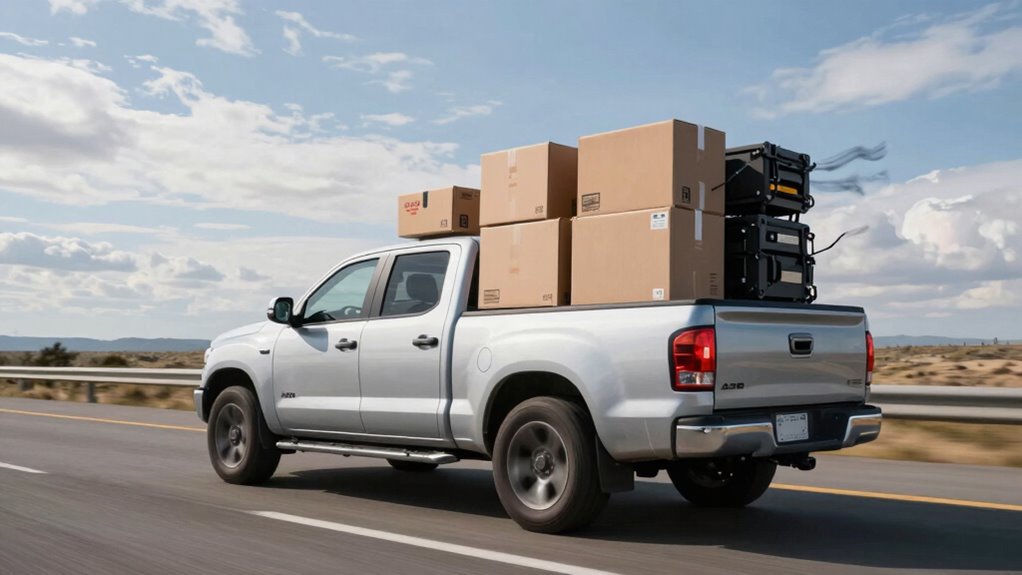
When driving a truck, wind resistance can markedly impact cargo stability, especially in strong gusts or crosswinds. The way your truck is designed plays a vital role in how well it handles these forces. An aerodynamic design helps streamline the shape of your vehicle, reducing drag and minimizing the impact of wind on your cargo. When your truck is streamlined, it slices through the air more efficiently, meaning less lateral force pushes against the cargo in windy conditions. This not only improves fuel efficiency but also stabilizes your load, decreasing the risk of shifting or toppling.
Aerodynamic truck design reduces wind impact, improves stability, and enhances fuel efficiency during gusty conditions.
To achieve peak aerodynamic performance, manufacturers often rely on wind tunnel testing. This process involves placing a scale or full-sized model of the truck in a controlled environment where air flows around it. Wind tunnel testing provides detailed insights into how different shapes and features influence airflow and resistance. By analyzing these results, designers can refine the truck’s shape—adding features like fairings, side skirts, or roof deflectors—to reduce turbulence and wind pressure on the cargo area. When you choose a truck with an aerodynamic design verified through wind tunnel testing, you’re better equipped to handle adverse weather conditions without risking cargo stability. Additionally, understanding aerodynamic principles can help you make informed decisions about your truck’s features and modifications to improve stability.
Wind resistance doesn’t just affect fuel economy; it also directly influences how your cargo behaves on the road. Strong crosswinds push against the sides of the truck and its load, creating lateral forces that can cause shifting or even tipping if the cargo isn’t properly secured. A well-designed aerodynamic truck mitigates these forces by controlling airflow around the vehicle, which helps maintain stability. It’s important to remember that even minor improvements in design can considerably reduce wind impact, especially at highway speeds where aerodynamic drag becomes more pronounced. Moreover, incorporating advanced aerodynamic features can further enhance your truck’s stability in windy conditions. Additionally, understanding how wind interacts with your truck through wind tunnel testing allows manufacturers to develop more effective stabilization tools. For example, adding side skirts or adjusting the height of cargo racks can help divert airflow and lessen the wind’s effect. A comprehensive understanding of design factors can also enable you to select the right modifications to optimize your truck’s performance in windy weather. When you’re aware of these design elements and their origins, you gain confidence in your truck’s ability to keep cargo secure despite unpredictable gusts. Ultimately, investing in a truck with proven aerodynamic features, validated through wind tunnel testing, equips you to navigate challenging weather conditions safely and efficiently, protecting your cargo from shifting and maintaining overall vehicle stability. Understanding aerodynamic principles is crucial for appreciating how modern truck designs enhance stability in windy conditions.
As an affiliate, we earn on qualifying purchases.
Frequently Asked Questions
How Does Wind Resistance Vary With Different Truck Bed Covers?
Wind resistance varies considerably with different truck bed covers. Aerodynamic designs, like streamlined covers, reduce drag and improve stability, while flat or boxy covers increase wind resistance. Cover materials also matter—lightweight, smooth materials create less turbulence compared to heavy, textured ones. You’ll notice less wind push and better fuel efficiency with sleek, aerodynamic covers, especially made from durable, low-resistance materials. Choosing the right cover can make a big difference on windy days.
Can Wind Resistance Impact Fuel Efficiency Significantly?
Yes, wind resistance can substantially impact your fuel efficiency. An aerodynamic design reduces drag, helping your vehicle move more smoothly through the air. Wind tunnel testing shows that even small changes in shape or accessories, like truck bed covers, can lower resistance. When you optimize your truck’s aerodynamics, you’ll notice improved fuel economy and less strain on your engine, saving you money over time.
What Materials Best Reduce Wind Drag on Truck Beds?
Want to beat the wind’s sneaky attempts at chaos? You should opt for aerodynamic design materials like smooth, lightweight composites or plastics, which cut drag dramatically. Durable materials such as aluminum or high-strength polymers resist wear while maintaining airflow. These choices help your truck slice through the air effortlessly, keeping your cargo stable and your fuel bills happy. Who knew reducing wind drag could be so simple and stylish?
How Should Cargo Be Secured to Minimize Wind Effects?
To minimize wind effects, you should secure your cargo with cargo netting, which prevents movement and reduces wind drag. Use proper tie down techniques, ensuring straps are tight and evenly distributed to keep items stable. Position heavier items at the bottom and lighter ones on top to lower the center of gravity. Regularly check your tie downs during transit to maintain secure cargo, especially in windy conditions.
Do Different Truck Models Experience Varying Wind Resistance Effects?
Yes, different truck models experience varying wind resistance effects due to their aerodynamic design. Trucks with streamlined shapes and smoother surfaces cut through the air more efficiently, reducing wind drag. Manufacturers often use wind tunnel testing to optimize these designs, which helps minimize instability caused by wind. As a result, trucks with better aerodynamic features typically offer improved cargo stability and fuel efficiency, especially in windy conditions.
wind-resistant cargo net for trucks
As an affiliate, we earn on qualifying purchases.
As an affiliate, we earn on qualifying purchases.
Conclusion
Remember, a boat is safest when it’s in the water, not fighting the waves. Similarly, understanding how wind resistance impacts your truck bed cargo helps you keep everything secure and stable. By adjusting your load and driving carefully, you can prevent surprises on the road. Don’t forget—an ounce of prevention is worth a pound of cure. Stay mindful of the wind’s influence, and your cargo will stay put, no matter what the weather throws at you.
As an affiliate, we earn on qualifying purchases.
truck bed cargo stabilization tools
As an affiliate, we earn on qualifying purchases.
As an affiliate, we earn on qualifying purchases.
Columbus Day / Indigenous Peoples' Day Picks
long weekend sales
As an affiliate, we earn on qualifying purchases.