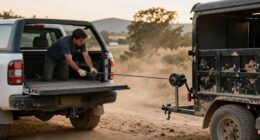
When using a bed extender, remember it only adds space; it doesn’t secure your cargo. You still need to identify heavy or oddly shaped items and strap them down with quality, rated tie-downs. Distribute the weight evenly, use multiple straps at different points, and make certain everything stays low enough to see clearly. Regularly check your straps and cargo, especially during stops. Want to know the best practices to keep your load safe and secure throughout your trip?

Get business pricing on garage and car supplies
- Business-only prices and quantity discounts
- Tax-exempt purchasing
- Multiple users, one account, clear invoices
Key Takeaways
- Bed extenders do not secure cargo; always use proper straps for heavy or irregularly shaped items.
- Choose strong, rated tie-down straps and ensure they are in good condition before use.
- Distribute cargo evenly and secure all points at approximately 45° angles for maximum stability.
- Keep cargo low, visible, and avoid blocking lights or license plates for safety and compliance.
- Regularly inspect and maintain straps, hardware, and extenders to ensure reliable securement.
heavy duty ratchet straps for truck bed
As an affiliate, we earn on qualifying purchases.
As an affiliate, we earn on qualifying purchases.
Understanding the Limitations of Bed Extenders
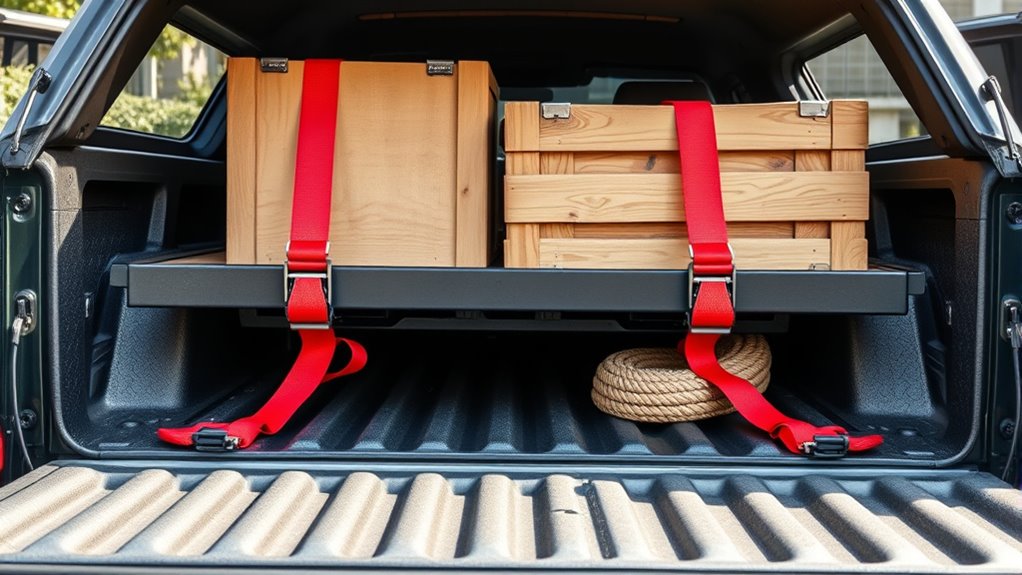
While bed extenders add valuable space to your truck bed, they have inherent limitations that you need to understand for safe and effective use. They don’t secure cargo by themselves, so relying solely on the extender isn’t enough. The extender’s primary role is to create additional space, but it won’t prevent items from shifting or falling out during transit. Even if your extender has tie-down points, you must use proper straps and secure your cargo correctly. It’s vital to remember that bed extenders aren’t designed for off-road use or heavy loads exceeding their weight capacity, usually around 350 pounds. Understanding these limitations helps you avoid accidents, damage, or fines, ensuring you transport your cargo safely and within the extender’s capabilities. Additionally, knowing the relevant safety guidelines can help prevent potential hazards during transportation.
cargo tie-down straps for trucks
As an affiliate, we earn on qualifying purchases.
As an affiliate, we earn on qualifying purchases.
Identifying Cargo That Requires Strapping

You need to strap down heavy, long, or irregularly shaped cargo to keep it secure during transit. Items like ladders, pipes, or furniture can shift or tip if not properly restrained. Always identify these items before loading to guarantee you use the right straps and attachment points. Proper color accuracy in your securing methods ensures that all items are clearly visible and correctly positioned for optimal safety.
Heavy and Long Items
Heavy and long items such as ladders, lumber, and pipes require proper strapping to stay secure during transit. These cargo types are prone to shifting or falling if not correctly restrained, posing safety hazards. Use multiple tie-downs at different points to prevent movement and ensure stability. Ratchet straps are ideal for these items because they provide strong, adjustable tension. Make sure straps are tight, not frayed, and in good condition before driving. Distribute weight evenly across the bed to maintain vehicle balance and avoid overloading the extender. For extremely long items, consider additional support or padding to prevent damage. Always double-check your straps after initial acceleration and at regular intervals during your trip to keep everything secure. Proper cargo restraint is essential to minimize movement and maintain safety during transportation.
Irregularly Shaped Cargo
Irregularly shaped cargo can be challenging to secure because its uneven surfaces and protrusions make it prone to shifting during transit. You’ll need to identify these items early and plan your tie-down strategy accordingly. Items like oddly shaped furniture, equipment with protruding parts, or oddly formed boxes require extra attention. Use additional straps at multiple points to prevent movement and ensure stability. For bulky or awkwardly shaped objects, consider padding or blocking to fill gaps and keep the cargo from shifting. Secure all loose or protruding parts to avoid damage or accidents. Remember, the goal is to keep everything stable, so don’t rely on a single strap. Properly identifying and securing irregularly shaped cargo keeps your load safe and your drive smooth. Smart load management techniques can help optimize your securing strategy and minimize the risk of shifting during transit.
As an affiliate, we earn on qualifying purchases.
Selecting the Appropriate Straps and Tie-Down Points
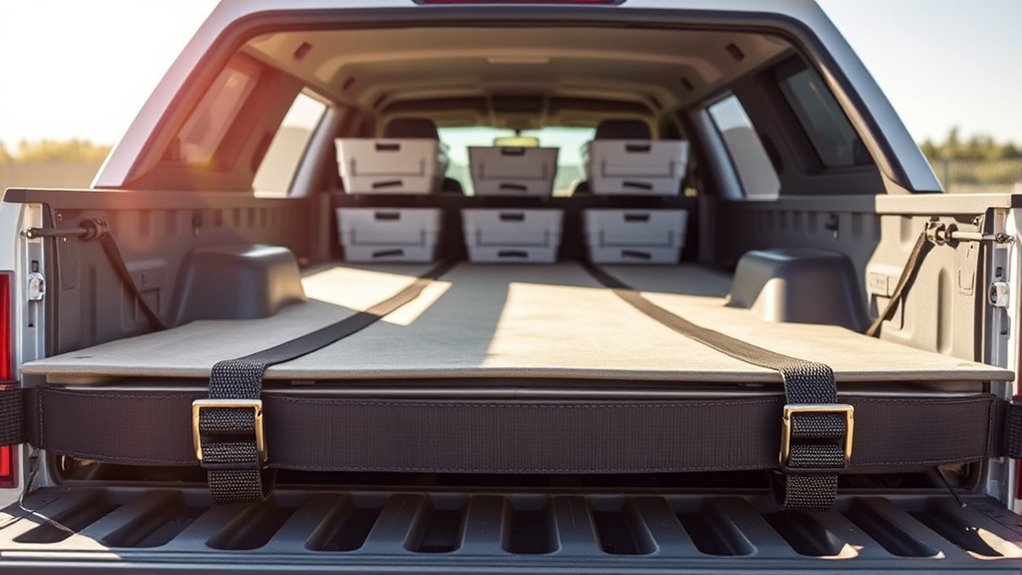
Choosing the right straps and tie-down points is essential for securing cargo safely and effectively. You want straps that are strong enough for the weight and size of your items, like ratchet straps for heavy loads or bungee cords for lighter goods. Make sure your tie-down points are sturdy, well-placed, and designed to handle the load. Use multiple points to distribute tension evenly and prevent shifting. Always check that straps are not frayed, twisted, or damaged before use. Tighten straps securely so cargo doesn’t move during transit. Position straps at appropriate angles—ideally at 45 degrees—to maximize holding power. Proper selection and placement of straps and tie-down points are key to ensuring your cargo stays put and your journey remains safe. Additionally, ensure your tie-down points are properly rated to withstand the forces exerted during transport.
As an affiliate, we earn on qualifying purchases.
Properly Securing Long and Irregularly Shaped Items
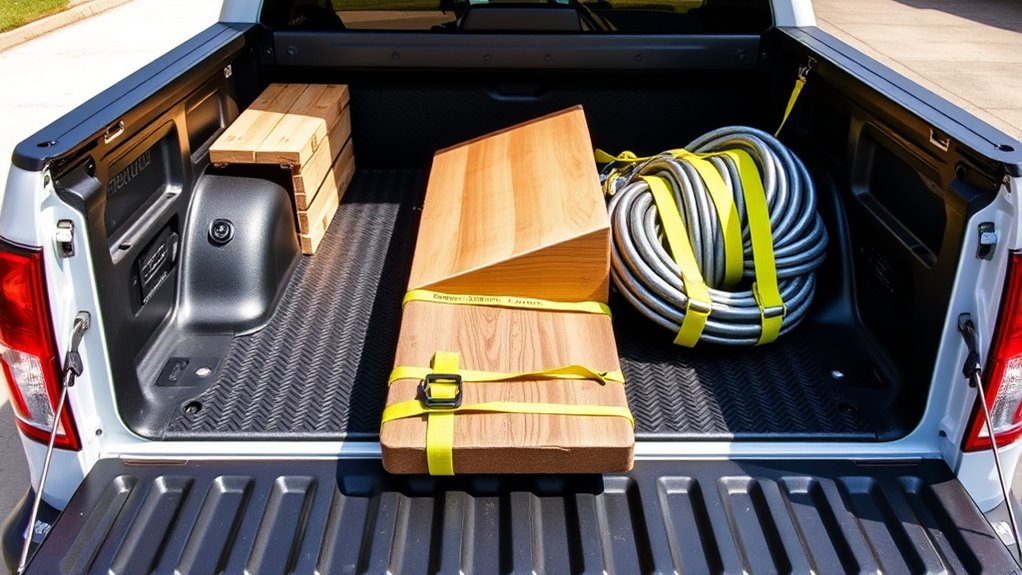
Securing long and irregularly shaped items requires careful attention to prevent shifting or tipping during transit. You should use multiple straps at different points along the cargo to hold it firmly in place. Attach straps to sturdy tie-down points on your bed extender, ensuring they are tight without damaging the cargo. For elongated items like ladders or pipes, secure both ends and the middle to distribute tension evenly. For irregular shapes, add extra straps or padding to fill gaps and prevent movement. Always check that straps are not frayed or worn before securing. Tighten straps properly so they don’t loosen during the drive. Regularly recheck the securement after driving a short distance or hitting bumps, to ensure everything remains stable. Proper tensioning techniques are essential to maintain securement and prevent accidents on the road.
Distributing Cargo Evenly for Vehicle Balance
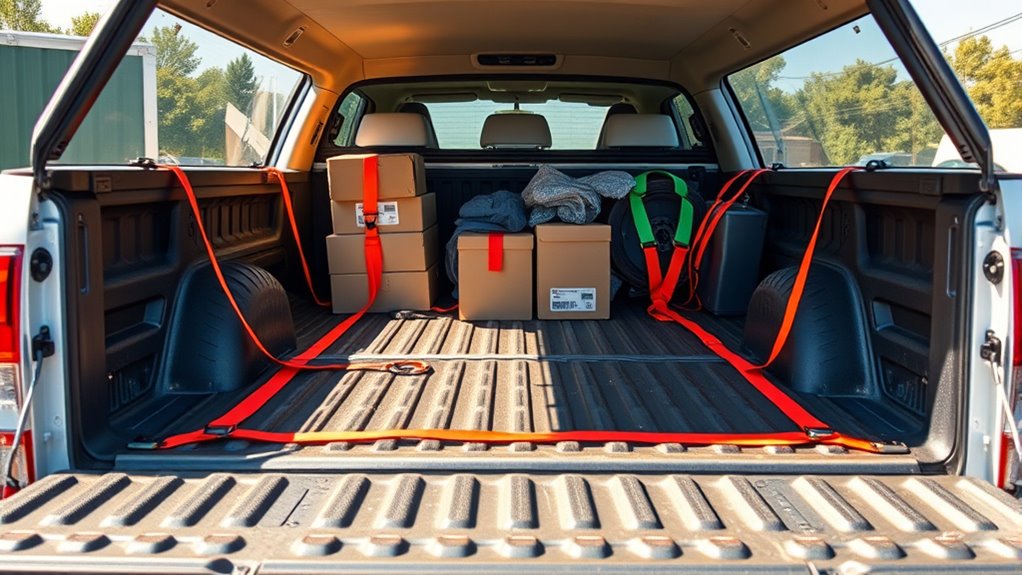
To keep your vehicle balanced and safe, make sure to distribute cargo evenly between the front and rear. Place heavy items strategically to avoid putting too much weight on one side, which can affect handling. Remember, overloading one side can compromise stability and increase the risk of accidents. Incorporating energy-efficient cloud solutions can also support sustainability in your transportation planning.
Balance Front and Rear
Distributing cargo evenly between the front and rear of your vehicle is essential for maintaining proper balance and safe driving. When cargo is concentrated in one area, it can affect steering, braking, and overall stability. To achieve balance, place heavier items closer to the cab and spread lighter items throughout the bed. Avoid piling all your cargo at the tailgate, as this shifts weight backward and can cause fishtailing or sway. Use your vehicle’s weight distribution as a guide—aim for an even spread that keeps the vehicle level. Regularly check how your cargo is positioned, especially after stops or sudden accelerations. Proper balance helps prevent accidents, reduces strain on your suspension, and ensures a smoother, safer ride. Weight distribution techniques can further assist in optimizing cargo placement for stability.
Position Heavy Items Strategically
Placing your heaviest items toward the front of the cargo bed helps maintain vehicle stability and improves handling. Proper weight distribution reduces the risk of swaying or loss of control. To optimize balance, consider these tips:
- Keep bulky, heavy items close to the cab for better control
- Spread weight evenly side to side to prevent tilting
- Distribute lighter items across the bed to fill gaps
- Avoid stacking heavy objects on top of lighter ones
- Regularly check that cargo remains balanced during transit
- Vehicle stability is directly influenced by how you position your cargo, so carefully plan your load to enhance safety and handling.
Balancing your load ensures safer driving and reduces strain on your vehicle’s suspension and tires. Proper positioning combined with secure strapping helps prevent shifting, keeping your cargo stable and your trip smooth.
Avoid Overloading One Side
Uneven cargo weight can cause your vehicle to sway or become difficult to control. When loading your bed extender, focus on distributing weight evenly across the bed. Place heavier items towards the center and close to the cab to improve balance and handling. Avoid piling all the weight on one side, which can cause side-to-side instability and increase the risk of rollover. Use your eyes and hands to ensure cargo is spread out uniformly, preventing side loads that can strain the vehicle’s suspension. Proper distribution also helps prevent cargo from shifting during transit, reducing the need for constant adjustments. Remember, a balanced load not only keeps you safer but also enhances driving comfort and vehicle longevity. Incorporating proper load balancing techniques is essential for safe and reliable deep-sky imaging, as it ensures your equipment remains stable during long exposures.
Ensuring Straps Are Tight and Not Damaged
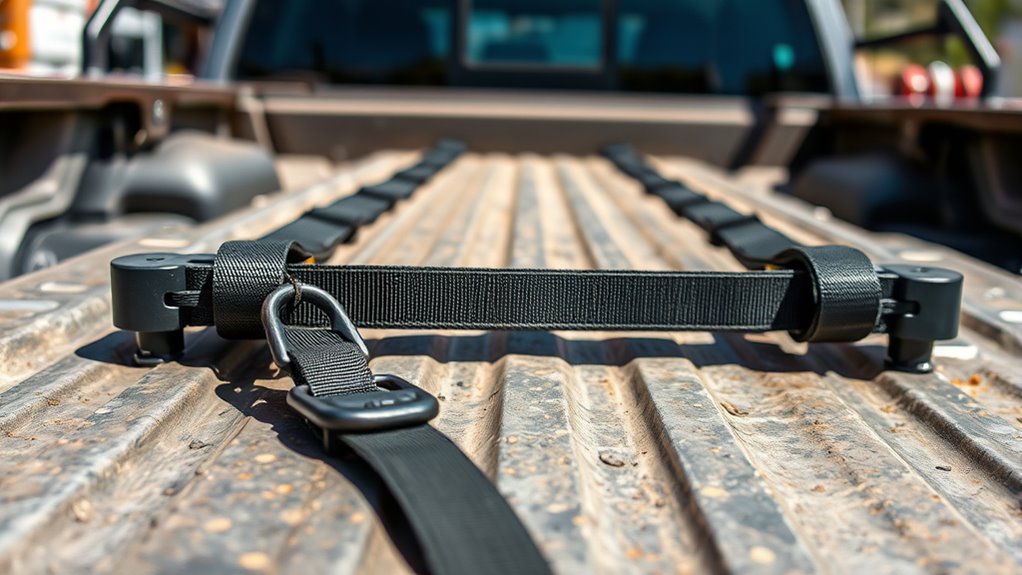
To guarantee your cargo stays secure during transit, you need to make sure all straps are tight and in good condition. Loose or damaged straps can lead to shifting or even loss of cargo. Before hitting the road, double-check each strap’s tension and look for signs of wear, fraying, or cuts. Reuse or replace any straps that show damage to prevent failure during transit. Properly tensioned straps keep your load stable and reduce movement.
Secure your cargo with tight, well-maintained straps to prevent shifting and ensure safe transit.
- Ensure straps are snug but not overly tight, avoiding damage.
- Look for fraying, cuts, or tears in the webbing.
- Confirm ratchets are functioning smoothly.
- Check for rust or corrosion on hardware.
- Replace worn or damaged straps immediately.
Using Multiple Tie-Downs for Stability

Using multiple tie-downs is essential for maintaining cargo stability during transit. It distributes tension evenly and prevents shifting that could cause accidents. Use at least two or three straps depending on cargo size and shape. Attach straps at different points along the cargo, ensuring even pressure. Check each strap for fraying or damage before tightening. Tighten straps gradually to avoid overstressing any single point. Proper placement guarantees stability, especially for irregular or heavy loads. Below is an example setup:
| Tie-Down Point | Strap Type | Cargo Position |
|---|---|---|
| Front | Ratchet strap | Front of cargo |
| Middle | Bungee cord | Center |
| Rear | Tie-down loop | Back |
| Side | Additional strap | Sides |
| Top | Overhead strap | Over cargo |
Using multiple tie-downs keeps your load secure and safe on the road.
Checking Visibility and Lighting Compliance

Ensuring your cargo remains stable isn’t just about properly securing it with straps; it’s also about maintaining clear visibility and compliance with lighting requirements. You need to make sure your load doesn’t block your taillights, brake lights, or turn signals, as this can be dangerous and illegal. Additionally, check that your vehicle’s lights are functioning properly and visible to other drivers. Here are key points to follow:
- Keep cargo low enough to avoid covering lights or license plates
- Use reflective tape on your cargo for extra visibility
- Ensure all lights are clean and working before driving
- Avoid stacking cargo in a way that blocks your rear view
- Confirm your load doesn’t extend beyond legal length limits
Being vigilant about visibility and lighting keeps you safe and compliant on the road.
Regular Inspection and Maintenance of Straps and Extenders

Regularly inspecting your straps and bed extender is essential for safe cargo securement. You should check for frayed, cut, or worn straps before each trip. Make certain ratchet mechanisms work smoothly and tighten properly, avoiding slack that could cause shifting. Examine all hardware, including pins, hooks, and tie-down points, for rust, damage, or corrosion. If you find any compromised parts, replace them immediately to prevent failure during transit. Clean the extender regularly to remove dirt and debris that can cause corrosion or reduce effectiveness. Confirm that locking pins or hitch locks are secure and fully engaged. Remember, a well-maintained extenders and straps improve safety, reduce the risk of cargo loss, and ensure compliance with safety regulations. Consistent inspection keeps your load secure and your journey worry-free.
Safe Practices During Transit and Stop Checks
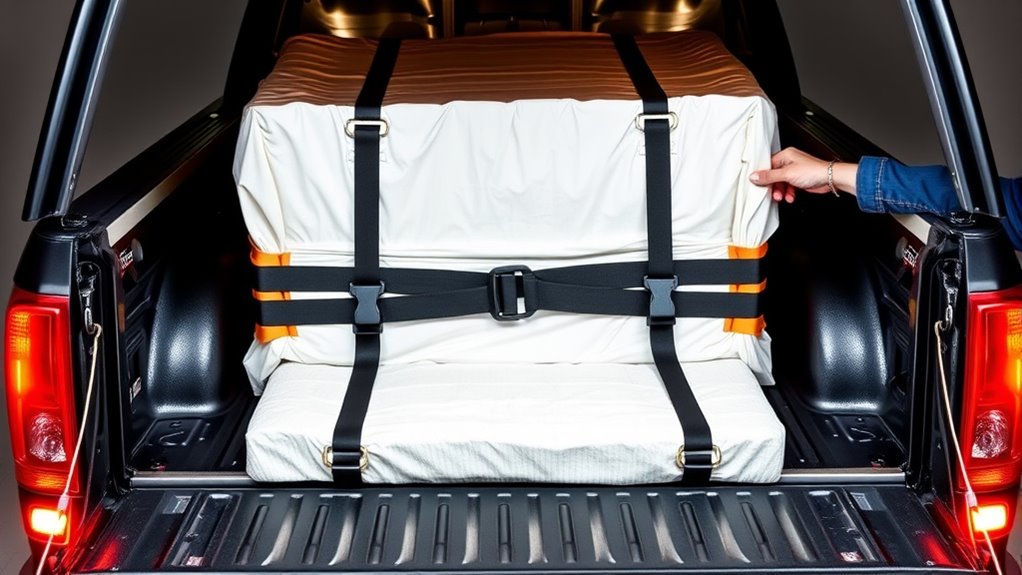
When you’re on the road, it’s crucial to regularly check your straps to make sure they stay tight and secure. At each stop, take a moment to verify that your cargo hasn’t shifted and remains properly secured. This simple step helps prevent accidents and keeps your load safe throughout your trip.
Regular Strap Checks
During transit, it’s essential to stop periodically and check your straps to guarantee they remain tight and secure. Loose straps can lead to shifting cargo or even accidents. Make a habit of inspecting your straps each time you stop, especially after driving over bumps or rough patches. Focus on these key points:
- Tighten straps if you notice slack or movement
- Look for frayed, cut, or damaged straps and replace if needed
- Ensure all hooks and ratchets are fully engaged
- Verify cargo isn’t shifting or leaning
- Double-check tie-down points for secure attachment
Regular checks help prevent accidents, protect your cargo, and ensure compliance. Staying vigilant during transit keeps everyone safe and your load firmly in place. Don’t skip these critical inspections.
Secure Cargo at Stops
As you approach a stop during transit, it’s important to double-check your cargo to make certain it remains secure. Quickly inspect all straps and tie-down points, ensuring they’re tight and undamaged. Confirm that cargo hasn’t shifted or loosened during your drive. If you’re carrying long or bulky items, verify they’re still properly anchored at multiple points. Check that no items are blocking your taillights or license plate. If you notice any movement or wear, tighten straps or replace damaged hardware before proceeding. Always re-inspect after initial acceleration and periodically during longer stops. Properly secured cargo prevents accidents and fines, so taking these quick checks helps keep you and others safe on the road.
Frequently Asked Questions
Can I Use Bed Extenders for Off-Road Driving?
No, you shouldn’t use bed extenders for off-road driving. They’re designed for paved roads and can become unstable on uneven terrain. Off-road conditions increase the risk of the extender loosening or detaching, which could lead to accidents or damage. Always follow the manufacturer’s guidelines and only use your bed extender on smooth, paved surfaces to guarantee safety and prevent mishaps during transit.
What Is the Maximum Weight Capacity for a Bed Extender?
The maximum weight capacity for a bed extender is typically around 350 pounds, but always check your specific model. This limit reminds you that even solid gear has its bounds, urging you to respect safety guidelines. When loading, distribute weight evenly and avoid exceeding this limit to prevent damage or accidents. Remember, knowing your equipment’s capacity guarantees your cargo stays secure and your journey remains safe.
How Do I Choose the Best Straps for Different Cargo Types?
You should choose straps based on your cargo’s size, weight, and shape. For heavy or bulky items, go with ratchet straps for a secure hold. Use bungee cords or tie-downs for lighter, flexible cargo. Make certain straps are strong, durable, and rated for your load. Always check that they’re not frayed or damaged. Properly securing each item with the right straps keeps your cargo stable and safe during transit.
How Often Should I Recheck Strap Tension During Transit?
Rechecking strap tension during transit is like tightening a guitar string—you want it secure but not overly tight. You should check your straps after the first 10-15 minutes of driving, then periodically every 30 minutes or so, especially on long trips. This helps prevent shifting or loosening due to road vibrations. Always stop safely to re-tighten straps if you notice any slack or movement.
Are There Safety Features to Prevent Theft of Bed Extenders?
Yes, safety features like locking pins or hitch locks help prevent theft of your bed extender. These components secure the extender firmly to your vehicle, making it harder for thieves to remove or steal it. Always engage these locks fully before driving, and consider adding additional security measures like padlocks if your extender has lockable points. Regularly check that locks are in place and functioning properly to keep your gear safe.
Conclusion
Remember, your cargo is only as secure as your last tie-down. Like a house built on solid foundations, proper securing keeps you safe on the road. Always check your straps, distribute weight evenly, and never overlook visibility. By following these simple steps, you turn your vehicle into a fortress of safety. After all, it’s not just about reaching your destination—it’s about arriving there safe and sound. Stay vigilant, stay secure.
Halloween Picks
halloween
As an affiliate, we earn on qualifying purchases.